Connect with us

Business

FX reserves to hit $51bn by 2026 — CBN

Published

on

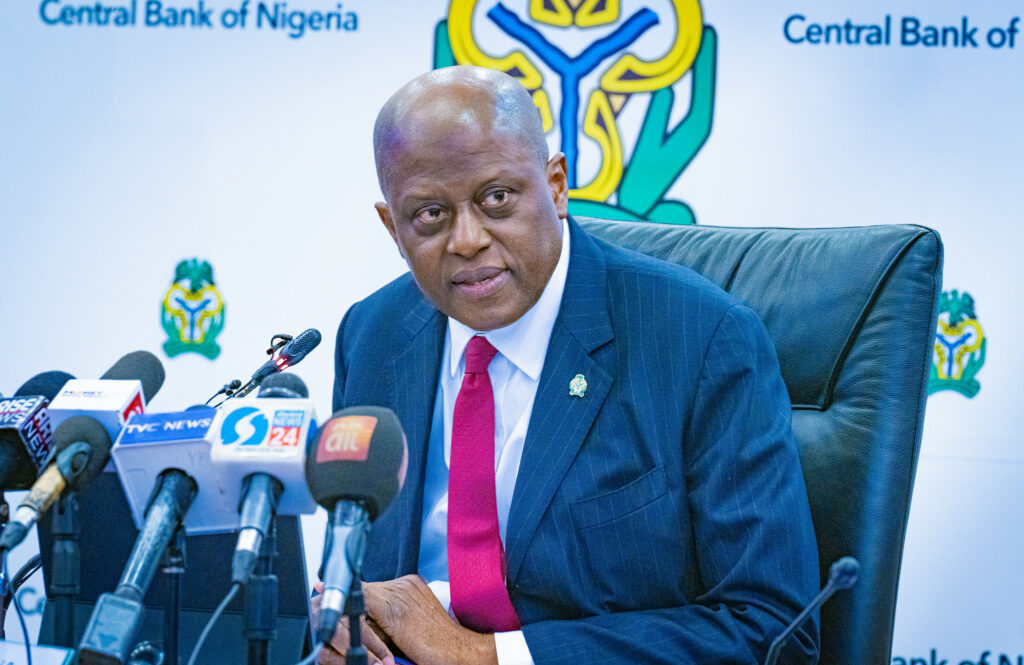
The Central Bank of Nigeria predicts external reserves will climb to $51.04bn in 2026, up from $45bn in 2025.

This projection was contained in the Macroeconomic Outlook for Nigeria, 2026, titled ‘Consolidating Macroeconomic Stability Amid Global Uncertainty’, published by the CBN on Tuesday.

The PUNCH reported that Nigeria’s external reserves as of Monday, 29 December 2025, stood at $45.45bn, following days of steady accretion.

“The external reserves are projected at $51.04bn in 2026, compared with $45.01bn in 2025. The external reserves are expected to be boosted by reduced pressure in the FX market based on the anticipated rise in oil earnings, sovereign bond issuance, and diaspora remittance inflows.

“Additionally, Dangote refinery’s expansion of its nameplate capacity to 700,000 bpd from 650,000 bpd in 2025 and eventually to 1.4 million bpd in the medium term would further support the growth in external reserves,” the report read.

In the FX market, the apex bank noted that reforms are expected to further enhance efficiency and transparency, narrow the premium between the Nigerian Foreign Exchange Market and Bureau de Change rates, and sustain exchange rate stability. In addition, improved domestic oil refining capacity is expected to reduce foreign exchange demand for fuel imports.

On inflation, the CBN anticipates that headline inflation will decelerate further to 12.94 per cent in 2026, driven by a combination of factors, and is expected to come down to 10.75 per cent in 2027.

According to data from the National Bureau of Statistics, inflation has been falling for consecutive months, supported by the base-year effect.

See also  Nigeria’s World Bank debt to hit $9.65bn

As of November, headline inflation had dropped to 14.45 per cent, relative to the October 2025 headline inflation rate of 16.05 per cent. However, the NBS said the Consumer Price Index rose to 130.5 points in November 2025 from 128.9 points in October, reflecting a 1.6-point increase month-on-month.

The CBN stated, “Inflation is expected to continue its downward trend in 2026. The inflation outlook is predicated on continued stability in the foreign exchange and energy markets, the lagged effect of previous rate hikes, and improved policy coordination. Headline inflation is projected to further decelerate to 12.94 per cent in 2026 from 21.26 per cent estimated for 2025. The anticipated moderation would be driven by declining food and premium motor spirit prices. The expected deceleration in PMS prices would be driven by increasing competition within the midstream segment of the oil industry.

“Furthermore, the anticipated faster decline in food prices is expected to drive the slower pace of inflation. This would be on account of the expected increase in food supply following the launch of various agriculture sector-based policies, improved security in major food-producing regions, and favourable weather conditions.”

The CBN also added that in the transition phase, monetary policy will be flexible to balance price stability and growth objectives. Hence, the Monetary Policy Rate, the Cash Reserve Ratio and other instruments would be adjusted appropriately to manage the growth in money supply and attain a non-accelerating inflation growth path.

On projected monetary conditions in 2026, the CBN said they are expected to be relatively loose in view of the macroeconomic stability observed in 2025, as inflation and exchange rate risks continue to subside.

See also  Hundreds still missing after Boko Haram attack in Borno

“In line with its price stability mandate, the Bank will deploy appropriate tools to anchor expectations, foster financial stability, and promote confidence in the economy. The trajectory of monetary aggregates in 2026 is expected to be influenced by external conditions and fiscal operations. Changes in the naira value of foreign currency deposits, arising from exchange rate movements, will continue to influence monetary aggregates. Nevertheless, the Bank’s policy stance, complemented by measures to stabilise the foreign exchange market, is expected to moderate the growth rate of monetary aggregates in 2026,” the bank said.

On the fiscal front, the apex bank noted that the outlook for 2026 is broadly positive, buoyed by sustained improvements in domestic crude oil production and the phased implementation of the Nigeria Tax Act, 2025, which is expected to strengthen non-oil revenue mobilisation.

“However, downside risks persist. A sustained decline in global oil prices below the budget benchmark and an unexpected reduction in oil production could undermine projected oil revenues. Elevated debt service obligations, extra-budgetary spending, and a potential rise in statutory transfers due to pre-election spending could further constrain the fiscal space. The fiscal outlook for 2026 is vulnerable to various risk factors. Notably, a budget risk could crystallise if crude oil prices and domestic production fall below benchmarks, thereby dampening the optimism about oil revenue contribution (57.01 per cent) to the total revenue outcome in 2026.

“Although crude oil production is expected to ramp up in the near term, the domestic oil sector remains sensitive to global shocks. The expectation of a strong non-oil revenue performance in 2026 is hinged on the successful implementation of the Nigeria Tax Act, 2025, and the sustenance of the ongoing tax effort. However, low tax awareness and compliance levels, as well as gaps in tax administration systems, remain significant risks to tax revenue projections,” the bank noted.

See also  FG to borrow N800bn via February bonds

In the financial sector, the CBN expressed concerns about rising non-performing loans and their impact on banks, saying, “Rising NPLs pose a direct threat to banks’ profitability, credit availability, and overall risk-bearing capacity. This underscores the need to sustain measures to ensure that worsening NPLs do not weaken banks’ balance sheets, impair asset quality, and trigger systemic contagion. Although recent gains in capital adequacy and liquidity ratios provide a buffer, these indicators remain susceptible to unforeseen macroeconomic shocks.

“An increase in credit losses or foreign exchange illiquidity could erode capital reserves, breach prudential thresholds, and strain liquidity coverage. These conditions could disrupt financial intermediation, diminish market confidence, and amplify vulnerabilities across the banking sector.”


Continue Reading
Click to comment

Leave a Reply

Your email address will not be published. Required fields are marked *

Business

Monopoly fears rise as Dangote controls N14.4tn petrol market

Published

on

Stakeholders, including energy experts, economists, and Nigerian workers, have raised alarm over the suspension of petrol imports by the Federal Government, urging urgent price regulation as Dangote Petroleum Refinery takes command of Nigeria’s N14.4tn petrol market, signaling a major shake-up in the nation’s energy sector.

On Wednesday, The PUNCH reported that the Nigerian Midstream and Downstream Petroleum Regulatory Authority confirmed that it had not issued any import licence for petrol this year, saying that it was no longer needed because local production now meets national requirements.

Data from the NMDPRA, a Federal Government agency, showed that Dangote refinery accounted for about 92 per cent of Nigeria’s daily petrol supply in February, as the regulatory agency stopped the importation of petrol.

Figures released in the February 2026 fact sheet by the NMDPRA showed that local refineries supplied 36.5 million litres per day of petrol in February 2026, while imports contributed just three million litres per day.

This brought the total national daily supply for February to 39.5 million litres, with domestic refining accounting for roughly 92 per cent of the volume, a sharp shift from the long-standing dependence on imported fuel. The data indicates a drastic drop in imports compared with the previous month.

Dangote refinery is the only plant producing petrol currently in Nigeria. Other modular refineries produce diesel. Taking a low-range price of N1,000/litre for petrol, and the total consumption of 39.5 million litres per day in February, it implies that the petrol market in Nigeria is worth over N14.4tn annually. This will however vary from time to time as the global crude price fluctuates.

The confirmation by the NMDPRA that it suspended petrol importation because the country now has enough domestic supply generated diverse reactions from stakeholders on Wednesday.

The NMDPRA warned against the return of petrol imports, as the Minister of Finance, Wale Edun, declared during a live television programme on Wednesday that the government would not tamper with market pricing of petroleum products, stressing that intervention would only be considered as a last resort.

“Rather than now reverting and taking a backward step, we will look at every other measure that can help the cost of living of Nigerians without resorting to non-market pricing,” Edun stated.

An energy expert, Professor Emeritus Wumi Iledare, said the government should allow competitive petrol supply instead of import substitution. While describing that announcement as a significant policy signal, Iledare said it could trigger market speculation and a scramble for market power.

The behaviour, he said, could manifest through precautionary stockholding, opportunistic pricing, or attempts to secure logistical and supply advantages. “The announcement by NMDPRA suspending the issuance of new petrol import licences, on the grounds that local production is sufficient to meet domestic demand, is a significant policy signal in Nigeria’s evolving downstream petroleum market.

“However, such announcements can also trigger market speculation. In a transitioning market structure, participants may interpret regulatory signals differently, leading to strategic positioning and, in some cases, scrabbling for market power. This behaviour can manifest through precautionary stockholding, opportunistic pricing, or attempts to secure logistical and supply advantages,” he said.

The don argued that the data showing reduced imports alongside lower overall PMS supply in February suggested that the market was still searching for equilibrium. “The data showing reduced imports alongside lower overall PMS supply in February suggests that the market is still searching for equilibrium between domestic refining output, inventory management, and distribution capacity.

“For policy effectiveness, regulatory communication must therefore be clear, predictable, and supported by verifiable supply assurance mechanisms. Market confidence improves when participants are certain that domestic production, logistics infrastructure, and pricing frameworks can consistently sustain national demand. Ultimately, the goal should be competitive market stability — not just import substitution,” Iledare submitted.

Also speaking, a professor of energy, Dayo Ayoade, said the NMDPRA is the only agency that knows whether or not the country has enough petrol stock. He said it is the duty of the regulator to ensure the country does not insist on costly importation when there is enough in-country refining. At the same time, he said the NMDPRA has to be careful to ensure the country is not stranded if there is any failure on the part of the Dangote refinery.

“The Petroleum Industry Act is very clear on competition. The Nigerian Midstream and Downstream Petroleum Regulatory Authority, as a regulator, has powers to ensure competition in the downstream sector,” he said.

He added that the heavy dependence on Dangote’s output reflects structural weaknesses in Nigeria’s refining capacity rather than deliberate market control by the refinery. “The fact that they are reliant on Dangote refinery output is because we don’t have functional Nigerian National Petroleum Company Limited refineries, and there are no alternatives at the moment,” he said.

According to him, the key responsibility lies with the regulator to ensure transparency in pricing and prevent profiteering. He, however, stressed that the regulator retains the authority to act if the refinery abuses its dominant market position. “But if they find that Dangote is abusing its monopoly privileges, then of course they have the power to penalise the refinery,” he said.

Ayoade added that increased competition would naturally emerge as more refineries come on stream. “The ball is really in the court of the regulator. It has nothing to do with the Dangote refinery. It is not their fault that we haven’t built our refineries to compete with them. As the market matures and other refineries come on stream, we will see more competition, and that will affect pricing,” he said.

The energy law expert also warned that even with multiple refineries in operation, regulators must still guard against anti-competitive behaviour. “Even when we have four refineries working, we still have to keep an eye on competition because they can easily agree and share the market among themselves. So regulation will always remain important,” he added.

Similarly, the Chief Executive Officer of petroleumprice.ng, Jeremiah Olatide, warned that relying on a single refinery for the bulk of Nigeria’s petrol supply could expose the country to major supply shocks. He noted that the production boost by the refinery was artificial and not natural.

See also  NNPC eyes 20% stake in Dangote refinery

“It is quite great that in two years, Nigeria has achieved over 90 per cent of its petrol consumption produced in the country. But at the same time, we have to be very careful of the energy risks it imposes. A country like Nigeria that is quite fragile, and has a policy that is not properly implemented.”

According to him, the Dangote refinery currently supplies around 50 million litres of petrol daily, accounting for roughly 90 per cent of Nigeria’s estimated consumption. Olatide stressed that competition must be allowed to develop naturally in the market to ensure energy security.

“Relying on the Dangote refinery to supply an average of 50 million litres daily, in tune with 90 per cent of our daily consumption, is a complete energy risk. Competition must be natural. It must be allowed in an economy like Nigeria. We have over 200 million Nigerians who consume around 70 million litres of petroleum products on a daily basis. Any little glitch from the Dangote refinery might pose an energy crisis and even a security crisis for the country,” he warned.

To ensure stability, he proposed a more balanced supply structure that would combine local refining and imports. “For me, a 70:30 balance would be better. 70 per cent locally refined products and 30 per cent importation will give us that balance and energy security.

But 90:10 is too much for an economy like Nigeria that does not yet have very strong institutions to monitor these things. The combination of 70 locally refined products and 30 per cent of importation will give us that balance and energy security,” he said.

Olatide also criticised recent restrictions on petrol import licences, which he said had artificially boosted the Dangote refinery’s market share. While acknowledging the need to support local refining, he argued that restricting imports could distort the market.

According to him, competition combined with access to crude oil in naira for local refiners would naturally lower petrol prices and gradually eliminate the need for imports.

“In the month of February, because of the refusal of NMDPRA to give import licences, the Dangote refinery was able to achieve a lot, and I feel that move is an artificial move. Market forces are supposed to play out. What I mean by this is to allow both parties to compete.

“Though I understand that for us to grow our economy, we must encourage local refining. But giving out only a few import licences in the first quarter is not acceptable. The three million average imports per day shouldn’t be acceptable. It makes up 10 per cent, which is quite dangerous.

“So, for me, I think competition should be allowed to play out and give Dangote access to crude in naira. If this were done, prices would drop and chase out importation. With lower prices alone, importation will die a natural death. But restricting imports through licence withdrawal is an artificial methodology,” he said.

He added that even major economies maintain a level of imports to protect supply security. “Even China recorded above 15 per cent importation recently, and the United States reported about 12 per cent of refined product imports. So, why will Nigeria do just 10 per cent? We should allow the transition to play out gradually instead of jumping from about 40 per cent local supply last year to over 90 per cent in just two months,” he said.

Nigeria has struggled for decades with fuel supply challenges due to the poor performance of its state-owned refineries in Port Harcourt, Warri, and Kaduna, forcing the country to rely heavily on imported petrol.

The commissioning of the 650,000-barrels-per-day Dangote refinery in Lagos has significantly altered the structure of the downstream sector, reducing imports and boosting local refining capacity.

Price regulation

Calls for government price regulation are mounting after the Dangote refinery supplied more than 90 per cent of Nigeria’s petrol market in February, raising concerns about monopoly and consumer protection.

The Nigeria Labour Congress said the dominance of a single supplier in such a critical sector could expose consumers to price exploitation and worsen economic hardship if left unchecked. “The truth is that monopoly is not good for any nation, business, or economy,” NLC Assistant Secretary-General Christopher Onyeka said in an interview.

According to Onyeka, many countries enforce anti-trust regulations to prevent private-sector monopolies, warning that Nigeria risks allowing pricing power to concentrate in one company supplying a product central to economic activity.

The labour leader argued that government intervention has become necessary given the refinery’s growing market share, suggesting temporary price controls as a short-term solution. “In a monopoly situation, the seller fixes the price and determines supply. There is a need to regulate the price of this product at this time,” he said.

He urged authorities to engage the refinery operator to agree on a controlled pricing framework while also reducing taxes and levies on petroleum products to lower pump prices.

Onyeka added that affordable public transportation options should be introduced to cushion workers already facing rising commuting costs, noting that transport fares across major cities have increased sharply alongside fuel prices.

The NLC official claimed Nigeria’s current market structure emerged partly because public refineries remain idle despite claims they are capable of operating, alleging policy decisions had indirectly enabled market concentration.

He also argued that refined petroleum products are still being imported into the country despite claims of domestic supply dominance. “When one man controls a commodity critical to national survival, it becomes prone to abuse,” Onyeka said, warning that monopoly conditions could lead to abnormal profits at the expense of ordinary Nigerians.

As a lasting fix, the labour union called on the government to restore state-owned refineries and support other private refiners entering the market to create competition. “All bottlenecks preventing public refineries from operating must be removed,” he stated, adding that increased competition would help stabilise prices and reduce dependence on a single supplier.

See also  Wike distributes subsidised fertilisers to Abuja farmers

The comments come amid broader debate over fuel pricing and market liberalisation following Nigeria’s subsidy removal reforms, which shifted petrol pricing largely to market forces.

An economist, Aliyu Alias, warned that Nigeria risks drifting into a monopoly-driven fuel market that could allow a single supplier to dictate petrol prices if competition is not urgently restored.  “I think we are going to a dangerous corner now. Once there is no competition, monopoly creeps in, and the supplier begins to determine prices,” Alias noted.

He said recent price reductions by the refinery should not be viewed as long-term relief, arguing that dominant market power allows a supplier to adjust prices at will. “You could see that he reduced N100, and people are saluting him. Such moves could mask deeper structural risks in a market lacking alternative suppliers,” he added.

According to him, the absence of operational public refineries and limited participation by other private refiners has weakened competition, leaving consumers exposed to pricing decisions by a single major producer. “If one supplier controls over 90 per cent of the supply, that means he will largely determine the price,” Alias said.

He also warned that market concentration could evolve beyond monopoly into coordinated pricing among suppliers if new entrants align their pricing strategies, creating cartel-like conditions that would be harder for regulators to address.

The economist urged the Federal Government to prioritise restoring domestic refining capacity to create competition and stabilise pricing. “If we have our refineries working, everybody will have to compete,” he said.

Alias stressed that stronger regulatory action from petroleum authorities would be necessary to ensure fair pricing and adequate fuel reserves, noting that several African countries have avoided sharp pump price increases by maintaining buffer stocks. “In Nigeria, once global shocks occur, prices immediately rise because there is not enough stock,” he said.

He warned that without structural reforms, rising global oil prices could continue to translate into higher pump prices for consumers even as government revenues improve. “We are moving into a zone where monopoly and cartel behaviour may flourish, and citizens will bear the cost,” he submitted.

OPS, economists speak

Members of the Organised Private Sector and economists advised the Federal Government to adopt temporary relief measures and expedite the establishment of additional refineries to prevent monopolistic tendencies in the domestic fuel market.

The Chief Executive Officer of Economic Associates, Dr Ayo Teriba, cautioned against making long-term policy decisions, such as price regulations, in response to a short-term global crisis.

He said, “You cannot, because of short-term crises, take a long-term policy decision. Whatever the government wants to do to cushion the shock of a war outbreak that may be over in two weeks or one month should be limited to short-term responses.”

Teriba warned that returning to any form of regulation could lead to price controls or subsidy regimes that could reverse reforms that stabilised the sector after the removal of the petrol subsidy.

The economist recalled that Nigeria “suffered when the subsidy lasted” and that things improved when the President Tinubu administration removed the subsidy. “I am shocked that anybody could suggest bringing price control back because of 11 days of disruption,” he added.

The CEO of Economic Associates added that the government should instead consider temporary interventions that ease the burden on citizens without distorting the market.

“We can announce a ‘US-Israeli-Iranian war relief’ to cushion the shock of that war on energy. No permanent price changes, no permanent policy changes—maybe one month’s relief for targeted Nigerians who need protection against the cost shock,” Teriba suggested.

He also suggested temporary measures to reduce transportation costs, saying, “If the government wants to do something, it can give a 75 per cent discount on train travel or bus travel the way they do during festive periods to ease transportation costs where people feel the pinch of higher fuel prices.”

Similarly, the Director of the Centre for the Promotion of Private Enterprise, Dr Muda Yusuf, rejected the idea of price regulation, warning that it could distort the economy.

He said, “Price control is not the way to go. It can be very arbitrary, and it can cause a lot of distortions in the economy.” Rather, Yusuf urged the government to reduce regulatory charges and costs imposed on refiners and fuel suppliers to ease pricing pressures.

“The best way is for the government to give concessions to those who are either refiners or suppliers or those who are producing the product. The Dangote refinery management recently said they pay about 46 different charges, and all of these things will end up as part of the price that they will charge at the pump,” he said.

He also stressed the need to develop more refineries to ensure competition in the sector.

Members of the OPS, including the National Vice President of the National Association of Small-Scale Industrialists, Segun Kuti-George, affirmed that the current fuel price pressures were driven mainly by global geopolitical tensions rather than by domestic market manipulation.

Kuti-George warned against returning to the era of petrol subsidies, saying, “I am not sure the government should respond by going back to the subsidy era as a result of that. We should not under any guise return to the oil subsidy era.”

He noted that the crisis in the country was external and more likely to be temporary. “It is nothing but the crisis in the Gulf region, the US-Iranian war, which is a temporary thing. That is what has driven up the cost of crude, and it is not Dangote that is responsible for it,” he cautioned.

But the NASSI leader noted that temporary relief measures could help cushion the effects on Nigerians. He suggested that the most important way to prevent Dangote’s dominance in petrol supply is to build more refineries. “The most important thing is that we already have a refinery here in the country. Government should encourage others to build more refineries so that we can have more competition,” he maintained.

See also  Cooking gas stabilises around N1,000/kg as supply improves

NMDPRA rejects petrol imports

Meanwhile, Chief Executive of the NMDPRA, Saidu Mohammed, has warned against attempts to push Nigeria back into an era of heavy petrol importation, saying the country must sustain the gains made in domestic refining.

Mohammed confirmed The PUNCH’s exclusive report that Nigeria did not issue a single licence for the importation of petrol this year, as part of efforts to strengthen local refining capacity.

He made this known on Tuesday while receiving a delegation from PUNCH Nigeria Limited at the agency’s headquarters in Abuja during a courtesy visit aimed at strengthening strategic partnerships between the media organisation and key institutions in the energy sector.

Speaking during the meeting, Mohammed said some interests were still pushing for the continuation of large-scale fuel importation despite the country’s progress in boosting domestic refining capacity.

“Today, we have a refinery that meets our requirements. But there are still people who want us to remain in phase three of importation. I must tell you. So we have to do all we can to make sure that what has been achieved is sustained. That is the hard work and the hard part of our job,” he said.

The NMDPRA boss explained that Nigeria’s petroleum sector has historically passed through different phases, from early domestic refining to the long period of import dependence caused by the collapse of state-owned refineries.

“We have a history of moving through phases. Phase one was very, very good. Most of us were not born then. We understood that there was only one refinery and that the products were being moved by rail. When we grew up, we saw waggons of different colours, and we were told those were petroleum products,” he said.

According to him, the second phase emerged with the establishment of the Nigerian National Petroleum Company Limited and the construction of additional refineries and pipeline infrastructure that improved fuel distribution across the country.

However, he explained that the situation deteriorated when Nigeria’s refineries gradually stopped working, forcing the country into almost total reliance on imported petrol.

“Until we entered the bad phase, phase three, when the refineries went down one by one, and we were faced with this bad phase of importation, almost 100 per cent. It was a bad phase, but good for some businesses. That is how we ended up lining up tank farms between Calabar and Badagry,” Mohammed stated.

He noted that more than 200 tank farms sprang up along Nigeria’s coastline during the period, reflecting the country’s heavy dependence on imported fuel.

“Over 200 tank farms were relying on importation because Nigeria is a very big market, and that created business opportunities for some people. Until the big bang came, which is phase four. Today we have a refinery that meets our requirements,” he said, referring to the Dangote refinery. “But there are still people who want us to remain in phase three. So we must do everything possible to sustain what has been achieved.”

400m barrels release

As the US-Iran crisis disrupted the oil market, the International Energy Agency said on Wednesday its member countries would unlock 400 million barrels of oil from their reserves to ease the impact of the Middle East war, the biggest such release ever.

The coordinated release was the sixth in the history of the organisation, which was created to coordinate responses to major supply disruptions after the 1973 oil crisis.

“IEA countries have unanimously decided to launch the largest-ever release of emergency oil stocks in our agency’s history. IEA countries will be making 400 million barrels of oil available,” IEA Executive Director Fatih Birol told reporters.

“This is a major action aiming to alleviate the immediate impacts of the disruption in markets. But to be clear, the most important thing for a return to stable flows of oil and gas is the resumption of transit through the Strait of Hormuz,” he emphasised.

The IEA-coordinated release exceeded the 182 million barrels of oil that member countries of the Paris-based global energy body released in 2022 when Russian leader Vladimir Putin invaded Ukraine.

The 32-member IEA said that the emergency stocks will be made available “over a timeframe that is appropriate to the national circumstances of each member country and will be supplemented by additional emergency measures by some countries”.

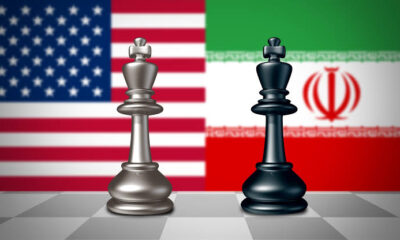
The crude market has been hit by wild volatility since the United States and Israel began striking Iran at the end of last month, with Tehran retaliating by attacking targets across the oil-rich Gulf and effectively shutting down the Strait of Hormuz.

The Strait normally carries about 20 per cent of the world’s oil and gas supplies. According to AFP, the IEA announcement came as leaders of the Group of Seven advanced economies discussed the economic fallout from the US-Israeli war with Iran, now into its second week, at a video conference meeting chaired by French President Emmanuel Macron.

Macron, whose country holds the rotating presidency of the G7 advanced economies, urged US President Donald Trump and other G7 leaders to coordinate to open the strait “as soon as possible”.

At the same time, he said that the strait being choked “in no way” justifies lifting the sanctions imposed on Russia over the invasion of Ukraine. “The consensus was that we should not change our position on Russia and should maintain our efforts on Ukraine,” said Macron.

The PUNCH observed that crude oil hovered around $90 per barrel on Wednesday.

Meanwhile, filling stations lowered their pump prices yesterday to reflect the N100 reduction from the petrol gantry price on Tuesday. Petrol sold for prices ranging from N1,130 to N1,150. However, a few filling stations still sold petrol at higher rates.

punch.ng

FOLLOW US ON:

FACEBOOK

TWITTER

PINTEREST

TIKTOK

YOUTUBE

LINKEDIN

Continue Reading

Business

‘Every Lagos resident must file annual tax returns before March 31’ LIRS says

Published

on

The Special Adviser to the Executive Chairman of the Lagos State Internal Revenue Service (LIRS), Abideen Akande, has disclosed why filing an annual tax return is compulsory for every Lagos resident.

He also revealed penalties for defaulters and the intent of the tax reform.

In an interview with Helen Oji for Guardian Nigeria, Akande said: “Filing of returns allows the tax authority to know how much you have earned in the preceding year and how much tax, if any, you have already paid in advance. Nigeria operates a self-assessment tax system. This means that you voluntarily declare your income for a defined period.”

He continued: “Filing of returns by individuals involves disclosing the income you earned in the previous year because that year has already ended.

“The interesting thing is that people often talk about constitutional rights, but shy away from constitutional obligations.

“Unlike the filing by employers that is done in January, which is predicated only on statutory provisions, filing by individuals is actually predicated on both the Constitution and the law. That tells you how important it is. In any organised society, you must have a tax system. As the saying goes, ‘aside from taxes, the only other certainties are death and change.’ So, tax compliance is inevitable.

“Here in Nigeria, it is based on self-assessment. You declare how much you earned. If you have already paid some tax in the preceding year, or if tax was deducted from your income at source, you disclose it to the tax authorities. Then, of your own volition, you may say: ‘This is how much I earned, and this is how much has already been deducted from me.’ If you still owe the State government, say, N5 or N10, you go ahead and pay it.

See also  NNPC eyes 20% stake in Dangote refinery

“If you cannot pay immediately, you can approach the tax authorities and request a payment plan. For instance, you may say: ‘Please allow me to pay N3 now, N3 next month, and N4 later.’ If the tax authority is satisfied that you are genuinely facing financial challenges, it may approve the arrangement. But if it believes you are simply trying to evade payment, it may decline your request and proceed to recover the money, using the provisions available under the law.”

He added that filing tax return is “not optional” rather it is a must.

He said: “Even if by your own assessment, you believe you do not owe the government any money, you are still expected to file. For example, you may indicate that all the income you earned last year was below N840,000, which is around the annual equivalent of the minimum wage threshold. In that case, you would automatically not be liable to pay tax.

“However, you must still declare that you earned N800,000 from different sources.
The government has set a threshold below which it does not tax the poor; your tax liability in that situation would be zero, but you still need to inform the government that you earned that amount of money you claimed.”

On where to file tax returns, he said: “You simply go to the e-tax platform at e-tax.lirs.net. You input your details, and the system guides you to the filing page. It shows where to enter your income, your expenses, and any taxes that may have been withheld from you. Remember that the form called ‘Form A’ is a declaration of income and claim for reliefs.

See also  FG revokes 5% telecom tax on voice, data services

“Now, regarding what we are filing: it is the income of the preceding year. Since we are in 2026, you will file income earned from January 1, 2025, to December 31, 2025. You must disclose all income sources: salary, side businesses, rent and even investment income like dividends.

“Dividends are usually taxed at source, so the tax deducted is final. For instance, if you received N100,000 in dividends from BUA Cement, the company would already have deducted the applicable tax before payment. You still declare the income, but it will not be taxed again.

“This helps the tax authority to understand the full size of economic activity in the state, which also contributes to measuring the Gross Domestic Product (GDP) of Lagos State, including household economic activities.”

He added that “the filing window opens from January 1 and the deadline is March 31.”

As for the penalty for non-complainace, he said, “Under the new law, a taxable person who fails or refuses to file returns, or knowingly submits incomplete or inaccurate returns, is liable to an administrative penalty. The penalty is N100,000 for the first month of default and N50,000 for each subsequent month until compliance is achieved. N100,000 can buy your internet data for an entire year. So, it makes more sense to comply than to pay such penalties.

FOLLOW US ON:

FACEBOOK

TWITTER

PINTEREST

TIKTOK

YOUTUBE

LINKEDIN

Continue Reading

Business

Pure Water producers announce increment in price of bag

Published

on

The Kano State chapter of the Association of Table Water Producers (ATWAP) has announced an upward review in the price of sachet water, popularly known as “pure water,” citing rising production costs.

In a statement, the Public Relations Officer of the association, Anas Idris Hassan said the price of a bag of sachet water, previously sold at N220 has now been adjusted to a minimum of N300 across the state.

Hassan explained that the decision followed what he described as an unsustainable increase in the cost of essential production materials, which he said has risen by about two-thirds.

According to the association, the price of printing film used for packaging has climbed to N3,700, while the cost of gas and fuel has reached N1,500 per litre.

The association also noted that the persistent lack of stable electricity has forced most factories to depend heavily on generators, further increasing operational expenses.

Hassan described the review as a last-resort aimed at ensuring the continued availability of safe drinking water for residents of the state.

ATWAP Chairman, Ahmad Bala Hudu said the adjustment was necessary to prevent the collapse of the sachet water production industry in the state.

Despite the price increase, Hudu warned producers against compromising on water quality, stressing that all members must maintain strict purification standards.

He said reverse osmosis systems and other water treatment processes must be properly maintained to ensure the safety of consumers.

The chairman added that the association is working closely with health authorities to conduct inspections of production facilities across the state.

See also  PDP consensus deal shatters as Lamido rejects Turaki as chairman

He warned that any producer found violating health regulations or bypassing approved standards would be handed over to the appropriate law enforcement agencies.

The association appealed to residents to show understanding over the price adjustment, particularly as the development comes during the ongoing holy month of Ramadan.

FOLLOW US ON:

FACEBOOK

TWITTER

PINTEREST

TIKTOK

YOUTUBE

LINKEDIN

TUMBLR

INSTAGRAM

Continue Reading

Trending