Connect with us

Business

Oyedele reveals how tax reform will protect low-income Nigerians

Published

on

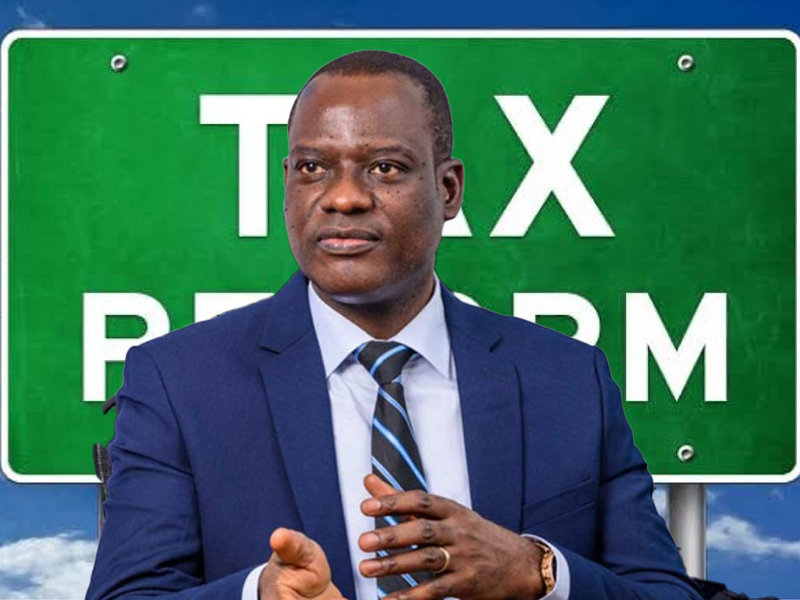
The Chairman of the Presidential Committee on Fiscal Policy and Tax Reforms, Taiwo Oyedele, has clarified that small-scale investors in the capital market are fully exempted from paying capital gains tax, while the 2026 tax reform law is aimed at protecting low-income earners and increasing disposable income.

Oyedele made the disclosure at the Cowry Quarterly Economic Discourse themed “Nigeria in 2026: Will Politics Trump Economic Reform?” where he addressed concerns and misconceptions surrounding the new tax regime. According to him, the law provides automatic capital gains tax exemptions for individuals whose total proceeds from asset disposal do not exceed N150m, provided the gain is not more than N10m within 12 months.

“The law says everyone is entitled to an exemption on capital gains tax. If the proceeds are not more than N150m and the gain is no more than N10m in 12 months, the exemption is automatic, with no explanation and no conditions attached,” Oyedele said.

He added that pension fund administrators and real estate investment trusts also enjoy exemptions, provided the proceeds are reinvested. High-net-worth individuals only become liable to capital gains tax when they exit investments permanently without reinvesting.

“If a multi-billionaire sells shares worth N2bn and decides not to reinvest, then tax is payable. But if the proceeds are reinvested, the law allows that exemption. What you pay instead is a minimal transaction cost, which also stimulates market activity,” he explained.

Oyedele described Nigeria’s current capital gains tax framework as one of the most competitive globally, noting that it encourages reinvestment, liquidity, and growth in the capital market. He also assured investors that the committee is drafting implementation regulations to clarify grey areas, while any proposed amendments requiring legislative action will be forwarded to President Bola Tinubu for consideration.

The tax expert further noted that most young Nigerians investing in digital and virtual assets operate at very small scales, making taxation concerns largely misplaced. “These young people are not investing millions of dollars. They invest $50, $80, and $200. That is what adds up. Meanwhile, capital market investments offer better returns, even in dollar terms, and they are fully exempted,” he said.

See also  US expands travel restrictions, adds Nigeria to list of countries

Oyedele warned that misinformation has discouraged youth participation in the stock market, with many wrongly believing that investment returns attract up to 30 per cent tax. “If you ask young people on the street, they will tell you the stock market is taxed at 30 per cent because nobody is telling them they are exempted,” he said.

He also highlighted the broader objectives of the 2026 tax reform law, saying it seeks to stop the taxation of poverty, protect low-income earners, and ensure that Nigerians with a higher capacity to pay bear a fairer share of the tax burden. Under the new framework, Nigerians earning the national minimum wage are fully exempt from personal income tax, while the threshold for taxable income has been significantly raised after allowable deductions and reliefs.

“The N800,000 people talk about is taxable income, not gross income. By the time you remove deductions and allowances, that translates to about N1m to N1.2m gross income. And even at that, anyone earning the minimum wage pays no tax at all,” Oyedele said.

He recalled that nationwide data previously presented to the government showed that about 96 per cent of personal income tax in Nigeria came from low-income earners, a situation he described as inequitable and economically dangerous. “We were taxing poverty. That is not how a functional economy works,” he said.


Continue Reading
Click to comment

Leave a Reply

Your email address will not be published. Required fields are marked *

Business

Amazon to cut 16,000 jobs worldwide

Published

on

Amazon said Wednesday that it would be cutting 16,000 jobs worldwide as part of a restructuring announced in October, when the e-commerce giant had already flagged plans to cut its workforce by 14,000 posts.

The jobs cuts are aimed at “reducing layers, increasing ownership, and removing bureaucracy,” senior vice president Beth Galetti said in a statement.

Media reports from October had said the roughly 30,000 job cuts planned in total would impact nearly 10 percent of the 350,000 office jobs at Amazon, without affecting the distribution and warehouse workers that make up the bulk of its 1.5 million employees.

At the time the company refused to comment on the reports, which said they came amid increased investments in artificial intelligence.

Amazon did not give any breakdown of the latest job cuts on Wednesday, saying only that “every team will continue to evaluate the ownership, speed, and capacity to invent for customers, and make adjustments as appropriate.”

The company will release its full-year 2025 results on February 6, when it will hold a conference call that will be broadcast live.

punch.ng

FOLLOW US ON:

FACEBOOK

TWITTER

PINTEREST

TIKTOK

YOUTUBE

LINKEDIN

TUMBLR

INSTAGRAM

See also  The Rise and Fall of Volkswagen in Nigeria’s Auto Industry
Continue Reading

Business

Multi-Trex gets NGX nod to fix shareholding shortfall

Published

on

Multi-Trex Integrated Foods Plc has secured approval from the Nigerian Exchange to take steps aimed at increasing its public shareholding, following a recapitalisation that left its free float below the Main Board requirement.

According to a statement signed by the Company Secretary, Sogunle Adekunle, on Wednesday, NGX Regulation Company granted the company a 24-month moratorium, ending 14 January 2028, to restore its free float to at least 20 per cent of issued share capital or a market capitalisation of 20bn, whichever is lower.

This extension provides the company with additional time to comply with regulatory requirements while implementing strategic plans to increase shareholder participation.

The recapitalisation, which followed a seven-year cessation of operations, involved Messrs N-Foods Universal Concept Limited injecting capital to settle obligations to the Asset Management Corporation of Nigeria.

As a result, N-Foods Universal Concept Limited now controls 70 per cent of Multi-Trex’s issued share capital, leaving the company’s public free float at 7.23 per cent, valued at N117.46m, according to the 2024 audited financial statements.

In a statement to shareholders, the company emphasised its commitment to maintaining its listing on the NGX and assured investors that it is actively exploring strategies to increase the public free float.

The board warned that failure to meet the NGX threshold within the extension period could result in trading suspension or potential delisting of the company’s securities.

The statement read, “While this recapitalisation successfully stabilised the Company, it resulted in a contraction of the Company’s public free float. According to our 2024 Audited Financial Statements, our Company’s free float stood at 7.23% (with a value of N117,457,100.64). This is below the NGX Main Board requirement, which mandates a free float of either 20% of issued share capital or a market capitalisation of N20 billion.

See also  Ensure Jonathan’s safe return to Nigeria, Reps tell FG

“​In view of the above, the Company applied to the NGX for an extension of time to comply with the free float threshold. We are pleased to announce that the NGX Regulation Company (NGX RegCo) has conditionally granted the Company a 24-month moratorium, ending on January 14, 2028, to take the necessary steps to restore the free float to the required level.”

The management expressed appreciation to shareholders for their continued patience and support during the company’s recovery phase, highlighting the strategic measures undertaken to strengthen operations and compliance with market regulations.

Multi-Trex Integrated Foods’ NGX approval marks a milestone in its ongoing business recovery, giving the company a clear regulatory pathway to enhance public participation in its shareholding while ensuring compliance with market standards.

Continue Reading

Business

Voltage disturbance hits Gombe substation, triggered partial grid collapse — NISO 

Published

on

The national electricity grid experienced a voltage disturbance originating from the Gombe Transmission Substation on Tuesday morning, the Nigerian Independent System Operator has confirmed, clarifying that the event affected only part of the grid and did not result in a total collapse, contrary to some media reports.

In a statement titled “Update on Partial System Disturbance on the National Grid”, NISO said the incident occurred at approximately 10:48 a.m., rapidly propagating across the network and impacting the Jebba, Kainji and Ayede Transmission Substations.

It noted that the disturbance caused the tripping of some transmission lines and generating units, resulting in what the operator described as a partial system collapse.

Recall that PUNCH Online reported that the power grid crashed again on Tuesday, the second time in four days.

The power generation dropped to just 39 megawatts at 11 a.m., down from 3,825 MW as of 10 a.m.

Our team monitoring the situation reported that power generation had peaked at 4,762 MW as of 6 a.m. on Tuesday.

Also, EkoDisCo, in a statement on Tuesday, informed its customers of a system collapse that resulted in power loss.

This is the second grid collapse in January 2026 and the third in less than one month. The national grid previously collapsed on December 29, 2025, and more recently on Friday, January 23, 2026.

As the grid collapsed on Tuesday, load allocation to the distribution companies was 0.00 MW, indicating that no Disco was supplying electricity at the time of the incident.

Confirming the incident, the System Operator, which manages the transmission network and ensures stability across the country, attributed the prompt restoration to coordinated control room interventions and automated protection mechanisms embedded across the grid.

See also  N15bn Benue brewery set for inauguration in October

NISO said, “The Nigerian Independent System Operator wishes to state that at approximately 10:48 hours on January 27, 2026, the national grid experienced a voltage disturbance which originated from the Gombe Transmission Substation.

“The voltage disturbance rapidly propagated across the network, affecting Jebba, Kainji, and subsequently Ayede Transmission Substations. The event was accompanied by the tripping of some transmission lines and generating units, resulting in a partial system collapse.

“Appropriate corrective actions were immediately implemented to stabilise the system and restore normal operations. Restoration, which began at about 11:11 am, has since been completed. The incident only affected part of the grid; therefore, not a total collapse as reported by some media organisations. Additional information can be obtained from our website: www.niso.org.ng.

“The national grid has been fully restored, and electricity supply across the affected areas has since returned to normal.”

punch.ng

FOLLOW US ON:

FACEBOOK

TWITTER

PINTEREST

TIKTOK

YOUTUBE

LINKEDIN

TUMBLR

INSTAGRAM

Continue Reading

Trending