Connect with us

Sports

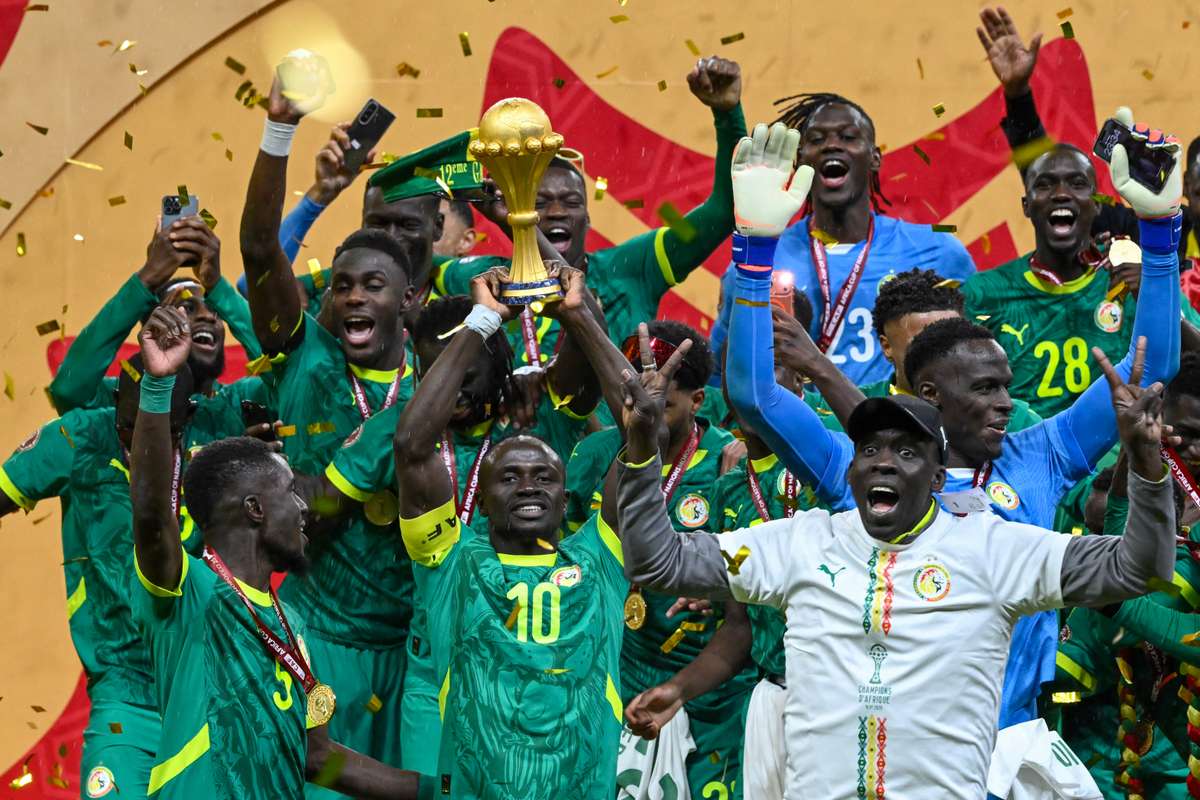
Drama as Senegal beat Morocco to claim AFCON title

Published

on

Senegal won their second Africa Cup of Nations title in dramatic fashion on Sunday after defeating hosts Morocco 1–0 following extra time at the Prince Moulay Abdellah Stadium in Rabat, in a final that descended into chaos and controversy, The PUNCH reports.

The Teranga Lions, playing their fourth AFCON final and first since 2021, overcame the Atlas Lions, who were contesting only their second final since 2004, to lift the trophy in a match marked by contentious refereeing decisions, a pitch protest, and a decisive goal from Pape Gueye.

Senegal had enjoyed a relatively smooth run to the final, playing all six of their previous matches in Tangier, while Morocco were playing their seventh game in Rabat.

Despite this fatigue, the host nation, who became the 15th African nation to reach a final on home soil, had the support of a raucous crowd and were aiming to emulate recent successful hosts such as Tunisia in 2004, Egypt in 2006, and Ivory Coast in 2023, all of whom lifted the trophy after reaching the final at home.

The match itself was cagey in the early stages, with both teams feeling each other out. Senegal’s Sadio Mané and Morocco’s Brahim Diaz tested the respective goalkeepers, while set-pieces became a frequent feature of the game as defenders and attackers jostled for advantage.

Ismaïla Sarr and Nicolas Jackson created early chances for the Teranga Lions, but Yassine Bounou and Édouard Mendy in the respective goals were alert.

Morocco’s Ayoub El Kaabi and Achraf Hakimi sought to penetrate Senegal’s defence, but Senegal’s organised backline, marshalled by El Hadji Malick Diouf, held firm.

See also  Victor Osimhen breaks record, becomes Nigeria’s top Champions League goal scorer

The drama intensified deep into stoppage time at the end of the second half. Senegal thought they had scored a late winner when Idrissa Gueye’s strike hit the post and Ismaïla Sarr nodded home the rebound, only for the goal to be disallowed.

DR Congo referee Jean-Jacques Ngambo ruled that Gueye had fouled Achraf Hakimi in the build-up, leaving Senegal furious as the whistle had already blown before the ball crossed the line, preventing a VAR review.

Minutes later, the controversy escalated further when Morocco were awarded a penalty after a VAR check adjudged El Hadji Diouf to have fouled Brahim Diaz.

In protest, Senegal manager Pape Thiaw instructed his players to leave the pitch. Only Mané remained as the game was delayed for approximately 16 minutes.

Brahim Diaz’s ensuing penalty was a tame chip straight into the arms of Édouard Mendy, sending the contest into extra time and giving Senegal a lifeline.

In the fourth minute of the first period of extra time, Pape Gueye capitalised on a fast break, receiving a pass from Idrissa Gueye and rifling a left-footed shot into the top right corner of the net to finally break the deadlock.

Morocco pressed desperately for an equaliser, bringing on fresh legs including Ilias Akhomach and Hamza Igamane, but Senegal’s defence and Mendy’s commanding presence in goal ensured the lead was protected.

The remainder of extra time saw a flurry of attacks and blocked shots. Cherif Ndiaye, Mané, and Pape Gueye all tested Bounou, who produced a series of important saves, while Morocco’s El Khannouss, El Aynaoui, and En-Nesyri were denied by Senegal’s defenders and quick reactions from Mendy.

See also  Golden Eaglets battle Ghana’s Black Starlets for U-17 AFCON ticket

Senegal’s victory was their sixth win at this edition of the tournament, marking their highest single-edition tally of victories.

They now add a second AFCON title to their record, joining their 2021 success, while Morocco’s heartbreak continues as they were denied the chance to emulate previous victorious hosts. The match will also be remembered for the unprecedented walk-off by the Senegal players and the missed penalty by Diaz, which might have altered the outcome.

As Gueye’s decisive strike ensured Senegal emerged as deserved champions in what will go down as one of the most dramatic finals in recent African football history, Morocco, despite the disappointment and controversy that trailed them from the group stage, remain a formidable force, and their run to the final will be seen as a positive platform for future tournaments.

punch.ng

FOLLOW US ON:

FACEBOOK

TWITTER

PINTEREST

TIKTOK

YOUTUBE

LINKEDIN

TUMBLR

INSTAGRAM

Continue Reading
Click to comment

Leave a Reply

Your email address will not be published. Required fields are marked *

Sports

Nsofor advises Osimhen to leave Galatasaray

Published

on

Former Super Eagles forward Obinna Nsofor has urged Victor Osimhen to leave Galatasaray this summer, insisting that a move to a club capable of challenging for the UEFA Champions League is the only thing standing between the Nigerian striker and a place among Europe’s elite.

Nsofor, who represented Nigeria at the 2008 Beijing Olympics where the Super Eagles won silver, made his position clear while acknowledging the Turkish giants’ status as a major club.

“Victor Osimhen has done enough at Galatasaray. If he truly wants to become the best striker in the world, then he must move to a club that can compete seriously for the UEFA Champions League. Right now, the only thing separating him from the very top is winning at the highest level in Europe,” Nsofor said on Brila in quotes shared on X on Thursday.

“Galatasaray is a big club, nobody can deny that, but when you talk about clubs expected to win the UEFA Champions League, they are not among the favourites. Osimhen is already at the level where he should be competing with the very best strikers every single season.”

Osimhen, 27, has enjoyed a remarkable two-season spell at Galatasaray, scoring 59 goals in 74 appearances and helping the club win three trophies, including a fourth consecutive league title secured last weekend with a brace in a 4-2 win over Antalyaspor. This season alone, the Nigerian has registered 15 goals and five assists in 22 league appearances.

The striker first rose to prominence at the 2015 FIFA U-17 World Cup, where he led Nigeria to a fifth title and finished as the tournament’s top scorer with 10 goals, a record that still stands. He later shone at Lille before moving to Napoli, where he was instrumental in the club’s first Serie A title in 33 years during the 2022/23 season, finishing as top scorer and placing eighth in the Ballon d’Or.

See also  AFCON 2025: Morocco seeks CAF, FIFA intervention after Senegal walk-out

Interest in Osimhen ahead of the summer window is considerable, with Arsenal, Manchester United, Real Madrid and Barcelona all linked with the forward.

Mourinho, currently in charge of Benfica, is reported to be in talks with Real Madrid ahead of a potential return. The Portuguese manager has previously compared Osimhen to Didier Drogba and faced him regularly during his time as AS Roma manager.

A move to Chelsea broke down in 2024, while Osimhen also rejected a lucrative Saudi Arabia offer before choosing Galatasaray. Now entering the prime years of his career, the expectation is that a return to one of Europe’s biggest leagues is imminent.

punch.ng

FOLLOW US ON:

FACEBOOK

TWITTER

PINTEREST

TIKTOK

YOUTUBE

LINKEDIN

INSTAGRAM

Continue Reading

Sports

Scientists warn FIFA over extreme heat risks ahead of 2026 World Cup

Published

on

Scientists and climate experts have warned that players and fans could face dangerous heat conditions during the 2026 FIFA World Cup, urging FIFA to strengthen its safety measures before the tournament begins.

As reported by BBC Sport on Thursday, in an open letter signed by medical experts, climate researchers, and sports scientists, the group called on FIFA to adopt stricter heat protection standards proposed by FIFPRO, the global football players’ union.

The experts warned that rising temperatures across the United States, Canada, and Mexico, the three host nations for the 2026 tournament, could place athletes and spectators at serious risk.

“Player safety is an immediate and urgent concern because things can go wrong very quickly when people overheat,” said Andrew Simms, who coordinated the letter.

“We’re worried that FIFA is playing recklessly with the health and safety of players,” Simms added.

The concerns come after new analysis by the World Weather Attribution group found that around one quarter of World Cup matches could be played in temperatures above 26°C Wet Bulb Globe Temperature (WBGT), a key measure used to assess heat stress.

Scientists also warned that approximately five matches could exceed 28°C WBGT, conditions that FIFPRO considers unsafe for professional football.

Experts say the risk of extreme heat at the tournament has nearly doubled compared to the 1994 World Cup, which was also hosted in North America.

In addition to heatwaves, scientists warned that thunderstorms and wildfire smoke could also affect matches during the summer tournament.

See also  Adams confident ahead Morocco clash

The scientists hope FIFA will revise its policies before the tournament begins next summer.

In response, FIFA said it would implement a “tiered heat mitigation model” during the competition, with safety measures adjusted according to real-time weather conditions.

A FIFA spokesperson said the organisation would provide dedicated meteorological monitoring across host cities, using WBGT readings and heat indexes to guide decision-making during matches.

FIFA also stated that kickoff schedules had been designed with climate conditions in mind, with efforts made to avoid matches during the hottest parts of the day and to prioritize warmer fixtures in covered stadiums.

The governing body added that it would continue working with medical experts and local authorities to ensure what it described as a “safe and resilient” tournament.

However, critics argue that climate change is making summer sporting events increasingly dangerous, raising broader questions about the future of major tournaments in extreme weather conditions.

punch.ng

FOLLOW US ON:

FACEBOOK

TWITTER

PINTEREST

TIKTOK

YOUTUBE

LINKEDIN

INSTAGRAM

Continue Reading

Sports

Jason Collins, first openly gay NBA player, dies at 47

Published

on

Former NBA player Jason Collins has died at the age of 47 following a battle with brain cancer, his family has announced.

Collins passed away after what his family described as a “valiant fight” with glioblastoma, an aggressive and inoperable form of brain cancer.

As reported by the BBC on Wednesday, the announcement was shared through the National Basketball Association.

He revealed in 2025 that he had been diagnosed with the disease after experiencing difficulties with concentration. Doctors later confirmed the presence of a rapidly spreading brain tumour, which he described as “a monster with tentacles spreading across the underside of my brain.”

At the time of his diagnosis, Collins said he was undergoing treatment to slow the progression of the illness, including targeted chemotherapy and medication such as Avastin, as well as specialist treatment abroad.

NBA Commissioner Adam Silver paid tribute to Collins, saying his influence extended far beyond basketball.

“Jason Collins’ impact and influence extended far beyond basketball as he helped make the NBA, WNBA, and larger sports community more inclusive and welcoming for future generations,” Silver said.

He added that Collins would be remembered not only for breaking barriers but also for his kindness and humanity.

Collins made history in 2013 when he became the first active male athlete in a major American professional team sport to publicly come out as gay.

His announcement, published in Sports Illustrated, was widely regarded as a landmark moment for LGBTQ visibility in sport.

At the time, Collins was a free agent, and it was unclear whether his decision would end his NBA career. He later returned to the league, rejoining the Brooklyn Nets, the team with which he began his career.

See also  Taribo charges Flamingos to bring home World Cup trophy

Over a 13-season NBA career, Collins played for six teams, including the New Jersey Nets, Atlanta Hawks, and Boston Celtics. Known for his defensive role at center, he was respected as a steady presence in the locker room.

The Nets said they were “heartbroken” by his death, praising both his contributions on the court and his wider impact on the sport.

“Those who were around Jason every day knew him not just as a competitor, but as a genuinely kind, thoughtful person,” the team said. “His courage and authenticity helped move the game—and the world—forward.”

After retiring in 2014, Collins was named among Time Magazine’s 100 most influential people. He later continued advocacy work for inclusion in sport and spoke at the 2016 Democratic National Convention alongside his twin brother and fellow former NBA player Jarron Collins.

Former Stanford coach Mike Montgomery described Collins as one of the university’s great players and said his passing marked a “sad day” for basketball.

Collins is being remembered as a trailblazing athlete whose openness and courage helped reshape attitudes toward LGBTQ players in professional sports.

punch.ng

FOLLOW US ON:

FACEBOOK

TWITTER

PINTEREST

TIKTOK

YOUTUBE

LINKEDIN

INSTAGRAM

Continue Reading

Trending