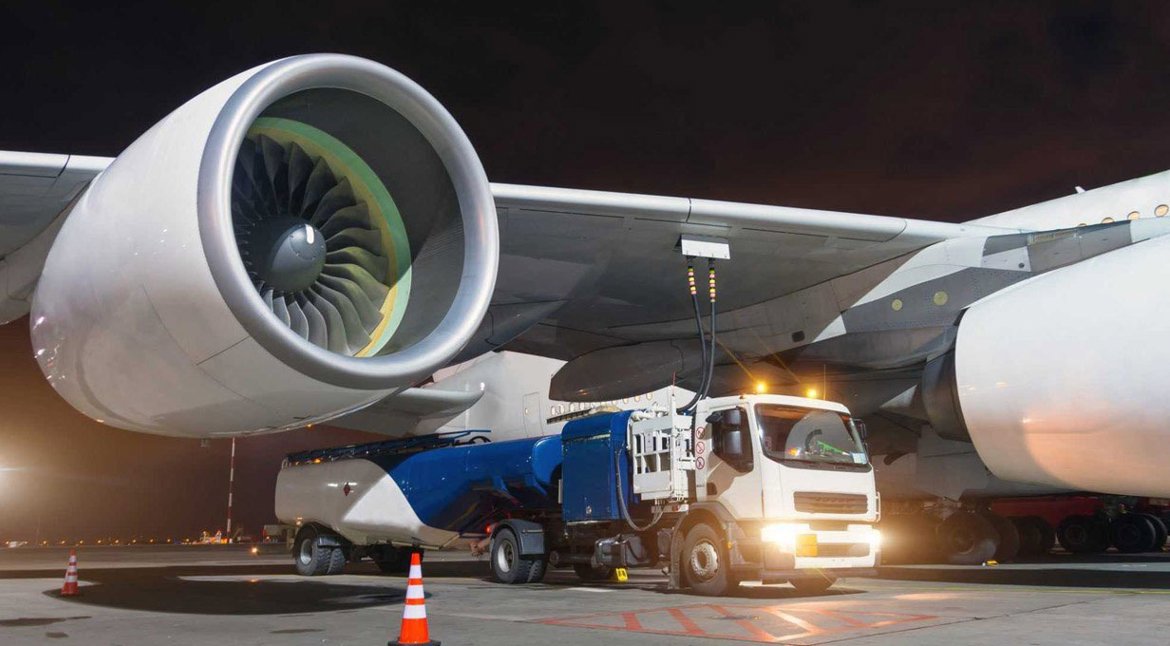
Petrol importation remained the dominant source of fuel consumed in Nigeria in 2025, accounting for 62.47 per cent of the country’s total Premium Motor Spirit consumption.
This trend persisted despite the commencement of operations, steady ramp-up in production and distribution of petrol by domestic refineries, notably the Dangote Petroleum Refinery, alongside state-owned refineries and several modular facilities, as revealed in the latest midstream and downstream sector factsheet released by the Nigerian Midstream and Downstream Petroleum Regulatory Authority.
According to the newly released NMDPRA factsheet on the state of the midstream and downstream petroleum sector, as analysed by our correspondent on Sunday, total national petrol consumption by Nigerians stood at approximately 18.97 billion litres in 2025, with oil marketing companies accounting for 11.85 billion litres through imports, highlighting the market’s continued dependence on foreign supply.
This means that nearly two-thirds of petrol consumed by Nigerians in 2025 was sourced from imports, while domestic refineries contributed about 7.54 billion litres, representing 37.53 per cent of total consumption, the regulator stated.
These totals were derived by applying the daily average consumption to the number of days in each month. The data, which are based on volumes trucked into the domestic market, underscore Nigeria’s continued dependence on fuel imports, even as the Dangote refinery, currently the country’s only operational large-scale refinery, ramped up supply during the year.
Meanwhile, the volume of petrol imports is expected to decline significantly in 2026 if the Federal Government proceeds with the planned implementation of a 15 per cent import tariff on Premium Motor Spirit, slated to take effect in the first quarter of 2025, in line with a policy memo approved by President Bola Tinubu.
For decades, Nigeria, Africa’s largest crude oil producer, relied almost entirely on imported petrol following the prolonged underperformance of its state-owned refineries in Port Harcourt, Warri, and Kaduna. This dependence deepened after the refineries became largely dormant, forcing the country to meet domestic demand through imports financed with scarce foreign exchange and, for years, supported by a costly petrol subsidy regime.
The structure of the market began to shift in late 2024 with the commencement of operations at the 650,000-barrel-per-day Dangote Petroleum Refinery, widely regarded as a potential turning point for Nigeria’s downstream sector. The refinery, alongside smaller modular refineries and limited output from state-owned facilities, was expected to significantly cut import volumes, improve energy security, and stabilise fuel supply across the country.
However, regulatory data from the regulatory Authority show that while domestic refining and distribution improved steadily in 2025, imports remained dominant. The NMDPRA attributes this to factors including the gradual ramp-up of refining operations, crude supply arrangements, logistics constraints, and demand fluctuations following the full deregulation of petrol pricing.
2025 represents the first full year of large-scale domestic Premium Motor Spirit supply, limiting year-on-year comparisons, particularly as the Dangote Petroleum Refinery only commenced petrol distribution in the final quarter of 2024.
Regulatory data showed that between October and December 2024, total petrol consumption stood at 4.77 billion litres, out of which imports accounted for 3.61 billion litres, while domestic refineries supplied about 1.17 billion litres.
Against this backdrop, the latest midstream and downstream factsheet provides one of the clearest regulatory snapshots yet of Nigeria’s petrol market in a post-subsidy environment, highlighting both the gains made in domestic supply and the structural challenges that continue to sustain the country’s reliance on imported fuel.
A breakdown of the factsheet showed that Dangote refinery accounted for virtually all domestic PMS supply in 2025, supplying an average of between 17 million and 32 million litres per day, depending on the month, and a total of 7.534.9 billion litres for the entire year.
Based on its supply framework with the regulator and the Federal Government, the Dangote Petroleum Refinery was expected to deliver about 600 million litres of petrol monthly, translating to an annual benchmark of 7.2 billion litres.
However, NMDPRA data showed that the refinery supplied 7.54 billion litres in 2025, representing a shortfall of about 336 million litres, or roughly 4.7 per cent below the annual target, despite improved output towards the end of the year.
In December 2025, domestic supply rose sharply to 32 million litres per day, the highest monthly average for the year, while total domestic deliveries reached 992 million litres, signalling gradual stabilisation of operations.
The factsheet showed that total petrol consumption fluctuated significantly throughout the year, rising from 1.60 billion litres in January to 1.97 billion litres in December, reflecting seasonal demand, logistics dynamics, and pricing conditions.
A month-on-month breakdown showed that Nigeria’s petrol consumption showed wide fluctuations throughout 2025, rising from 1.60 billion litres in January to 1.97 billion litres in December, representing an overall increase of about 23.7 per cent over the year.
Total consumption declined sharply by 11.6 per cent, from 1.60 billion litres in January to 1.41 billion litres in February, before rebounding by 11.8 per cent in March to 1.58 billion litres. Demand rose further in April to 1.66 billion litres, a 5.0 per cent increase, and peaked in May at 1.69 billion litres, up 1.8 per cent.
This was followed by a steep 14.6 per cent drop in June to 1.44 billion litres. Consumption recovered modestly in July (1.46 billion litres, up 1.6 per cent) and August (1.50 billion litres, up 2.5 per cent), before falling to its lowest level of the year in September at 1.31 billion litres, a 12.4 per cent decline.
Demand then surged by 33.8 per cent in October to 1.76 billion litres, dipped by 9.7 per cent in November to 1.59 billion litres, and climbed strongly by 24.4 per cent in December to 1.97 billion litres, the highest monthly level recorded in 2025.
Petrol imports by oil marketing companies and the Nigerian National Petroleum Company Limited tracked these consumption movements and remained the dominant source of supply throughout the year.
Imports rose from 765.7 million litres in January to 770 million litres in February, an increase of 0.6 per cent, before jumping by 15.5 per cent in March to 889.7 million litres. Volumes dipped slightly by 3.2 per cent in April to 861 million litres, but surged sharply in May to 1.20 billion litres, representing a 39 per cent increase and accounting for about 71 per cent of total consumption for the month.
Imports declined by 18.3 per cent in June to 978 million litres, rose again by 14.4 per cent in July to 1.12 billion litres, and fell by 26.9 per cent in August to 818.4 million litres. September imports dropped further by 16.3 per cent to 685.1 million litres, before climbing by 30.8 per cent in October to 895.9 million litres.
November recorded a sharp spike to 1.56 billion litres, a 74.4 per cent increase, making imports equivalent to almost 98 per cent of total consumption that month. Imports eased in December to 1.31 billion litres, down 16.3 per cent, but still represented about two-thirds of monthly demand.
Similarly, domestic refinery supply, largely from the Dangote Petroleum Refinery, showed a gradual but uneven improvement over the year. Supply rose from 592.1 million litres in January to 694.4 million litres in February, an increase of 17.3 per cent, and edged up further to 709.9 million litres in March, up 2.2 per cent. Output declined in April by 9.1 per cent to 645 million litres, and fell further in May by 11.1 per cent to 573.5 million litres.
The downward trend continued in June and July, with supply dropping to 543 million litres (down 5.3 per cent) and 511.5 million litres (down 5.8 per cent), respectively. Domestic supply rebounded in August by 20.0 per cent to 613.8 million litres, dipped slightly in September by 11.1 per cent to 545.6 million litres, and eased further in October to 530.1 million litres, down 2.8 per cent.
Output improved again in November to 585 million litres, a 10.4 per cent increase, before surging sharply in December to 992 million litres, representing a 69.6 per cent month-on-month rise and the strongest domestic supply performance of the year.
A further breakdown showed that in January, imports accounted for about 48 per cent of daily petrol consumption, while domestic refineries supplied around 37 per cent. Import dependence widened significantly in May, with marketers meeting about 71 per cent of daily demand, while domestic refineries contributed just 34 per cent. However, by December, domestic supply rose to about 50 per cent of daily consumption, narrowing the gap with imports, which accounted for roughly 66 per cent, reflecting the highest level of domestic participation recorded in 2025.
Imports consistently exceeded domestic supply in most months. In May, for instance, marketers imported 1.20 billion litres, representing about 71 per cent of total consumption for that month, while domestic refineries supplied just 573.5 million litres.
In contrast, December recorded the narrowest gap, with imports of 1.31 billion litres against the domestic supply of 992 million litres, as Dangote ramped up output and daily consumption rose to 63.7 million litres.
A further breakdown of the data showed that in January 2025, Nigeria recorded a daily average petrol consumption of 51.5 million litres, translating to 1.60 billion litres for the month. Of this volume, petrol importing marketers supplied an average of 24.7 million litres per day, amounting to 765.7 million litres. In comparison, domestic refineries delivered an average of 19.1 million litres daily, or 592.1 million litres in total.
In February, daily average consumption moderated to 50.4 million litres, with total monthly demand of 1.41 billion litres. Imports accounted for an average of 27.5 million litres per day, or 770 million litres, while domestic refineries supplied 24.8 million litres daily, amounting to 694.4 million litres.
For March, average daily consumption rose slightly to 50.9 million litres, bringing total demand to 1.58 billion litres. Petrol imports averaged 28.7 million litres per day, totalling 889.7 million litres, while domestic refineries supplied 22.9 million litres daily, or 709.9 million litres for the month.
In April, consumption increased further to a daily average of 55.2 million litres, with total demand of 1.66 billion litres. Importers supplied 28.7 million litres per day, amounting to 861 million litres, while domestic refinery output averaged 21.5 million litres daily, totalling 645 million litres.
Data for May showed average daily consumption of 54.4 million litres, translating to 1.69 billion litres for the month. Imports rose sharply to an average of 38.6 million litres per day, or 1.20 billion litres, while domestic refinery supply declined to 18.5 million litres daily, amounting to 573.5 million litres.
In June, daily average consumption fell to 48.0 million litres, with total demand of 1.44 billion litres. Petrol imports averaged 32.6 million litres per day, totalling 978 million litres, while domestic refineries supplied 18.1 million litres daily, or 543 million litres.
For July, average daily consumption declined slightly to 47.2 million litres, bringing monthly demand to 1.46 billion litres. Importers supplied 36.1 million litres per day, amounting to 1.12 billion litres, while domestic refineries delivered 16.5 million litres daily, totalling 511.5 million litres.
In August, daily consumption improved to 48.4 million litres, with a total demand of 1.50 billion litres. Imports averaged 26.4 million litres per day, or 818.4 million litres, while domestic refineries supplied 19.8 million litres daily, amounting to 613.8 million litres.
September recorded the lowest consumption levels of the year, with daily average demand at 43.8 million litres and total consumption of 1.31 billion litres. Import volumes averaged 22.1 million litres per day, totalling 685.1 million litres, while domestic refinery supply stood at 17.6 million litres daily, or 545.6 million litres.
In October, consumption rebounded sharply to a daily average of 56.7 million litres, translating to 1.76 billion litres for the month. Imports averaged 28.9 million litres per day, amounting to 895.9 million litres, while domestic refineries supplied 17.1 million litres daily, totalling 545.6 million litres.
For November, average daily consumption eased to 52.9 million litres, with total demand of 1.59 billion litres. Importing marketers supplied an average of 52.1 million litres per day, totalling 1.56 billion litres, while domestic refinery output averaged 19.5 million litres daily, amounting to 585 million litres.
In December, petrol consumption surged to its highest level of the year, averaging 63.7 million litres per day and reaching 1.97 billion litres in total. Imports accounted for an average of 42.2 million litres per day, or 1.31 billion litres, while domestic refineries recorded their strongest performance of the year, supplying an average of 32.0 million litres daily, totalling 992 million litres.
Since the Dangote Petroleum Refinery began phased commercial operations in late 2024, its officials and some industry stakeholders have repeatedly asserted that the facility has the capacity to satisfy Nigeria’s petrol needs and reduce, if not eliminate, the need for imports.
Built with an ambitious 650,000‑barrel‑per‑day capacity, the plant has been positioned by its backers as a potential game‑changer for Nigeria’s downstream petroleum sector
In a statement outlining the refinery’s production profile, Anthony Chiejina, Group Chief Branding and Communications Officer of Dangote Industries Limited, said the plant was already producing above current national demand. He stated:
“Our refinery is currently loading over 45 million litres of PMS and 25 million litres of diesel daily, which exceeds Nigeria’s demand.”
Chiejina added that the refinery’s output was supporting nationwide supply stability and reducing dependency on imported products, with improved local production helping to moderate foreign exchange outflows and strengthen the naira.
Recently, the National Publicity Secretary of the Independent Petroleum Marketers Association of Nigeria, Chinedu Ukadike, revealed that marketers had been sourcing all their petrol supplies from Dangote and that “nobody is importing now,” even during high‑demand periods such as the Christmas season. He said:
“Well, since Dangote has reduced his price, and we have not complained of a shortage of products. There is no importation. So all the supplies we are getting now are from Dangote.”
Also, in earlier remarks reported in 2025, the Dangote group chairman, Aliko Dangote, asserted that the refinery had sufficient refined products in storage to meet domestic needs, saying:
“Right now, we have more than half a billion litres in storage. The refinery is producing enough refined products, gasoline, diesel, and kerosene to meet all of Nigeria’s needs.”
However, these claims remain contested. While some marketers and refinery officials describe importation as unnecessary under current supply arrangements, others note that domestic refining capacity has not yet consistently matched national consumption, and that imports continue to play a role in bridging supply gaps.
Commenting in an earlier report, renowned energy economist Professor Wumi Iledare, noted that Nigeria’s reliance on imported petrol has declined but has not been eliminated. He also warned against claims that fuel importation has ended following increased domestic supply from the Dangote Petroleum Refinery.
In a personal note titled “Dangote Refinery, Petrol Imports, and Market Reality,” Iledare said recent assertions that Nigeria no longer imports petrol reflect “understandable optimism” but overstate the economic reality of the downstream oil market.
“Recent claims that petrol importation into Nigeria has ended because Dangote Refinery now meets domestic demand reflect understandable optimism, but they overstate economic reality.
Dangote Refinery has significantly improved domestic supply conditions and reduced Nigeria’s marginal reliance on imported petrol. However, neither Dangote Refinery nor petroleum marketers determine national supply outcomes,” he said.
Iledare, who also serves as Executive Director of the Emmanuel Egbogah Foundation, Abuja, acknowledged that the Dangote Refinery has significantly improved domestic supply conditions and reduced Nigeria’s marginal dependence on imported petrol.
However, he stressed that neither the refinery nor the petroleum marketers determines national supply outcomes. According to him, Nigeria’s downstream petrol market operates within an oligopolistic, import-parity–anchored framework, where prices and supply stability are shaped by the option to import, rather than the physical presence of imported cargoes.
“Nigeria’s downstream petrol market operates within an oligopolistic, import-parity–anchored framework, where prices and supply stability are disciplined by the option to import, not merely the act of importing.
Even when no petrol cargoes are landing, the credible threat of imports remains the market anchor. Importation also continues to serve as a risk-management tool for stock security, demand surges, logistics disruptions, and refinery operational risks,” Iledare said, adding that importation continues to function as a risk-management tool for stock security, demand surges, logistics disruptions, and refinery operational risks.
The energy economist further noted that the Petroleum Industry Act entrenches liberalisation and competition in the downstream sector, leaving no room for discretionary declarations that petrol imports have ended.
“The PIA does not permit discretionary declarations that imports have ended. Sustainable price stability and energy security arise from market discipline, infrastructure efficiency, foreign exchange liquidity, and regulatory credibility, not announcements,” he said.
Iledare argued that the appropriate policy narrative should focus on reduced marginal import dependence, rather than import elimination, warning that imprecise language could undermine policy credibility.
“The correct policy framing, therefore, is reduced marginal import dependence, not import elimination. Precision in language matters because credibility in energy policy is built on economic fundamentals, not celebratory headlines,” he added.
In his expert opinion, the Chief Executive Officer of petroleumprice.ng, Jeremiah Olatide, said the new data indicates that Nigeria’s domestic refining capacity has grown significantly over the past three years, rising from less than five per cent in 2022 to about 40 per cent in 2025.
Olatide, who disclosed this in a telephone conversation on Sunday, described the development as a major milestone in the country’s long-standing quest to reduce dependence on imported petroleum products.
“In 2022, local refining was less than five per cent. But three years later, it has increased to around 40 per cent according to NMDPRA. I think that is good, significant, and a big milestone,” Olatide said.
He explained that while the progress was commendable, Nigeria must push further to achieve meaningful macroeconomic stability. According to him, domestic refining must account for at least 70 per cent of national fuel consumption, with imports limited to 30 per cent.
“Local refining needs to be 70 per cent while import takes 30 per cent. That is the point where this would have direct influence on our economy, create more jobs, stabilise our naira, and deliver other benefits,” he stated.
Olatide noted that 2025 marked a turning point for the sector, largely driven by improved refinery performance and policy shifts aimed at boosting local supply.
He expressed optimism that subsequent industry reports would reflect further improvements. “By and large, I think in the year 2025, we have had a massive improvement and surge in local refining. Hopefully, subsequent reports will go up from the local refining angle, because that is what we need for economic stability,” he added.
He also identified crude oil availability as a critical constraint, particularly for the Dangote Refinery, which plays a dominant role in Nigeria’s refining landscape. Olatide said increasing crude allocation to the refinery could significantly reduce fuel imports.
“I hope in the new year, Dangote would have further access to crude, up from 30 to 40 per cent. More access to crude will really help, and then importation will reduce. The reason importation is still competing is largely because of pricing,” he explained.
Despite the positive outlook, Olatide raised concerns over conflicting production figures being reported by industry stakeholders. He pointed to recent claims by the new Chief Executive Officer of Dangote Refinery, David Bird, who said the refinery was loading about 1,000 trucks daily, equivalent to roughly 50 million litres of petroleum products.
“If you put those figures together, it suggests Dangote alone is doing about 60 to 70 per cent of our daily consumption,” Olatide said.
However, he noted that official figures from the NMDPRA paint a different picture. “NMDPRA is saying local refineries, including Dangote, are doing between 37 and 40 per cent. So clearly, there are conflicts in the reporting.”