Nigeria loses about N40tn annually to poor electricity supply, the Nigerian Independent System Operator, an agency of the Federal Government, has said, warning that unreliable power remains one of the biggest constraints to economic growth, industrial productivity, and job creation in the country.
The system operator noted that persistent outages continue to impose high costs on businesses and households, many of which are forced to generate their own electricity.
According to the organisation, reliable electricity remains one of Nigeria’s most important economic priorities, stressing that power outages cost Nigeria up to $29bn annually.
Converted at the prevailing exchange rate of N1,385 to a dollar, this translates to roughly N40.1tn in yearly losses to the economy. The operator added that the burden extends across all sectors, stating that businesses, manufacturers, and households spend billions each year generating their own electricity.
“Reliable electricity is one of Nigeria’s most important economic priorities. Power outages cost Nigeria an estimated $29bn annually. Businesses, manufacturers, and households spend billions each year generating their own electricity,” the system operator said in its latest industry report.
It emphasised that a stable power supply would unlock economic opportunities, noting that “a stable national grid unlocks economic growth, industrial productivity, and job creation”.
Despite the huge demand, the organisation said Nigeria generates significantly more electricity than is ultimately delivered to consumers due to structural bottlenecks across the value chain.
It disclosed that Nigeria generates approximately 45,000 to 50,000 megawatts of electricity daily, but the grid only takes 5,000 megawatts, which is about 10 per cent of total generation. “Nigeria generates approximately 45-50 GW of electricity daily, far more electricity than the grid can deliver. Yet only about 5GW currently reaches the national grid,” it said.
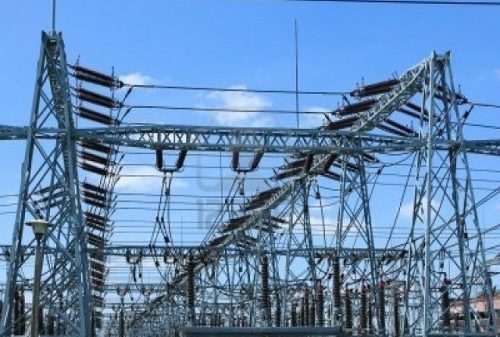
The operator attributed the shortfall to multiple challenges, saying, “The gap reflects constraints across the value chain, including transmission capacity limitations, distribution network constraints, and gas supply disruption.”
To address these issues, the system operator outlined its responsibilities, noting that NISO’s mandate is to strengthen grid reliability and accountability. It added that its duties include enforcing the national grid code, strengthening system dispatch and reliability, improving sector transparency and accountability, and supporting coordination across the electricity value chain.
The organisation stressed the urgency of reforms, stating that a stable national grid is essential for Nigeria’s economic future. It also quoted its board chairman, Adesegun Akin-Olugbade, as saying, “Electricity is, after all, a 19th-century technology, and we do not need rocket scientists to fix these problems.”
Making recommendations, the operator said the way forward is to digitalise the grid, strengthen infrastructure, diversify the energy mix, and enforce grid code compliance.
On the feats recorded in the past year of NISO’s creation, the organisation pointed to ongoing improvements in transmission infrastructure, noting that 82 new power transformers were commissioned between 2024 and 2025. It added that 8,500+ MVA additional transformer capacity had been added, while over 30 transmission projects were completed.
According to the operator, the national grid wheeling capacity now stands at approximately 8,700MW. The organisation further disclosed that the grid had recorded operational milestones in recent years, including a 5,802MW all-time peak generation in March 2025, a 129,370MWh record daily energy delivery, and 421 consecutive days without grid collapse during 2022–2023.
“These milestones demonstrate the potential of the system when operating conditions align,” it said.
The agency also highlighted progress in grid digitalisation through the SCADA/EMS programme, stating that there had been a “$1.16bn investment in grid digitalisation,” with over 3,000 kilometres of fibre optic network deployed and more than 100 substations equipped with SCADA technology, adding that the project had reached approximately 69 per cent completion.
It emphasised that improved monitoring would strengthen operations, noting that real-time monitoring enables faster decision-making and improved grid stability. The operator reiterated that bridging the gap between generation and delivery remains critical, stressing that Nigeria generates far more electricity than consumers receive, while transmission, distribution, and gas supply challenges continue to limit the amount of power that reaches the grid.
As Nigerians continue to grapple with widespread power outages blamed on gas constraints since the beginning of the year, the Transmission Company of Nigeria blamed multiple factors for low allocation, including generation companies’ output and requests by the DisCos. TCN said electricity load allocation to distribution companies is determined mainly by their daily requests.
So far, power generation has fallen far below 4,000MW, limiting the capacity of DisCos to supply electricity to their customers. Our correspondent reports that data from TCN’s distribution load profile as of 25 March 2026 showed that a paltry 2,908 megawatts was allocated to the 11 distribution companies.
While Nigerians experience persistent outages, several distribution companies keep apologising to customers and attributing the situation to reduced generation caused by gas constraints. The Minister of Power, Adebayo Adelabu, also apologised on Tuesday, acknowledging the disruptions and assuring Nigerians that efforts were ongoing to stabilise supply in a few weeks.
The minister attributed current blackouts to gas supply constraints affecting 75 per cent of Nigeria’s gas-fired plants. “Even the best turbines cannot operate without raw materials. Global gas shortages due to the Middle East crisis, local supply obligations, outstanding payments to gas suppliers, and pipeline repairs have all contributed to the recent decline in generation,” he said.
According to him, only two out of 32 power plants currently have firm gas supply contracts, while the rest rely on irregular supplies on a best-effort basis.
Experts speak
A Professor of Energy, Dayo Ayoade of the University of Lagos, blamed corruption and poor governance for the country’s electricity woes. According to him, the economy will continue to lose money and will not develop “provided we don’t take control of the power sector”.
Ayoade said the economy will continue to suffer because self-generation is too costly for the common man and small businesses.
“Until the power sector is put right, the economy will continue to suffer, Nigerians will continue to suffer, and there is no way out of this. Self-generation doesn’t work because it’s inefficient. The kind of resources you need to generate power, like gas, are out of the hands of private individuals or companies. So, it is very important that the government takes the lead on this,” he stated.
The professor said the way forward is for the government to undertake holistic reforms of the sector, calling for the removal of electricity subsidies.
“That reform requires us to tell one another the truth. Nigerians will have to pay more money for power. Tariffs must reflect the cost of delivering electricity. Also, creating new institutions like GAMCO and others all the time means there is a proliferation of institutions in the sector. We need to streamline the sector; we need to control corruption,” he said.
Ayoade added that governance is key to the power sector. “One of the reasons the sector is not working is poor governance. Billions of dollars were spent on power in the past with no appreciable electricity. We can’t continue down that way. There are too many loopholes and leakages. We have to address this,” he submitted.
The convener of PowerUp, Adetayo Adegbemle, reiterated that the sector is bleeding because bulk power users have exited the grid, making cost recovery a burden. He said operators may not be able to boost power generation in the face of low recovery.
“We have allowed the big consumers to escape the national grid, pushing the load of sustaining it onto residential consumers. The tariff becomes more expensive for them, while producers continue to seek alternatives, albeit more costly. The Federal Government should, as a matter of urgency, reverse this trend to boost power supply,” he said.
Adegbemle also noted that the electricity subsidy is no longer sustainable, saying the government ought to have found a way out of the burden. He emphasised that the subsidy affects the entire value chain, as the Federal Government has failed to fulfil its subsidy obligations.
punch.ng
FOLLOW US ON:
FACEBOOK
TWITTER
PINTEREST
TIKTOK
YOUTUBE
LINKEDIN