At a time Nigeria is battling what global agencies describe as a full-blown education emergency, a staggering N97,881,553,326.94 earmarked for basic education is lying idle in government vaults across states, a Sunday PUNCH investigation has revealed.
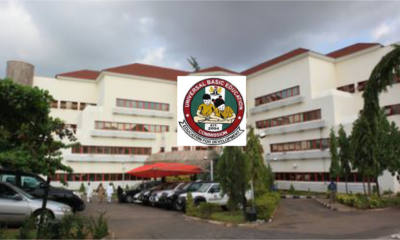
The funds, meant to support primary and junior secondary education through the Universal Basic Education Commission framework, remain unaccessed largely due to the failure of state governments to provide counterpart funding, a prerequisite for drawing down the grants.
Documents exclusively obtained through a Freedom of Information request by a legal team led by human rights lawyer, Femi Falana show that at least 21 states and the Federal Capital Territory have failed to access their allocations as of March 2026.
This is despite Nigeria’s worsening education crisis, with the country now hosting the highest number of out-of-school children globally.
Crisis in numbers
Data from UNICEF, corroborated by Nigeria’s Federal Ministry of Education and cited in multiple policy briefs between 2024 and 2026, puts the number of out-of-school children at approximately 18.5 million the highest in the world.
UNICEF notes that this figure represents nearly one in every five out-of-school children globally, with the majority concentrated in northern Nigeria, though the crisis increasingly affects southern states due to economic hardship and infrastructure deficits.
According to UNICEF’s 2025 Education Fact Sheet on Nigeria, key drivers of the crisis include poverty, insecurity, cultural barriers, weak education financing, and poor governance at the sub-national level.
The agency warned that unless urgent investments are made in foundational education, Nigeria risks “a generational catastrophe” with long-term consequences for economic growth, national security and social cohesion.
Yet, even as millions of children remain out of school, billions meant to address the crisis remain untouched.
How funds work
Under the UBEC intervention framework established by the UBE Act of 2004, the Federal Government provides annual matching grants to states to support basic education development.
However, states are required to provide 50 per cent counterpart funding before they can access the grants a mechanism designed to ensure ownership, accountability and sustainability.
Findings by The PUNCH show that this requirement has become a major bottleneck.
While some states have consistently met the condition, many others have failed to do so, leading to an accumulation of unaccessed funds year after year.
As of March 18, 2026, total unaccessed UBEC funds stood at ₦97.88bn.
Further analysis reveals that 2025 recorded the highest default in the history of the scheme, with ₦68.1bn left untouched in a single year.
Education policy analysts say this trend reflects a deeper governance problem.
Mapping the defaulters
The data analysis shows a concentration of defaults among a group of states with significant fiscal capacity, raising questions about priorities rather than resources.
Imo State tops the list with ₦10.6bn in unaccessed funds. Ogun follows with ₦9.7bn, while Rivers ranks third with ₦7.8bn.
Other major defaulters include Niger, Abia and Oyo states, each with over ₦7.1bn unaccessed.
The Federal Capital Territory also has ₦5.07bn in idle funds, while Ekiti, Bayelsa and Adamawa states each account for over ₦3.5bn.
In total, 21 states and the FCT failed to access their UBEC allocations a development expert describes as a “systemic failure of sub-national governance.”
‘Compliance is possible’
In contrast, 15 states have consistently accessed their UBEC funds in full.
These include Bauchi, Borno, Jigawa, Kaduna, Katsina, Plateau, Sokoto, Taraba and Yobe in the North, as well as Benue, Delta, Enugu, Kogi, Ondo and Osun states.
Their compliance, experts say, demonstrates that the counterpart funding requirement is not inherently unworkable.
Rather, it highlights disparities in political will, fiscal discipline and prioritisation.
Falana reacts
Human rights lawyer Femi Falana criticised federal and state authorities for failing to guarantee free basic education to millions of Nigerian children, despite existing laws and court rulings.
In a statement, Falana said the Child’s Rights Act (2003) and the Compulsory, Free Universal Basic Education Act (2004) clearly provide for free and mandatory education for children at primary and junior secondary levels across the country.
He, however, lamented that many state governments and the Federal Capital Territory had failed to access over ₦97bn available under the Universal Basic Education Commission fund as of March 2026.
“As of March 2026, the authorities of many state governments and the Federal Capital Territory have refused to access over N97bn from the Universal Basic Education Commission Fund. Apart from not accessing the UBE matching grant, some state governments have failed to properly utilise the funds for the purpose of development of infrastructure and improvement of the teaching and learning conditions in primary and junior secondary schools across the country,” Falana said.
“In spite of several judgments of the Ecowas Court and the Federal High Court, which have upheld the right of every Nigerian child to mandatory and free universal basic education, Nigeria has about 20 million out-of-school children. The members of the ruling class have consigned the children of poor citizens to illiteracy and ignorance.”
He explained that while the Federal Government provides funding through UBEC, states are required to contribute counterpart funding to access the grants, a condition many have not met.
Falana further alleged that even when funds are accessed, some states fail to deploy them effectively toward improving infrastructure and learning conditions in public schools.
“Some state governments have failed to properly utilise the funds for the development of infrastructure and improvement of teaching and learning conditions,” he stated.
The senior advocate also decried the rising number of out-of-school children in Nigeria, which he put at about 20 million, despite multiple court rulings affirming every child’s right to education.
“The members of the ruling class have consigned the children of poor citizens to illiteracy and ignorance,” he said.
Falana added that his team had formally requested information from the Universal Basic Education Commission on states’ compliance with the law, noting that the response had been received and reviewed.
He called for urgent action to ensure that all Nigerian children have access to free and compulsory basic education as guaranteed by law.
Governance failure
Education stakeholders who spoke with The PUNCH delivered scathing assessments of the situation, describing it as both a policy and moral failure.
A public analyst, Comrade Mashood Osho, said the refusal of state governments to provide counterpart funding reflects a troubling disregard for education.
“It is inexcusable that funds specifically allocated for basic education are left unused while millions of children are out of school,” he said.
“This is not about a lack of money. Many of these states spend billions on recurrent expenditure and political projects. The issue here is priority.”
Osho called for immediate sanctions against defaulting states.
“The Federal Government should begin to name and shame these states. There must be consequences. You cannot continue to deny children access to education without accountability,” he said.
He also urged civil society organisations to intensify advocacy.
“Citizens must begin to demand explanations from their governors. Education is not a privilege; it is a right.”
Global Director Brain Builders Youth Development Initiative, Abideen Olasupo, said the implications of the crisis extend beyond education.
“You cannot separate education from security and economic development,” he said.
“When children are out of school, they become vulnerable to exploitation, radicalisation and crime. What we are seeing is a direct pipeline to insecurity.
“Every naira not accessed represents a missed opportunity. This is not just about money; it is about the future of millions of children,” he said.
He added that the failure to access UBEC funds undermines national development efforts.
“These funds are designed to address foundational gaps in classrooms, teachers, and learning materials. When states fail to access them, they are effectively sabotaging their own future workforce.”
A senior education specialist with the World Bank, Aisha Garba, expressed concern over the impact on development partnerships.
“Development partners continue to invest heavily in Nigeria’s education sector, but the lack of state-level commitment is a major constraint,” she said.
“Accessing UBEC funds should be the baseline. If states cannot meet that minimum requirement, it raises serious questions about governance capacity.”
Garba warned that continued inaction could affect future funding opportunities.
“International partners look at commitment and performance. If states are unable or unwilling to utilise available resources, it weakens the case for further investment.”
Also speaking, a professor of education policy, Prof. Ibrahim Adewale, warned of long-term social consequences.
“When children are denied access to education, the effects are generational,” she said.
“You are not just creating illiteracy; you are entrenching poverty, inequality and social instability.”
He described the situation as a “ticking time bomb.”
“In many communities, out-of-school children are already being drawn into child labour and criminal activities. If this trend continues, the consequences will be severe.
Human cost
Beyond the statistics lies a deeper human tragedy.
Across Nigeria, millions of children remain out of school due to a combination of poverty, insecurity and poor infrastructure.
In many rural communities, schools lack basic facilities, while in urban areas, overcrowding and poor learning conditions discourage attendance.
Parents, faced with economic hardship, often prioritise survival over education.
For these families, the billions of naira sitting idle represent a painful contradiction of resources that exist but are not reaching those who need them most.
Education advocates warn that the longer the crisis persists, the harder it will be to reverse.
What ₦98bn would achieve
Experts estimate that the ₦97.88bn in unaccessed funds could have significantly transformed Nigeria’s basic education landscape.
With the funds, states could have built and rehabilitated thousands of classrooms, recruited and trained teachers, provided textbooks and learning materials, expanded access to education in underserved areas, and implemented targeted programmes for out-of-school children
Reform or enforcement?
The revelations have reignited debate over the structure of the UBEC funding model.
Some stakeholders argue that the counterpart funding requirement should be reviewed to accommodate states with limited fiscal capacity.
Others insist that removing the condition could weaken accountability and lead to misuse of funds.
For now, experts agree that enforcement remains weak.
“There must be stricter compliance mechanisms,” Osho said.
“States that fail to access funds should face penalties, including restrictions on other federal allocations.”
Nation at crossroads
As Nigeria continues to grapple with its education crisis, the contradiction remains stark: billions of naira meant to educate children are lying unused, while millions remain out of school.
For a country seeking to harness its demographic potential, the cost of inaction is enormous.
UNICEF warns that without urgent intervention, Nigeria risks producing a generation ill-equipped to participate in the modern economy.
For now, the figures tell a troubling story, one of missed opportunities, weak governance and a system struggling to deliver on its most basic responsibility.
And until political will aligns with available resources, millions of Nigerian children will remain locked out of the classroom and the future it represents.