Connect with us

News

Averting pandemic amid global funding crisis

Published

on

Far away from another pandemic, it seems. Earlier this month, the World Health Organisation issued its latest alarm about the deteriorating state of global health financing – a stark new reality as the world stands on the brink of a renewed pandemic threat.

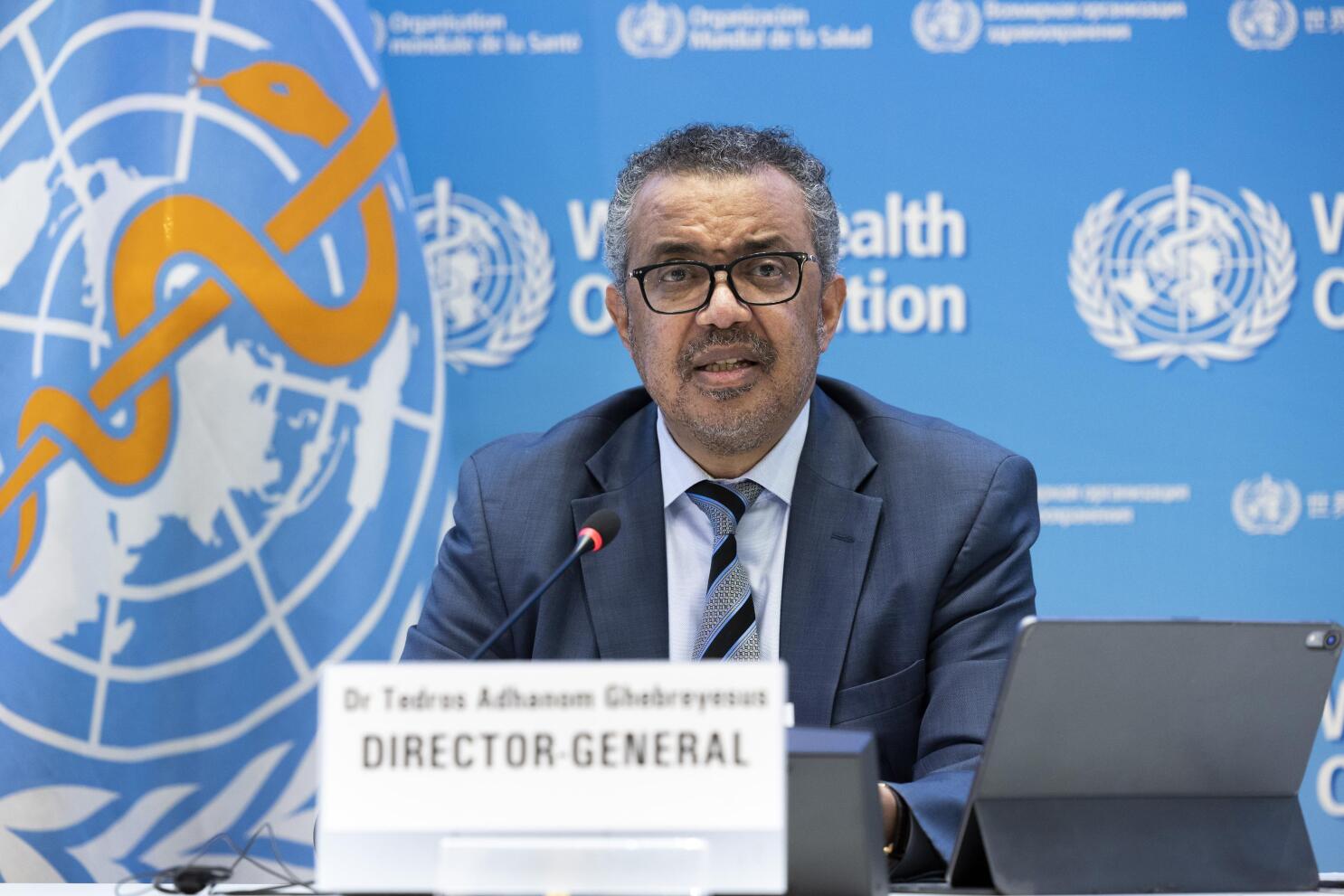
At the opening of the WHO Executive Board in Geneva on February 2, the Director-General Tedros Ghebreyesus, told health ministers and diplomats that sudden and severe cuts to bilateral aid “have also caused huge disruptions to health systems and services in many countries,” describing 2025 as “one of the most difficult years” in the agency’s history.

Indeed, the recent tragic death of renowned soprano singer, Ifunanya Nwangene, following a snake bite in her Abuja apartment—reportedly worsened by the unavailability of snake antivenom—has reignited concerns about the far-reaching consequences of inadequate healthcare funding in Nigeria.

According to WHO data, an estimated 4.6 billion people worldwide still lack access to essential health services, and 2.1 billion face financial hardship because of health costs.

Pandemics have repeatedly reshaped human history, exposing the strengths and weaknesses of societies while testing public health systems, economies, and governance structures.

They are not only medical emergencies but also social and economic crises that disrupt daily life, strain institutions, and deepen existing inequalities.

The rapid spread of infectious diseases across borders highlights how interconnected the modern world has become, making preparedness, surveillance, and timely response essential.

The COVID-19 pandemic is a recent and striking example of how devastating a global health crisis can be. It exposed gaps in healthcare funding, particularly in low- and middle-income countries where access to testing, vaccines, and treatment was limited.

See also  ‘US Airstrikes In Nigeria Signal Tough Stance On Attacks Against Christians’, Says Congressman Huizenga

Outbreaks such as Ebola in West Africa between 2014 and 2016 demonstrated how fragile health systems, misinformation, and delayed responses can worsen the toll of a pandemic.

Together, these examples underscore the importance of sustained investment in healthcare, public trust, and international cooperation to reduce the impact of future pandemics.

Meanwhile, a projected shortage of 11 million health workers by 2030 — more than half of them nurses — threatens the very backbone of pandemic prevention, detection and response.

These unsettling projections come amid a backdrop of dramatic shifts in international health financing. In January, the United States formally withdrew from the WHO, ending a role it has played for decades.

The US had previously been one of the largest contributors to the WHO’s budget, covering nearly a fifth of its funding. Its exit forced the agency to revise its finances, including planning for a 21 per cent budget reduction in the 2026–27 cycle, and to make staff and programme cuts across regions.

The ripple effects are already visible. WHO surveys conducted in 2025 across 108 low- and middle-income countries showed that funding cuts reduced key services, including maternal care, vaccination, emergency preparedness and disease surveillance, by up to 70 per cent in some settings. This is alarming.

Even more troubling, 70 per cent of countries reported disruptions to health emergency preparedness and response, and 66 per cent to public health surveillance, during the same period, according to WHO rapid assessments.

These disruptions translate directly into lives at risk. On the malaria front, recent WHO reports show that investments which once helped prevent more than 2 billion cases and nearly 13 million deaths are now jeopardised as planned preventive campaigns and distributions of insecticide-treated nets are delayed or derailed.

See also  Tambuwal fights back over N189bn EFCC probe

These dips in global health aid, especially from major donors, could lead to millions of additional cases and deaths from tuberculosis and other infectious diseases over the next decade.

The lessons COVID-19 vividly echoed to the world are that pathogens do not respect borders. The Nigerian government needs to turn this funding crisis into an opportunity for investment in research and development to develop local production and standardisation of life-saving medicine.

In Nigeria, the federal and state governments need to invest in resilient health systems, from community clinics to national laboratories. There should be cuts in wasteful government spending, tackling the entrenched culture of corruption and developing the country’s healthcare system.

punch.ng

FOLLOW US ON:

FACEBOOK

TWITTER

PINTEREST

TIKTOK

YOUTUBE

LINKEDIN

TUMBLR

INSTAGRAM

Continue Reading
Click to comment

Leave a Reply

Your email address will not be published. Required fields are marked *

News

Putin ‘helping Iran attack US military as Russia shares comprehensive intel on American targets’ in major WW3 escalation

Published

on

Russia is reportedly sharing intelligence with Iran as the conflict across the Middle East intensifies following recent US-Israeli strikes.

According to a report by the Washington Post, Russian officials have allegedly provided Iran with information about the locations of United States warships and aircraft operating in the region.

Sources cited in the report said the intelligence sharing appears to be extensive, describing it as “a fairly comprehensive effort”. The reported assistance comes as Iran’s ability to independently locate US military targets has reportedly been weakened following recent military operations that targeted key Iranian leadership and infrastructure.

Vladimir Putin has not publicly confirmed the reports, but the alleged intelligence support would mark the first indication that Russia is directly assisting Iran since the conflict escalated.

Meanwhile, the White House said Iranian forces have suffered significant losses in recent days. Anna Kelly said the Iranian government was under increasing pressure from ongoing strikes. “The Iranian regime is being absolutely crushed,” she said.

Kelly did not directly address the reports about Russia sharing intelligence with Iran but added that Tehran’s military capabilities were declining. “Their ballistic missile retaliation is decreasing every day, their navy is being wiped out, their production capacity is being demolished, and proxies are hardly putting up a fight,” she said.

Officials also noted that although Russia and China have maintained close coordination diplomatically, there was no clear indication that China was providing similar support to Iran.

The developments come as regional tensions continue to rise, with drone and missile attacks targeting US bases across the Middle East.

See also  Build Nigeria from grassroots, not just Abuja, Lagos – Ex-presidential candidate

In one incident, several American soldiers were killed when an Iranian drone reportedly struck a tactical operations centre at Port Shuaiba in Kuwait. Donald Trump later offered condolences to the families of those killed and warned that further American casualties could occur as the conflict continues.

lindaikejiblog.com

FOLLOW US ON:

FACEBOOK

TWITTER

PINTEREST

TIKTOK

YOUTUBE

LINKEDIN

TUMBLR

INSTAGRAM

Continue Reading

News

Jigawa sacks 22 over Ramadan feeding scam

Published

on

The Jigawa State Government has dismissed 22 vendors and companies involved in the ongoing Ramadan Iftar programme over allegations of cheating, misrepresentation of food quality and quantity, and questionable financial practices.
The decision was taken as part of efforts to promote transparency and accountability in the initiative designed to provide meals for vulnerable residents during the holy month.
Recall that Governor Umar Namadi initiated the Ramadan Iftar programme, targeting 7.9 million beneficiaries across 640 free meal centres in the state, to provide relief and nutritious meals to vulnerable citizens during the 2026 Ramadan period.
However,  two weeks into the programme, a comprehensive supervisory report and field monitoring exercise reportedly uncovered serious misconduct by several vendors and companies following public complaints.
The State Ministry of Humanitarian Affairs and Special Duties has now taken swift action, dismissing those suspected to be involved in the scandal.
In a statement made available to journalists in Dutse on Friday by the Jigawa State Commissioner for Humanitarian Affairs and Special Duties, Auwalu Sankara, the dismissals were attributed to gross misconduct, mismanagement of public funds, and poor handling of the programme.
The statement listed the affected individuals and entities as follows: Haruna Ladan Inv. and Property (Jahun LGA); Musa A. Jibrin (Gwiwa 1, Jahun LGA); Nura Yahaya (Chukuto Ward, Taura LGA); Usman Umar Malam (Sarawa 1, Kafin Hausa LGA); Muhammad Suleiman (Sarawa 2, Kafin Hausa LGA); Musa Salisu (Zago 1, Kafin Hausa LGA); Dauda Yusuf (Zago 2, Kafin Hausa LGA); Lurwanu Alhassan (Unguwar Ya 1, Birnin Kudu LGA); Ashiru Kamisu (Danladi 1, Sule Tankarkar LGA); Shuaibu Muhammad (Danladi 2, Sule Tankarkar LGA); Muhammad Abdullahi (Jeke 1, Sule Tankarkar LGA); and Jafaru Magaji (Amanga 1, Sule Tankarkar LGA).
Others are Sulaiman Shuaibu (Yayari 1, Hadejia LGA); Badamasi Umar (Yayari 2, Hadejia LGA); Danbaba Nasallah (Matsaro 1, Hadejia LGA); Fatima Abdulaziz (Yankoli 1, Hadejia LGA); Ibrahim Sulaiman (Yankoli 2, Hadejia LGA); Yusuf Wada (Jahun); Haruna Yau and Aisha Garba (Malam Madori); Babannan Baffa (Guri); and Amina Abdullahi (Gwaram).
“These individuals and entities have been dismissed for gross misconduct, mismanagement of public funds, and poor handling of the programme,” Sankara said.
“Our commitment to standards remains unwavering,” he said, stressing that the government would not compromise on standards or allow any deviation from its policies, especially during the sacred month.
“We are already in the process of substituting these individuals with deserving contractors,” he added.
Sankara said the administration has prioritised the welfare of the people of Jigawa State.
“The dismissals demonstrate the government’s resolve to protect public funds, and the welfare of the people of Jigawa remains our highest priority.”
“The people of Jigawa deserve better. We will ensure accountability and continue to serve the people,” Sankara said, assuring the public of the government’s commitment to maintaining standards.
He thanked Namadi for his support, adding that “the government will continue to work tirelessly to ensure the success of the programme.”

See also  FERMA unveils initiative to curb road crashes in Kogi
Continue Reading

News

US likely responsible for strike on Iran school – New York Times

Published

on

The United States is most likely responsible for a strike that reportedly killed scores of people at an elementary school in southern Iran, according to a New York Times investigation.

The February 28 strike hit an elementary school in the Iranian town of Minab and killed at least 150 people, according to Iranian officials.

Neither Israel nor the United States has claimed responsibility for the attack, which was in close proximity to sites controlled by the Islamic Revolutionary Guards Corps (IRGC).

The US Department of Defence has said it is investigating the incident.

The New York Times reported on Thursday that US military statements indicating forces were attacking naval targets near the Strait of Hormuz, where an IRGC base is located, “suggest they were most likely to have carried out the strike.”

An analysis of social media posts from the time of the attack, as well as photos and videos from witnesses, indicated that the Shajare Tayyebeh elementary school was struck at the same time as a Revolutionary Guards’ naval base site, the Times said.

Two unidentified US officials told Reuters that military investigators “believe it is likely” that US forces were responsible for the strike.

AFP has been unable to reach the location to independently verify the toll or the circumstances of the attack.

General Dan Caine, the top US military officer, said on Wednesday that the United States was carrying out strikes along the southern Iran at the time.

A map he presented, the Times reported, indicated an area including Minab had been targeted by strikes in the first 100 hours of the operation.

See also  FULL LIST: US Congress urges Nigeria to ditch Russian arms, block beef exports

Caine noted that Israel had mainly been operating further north in Iran.

The school was at one point part of the IRGC’s naval base, according to satellite images from 2013 reviewed by the Times.

However, the paper said publicly available historical satellite imagery “shows the structure bears the hallmarks of a school, including a sports field and other recreational areas that were added over time.”

“Given the U.S.’s intelligence capabilities, they should have known that a school was in the vicinity,” Beth Van Schaack, a former State Department official who teaches at Stanford University’s Centre for Human Rights and International Justice, told the Times.

The Norway-based rights group Hengaw said the school was holding its morning session at the time of the attack and reportedly had about 170 students present.

Asked on Wednesday whether the United States was involved in the strike, White House Press Secretary Karoline Leavitt replied: “Not that we know of.”

AFP

punch.ng

FOLLOW US ON:

FACEBOOK

TWITTER

PINTEREST

TIKTOK

YOUTUBE

LINKEDIN

TUMBLR

INSTAGRAM

Continue Reading

Trending