Connect with us

Business

Blackout fears grow over gas plant maintenance

Published

on

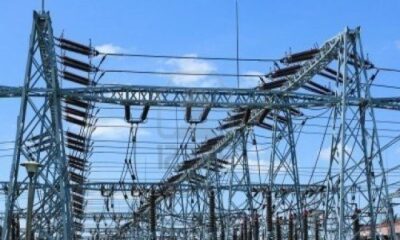
Seven power plants across Nigeria are expected to experience gas supply constraints as Seplat Energy shuts down a major facility for scheduled maintenance, raising fears of potential electricity shortfalls and looming blackouts, the Nigerian Independent System Operator has warned.

In a notice issued on Thursday, NISO alerted electricity market participants and consumers that the maintenance, slated for February 12 to 15, 2026, would temporarily reduce gas availability to some thermal power plants. The system operator emphasised that critical national infrastructure and essential services would be prioritised should load management measures be required during the period.

Power stations projected to be directly affected include Egbin, Azura, Sapele, and Transcorp Power Plants, while NDPHC Sapele, Olorunsogo, and Omotosho plants are likely to experience indirect constraints due to network-wide gas balancing effects.

The planned maintenance affects gas supply into the NNPC Gas Infrastructure Company Limited (NGIC) pipeline network and is expected to temporarily reduce thermal generation capacity on the national grid. At least seven power stations are projected to face direct and indirect constraints during the exercise.

In a separate press statement issued by NISO management and the Chief Corporate Communications Officer of NNPC Ltd, Andy Odeh, the system operator confirmed that gas availability to seven grid-connected power plants would be curtailed during the four-day exercise.

Earlier assessments by NISO indicate that the maintenance could result in a generation shortfall of about 934.96 megawatts, representing roughly 19.67 per cent of the combined available thermal and hydro generation capacity of 4,753.10MW on the grid.

The notice read in part: “The Nigerian Independent System Operator hereby informs the general public and all electricity market participants of anticipated gas supply constraints affecting some major thermal power generating stations connected to the national grid.

“This situation arises from a formal notification received on the scheduled maintenance shutdown of a major gas supply facility from 12 to 15 February 2026 (both days inclusive). Full gas supply is expected to be restored on 16 February 2026.

See also  Bulk fuel buyers dump middlemen for direct Dangote supply

“During the maintenance period, gas availability to certain power plants that depend on this supply network will be temporarily reduced. This will result in a temporary reduction in available thermal generation capacity across the national grid. This reduction underscores the need for careful system operation to maintain grid stability and reliability.”

NISO, which recently assumed the role of independent system operator under Nigeria’s restructured electricity market framework, said it would deploy real-time operational measures to preserve grid integrity throughout the maintenance window.

“In line with its statutory mandate, NISO will deploy appropriate real-time operational measures to safeguard the integrity and security of the national grid throughout the maintenance window,” the statement added.

“Any load shedding, if required, will be implemented in a structured, transparent, and equitable manner in close coordination with distribution companies. Priority will be accorded to critical national infrastructure, essential services, and security installations,” it emphasised.

The operator assured stakeholders that all decisions taken during the period would follow established grid security and reliability standards. “NISO assures all stakeholders and electricity consumers that every action taken during this period will be strictly guided by established operational procedures, grid security requirements, and reliability standards.

“The National Control Centre will intensify real-time system monitoring and contingency planning, while also ensuring fair load allocation based on available generation capacity,” the statement added.

Nigeria’s electricity grid remains heavily dependent on thermal power plants, which account for over 70 per cent of installed generation capacity and run primarily on natural gas supplied through pipelines and upstream processing facilities concentrated in the Niger Delta.

While Nigeria has abundant gas reserves—the largest in Africa—persistent supply bottlenecks, pipeline vandalism, payment arrears, and infrastructure maintenance have repeatedly disrupted electricity generation.

Industry data show that even when installed capacity exceeds 13,000MW, actual available generation often hovers between 4,000MW and 5,000MW due to gas shortages, transmission constraints, and plant outages.

See also  NNPCL appoints new heads of corporate communications, relations

Egbin, for instance, remains the largest single thermal power station in Nigeria with an installed capacity of 1,320MW. Azura-Edo contributes 461MW, while Transcorp’s Ughelli plant has over 900MW installed capacity. Any reduction in gas supply to these facilities typically has an immediate ripple effect across the national grid.

In a related statement titled “Notice of Scheduled Maintenance on Major Gas Plant and Facilities,” the Nigerian National Petroleum Company Limited confirmed the routine maintenance on its gas production facilities from February 12 to 15.

Seplat, a joint venture partner of NNPC Ltd and a key supplier of gas into the NGIC pipeline network, described the exercise as part of standard safety and asset integrity protocols.

“The public is hereby informed that Seplat Energy Plc, a Joint Venture partner of NNPC Ltd and a key supplier of gas into the NNPC Gas Infrastructure Company Limited pipeline network, has scheduled routine maintenance on its gas production facilities from 12th to 15th February 2026.

“This planned activity forms part of standard industry safety and asset integrity protocols designed to ensure the continued reliability, efficiency, and safe operation of critical gas infrastructure. Periodic maintenance of this nature is essential to sustain optimal system performance, strengthen operational resilience, and minimise the risk of unplanned outages,” the statement said.

The company acknowledged that the maintenance would temporarily reduce gas supply into the NGIC network, with possible knock-on effects on electricity generation.

“During the four-day maintenance period, there will be a temporary reduction in gas supply into the NGIC pipeline network. As a result, some power generation companies reliant on this supply may experience reduced gas availability, which could modestly impact electricity generation levels within the timeframe,” it added.

NNPC Ltd and Seplat said they were working to ensure the exercise is completed as scheduled, while mitigation measures are being put in place. “NNPC Ltd and Seplat Energy are working closely to ensure that the maintenance is executed safely and completed as scheduled.

See also  Nigerian businesses to lose billions of naira as 25-day blackout hits Lagos, Ogun

In parallel, NNPC Gas Marketing Limited is engaging alternative gas suppliers to mitigate anticipated supply gaps and maintain stability across the network. Upon completion of the maintenance exercise, full gas supply into the NGIC system is expected to resume promptly, enabling affected power generation companies to return to normal operations.”

The Executive Director of PowerUp Nigeria, Mr Adetayo Adegbemle, faulted the handling of the planned maintenance, describing it as evidence of poor long-term planning in the power sector. Reacting to the announcement of anticipated gas constraints, Adegbemle said the development reflects a systemic failure to build buffers into critical infrastructure planning.

“This announcement shows our inability to plan ahead. Nothing says we should not have storage facilities that would hold us for days while this maintenance is being done,” he said. He argued that with better foresight, the impact of routine maintenance on electricity generation could be significantly reduced.

“I want to believe it is just our Nigerian way of approaching all issues that is accounting for this. We really need to change our thinking and approach to issues. We need to chase excellence in all we do,” Adegbemle added. He stressed that as Nigeria continues to depend heavily on gas-fired power plants, investments in gas storage and strategic reserves would help shield electricity consumers from avoidable supply shocks during scheduled maintenance or unexpected disruptions.

For millions of Nigerians, however, the technical language of “gas balancing effects” and “maintenance windows” may translate simply into darker homes, noisier generators, and higher fuel expenses over the four-day period.

As the country pushes reforms under the Electricity Act and seeks to attract investment into generation and gas infrastructure, the latest development reinforces a recurring lesson: Nigeria’s power stability remains inseparably tied to the reliability of its gas supply chain.

punch.ng

FOLLOW US ON:

FACEBOOK

TWITTER

PINTEREST

TIKTOK

YOUTUBE

LINKEDIN

TUMBLR

INSTAGRAM

Continue Reading
Click to comment

Leave a Reply

Your email address will not be published. Required fields are marked *

Business

World’s Top 100 Biggest Economies in 2026

Published

on

1. 🇨🇳 China – $43.49 Trillion
2. 🇺🇸 United States – $31.82 Trillion
3. 🇮🇳 India – $19.14 Trillion
4. 🇷🇺 Russia – $7.34 Trillion
5. 🇯🇵 Japan – $6.92 Trillion
6. 🇩🇪 Germany – $6.32 Trillion
7. 🇮🇩 Indonesia – $5.36 Trillion
8. 🇧🇷 Brazil – $5.16 Trillion
9. 🇫🇷 France – $4.66 Trillion
10. 🇬🇧 United Kingdom – $4.59 Trillion
11. 🇹🇷 Turkey – $3.98 Trillion
12. 🇮🇹 Italy – $3.82 Trillion
13. 🇲🇽 Mexico – $3.55 Trillion
14. 🇰🇷 South Korea – $3.49 Trillion
15. 🇪🇸 Spain – $2.94 Trillion
16. 🇸🇦 Saudi Arabia – $2.85 Trillion
17. 🇨🇦 Canada – $2.81 Trillion
18. 🇪🇬 Egypt – $2.53 Trillion
19. 🇳🇬 Nigeria – $2.39 Trillion
20. 🇵🇱 Poland – $2.12 Trillion
21. 🇹🇼 Taiwan – $2.07 Trillion
22. 🇦🇺 Australia – $2.06 Trillion
23. 🇻🇳 Vietnam – $1.94 Trillion
24. 🇮🇷 Iran – $1.93 Trillion
25. 🇹🇭 Thailand – $1.92 Trillion
26. 🇧🇩 Bangladesh – $1.90 Trillion
27. 🇵🇰 Pakistan – $1.76 Trillion
28. 🇵🇭 Philippines – $1.59 Trillion
29. 🇦🇷 Argentina – $1.58 Trillion
30. 🇲🇾 Malaysia – $1.56 Trillion
31. 🇳🇱 Netherlands – $1.56 Trillion
32. 🇨🇴 Colombia – $1.24 Trillion
33. 🇿🇦 South Africa – $1.06 Trillion
34. 🇦🇪 United Arab Emirates – $1.00 Trillion
35. 🇸🇬 Singapore – $988.8 Billion
36. 🇰🇿 Kazakhstan – $973.4 Billion
37. 🇷🇴 Romania – $949.3 Billion
38. 🇧🇪 Belgium – $925.7 Billion
39. 🇩🇿 Algeria – $915.8 Billion
40. 🇨🇭 Switzerland – $909.1 Billion
41. 🇮🇪 Ireland – $836.7 Billion
42. 🇸🇪 Sweden – $809.5 Billion
43. 🇨🇱 Chile – $740.4 Billion
44. 🇮🇶 Iraq – $739.1 Billion
45. 🇺🇦 Ukraine – $730.8 Billion
46. 🇦🇹 Austria – $705.0 Billion
47. 🇵🇪 Peru – $682.8 Billion
48. 🇨🇿 Czech Republic – $677.7 Billion
49. 🇳🇴 Norway – $621.1 Billion
50. 🇭🇰 Hong Kong – $618.1 Billion
51. 🇮🇱 Israel – $600.5 Billion
52. 🇵🇹 Portugal – $556.4 Billion
53. 🇪🇹 Ethiopia – $530.8 Billion
54. 🇩🇰 Denmark – $529.3 Billion
55. 🇺🇿 Uzbekistan – $511.0 Billion
56. 🇬🇷 Greece – $485.1 Billion
57. 🇭🇺 Hungary – $478.5 Billion
58. 🇲🇦 Morocco – $457.5 Billion
59. 🇰🇪 Kenya – $430.3 Billion
60. 🇦🇴 Angola – $417.2 Billion
61. 🇶🇦 Qatar – $410.6 Billion
62. 🇫🇮 Finland – $384.9 Billion
63. 🇩🇴 Dominican Republic – $353.7 Billion
64. 🇧🇾 Belarus – $319.5 Billion
65. 🇹🇿 Tanzania – $317.9 Billion
66. 🇪🇨 Ecuador – $315.9 Billion
67. 🇬🇭 Ghana – $314.6 Billion
68. 🇳🇿 New Zealand – $309.1 Billion
69. 🇬🇹 Guatemala – $297.1 Billion
70. 🇨🇮 Côte d’Ivoire – $289.1 Billion
71. 🇲🇲 Myanmar – $286.4 Billion
72. 🇰🇼 Kuwait – $285.9 Billion
73. 🇦🇿 Azerbaijan – $282.2 Billion
74. 🇧🇬 Bulgaria – $279.2 Billion
75. 🇸🇰 Slovak Republic – $266.9 Billion
76. 🇴🇲 Oman – $245.9 Billion
77. 🇻🇪 Venezuela – $231.4 Billion
78. 🇷🇸 Serbia – $225.6 Billion
79. 🇨🇩 Dem. Rep. of the Congo – $225.5 Billion
80. 🇵🇦 Panama – $211.0 Billion
81. 🇭🇷 Croatia – $207.4 Billion
82. 🇺🇬 Uganda – $205.3 Billion
83. 🇳🇵 Nepal – $194.9 Billion
84. 🇹🇳 Tunisia – $193.6 Billion
85. 🇨🇲 Cameroon – $183.3 Billion
86. 🇨🇷 Costa Rica – $178.0 Billion
87. 🇱🇹 Lithuania – $173.1 Billion
88. 🇵🇷 Puerto Rico – $166.3 Billion
89. 🇰🇭 Cambodia – $160.0 Billion
90. 🇹🇲 Turkmenistan – $159.0 Billion
91. 🇵🇾 Paraguay – $145.1 Billion
92. 🇿🇼 Zimbabwe – $144.9 Billion
93. 🇯🇴 Jordan – $138.0 Billion
94. 🇸🇩 Sudan – $135.9 Billion
95. 🇺🇾 Uruguay – $135.1 Billion
96. 🇱🇾 Libya – $132.8 Billion
97. 🇸🇮 Slovenia – $128.1 Billion
98. 🇬🇪 Georgia – $123.0 Billion
99. 🇧🇭 Bahrain – $118.1 Billion
100. 🇱🇺 Luxembourg – $108.6 Billion

See also  FG eyes N796bn annually from 5% petrol surcharge

Nigeria 🇳🇬 ranks 19 biggest economies in the world, based on PPP (Purchasing Power Parity)

Source: IMF via Voronoi by Visual Capitalist

FOLLOW US ON:

FACEBOOK

TWITTER

PINTEREST

TIKTOK

YOUTUBE

LINKEDIN

TUMBLR

INSTAGRAM

Continue Reading

Business

US-Iran war: Marketers, Dangote trade words over petrol price

Published

on

Amid the escalating tensions in the Middle East, data from the Major Energies Marketers Association of Nigeria has shown that a litre of imported petrol is about N64 cheaper than the one produced by the Dangote Petroleum Refinery.

However, the refinery debunked the report, challenging importers to defy the ongoing airstrikes in the Middle East and bring in petroleum products.

The PUNCH reported on Monday that the Dangote refinery increased its gantry price from N774 to N874. The adjustment followed a jump in oil prices to $84 per barrel, up from below $70, days before the airstrikes involving the United States, Iran, Israel, and other countries.

Following the increment, filling stations on Tuesday raised their pump prices to as high as N937, depending on the location. Before the Middle East crisis deepened over the weekend, some filling stations had already been selling petrol at prices ranging between N812 and N839, but the crisis disrupted the global fuel market, affecting Nigeria and other countries.

However, data by MEMAN indicated that Dangote’s petrol gantry price was N874 per litre as of Monday, while the landing cost of imported petrol was N809.37 per litre, showing a difference of about N64 between the two sources.

MEMAN also reported that Dangote’s diesel price was N1,169.42, while imported diesel was N1,125.70 per litre.

However, officials of the Dangote refinery, who did not want to be mentioned because of the sensitivity of the matter, said some importers were projecting a false narrative to ensure the Federal Government continues to issue import licences.

“Anybody can go to Apapa to get the landing cost, and anybody who likes should go to Iran and import. Some people just want us to depend on imports. Isn’t it time we ended that dependence on foreign products?

“Some people want importation to continue, and that’s not normal. You keep importing what can be produced locally. Is that a good thing? How do you expect our children to survive? Nigerians will import and destroy what we have locally,” an official said.

Aside from pricing, another official said Nigeria should be thankful to the Dangote refinery for shielding the country from the fuel crisis that could have paralysed commercial activities.

“Let’s think about what could have happened to Nigeria if we didn’t have a refinery in Nigeria at this time. Assuming there is no Dangote refinery in Nigeria, economic activities would have been paralysed by now.

“Many countries are not so lucky, and they are now facing long queues at filling stations. Dangote has saved Nigeria from that fuel crisis. This has taught us that there’s nothing like one’s country, and we must always be prepared,” he said.

In its report, MEMAN explained that the downstream sector saw a major upward price adjustment on Monday, driven by the Dangote refinery raising its gantry price by N100, bringing it to N874 per litre.

The shift, triggered by rising global crude costs, pushed retail pump prices above N900 per litre. Many private depots reportedly paused sales briefly to recalibrate their pricing in response.

“The market is currently in a state of high uncertainty. With Brent crude climbing above $80/bbl due to escalating geopolitical tensions (specifically the US-Israel-Iran conflict), analysts warn that the cost of petrol remains under significant pressure. If crude prices continue toward the $90/bbl mark, domestic pump prices could potentially reach N1,100 by next month,” MEMAN said.

See also  Bulk fuel buyers dump middlemen for direct Dangote supply

On Wednesday, motorists flocked to petrol stations across Britain in a scramble for fuel as fears of a new oil crisis caused by the Iran war grew, according to a report by The Mirror UK.

Frustrated drivers complained on Wednesday about UK petrol stations running out of fuel and long queues at forecourts after hostilities erupted in the Middle East. Prices have risen by as much as 11 pence per litre in some locations.

In contrast, Nigeria relies on the Dangote refinery for an adequate fuel supply amid the geopolitical tensions. Petrol prices in Nigeria surged on Tuesday, but no queues were reported at filling stations. Analysts attribute this to the Dangote refinery reducing Nigeria’s dependence on imported fuel.

Commentators highlight the Dangote refinery’s role in shielding Nigeria from such disruptions. “Imagine a Nigeria without a refinery; we would be experiencing endless queues, black market prices, businesses slowing down, and an economy held hostage by fuel scarcity.

“Today, we stand at a turning point. The Dangote Petroleum Refinery & Petrochemicals is more than steel and pipes — it is energy security, economic power, job creation, and national pride,” an industry player who spoke in confidence stated.

During a recent meeting with refiners and stakeholders, the Dangote refinery assured them of sufficient fuel supply, though it noted challenges from insufficient crude, requiring some reliance on foreign feedstock.

The PUNCH reports that Dangote outpaced importers to supply approximately 62 per cent of the nation’s petrol in January 2026.

This development, revealed in the fact sheet from the Nigerian Midstream and Downstream Petroleum Regulatory Authority, signals a growing reliance on domestic refining capabilities and a potential reduction in the country’s longstanding dependence on fuel imports.

According to the NMDPRA’s State of the Downstream Sector report for January 2026, the total average daily supply of petrol reached 64.9 million litres per day in January.

Of this volume, receipts from domestic refineries — primarily driven by Dangote, the only petrol-producing refinery at the moment — accounted for 40.1 million litres per day, while imports by oil marketing companies and the Nigerian National Petroleum Company Limited stood at 24.8 million litres per day.

This marked the first time in the 13-month period covered by the report (from January 2025 to January 2026) that domestic production had exceeded imports, reversing a trend where foreign supplies often dominated the market.

The NMDPRA attributed the surge in domestic output directly to “improvement in supply from DPRP” — the Dangote Petroleum Refinery and Petrochemicals — which increased its PMS contributions from 32 million litres per day in December 2025 to 40.1 million litres per day in January 2026.

Crude supply denial

Meanwhile, the Dangote refinery has said that local crude producers are refusing to supply feedstock to its facility, forcing it to rely more on imported crude. In a statement on Thursday, the refinery defended its recent N100 increase in the gantry price of petrol.

While reassuring Nigerians of its unwavering commitment to serving as a stabilising force amid recent shocks in the international oil market, the refinery said the conflict in the Middle East has led to the shutdown of some refineries and cutbacks in refinery production across the world.

See also  The Bank of British West Africa: Pioneering Modern Banking in Nigeria

This, it said, is leading to a global scarcity of petroleum products, as China has banned the export of gasoline and diesel. “The Dangote refinery will ensure that Nigeria is insulated from these supply shocks by prioritising supply to the domestic market. This is one of the many benefits of domestic refining,” it said.

According to the statement, the conflict in the Middle East has driven global crude and freight prices sharply higher, with benchmark Brent prices rising by about 26 per cent within a short period to above $84 per barrel.

In response, the refinery implemented a measured adjustment of N100 per litre in its ex-depot price of petrol, representing an increase of about 12 per cent.

The refinery said it has absorbed 20 per cent of the cost escalation for now to cushion the domestic market, despite continuing to source crude at prevailing international market prices, whether purchased locally or from foreign suppliers.

“It is worth noting that Nigerian crude oil is more expensive than the Brent benchmark price by $3 to $6 per barrel. After adding freight of $3.50 per barrel, crude oil will be landing in our tanks between $88 and $91 per barrel. For context, crude oil was landing in our tanks at about $68 per barrel when our ex-depot price was N774/litre,” the refinery stated.

According to the company, the refinery receives five cargoes every month from the Nigerian National Petroleum Company Limited instead of 13 cargoes, adding that the cargoes are paid for at international market prices.

“Furthermore, while we receive about five cargoes a month from NNPC, which we pay for in naira, these cargoes are priced at international market prices plus premium and fall short of the 13 cargoes which we require to support sales into Nigeria. We, therefore, end up procuring foreign exchange at open market rates to pay for crude cargoes purchased from local and international traders.

“The high crude cost is compounded by the fact that Nigeria’s upstream producers have failed to supply crude oil to the refinery as required under the Petroleum Industry Act, forcing us to source a substantial portion through international traders who charge an additional premium,” it stated.

As a private enterprise operating in a deregulated environment, the Dangote refinery added that it has remained responsive and has made significant sacrifices by aligning pricing with market realities to ensure sustainability, particularly as it sources all its crude at prevailing international market prices, whether locally or from foreign suppliers.

“Selling below cost would undermine its ability to procure crude, sustain production, and guarantee uninterrupted supply to Nigerians. Despite these pressures, local refining at this scale continues to reduce exposure to international supply disruptions, moderate foreign exchange demand, and protect the country from severe shortages during periods of global instability,” the refinery added.

The refinery said it is also accelerating the deployment of compressed natural gas-powered trucks to cushion the impact of global shocks, enhance nationwide distribution efficiency, reduce logistics costs, and improve delivery timelines across the downstream sector.

See also  Dangote Set To Become World’s Largest Refinery As It Increases Capacity

“The rollout is scheduled to commence this month,” it announced, saying, “We remain committed to transparency, operational excellence, and the long-term objective of securing sustainable energy security and stability for Nigeria at an affordable cost.”

Efforts to get the reactions of the Nigerian Upstream Petroleum Regulatory Commission, the agency in charge of the domestic crude supply obligation, were unsuccessful. The NUPRC spokesman, Eniola Akinkuotu, did not reply to messages sent to him.

Similarly, the spokesman of NNPC, Andy Odeh, declined to comment when contacted by our correspondent on Thursday.

Experts speak

Meanwhile, as Dangote and modular refineries demand sufficient crude supply in the face of low crude production, experts have called on the government and operators to ramp up production.

An energy expert, Professor Emeritus Wumi Iledare, said meeting oil production targets would depend far less on ambitious projections of the government and far more on practical and on-the-ground actions.

Iledare told The PUNCH that the government must prioritise improved security around oil assets, reduce operational disruptions, fast-track regulatory approvals, and create a stable operating environment that allows existing fields to produce at full capacity.

According to Iledare, Nigeria earned about N55tn from crude oil in 2025, up from roughly N50tn in 2024. “While this is an improvement, it still fell short of what the Federal Government expected for the year,” he said. The don noted that the main issue was not oil prices but production.

He explained that the government planned to produce 766.5 million barrels in 2025 but managed to get only about 599.6 million barrels, saying that means close to 167 million barrels were not produced, and the revenue that could have come with them was lost.

“Looking ahead to 2026, meeting oil production targets will depend far less on ambitious projections and far more on practical, on-the-ground actions. The government must prioritise improved security around oil assets, reduce operational disruptions, fast-track regulatory approvals, and create a stable operating environment that allows existing fields to produce at full capacity,” he stated.

He added that supporting investment in maintenance and infill drilling—while ensuring policy consistency—will be critical to converting planned barrels into actual barrels. The expert called on the Independent Petroleum Producers Group to lead the charge by reopening shut-in wells.

“In this regard, the IPPG holds a key role in near-term production expansion. With appropriate economic and policy incentives, re-entry into shut-in wells in the onshore and shallow-water basins could deliver meaningful production gains within the year,” Iledare explained.

A professor of economics, Segun Ajibola, said the crude production volume is dependent on several factors, many of which are beyond the immediate control of the government itself.

According to him, the government can deploy resources towards oil exploration, but the overall impact depends on technical cooperation by partners, the joint ventures, happenings in the global oil market, and the environmental conditions, among others.

Ajibola maintained that the Nigerian situation is somehow complex, as the key agency in charge, the NNPC, has been enmeshed in controversies over the period.

punch.ng

FOLLOW US ON:

FACEBOOK

TWITTER

PINTEREST

TIKTOK

YOUTUBE

LINKEDIN

TUMBLR

INSTAGRAM

Continue Reading

Business

Senate rejects new fintech body, hands full oversight to CBN

Published

on

The Senate on Wednesday called for a stronger regulatory framework that would place the Central Bank of Nigeria at the centre of supervising the country’s fast-growing financial technology sector.

The upper chamber also demanded tougher measures to curb the rising wave of Ponzi schemes across the country.

Chairman of the Senate Committee on Banking, Insurance and Other Financial Institutions, Senator Mukhail Adetokunbo Abiru (Lagos East), disclosed this during a one-day public hearing at the National Assembly, Abuja.

The hearing focused on the Banks and Other Financial Institutions Act (Amendment) Bill, 2025 (SB. 959) and an investigative session into the operations of Ponzi schemes in Nigeria, with particular reference to the recent Crypto Bullion Exchange incident.

The session was jointly organised by the Senate Committees on Banking, ICT and Cyber Security, Capital Market, and Anti-Corruption and Financial Crimes.

Abiru said the proposed amendment seeks to strengthen the existing legal framework under the Banks and Other Financial Institutions Act, 2020 and provide a clear statutory basis for the designation, registration and supervision of Systemically Important Institutions, particularly technology-driven financial service providers.

According to him, the bill will amend BOFIA 2020 to reflect the realities of Nigeria’s evolving financial ecosystem, where fintech companies now process huge transaction volumes and hold sensitive financial data belonging to millions of Nigerians.

Over the past decade, fintech firms — including mobile money operators, payment platforms, digital lenders and settlement companies — have expanded rapidly, deepening financial inclusion.

However, concerns have grown that the regulatory framework has not kept pace with their scale and systemic importance.

See also  The Rise and Fall of Volkswagen in Nigeria’s Auto Industry

Although the Central Bank of Nigeria currently designates Systemically Important Financial Institutions, the framework largely focuses on banks and does not fully address large, non-bank digital platforms, thereby creating regulatory gaps.

Abiru said the amendment would empower the CBN to designate qualifying fintechs and digital financial institutions as Systemically Important Institutions, establish a national registry to enhance transparency and beneficial ownership disclosure, strengthen risk-based supervision tailored to technology-driven services, and promote data sovereignty and systemic stability.

“The question has arisen as to whether the creation of a new standalone regulatory agency would be a preferable pathway for supervising fintechs.

“However, after careful consideration, it is evident that establishing an entirely new agency would duplicate functions, create bureaucratic overlap, increase administrative costs, and fragment regulatory authority in a sector where coordination and coherence are essential”. Abiru said.

He added that fintech regulation is closely tied to monetary policy, payments oversight, prudential supervision, Know-Your-Customer and Anti-Money Laundering enforcement, as well as systemic risk monitoring — functions that already reside within the Central Bank.

“It is far more effective to strengthen the BOFIA framework, modernise CBN supervisory powers, and mandate robust coordination with agencies such as the Securities and Exchange Commission, Nigerian Communications Commission, National Information Technology Development Agency, Corporate Affairs Commission, Federal Competition and Consumer Protection Commission, Office of the National Security Adviser and the Federal Ministry of Finance,” he said.

The senator noted that incorporating fintech regulation into BOFIA would prevent regulatory silos and ensure digital financial services remain integrated with the broader banking system.

See also  Bulk fuel buyers dump middlemen for direct Dangote supply

Beyond fintech regulation, the Senate also intensified its scrutiny of Ponzi schemes and fraudulent digital investment platforms.

Abiru described the growing prevalence of such schemes as a serious threat to financial stability and public confidence.

He cited the recent CBEX incident, which reportedly led to significant losses for many Nigerians, including young professionals, retirees, traders, small business owners and students.

He warned that Ponzi schemes not only cause personal hardship but also undermine trust in legitimate financial institutions, distort capital allocation, damage Nigeria’s financial reputation and increase the risk of money laundering and illicit financial flows.

Following its investigation into regulatory gaps, institutional coordination and the adequacy of existing laws, the Senate proposed stricter measures to curb fraudulent investment platforms.

Stakeholders who made submissions at the hearing included representatives of the Central Bank of Nigeria, Nigerian Deposit Insurance Corporation, Economic and Financial Crimes Commission, Nigerian Communications Commission, Federal Competition and Consumer Protection Commission, Ministry of Finance Incorporated and the Chartered Institute of Bankers of Nigeria, among others.

The Senate said it would consider the memoranda submitted before making its final recommendations on the proposed amendment and related regulatory reforms.

punch.ng

FOLLOW US ON:

FACEBOOK

TWITTER

PINTEREST

TIKTOK

YOUTUBE

LINKEDIN

TUMBLR

INSTAGRAM

Continue Reading

Trending