Connect with us

Business

Nigeria spends N9tn importing petrol

Published

on

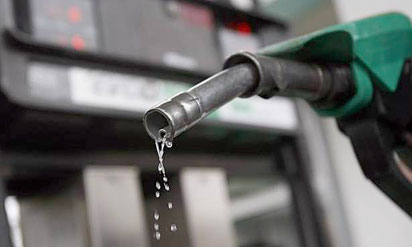
Nigeria’s dependence on imported petrol persisted in 2025, with oil marketers spending N8.96tn on Premium Motor Spirit (petrol) imports between January and December, despite increased investments in domestic refining capacity.

An analysis of the latest foreign trade data released by the National Bureau of Statistics on Thursday showed that petrol, code-named “Motor spirit ordinary,” remained one of the most imported commodities throughout the year, reflecting ongoing supply gaps in the downstream sector.

The NBS said petrol import costs were N8.96tn in 2025, but represented a decline of N6.46tn or about 41.9 per cent from the N15.42tn recorded in 2024, but still stood N1.45tn or roughly 19.3 per cent higher than the N7.51tn posted in 2023 when fuel subsidy was eliminated by the current administration.

This latest development comes days after The PUNCH exclusively reported that Domestic refineries imported crude oil worth N5.734tn between January and December 2025, exposing a deepening supply paradox in the country’s oil sector and an obsession for imports.

The fuel import expenditure came at a time when expectations were high for a decline in reliance on foreign supply following significant investments in local refining.

This trend persisted despite the commencement of operations, steady ramp-up in production and distribution of petrol by domestic refineries, notably the Dangote Petroleum Refinery, alongside state-owned refineries and several modular facilities.

Data from the Nigerian Midstream and Downstream Petroleum Regulatory Authority published recently revealed that total petrol consumption stood at 18.97 billion litres in 2025, with 11.85 billion litres, representing 62.47 per cent, supplied through imports.

While domestic refineries contributed about 7.54 billion litres, accounting for 37.53 per cent of total consumption.

But in the new NBS document, which focuses on the value of products, the data showed a fluctuating but sustained petrol import pattern, with expenditure rising by N0.62tn, or about 35.2 per cent, from N1.76tn in the first quarter to N2.38tn in the second quarter, before dropping sharply by N1.09tn, or roughly 45.8 per cent, to N1.29tn in the third quarter.

See also  Yuletide: Local flights break N300,000 mark

However, imports rebounded strongly in the fourth quarter, surging by N2.25tn, or about 174.4 per cent, to N3.54tn, the highest quarterly expenditure recorded in the year.

Overall, the fourth-quarter spike accounted for nearly 40 per cent of total annual imports, underscoring persistent supply pressures and seasonal demand fluctuations. The statistics agency didn’t provide a breakdown of the value imported monthly.

Breakdown of the figures showed that petrol was the second most imported product in the first quarter at N1.76tn, and also ranked as the second highest import from African countries, with N89.18bn largely sourced from Togo within the ECOWAS sub-region.

By the second quarter, petrol had risen to become Nigeria’s top imported product at N2.38tn, maintaining its dominance across African, West African, and ECOWAS trade corridors, where imports stood at N208.76bn.

However, the trend shifted in the third quarter, when import value dropped to N1.29tn, making petrol the third most imported product globally during the period. Notably, no imports were recorded from African or ECOWAS countries in that quarter, indicating a shift towards alternative international suppliers.

In the fourth quarter, petrol imports rebounded strongly to N3.54tn, reclaiming its position as the most imported commodity. Within Africa, it ranked as the second-highest import at N84.69bn, with Togo again featuring prominently among regional suppliers.

In the fourth quarter, petrol imports from Brazil were valued at N221.15bn, while the Netherlands emerged as one of Nigeria’s largest suppliers with shipments worth N1.22tn in the same period.

Overall, the product’s share of total trade reflected a fluctuating but rising trend, accounting for 11.42 per cent in the first quarter, increasing to 15.54 per cent in the second quarter, before dropping to 7.98 per cent in the third quarter and rebounding sharply to 20.52 per cent in the fourth quarter.

See also  10 states plan N4.3tn borrowing to fund 2026 budgets

Further analysis showed that Nigeria sourced petrol from a diverse mix of countries, including the Netherlands, the United States, Belgium, Brazil, and Togo, highlighting the global nature of its fuel supply chain.

Despite the operational take-off of the Dangote Refinery and ongoing rehabilitation of state-owned refineries, import dependence remains deeply entrenched.

Over the past five years, Nigeria’s petrol import bill has steadily risen. In 2020, the country spent N2.01tn on fuel imports, more than doubling to N4.56tn in 2021.

By 2022, the figure further increased to N7.71tn before slightly declining to N7.51tn in 2023. However, in 2024, fuel import expenditure surged to an all-time high of N15.42tn, marking the largest petrol import bill in Nigeria’s history.

The figures highlight a structural imbalance between refining capacity and actual output, noting that while installed capacity has improved, feedstock constraints, logistics challenges, and market dynamics continue to limit performance.

Energy analysts warn that the continued reliance on imports, despite increased refining capacity, raises concerns about energy security, foreign exchange pressure, and the sustainability of the downstream market.

Commenting, the Managing Partner at Energy Consulting Practice, Kelvin Emmanuel, accused the Presidency of maintaining tight control over licensing decisions in Nigeria’s oil and gas sector, in what he described as a violation of the provisions of the Petroleum Industry Act.

Speaking in a telephone interview on Thursday, Emmanuel said, “The State House has refused to hand off its control in dictating to the authority who gets a licence or not, and has ignored calls consistently to comply with Sections 317, and 7 to 11 of the PIA.”

See also  NNPC links cooking-gas price hike to PENGASSAN strike

He further raised concerns over crude supply challenges facing the Dangote Refinery, noting that the facility was still heavily reliant on imports despite its scale.

“Dangote is currently importing about 10 million barrels out of the 18 million barrels he processes monthly. The one fortunate part of this crisis is that Lagos sits on the Atlantic Basin, so he can easily ship in crude from Houston or Brazil,” he said.

Emmanuel criticised the Federal Government’s much-publicised naira-for-crude initiative, arguing that structural issues within the oil market were undermining its effectiveness.

“The government keeps touting the naira-for-crude initiative, when in reality it’s either the NNPC is not giving him crude because most of it is locked in forwards that have been pre-sold, or commercial operators are routing their feedstock at extra commissions outside the fiscal oil price,” he stated.

He added that Nigeria must take deliberate steps to safeguard domestic refining by establishing a national buffer stock. “The Nigerian Government needs to develop a strategic petroleum reserve that is codified through an Act of Parliament, to serve domestic refiners,” Emmanuel said.

The sustained reliance on foreign petrol supply underscores the challenges facing Nigeria’s energy transition, as the country grapples with aligning its upstream resources with downstream capacity.

As Africa’s largest oil producer, the paradox of importing a majority of its refined fuel needs continues to define Nigeria’s petroleum sector, a trend that policymakers say must be urgently reversed to achieve true energy independence.

punch.ng

FOLLOW US ON:

FACEBOOK

TWITTER

PINTEREST

TIKTOK

YOUTUBE

LINKEDIN

Continue Reading
Click to comment

Leave a Reply

Your email address will not be published. Required fields are marked *

Business

Power outages, insecurity top business challenges – CBN survey

Published

on

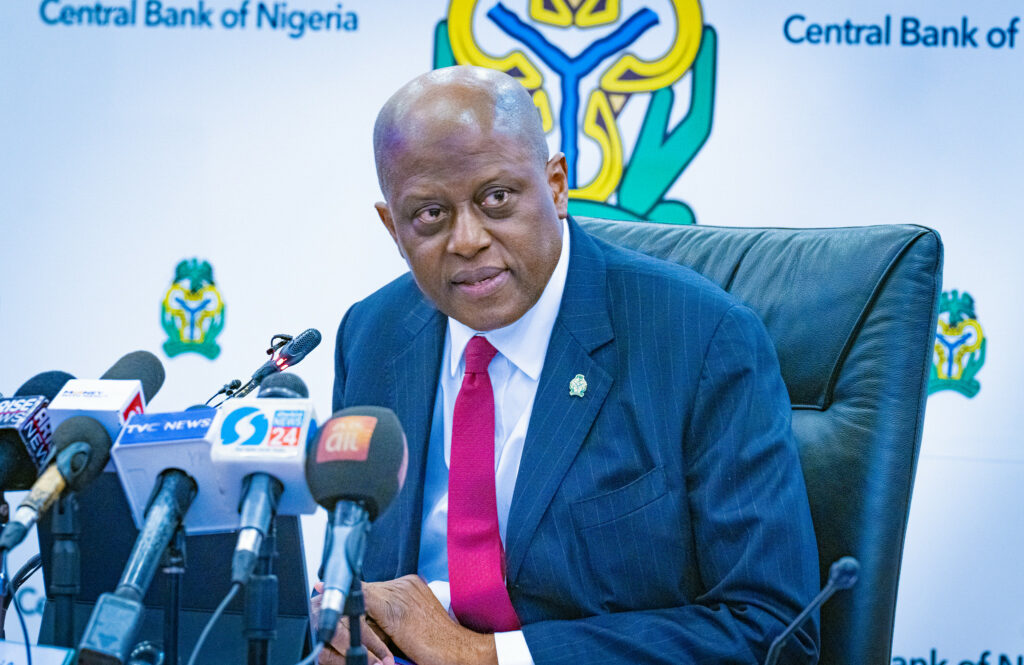
Businesses across Nigeria identified inadequate electricity supply and insecurity as their most pressing operational challenges in March 2026, despite maintaining a broadly positive outlook on the economy, according to the latest Business Expectations Survey released by the Central Bank of Nigeria (CBN) on Thursday.

The report stated, “Respondents identified Insufficient Power Supply (74.5), Insecurity (70.9), High/Multiple Taxes (69.2), High Interest Rate (66.6), and Financial Problems (64.3) as the top five (5) business constraints in March 2026, highlighting factors that directly impact operational stability and profitability.”

The survey, conducted between March 9 and 13, 2026, covered 1,900 firms across industry, services, and agriculture, with a response rate of 99.7 per cent. Despite these constraints, businesses remained optimistic about the macroeconomic environment.

The CBN noted that the confidence index stood at 15.6 points in March, reflecting positive sentiment, although slightly moderated compared to the previous month. The optimism is projected to rise to 43.9 points over the next six months.

Sectoral analysis showed that all sectors expressed confidence in the macroeconomy, with agriculture recording the highest optimism for the current month. The outlook across sectors remained positive in the near and medium terms, signalling sustained economic activity.

On regional performance, the survey showed that optimism was strongest in the North-East, which recorded 39.4 index points, while the South-East lagged behind with negative sentiment at –5.5 points.

However, all regions are expected to record improved outlooks in the coming months.

The report also highlighted that firms anticipate growth in business activity. Respondents expressed positive expectations for volume of orders, business activity, financial condition, and access to credit during the review period, with projections indicating stronger performance in the next six months.

Employment and expansion indicators were similarly upbeat. Businesses signalled plans to increase hiring in April 2026, driven by expansion expectations. The Mining and Quarrying sector recorded the highest employment prospects, while agriculture showed the strongest expansion plans.

See also  10 states plan N4.3tn borrowing to fund 2026 budgets

However, the CBN emphasised that structural challenges continue to weigh on business performance. Beyond power shortages and insecurity, firms cited high bank charges (63.5), an unfavourable economic climate (62.0), unclear economic laws (61.6), and an unfavourable political climate (60.4) among the top constraints.

At the lower end of the constraints ranking was access to credit, with an index of 57.7, indicating that while financing remains a challenge, it is less severe relative to other constraints.

The apex bank noted that the findings underscore the need for reforms in key areas. “Overall, the findings in the review period highlight the need for improvements in energy supply, security conditions, and the regulatory/financial environment to enhance business stability and profitability,” the report added.

On exchange rate expectations, respondents projected that the naira would appreciate against the US dollar across the review periods. Firms also expressed a positive outlook on borrowing rates, suggesting expectations of a more favourable financing environment.

Meanwhile, average capacity utilisation across sectors stood at 52.5 per cent in March 2026, reflecting moderate use of installed capacity. Manufacturing recorded 54.4 per cent, agriculture 53.9 per cent, construction 52.7 per cent, while mining and quarrying, including electricity and water supply, posted 48.9 per cent.

The survey clarified that its findings represent the views of participating firms and do not necessarily reflect the position of the CBN.

punch.ng

FOLLOW US ON:

FACEBOOK

TWITTER

PINTEREST

TIKTOK

YOUTUBE

LINKEDIN

Continue Reading

Business

NISO cuts transmission losses to 7% from 10% in one year

Published

on

The Managing Director/Chief Executive Officer of the Nigerian Independent System Operator, Abdu Bello, has disclosed that Nigeria’s power sector was losing between N5bn and N8bn monthly to transmission inefficiencies, even as he revealed that targeted interventions by the operator have begun to cut losses and improve grid stability.

Bello made this known on Wednesday during the organisation’s first anniversary celebration held at its headquarters in Utako, Abuja, where he presented a detailed scorecard of reforms and operational milestones recorded since its establishment.

Recall that NISO was officially created on April 30, 2024, by the Nigerian Electricity Regulatory Commission following the unbundling of the Transmission Company of Nigeria under the Electricity Act, 2023.

Speaking on one of the most pressing challenges inherited by the operator, Bello said the transmission loss factor at inception was alarmingly high, with severe financial implications for the power sector.

“One of the greatest problems we encountered at the inception of NISO was that we recorded a very high transmission loss factor. At some point, it was close to 10 per cent, costing about N5bn to N8bn monthly,” he said.

He, however, noted that deliberate operational measures have started yielding results.

“We are working on it, and we have reduced it to about 7.05 per cent at the moment. We are also working to reduce it further to about five or six per cent so that we will meet the target of the regulators,” Bello added.

Adopting a broader tone, the NISO boss said the past year had been defined by institution-building, system stabilisation, and market reforms aimed at repositioning Nigeria’s electricity sector.

“Today, we are not just celebrating one year of existence; we are reflecting on one year of deliberate effort, institutional progress, and measurable impact,” he said.

He explained that NISO was established to function as an independent system operator with responsibility for system operations, market administration, planning, and enforcement of grid codes and market rules.

“This mandate is central to Nigeria’s power sector reform. It is about ensuring that our grid is stable, our market is credible, and our planning is coordinated so that electricity can effectively support economic growth,” Bello stated.

On institutional development, he said the organisation had prioritised governance and coordination across the electricity value chain.

See also  Nigeria, UK seal £746m deal to redevelop Tin Can, Apapa ports

“We have established governance and management structures at both board and executive levels, and strengthened coordination from generation through transmission to distribution and eligible customers,” he said.

A major highlight of the address was NISO’s push to digitise grid operations through advanced monitoring systems.

Bello disclosed that the operator is accelerating the deployment of Supervisory Control and Data Acquisition/Energy Management Systems to enable real-time grid visibility.

“On grid visibility, monitoring, and control, a key priority has been improving our ability to see, understand, and manage the national grid in real time. In this regard, we have accelerated the implementation of the SCADA EMS project, working very closely with the Nigerian Electricity Regulatory Commission, NERC, to ensure that the grid monitoring infrastructure SCADA EMS tool, which is a veritable tool for the system operations, is completed and operational.

“It’s a work in progress and we are seeing progress on this. We have also reached advanced stages in the deployment of the telemetry system across the grid at the electricity trading points,” he said.

He added that the organisation was also deploying telemetry systems and Internet-of-Things-based metering infrastructure across generation units, transmission lines, and substations.

“By the time we complete this project, hopefully before the end of the year, we shall have full visibility of the national grid from generation through transmission, substations, and distribution,” he stated.

According to him, the initiative would enable near-real-time electricity market settlements and significantly improve operational efficiency.

“Currently, we operate largely manually, but with telemetry, we can achieve hourly settlements or even real-time market operations,” he added.

Bello also revealed that NISO has intensified efforts to tackle grid instability and recurring system collapses through technical reforms and stricter compliance enforcement.

“Thank God, the regulators, NERC, have already ordered the distribution companies to install IoT meters on their 33 kV and 11 kV feeders, which is an ongoing project. So at the end of this project, we shall have end-to-end visibility of the system from generation through transmission, distribution, and eligible customers.

“Thereby, enabling our system operators and market operators to have visibility on a real-time basis and enhancing effective management of the grid. With that, our efficiency and effectiveness in managing the grid will be tremendously enhanced. These efforts are laying the foundation for full visibility and a data-driven grid and market operations environment.

“At the core of our mandate is ensuring a stable and resilient grid. We are working closely with generation companies and other stakeholders to implement the free-governor mode of operation of generating units to improve frequency response,” he said.

See also  AFCON 2025: Morocco seeks CAF, FIFA intervention after Senegal walk-out

He noted that compliance with this directive has already improved grid frequency stability.

“Substantially, a number of generating units have complied, and we have seen improvements in system frequency and overall grid reliability,” he said, while noting that enforcement actions were ongoing against defaulters.

He further disclosed plans to introduce grid “islanding”, a strategy that segments the national grid to prevent widespread outages.

“We are developing grid islanding to enhance resilience. Disturbances in one segment will not cascade across the entire grid. This will significantly reduce the risk of total system collapse,” he explained.

On market operations, Bello said NISO has taken steps to improve transparency, enforce compliance with market rules, and strengthen coordination among industry players.

“We have enhanced monitoring and enforced compliance with the grid code, market rules, and metering standards. We are also upgrading market systems to enable real-time operations and improved analytics,” he said.

He added that NISO is playing a central role in coordinating emerging state electricity markets following recent sector reforms.

“With states now able to establish their own electricity markets, there must be coordination between state systems and the national wholesale market. That interface is being managed by NISO,” he said.

The NISO boss also linked recent fluctuations in power generation to gas supply challenges, stressing the need for stronger coordination between the power and gas sectors.

“You will have noticed a slight drop in generation capability recently due to gas supply constraints. This coordination between the power sector and gas suppliers is very critical,” he said.

He assured that regulators and stakeholders are working to address the issue and prevent future disruptions.

In a significant development, Bello disclosed that Nigeria has achieved trial synchronisation of its national grid with the West African power system, opening new opportunities for cross-border electricity trade.

“On November 8, 2025, we successfully synchronised the Nigerian grid with the West African power pool, positioning Nigeria for enhanced regional power trade,” he said.

See also  Yuletide: Local flights break N300,000 mark

He explained that the integration would allow Nigeria to export excess power and earn foreign exchange.

“This gives us a bidirectional opportunity to either supply power to the region or import when necessary. It also creates the potential to earn hard currency, which can be reinvested to improve domestic capacity. By

These interventions are contributing to improving system discipline and reliability together. On electricity market development and strengthening, we have made deliberate efforts to strengthen market credibility and transparency.

“Over the past year, we have enhanced monitoring and enforced compliance with the market rules, grid code, and metering standards. We have also improved coordination among market participants to support orderly market operations.

“We have initiated upgrades to market management systems to enable real-time operations, efficient settlement, and improved analytics. We have strengthened data transparency to support informed decision-making in the market space,” he added.

NISO was carved out of the Transmission Company of Nigeria as part of sweeping reforms introduced by the Electricity Act, 2023, to liberalise and decentralise Nigeria’s power sector.

The reform seeks to separate system operations from transmission ownership, improve transparency, and create a more competitive electricity market.

“As we enter our second year, our focus is clear—to translate these foundations into measurable
sector-wide impact. Our priorities include: deepening grid visibility and real-time operational control, strengthening system reliability and resilience, enhancing transparency and efficiency in market operations, enhancing data-driven and technology anchored system planning, supporting coordinated development of national and subnational electricity markets, advancing renewable integration and energy transition initiatives, continuing to invest in staff welfare and institutional capacity and ultimately, our success will be measured by three outcomes: a stable grid, a credible market, and strong investor confidence,” the MD concluded.

Despite these reforms, Nigeria’s power sector continues to face structural challenges, including transmission constraints, gas supply shortages, liquidity issues, and weak infrastructure.

NISO’s first-year performance signals a shift towards data-driven grid management and coordinated planning, although sustained investment and policy consistency will be required to deliver long-term stability.

punch.ng

FOLLOW US ON:

FACEBOOK

TWITTER

PINTEREST

TIKTOK

YOUTUBE

LINKEDIN

Continue Reading

Business

Tinubu approves N3.3trn to settle power sector debt

Published

on

President Bola Tinubu has approved the payment of ₦3.3 trillion, being accumulated debts owed to players in the power sector between February 2015 and March 2025.

Presidential spokesperson, Bayo Onanuga, said the debt repayment plan followed the final review of the legacy debts that have beset the power sector for more than a decade.

The statement noted that implementation has begun, with 15 power plants signing settlement agreements totalling ₦2.3 trillion.

“The Federal Government has already raised ₦501 billion to fund these payments. Out of the amount, N223 billion has been disbursed, with further payments underway.”

The initiative under the Power Sector Financial Reforms Programme is to ensure a fair and transparent resolution and ultimately, stimulate stable electricity generation and distribution.

The statement highlighted the far-reaching gains of the government’s commitment to the debt settlement.

“With the payments reaching the power value chain, generation will be more stable. With power plants supported, electricity reliability will improve. And as the sector stabilises, more investment, more jobs, and better service will follow.”

Shedding more light on this, Olu Arowolo-Verheijen, Special Adviser on Energy to President Tinubu, said,

“This programme is not just about settling legacy debts. It is about restoring confidence across the power sector — ensuring gas suppliers are paid, power plants can keep running, and the system begins to work more reliably.

“It is part of a broader set of reforms already underway — including better metering and service-based tariffs that link what you pay to the quality of electricity you receive.

See also  Shettima pushes for proactive disaster preparedness over costly relief

“The government is also prioritising power supply to businesses, industries, and small enterprises — because reliable electricity is critical to creating jobs, supporting livelihoods, and growing the economy.

“The goal is simple: more reliable power for homes, stronger support for businesses, and a system that works better for all Nigerians,” she added.

The statement further disclosed that President Tinubu has commended all stakeholders who supported efforts to resolve the legacy issues in the power sector.

He has also confirmed that the next phase (Series II) will begin this second quarter.

tribune.ng

FOLLOW US ON:

FACEBOOK

TWITTER

PINTEREST

TIKTOK

YOUTUBE

LINKEDIN

Continue Reading

Trending