Two videos of victims of abduction in Community High School, Ahoro-Esinele, and Baptist Nursery and Primary School, Ogbomoso Yawota area in Oriire Local Government Area of Oyo State, pleading with the federal and state governments to come to their rescue, went viral on social media on Sunday, sparking outrage as the Senate and Yoruba leaders demanded urgent action from the government to secure their release.
The PUNCH reports that terrorists on motorbikes attacked Baptist Nursery and Primary School, Yawota; Community Grammar School, Ahoro-Esinele; and L.A. Primary School, all in Oriire Local Government Area of Oyo State, around 9:30 am on Friday, May 15.
The armed hoodlums abducted pupils, students and staff members, including Alamu.
The police also confirmed the killing of an Assistant Headmaster identified as Mr Adesiyan during the attack, while an okada rider was reportedly shot dead after resisting attempts by the attackers to seize his motorcycle.
One of the viral videos on Sunday was from the abducted Principal of Community High School, Ahoro-Esinele, Mrs Alamu, and a teacher at Baptist Nursery and Primary School, Temitope Mary Dahunsi.
In one of the videos sighted on Sunday by The PUNCH, Mrs Alamu appealed to the federal and state governments, the Christian Association of Nigeria and well-meaning Nigerians to intervene and secure their release.
Speaking from captivity, the visibly distressed school administrator said she and several students and staff members had remained with their abductors since the attack on Friday.
Alamu said, “I am Mrs Alamu F.R. I am the Principal of Community High School in Oriire Local Government of Oyo State. On Friday, around 9:30 am, we were attacked by a certain group of people and a good number of us were abducted, the staff and the students as well, and we have been here since Friday.”
She pleaded with authorities to ensure a peaceful resolution to prevent loss of lives.
Mrs Alamu added, “Today, I am making this video to ask for help from everyone, starting from the Federal Government of Nigeria and the Oyo State Government, Seyi Makinde, the Christian Association of Nigeria, and all well-meaning Nigerians, that they should come to our help and settle this thing peacefully so that our lives will not be lost.”
In the second viral video, Dahunsi called on both the federal and state governments to come to their immediate rescue, lamenting that the abducted children had been crying since Friday.
She said, “I am Dahunsi Temitope Mary, I’m from Ibadan, working at First Baptist Church, Ogbomosho Yawota area.
“Yesterday (Friday), people came to our school, and we were kidnapped. Both the teachers and the children. We are all here, we need help from the Federal Government and state government, from both the church, the Baptist Church Yawota and the community. So that these people will release us, please help us.
“We need help from our President Bola Tinubu, our state governor, Engineer Seyi Makinde and all Nigerians. The children are here crying so that we will not waste our lives. Please help us, don’t neglect us.”
Police probe video
The state police command \confirmed the receipt of the viral videos.
In a statement released by the state Police Public Relations Officer, Olayinka Ayanlade, in Ibadan, the state capital, the police said, “Consequently, the footage is presently undergoing comprehensive forensic examination to determine its authenticity and further aid ongoing investigations, rescue operations, as well as the identification and arrest of the perpetrators behind the heinous act.”
The command reassured residents of its unwavering commitment towards ensuring the safe return and reunification of all abducted persons with their families.
“To this end, intensive operational, intelligence-driven, and tactical efforts in collaboration with other security agencies are ongoing to secure the victims unharmed and bring all those responsible to justice,” the statement added.
The command, therefore, urged members of the public to remain calm, law-abiding, and continue to cooperate with the police and other security agencies by providing credible and timely information capable of assisting ongoing operations and investigations.
“Members of the public are equally advised to refrain from sharing unverified information, misleading content, or materials capable of heightening tension and creating unnecessary panic, as such situations are often exploited by criminal elements and enemies of peace to further their sinister objectives.
“Consequently, anyone with useful information capable of aiding the ongoing investigation, rescue operations, and arrest of the perpetrators is encouraged to promptly relay the same to the appropriate authorities or nearest security agency for immediate action,” the statement read.
Senate demands action
Leader of the Senate, Opeyemi Bamidele, on Sunday condemned the abduction of 87 students and teachers in Borno and Oyo states, describing the attacks as a threat to Nigeria’s future.
Bamidele, who is also the Vice Chairman of the Senate Committee on the Review of the 1999 Constitution, said the incidents further underscored the urgency of establishing state police to strengthen the country’s security architecture.
In a statement issued by his Directorate of Media and Public Affairs, the Senate leader called for coordinated measures to secure schools nationwide and tackle the growing out-of-school children crisis.
While the Oyo school incident happened on Friday, Boko Haram insurgents reportedly attacked Mussa Primary and Junior Secondary School in Askira/Uba Local Government Area of Borno State, abducting 42 students.
Reacting to the incidents, Bamidele described the abductions as “an attack on the future of Nigeria,” promising that the National Assembly would fast-track the process for the creation of state police.
According to him, the 10th National Assembly is already at an advanced stage in the ongoing constitutional amendment process aimed at paving the way for state police.
He explained that after the National Assembly concludes its part, the proposal would be transmitted to state Houses of Assembly for approval by at least two-thirds before it could take effect.
The Senate leader appealed to state governments and legislatures to treat the state police proposal as a matter of national importance rather than subjecting it to partisan or ethno-religious considerations.
Bamidele also urged both federal and state governments to fully implement the Safe School Initiative as a temporary measure to curb insecurity in schools and address the rising number of out-of-school children, which he said stood at 18.3 million nationwide.
He said, “The incessant abduction of students and teachers is a tragic national concern that negates our national development indices. We cannot and must not allow it to continue.
“At the National Assembly, we will rise against this trend and put an end to it through the instrumentality of legislation.
“As soon as the National Assembly resumes plenaries on June 2, we will perfect all outstanding legislative initiatives that have been introduced to decisively address security challenges in the federation.
“One of such initiatives is the ongoing review of the 1999 Constitution that seeks to establish state police, which is now at an advanced stage.
“Another is the amendment of the Terrorism (Prevention and Prohibition) Act, 2022, aimed at strengthening the system of consequence in the country’s justice sector and discouraging heinous crimes nationwide.”
‘Yorubaland under siege’
The pan-Yoruba socio-political organisation, Afenifere, on Sunday, expressed dismay and charged state governments, saying, “Yorubaland is now under siege.”
The organisation, in a statement released by its National Publicity Secretary, Jare Ajayi, in Ibadan, the Oyo State capital, also sympathised with families of the victims of the attacks.
Ajayi said Afenifere leader, Pa Reuben Fasoranti, “was saddened to hear this unfortunate incident which occurred the same week he marked his 100th year on earth.”
Ajayi said, “He (Pa Fasoranti) sympathised with the victims and their families just as he prayed for the quick recovery of those who were injured.
“Besides, he expressed the hope that a total stop would be put to the life-threatening insecurity situation in the country without further delay.”
Ajayi said the latest attacks reinforced growing fears that the terrorists appeared determined to overrun the South-West and, ultimately, the entire South.
“The actions of South-West governors in recent times do not suggest that they appreciate the enormity of the responsibility they shoulder concerning the security of their land.
“In view of the fact that the primary duty of government is the security and welfare of the people, governments in South-Western states of Nigeria must prove that they are alive to their constitutionally assigned responsibilities.
“Everything must be done to ensure that no area in the region experiences an attack by kidnappers and bandits anymore,” he said.
The organisation listed some incidents of terrorism in recent times to underscore the call for urgent action.
“Among the instances he (Fasoranti) cited were the confirmation by Ogun State Police command on Tuesday, May 12, of the abduction of three members of a family by suspected gunmen at Ipojo Golden Estate, Oke-Eri, in Ijebu Ode.
“On Wednesday last week, the police and vigilante operatives disrupted an alleged N10m ransom collection operation by a suspected kidnapping gang in Otefon Village Forest, Atiba Local Government Area, Oyo State.
“On April 18, heavily-armed gunmen invaded a church during an open-air crusade in Eda Oniyo, Ekiti State, killing a pastor and abducting several worshippers.
“Gunmen stormed Woro and Nuku in Kaiama Local Government Area of Kwara State on February 3 and 4, killing many and abducting more than 170 people.
“On May 2, gunmen invaded a Police Mobile Force camp in Tenebo, Kaiama LGA, killing three police officers.
“On the same day, a 60-year-old trader was kidnapped at Jinarere area of Ibadan by four masked gunmen just as one Alhaji Aleshinloye, a businessman, was kidnapped in Irawo, Atisbo Local Government Area of Oyo State last week.
“Earlier, a schoolgirl was kidnapped at the Challenge area of Ibadan, while a retired teacher was killed on his farm in Ago Are, Oke-Ogun, Oyo State.
“On November 18, 2025, Christ Apostolic Church in Eruku, Ekiti LGA of Kwara State, was attacked by terrorists during a Tuesday evening service, killing three worshippers and abducting 38 others, including a pastor.
“Four passengers were abducted along the Igbeti–Kisi Road, though they were later rescued by police, Amotekun and Operation Burst. The list of terror acts keeps growing,” Afenifere stated.
The organisation declared that the latest attacks reinforced growing fears that the terrorists appeared determined to overrun the South-West and, ultimately, the entire South.
“The chilling reality thus detonated the earlier notion that the southwestern part of Nigeria was a safe haven considered relatively insulated from extremist violence that is prevalent in some other parts of the country,” it added.
Ajayi said what was happening now seemed to have been anticipated, going by the action taken by the then South-West governors who, under the leadership of the late Ondo State Governor Rotimi Akeredolu, established the South-West Security Network, codenamed Amotekun, on January 9, 2020.
“The initiative was designed to safeguard the six states of the region,” he added.
Afenifere, therefore, commended the swift visit of Inspector General of Police, Olatunji Disu, to the scene of the incident and the inauguration of the Police’s Violence Crime Response Unit in Ibadan by Makinde on Saturday, May 16.
The group expressed the hope that the initiatives would lead to the prevention of crimes, including banditry.
He recalled that governors of Ondo, Ekiti, Osun, Ogun, Lagos and Oyo met in Ibadan on Monday, November 24, 2025, on what was dubbed a security summit.
The group said, “The objective of the meeting was mainly on how to secure the South-West. In February, the Ogun State Government launched closed-circuit television hubs for security purposes, just as Ondo and Ekiti states also announced various steps to stem insecurity in their respective states.
“Earlier in the year, Oyo announced the purchase of two DA 42 MNG Intelligence, Surveillance and Reconnaissance aircraft at a cost of N7.7bn.
“Announcing the purchase, Makinde said that the aircraft, when fully operational, will provide wide aerial coverage across Oyo and extend surveillance to vulnerable corridors linking Oyo and Kwara states as areas often exploited by criminal elements due to the porosity of the borders.
“Were the aircraft deployed, what happened last week would have been nipped in the bud because the planes were reported to be fitted with sophisticated surveillance technology capable of identifying targets from both high and low altitudes, which allows for real-time intelligence gathering, improving rapid response and precision security operations.”
Afenifere wondered what had become of the resolutions by the six governors, the CCTV erected by Ogun, the surveillance aircraft purchased by Oyo and related security steps announced by Ondo at various times.
He recalled that there was a report of bandits sending notices in English and Yoruba of their planned attack to some communities in Oriire LG shortly after the killing of five forest guards at Oloka village in January this year.
“In view of the fact that the primary duty of the government is the security and welfare of the people, governments in the south-western states of Nigeria must prove that they are alive to their constitutionally assigned responsibilities.
“Everything must be done to ensure that no area in the region experiences an attack by kidnappers and bandits anymore. Yorubaland has been infiltrated,” he said.
Afenifere then called on the six governors in the region to let the security of their people be their topmost priority.
He added that while the Federal Government has the onerous duty of ensuring the security and welfare of Nigerians, governors have the sacred responsibility of using the resources at their disposal to secure their people and guarantee their welfare.
Oyo vows rescue
The Oyo State Government has vowed to rescue the victims, as it assured families of its commitment to securing the safe release of those abducted.
The Deputy Governor, Bayo Lawal, stated this on Sunday when he led a government delegation on a condolence visit to communities in Oriire LGA.
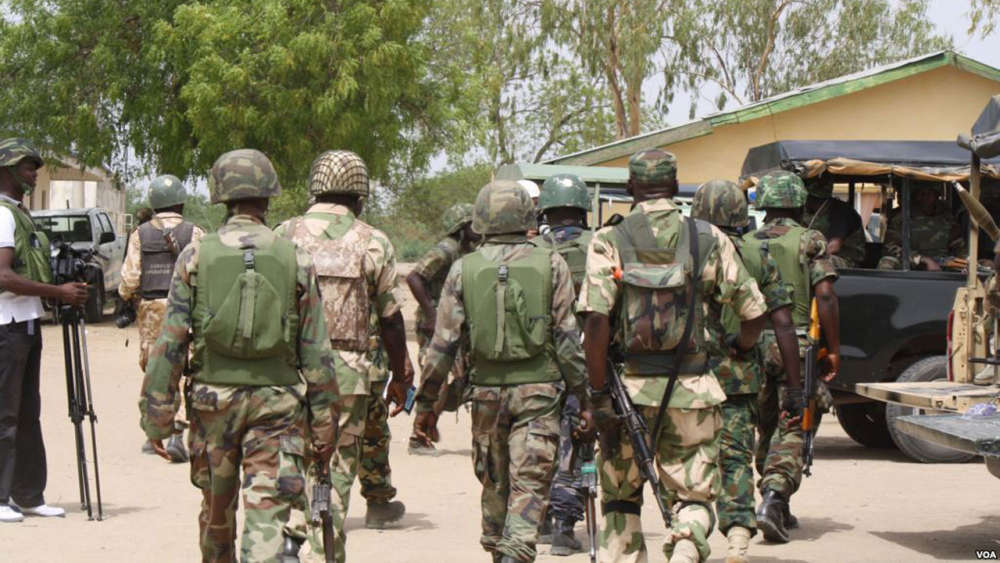
In a statement on Sunday, made available to newsmen in Ibadan, the Commissioner for Information, Dotun Oyelade, disclosed that the deputy governor, during the visit, disclosed that security forces, including the garrison commander, police, Department of State Services, Nigeria Security and Civil Defence Corps, as well as local hunters, were still in the bush pursuing the attackers.
Lawal warned that the government would not tolerate banditry, reiterating that, “Oyo State is not giving an inch for banditry and criminality. The government is doing everything required to ensure adequate security so that citizens can live in peace.”
Lawal also said the figure of those abducted had not been established, describing what was circulating in the media as incorrect.
“Until we do proper verification, we cannot put a figure to those abducted. For now, figures circulating in the media cannot be taken as correct,” Lawal said.
The delegation visited Yawota and Esiele in Oriire South and equally met with families of the victims.
Speaking on steps already taken, Lawal said Governor Makinde had responded swiftly since the incident happened, adding that security agencies had engaged the suspected kidnappers in the bush, leading to the killing of about three of them.
“We have pacified the residents and given assurances that those abducted will be rescued and brought back,” Lawal told journalists after visiting victims at LAUTECH Teaching Hospital and Bowen University Teaching Hospital in Ogbomoso.
According to him, the attackers targeted Esiele and Yawota around Ahorodada, abducting pupils and staff from LA Basic School Ahoro Esiele, Community High School, and a private primary school.
Lawal said the state immediately deployed logistical and operational support to enable security agencies to respond and to ensure injured victims received treatment, adding, however, that the incident showed bandits were operating close to communities, particularly along the fringes of forest reserves.
He said the government would continue to strengthen security architecture in vulnerable areas, including Saki West, Saki East, Irepo, Iseyin, Ibarapa, Igbeti, and Oriire.
“We are asking residents to remain vigilant. If you notice any unusual movement, report it to security agencies so that prompt action can be taken,” Lawal said.
The deputy governor confirmed that one person and a teacher lost their lives in the attack.
He directed the chairmen of Oriire and Surulere local government areas to submit comprehensive reports by Monday morning.
The delegation included the Commissioner for Education, Segun Olayiwola; the Commissioner for Information, Oyelade; Chairman of the Oyo State Project Performance Monitoring Agency, Muftau Open Salawu, and Special Adviser on Security Matters, Sunday Odukoya, among others.
Osun reinforces security
Osun State Governor, Ademola Adeleke, has ordered immediate revitalisation of the Safe School Initiative by the Ministry of Education and other relevant government and security agencies.
He also said his administration would improve the security of schools, especially in rural areas in the state.
The order came in the wake of recent school kidnappings in Oyo state.
The governor said the directive was a precautionary step to forestall possible spillover of the Oyo incident.
A statement by the spokesperson to the governor, Olawale Rasheed, obtained in Osogbo on Sunday, said Adeleke additionally directed an immediate beef-up of intelligence gathering, especially around schools located in border areas and remote sections of the state.
“The Amotekun Security Service was specifically instructed to strengthen its partnership with various non-governmental peace organisations currently providing security services in many schools across the state,” the statement noted.
He assured parents and school authorities of the safety and protection of their wards and also directed his special adviser on security matters to follow up on the new plan with service commanders across the security agencies.
“We are resolved to secure our pupils across our school system. Necessary steps are ongoing to improve the security of schools, especially in rural areas. The existing safe school plan will be strengthened.
“The commissioner for education and the security adviser are to meet to firm up the revitalisation plan. I assure parents and school authorities of their wards’ safety and protection,” the statement further said.
Alaafin faults response
The Alaafin of Oyo, Oba Akeem Owoade, on Sunday, called on the Federal Government to take a holistic view on intelligence gathering and native intelligence mechanisms as a system for addressing insecurity.
He gave the advice in a statement released by his Director of Media and Publicity, Bode Durojaiye, in Ibadan, the Oyo State capital.
The Alaafin urged the government to abandon reactive approaches to insecurity, saying this would require making credible investments in intelligence capabilities that pinpoint threats even before they materialise, hardening soft targets such as schools and communities, and cutting off the financial and logistical networks that sustain criminal groups.
This, according to the monarch, means working with communities to build trust and gather intelligence rather than treating them as collateral damage in airstrikes.
Oba Owoade said abductions and wanton destruction of lives by terrorists had reached an intolerable level, adding that Nigerians were becoming more apprehensive and worried about the state of insecurity, especially the flagrant disregard for human lives.
He said, “The attack is going through serious security challenges, and what is more disturbing is that these blood guzzlers cannot have such sophisticated and destructive weapons to terrorise without receiving backing from some allies somewhere.
“Threats to human lives are not only serious acts of terrorism but indeed an abomination. This is why well-meaning Nigerians and good friends of Nigeria must see the current war against dreaded terrorists as a welcome development and give total support, in order to save the country from the siege of terrorism.
“Citizens are fast losing trust in their government’s ability to protect them, and inter-communal trust breaks down. The constant threat of violence, kidnapping, and attacks leaves a generation of citizens with lasting psychological trauma, anxiety, and mental health challenges. Insecurity directly threatens the political integrity and governance of a nation.
“The ultimate solution is more political than military. Government, political leaders and followers, and all of us must have the courage and honesty to get to the root causes of our current state of insecurity, underpinned by criminality and insurgency.
“The most tragic consequence is the loss of human lives and the mass displacement of populations, creating an internally displaced persons crisis and tearing families apart.”
While pointing out that “it is high time for the Federal Government to carry out a total overhaul of the country’s security architecture,” Owoade lauded President Bola Tinubu’s demonstration, through actions, that ending insecurity is one of his administration’s foremost priorities.
“I commiserate with the families of the attacks, and assure that the government is on top of the situation, as perpetrators would be brought to justice.
“The Federal Government, too, must take a holistic view of intelligence gathering and native intelligence mechanisms as a system for addressing insecurity.
“The police and local security operatives have been deployed to the affected villages, and this donation of money is just to complement government efforts in apprehending the terrorists,” he added.
Olubadan decries kidnap
The Chairman, Oyo State Council of Obas and Chiefs and the Olubadan of Ibadanland, Oba Rashidi Ladoja, on Sunday decried the kidnapping of primary and secondary school pupils in Oriire Local Government Area of the state.
The Olubadan, in a statement released by his media aide, Adeola Oloko, in Ibadan, the state capital, said the issue of security should not be left in the hands of the government alone.
He said, “It is high time that we all come together to address the issue of insecurity nationwide.
“The police and other security operatives must intensify their search for these students.
“Also, local vigilantes and traditional rulers must collaborate with security personnel to ensure that the kidnapped students are returned to their respective parents safely.”
APM condemns abduction
The Allied People’s Movement has condemned the abduction of schoolchildren and teaching staff in Oyo State, describing the attack as “outrageous and heartless.”
In a statement issued on Sunday by its National Chairman, Yusuf Dantalle, the party demanded the immediate release of the victims kidnapped during Friday’s attack.
“The APM strongly condemns the abduction of schoolchildren, the principal and the killing of the assistant headteacher by terrorists in Oyo State on Friday. It is outrageous, barbaric and cruel in the worst order.
“Our thoughts and prayers are with these children, teachers, families, government and people of Oyo State in this trying time.
“Our hearts also go out to the family of the assistant headteacher who was brutally killed, as well as the bike rider who was mowed down in this senseless attack.
“We urge security agencies to intensify efforts to rescue these children and the principal held by terrorists to enable them to reunite with their families, and ensure adequate security of lives and property across the state in this electoral season,” Dantalle said.
The party also commended Makinde for what it described as his “visionary, purposeful and transformative leadership,” urging him not to be discouraged by the attack.
punch.ng
FOLLOW US ON: