The Monetary Policy Committee of the Central Bank of Nigeria (CBN) on Wednesday retained the benchmark interest rate at 26.5 per cent, citing rising external risks, renewed inflationary pressure, and the need to sustain exchange rate stability.
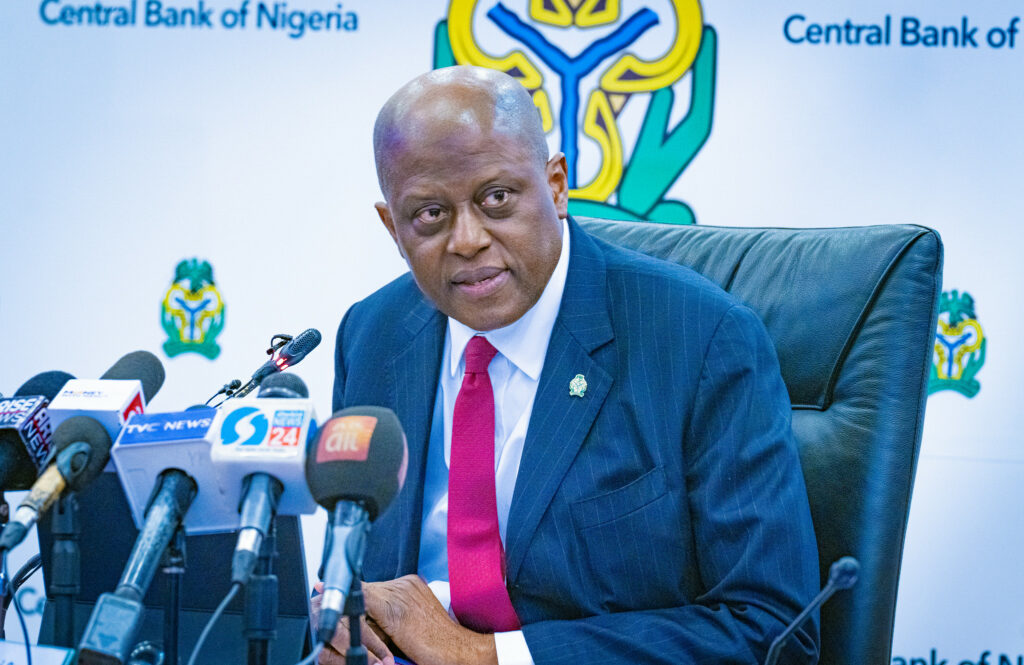
The CBN Governor, Olayemi Cardoso, announced the decision at the end of the committee’s 305th meeting held in Abuja. He said, “The committee’s decision is as follows: retain the monetary policy rate at 26.5 per cent.”
The decision also elicited mixed reactions from members of the Organised Private Sector. They acknowledged the justification for retaining interest rates and, on the other hand, cautioned that high rates hamper private sector investment in SMEs and manufacturing, leading to lower output and hampering job creation.
The committee also retained the standing facilities corridor around the MPR at +50/-450 basis points, the Cash Reserve Requirement of Deposit Money Banks at 45 per cent, Merchant Banks at 16 per cent, and non-TSA public sector deposits at 75 per cent.
The decision came after Nigeria’s headline inflation rose for the second consecutive month to 15.69 per cent in April 2026 from 15.38 per cent in March, according to the latest Consumer Price Index report released by the National Bureau of Statistics.
Food inflation also increased to 16.06 per cent in April from 14.31 per cent in March, reflecting higher transportation and logistics costs as well as seasonal pressures, while core inflation moderated to 15.86 per cent from 16.21 per cent.
The MPC said the renewed inflationary pressure was largely caused by external shocks, particularly spillovers from the Middle East crisis, which had pushed up global energy prices and logistics costs.
However, the committee said the impact on Nigeria had been muted by earlier reforms, including exchange rate stability, improved external reserves, stronger monetary policy transmission, a better-capitalised banking system, and ongoing fiscal consolidation.
It said, “Although inflation has risen marginally for two consecutive months, largely induced by external shocks, the MPC recognised its transitory nature and remained confident that the current macroeconomic environment is sufficiently robust to support a return to disinflation.”
Speaking during the post-meeting press briefing, Cardoso said the CBN would sustain its current policy direction, noting that the country had recorded 11 straight months of disinflation before the recent uptick.
“We’ve got to remember that we’ve been coming from 11 straight months of disinflation. And we believe that what we have now is something that has resulted from external shocks,” he said.
He added that the apex bank had built buffers to protect the economy, saying Nigeria’s recent sovereign rating upgrade by Standard & Poor’s showed that current policies were moving the economy in the right direction.
According to him, exchange rate stability remains central to the CBN’s inflation-control strategy. “It is key that the centrepiece of our toolkit is ensuring that our foreign exchange rate remains stable,” Cardoso said, adding that the bank would continue to work with fiscal authorities to reduce inflation pass-through.
On the foreign exchange market, the governor dismissed claims that the CBN was aggressively intervening to defend the naira. “The answer is that it’s not true,” he said. “The foreign exchange system has changed considerably.”
Cardoso said daily foreign exchange turnover had risen from about $100m when the current administration took office to roughly $550m, with occasional spikes to $1bn. He said the CBN’s intervention in 2025 was only about 1.2 to 1.3 per cent of total market turnover, adding that the market was increasingly being driven by willing buyers and willing sellers.
The governor also said Nigeria’s external reserves remained dynamic and resilient, despite recent concerns over declines in reserve levels. The MPC communiqué showed that gross external reserves stood at $49.49bn as of May 15, 2026, compared with $48.35bn at the end of March, providing 9.04 months of import cover.
Cardoso said some reserve movements reflected normal payments for government obligations and loans, but added that new inflows were also coming in.
Addressing the new foreign exchange manual, the apex bank chief said the document, which became effective on June 1, was part of ongoing reforms to deepen transparency and improve market confidence.
He said the last major revision was done in 2017, adding that the new manual would make it easier for exporters to repatriate foreign exchange earnings and access their funds without unnecessary restrictions.
OPS reacts
In separate phone interviews with The PUNCH, business leaders expressed more cautiousness. They backed the retention as a necessary move to shield the economy from instability linked to tensions in the Middle East and election-related inflation risks. In the same vein, they argued that the high borrowing cost would further weaken small businesses and deepen poverty.
President of the Lagos Chamber of Commerce and Industry, Leye Kupoluyi, explained that while the Chamber acknowledges market expectations for a rate cut to ease credit conditions and stimulate growth, it recognises that persistent inflationary pressures justify policy prudence at this stage.
He warned that “an elevated interest rate continues to constrain private sector investment, especially SMEs and manufacturing, thereby weighing on output and job creation.”
The LCCI described the 26.5 per cent rate as “A necessary stance to anchor inflation expectations, given the rise in headline inflation to 15.69 per cent in April 2026 from 15.38 per cent in March.”
Kupoluyi concluded that LCCI would continue to constructively support the apex bank as it “firmly calls for a clear, data-driven path toward gradual monetary easing once disinflation becomes sustained and exchange rate stability is reinforced.”
On his part, the Deputy President of the National Association of Small-Scale Industrialists, Segun Kuti-George, described the decision as appropriate given prevailing uncertainties.
“It is the sensible thing to do in this unstable atmosphere. Both at the local and world stages, there are serious instabilities, so it’s difficult to respond to them. The best thing is to retain the rates so you don’t get yourself into unnecessary problems due to the general instability,” Kuti-George said.
Also supporting the decision, the Director of the Centre for the Promotion of Private Enterprise, Dr Muda Yusuf, said the committee acted in line with expectations by resisting further tightening.
“The MPC decision to retain the rate is in line with the CPPE’s expectation. We were trying to caution that we don’t want to see further tightening of monetary policy,” Yusuf said.
The CPPE chief observed that businesses were already grappling with harsh operating conditions and could not absorb additional increases in borrowing costs. “The situation is bad enough for many businesses. We don’t want an additional hike in interest rates,” Yusuf said.
He explained that although inflation edged higher in March and April, month-on-month indicators for headline, core, and food inflation had declined, giving the apex bank room to maintain rates rather than tighten policy further.
Yusuf added that the prevailing geopolitical tensions involving Iran, Israel and the United States, rising crude oil prices, and increasing election-related spending posed major inflationary threats that made a rate cut unrealistic at this stage.
“Those inflation risks are a lot. So you can’t expect the CBN to be relaxing when you are facing so much inflation risk. Our own position is that even despite that, they should not tighten monetary policy. And they didn’t tighten,” Yusuf said.
However, the President of the Association of Small Business Owners of Nigeria, Dr Femi Egbesola, faulted the decision and called for a reduction in rates at the next MPC meeting.
“Many of us were very hopeful that the interest rate would come down. We believe that lowering the interest rate will go a long way to support more access to funding for SMEs and will also make it more affordable,” Egbesola said.
He said the retention would worsen the challenges facing businesses and households already struggling with rising energy costs and inflation.
“I’m not too sure that this is going to be good for SMEs and the business community. I’m not too sure that it is also going to be good for the citizens because this will continue to mean that poverty will remain or become deeper,” Egbesola said.
He added, “Our prayer is for it to be lowered. We hope that in the next MPR session, something more reasonable will be done to lower it.”
Earlier predictions from CPPE chief, Muda Yusuf and analysts at United Capital Plc Research held that the MPC would likely retain the current monetary policy stance despite rising inflationary pressures, citing inflationary pressures and rising liquidity ahead of the 2027 elections.
Recapitalisation, SMEs credit
The CBN governor also addressed the recent banking recapitalisation exercise, saying 33 banks had met the new capital requirements. He said the outcome showed investor confidence in the Nigerian economy, with domestic investors accounting for about 74 per cent of the capital raised and foreign investors contributing about 26 per cent.
Cardoso said banks yet to meet the threshold were dealing with legal, regulatory, and judicial issues, but remained under close supervision by the apex bank. “We are fully on top of all of the banks that are still on that road of travel. And there is business continuing as usual,” he said.
On credit to small and medium enterprises, Cardoso said the CBN was working with other government institutions to improve lending to the sector, noting that SME financing was not the exclusive responsibility of the apex bank.
He disclosed that new credit to the SME sector rose to about N199bn in April 2026 from N153bn in March, driven largely by retail, SME, and short-term facilities.
He said the CBN had also signed a memorandum of understanding with the Nigerian Communications Commission to tackle fraud and improve digital connectivity, while the Global Standing Instruction framework was helping lenders manage credit risks.
Cardoso said development finance institutions had also been given higher single obligor limits to enable them to extend more credit to SMEs.
On bank charges and customer complaints, the governor clarified that the N50 stamp duty did not originate from banks but from tax authorities, with banks only serving as collection channels.
He said the CBN had set up a committee led by its Consumer Protection Department, involving deposit money banks and the top 10 microfinance banks, to review customer complaints and improve service delivery.
Cardoso said one issue under review was the multiplicity of debit alerts and transaction notifications sent by banks, which often created confusion for customers.
He added that the CBN’s compliance department was also reviewing market conduct and how banks handle complaints, including their ability to compensate customers where necessary.
The MPC also noted that real GDP grew by 4.07 per cent in the fourth quarter of 2025 from 3.98 per cent in the previous quarter, supported by growth in industry, agriculture, services, and the oil sector.
The committee projected that output growth would remain resilient in 2026 despite risks from the Middle East conflict, while inflation was expected to moderate as the previous tightening, exchange rate stability, and improved food supply began to take effect.
The next MPC meeting is scheduled for July 20 and 21, 2026. The PUNCH earlier reported that the Central Bank of Nigeria noted that 63.3 per cent of Nigerians want interest rates reduced.
The apex bank disclosed this in its April 2026 Inflation Expectations Survey Report, released by its Statistics Department under the Economic Policy Directorate, and obtained by The PUNCH. The report found that most respondents preferred lower borrowing costs despite persistent inflationary pressures across the economy.