
Lifestyle
Princess Omo-Oba Adenrele Ademola: The Nigerian Royal Who Served as a Wartime Nurse (PHOTOS)

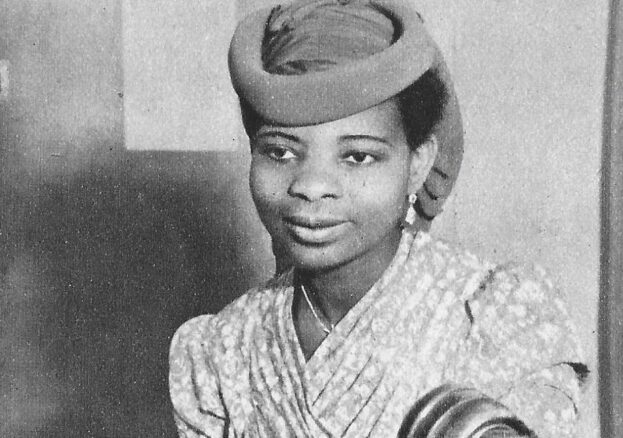
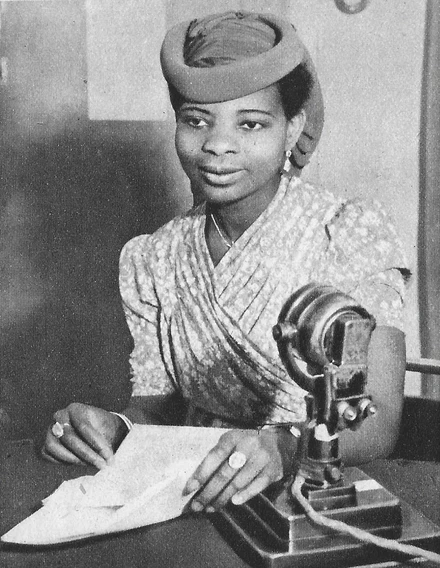
A pioneer of compassion and courage whose service redefined the legacy of African women during World War II.
Early Life and Royal Heritage
Princess Omo-Oba Adenrele Ademola was born into the royal family of Abeokuta, Nigeria, as the daughter of Oba Sir Ladapo Samuel Ademola II, the Alake of Egbaland. Her royal lineage placed her among the most prominent Yoruba families of her time. Yet, rather than living a life of luxury, she chose a path of service — dedicating her life to nursing and humanitarian care.
Her early life reflected the values of discipline and community that defined the Egba monarchy. Like many members of the educated Nigerian elite of the early 20th century, she was sent abroad for professional training, where she would later distinguish herself in one of the most challenging periods of modern history.
Training at Guy’s Hospital, London
Princess Adenrele Ademola began her nursing career at Guy’s Hospital, one of London’s most prestigious medical institutions. She trained rigorously and, in 1941, she qualified as a state-registered nurse.
Following this achievement, she obtained additional credentials from the Central Midwives Board, expanding her qualifications to include midwifery — a rare dual certification for African women in Britain at the time. Her academic and professional excellence made her one of the earliest Nigerian royals to earn medical credentials in the United Kingdom.
Wartime Service and the London Blitz
When the Second World War broke out, Princess Adenrele Ademola remained in London and joined the ranks of medical professionals who treated casualties during the Blitz — the relentless bombing of the city by German forces between 1940 and 1941.
She worked in several hospitals across London, including Guy’s Hospital and other wartime medical units, providing care to both soldiers and civilians. Her service under the harsh wartime conditions demonstrated extraordinary courage and dedication, earning her deep respect from her colleagues and patients alike.
At a time when colonial subjects were often overlooked in British public life, Princess Adenrele stood as a proud symbol of African contribution, resilience, and professional excellence.
“Nurse Ademola” – The Lost Wartime Film
In 1943, her remarkable story inspired a short film titled “Nurse Ademola”, produced by the Colonial Film Unit. The film was part of Britain’s wartime propaganda initiative, designed to highlight the contributions of individuals from across the British Empire to the war effort.
The film portrayed her daily life as a nurse in London, her interactions with patients and colleagues, and her unwavering commitment to service amidst the challenges of war. It was shown across West Africa, particularly in Nigeria, Ghana, and Sierra Leone, to encourage women and colonial subjects to join essential services and support the Allied cause.
Unfortunately, Nurse Ademola is now considered a lost film, with no known surviving copies. Nonetheless, it remains an invaluable part of colonial-era cinematic history and a rare example of early African representation in British media.
Later Career and Legacy
After the war, Princess Adenrele Ademola continued her nursing career, serving in hospitals both in the United Kingdom and Nigeria. Her career spanned over three decades, during which she became a role model for African women entering the nursing profession.
Through her work, she demonstrated that nobility was not merely a matter of birth, but of service, compassion, and courage. She inspired generations of Nigerian women to pursue education and careers in healthcare, long before such paths were common.
Today, her story is studied within the broader history of African women’s contributions to global service, particularly within the context of World War II and British colonial history.
A Forgotten Icon of African History
Despite her royal heritage and international achievements, Princess Omo-Oba Adenrele Ademola’s story remains relatively unknown in Nigeria. Historians and film archivists continue to search for surviving reels or documentation of Nurse Ademola, viewing it as a crucial artefact of African presence in wartime Britain.
Her life bridges two worlds — the royal traditions of Yoruba culture and the professional modernity of post-war Britain. As such, she embodies a form of quiet heroism that continues to resonate in narratives of African women’s resilience.
References
1. Imperial War Museum, London – “Nurse Ademola” (Colonial Film Unit, 1943) Archive Notes.
2. British Film Institute (BFI) – Colonial Film: Moving Images of the British Empire Database.
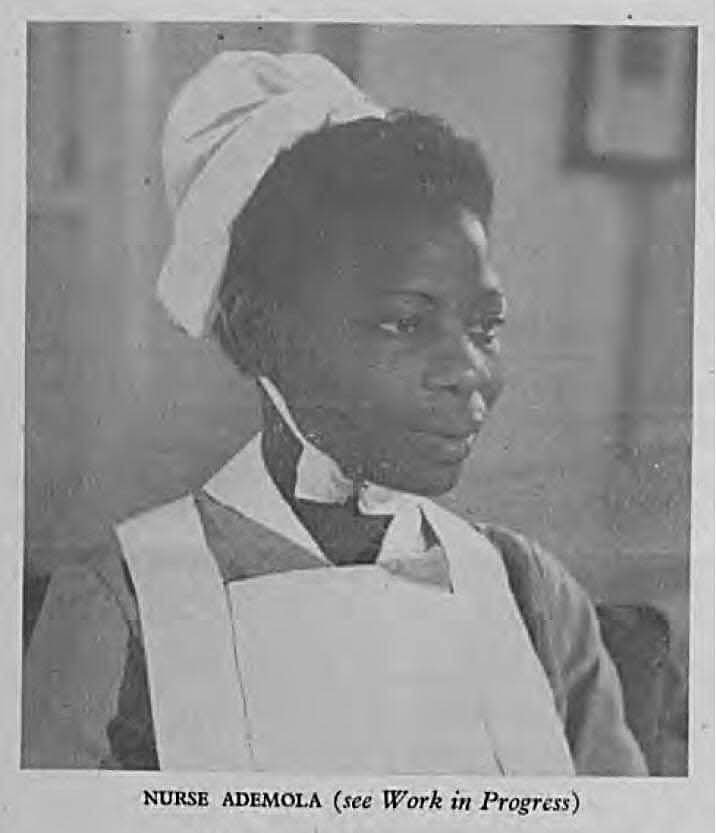
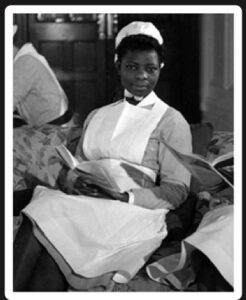
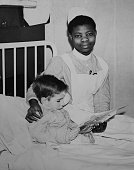
Nigerian Royal and nurse Princess Omo-Oba Adenrele Ademola with a young patient on an eye care ward during her nursing training at Guy’s Hospital, in Southwark, London, England, 3rd January 1938. Princess Adenrele Ademola is the daughter of Ladapo Ademola, the Alake of Abeokuta. (Photo by Becker/Fox Photos/Hulton Archive/Getty Images)
FOLLOW US ON:






FAKE IT TILL YOU MAKE IT — BUT AT WHAT COST?

“I MADE THIS PERSON WHO THEY ARE TODAY!” — REALLY?

SOME PEOPLE WILL DO ANYTHING — EVEN EVIL — JUST TO MAKE MONEY!

‘Sleeping Prince’ of Saudi Arabia dies after 20 years in coma

2027: Atiku delays ADC membership card collection amid rumoured Jonathan comeback

How A Class Of 24 Students Produced 2 Presidents, 4 Governors, 2 Ministers, 4 Emirs, 3 Justices, 4 Ambassadors and Other Influential Leaders


-

 News19 hours ago
Air chief pleads for patience as investigation begins on Ondo crash
-
News18 hours ago
Dapo Abiodun reveals that Nigeria needs 554,353 personnel for state police, read details
-
News18 hours ago
INEC displays voter register, begins PVC distribution ahead of 2027 elections
-
Sports18 hours ago
Adeniyi lauds Nigeria’s Veterans World Wrestling Champs medal
-
Business19 hours ago
FG’s 30-day petrol discount sparks opposition backlash
-
News17 hours ago
Trump rules out new Iran attack before US midterm elections
-
News18 hours ago
Gates Foundation director reveals that AI tools will help detect pregnancy complications early, read how
-
Business18 hours ago
Report reveals Nigeria leaves N40tn manufacturing opportunities untapped















