Connect with us

News

Osun must refund seven month’s LG allocations, AGF tells S’Court

Published

on

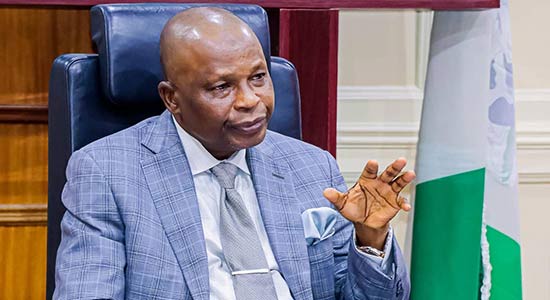
The Attorney General of the Federation and Minister of Justice, Lateef Fagbemi, has urged the Supreme Court to compel Osun State Government to refund seven months’ local government allocations to the Minister of Finance.

The request was contained in a response filed through Fagbemi’s counsel, Chief Akin Olujimi SAN, to a suit instituted by the government via its attorney general.

Osun had sued the AGF as the sole defendant, alleging that the Federal Government failed to release the statutory allocation due to its 30 local government councils for March 2025.

In the suit marked SC/CV/379/2025, the state government claimed that whenit queried the Ministry of Finance over the unpaid allocation, the Minister of Finance, Wale Odun, allegedly said he was acting under the AGF’s directive.

However, the AGF denied the claim, challenging the legitimacy of the suit, accusing the state government of contempt for allegedly disobeying a July 11, 2024, Supreme Court judgment.

Fagbemi argued that Osun’s reliance on the 2004 case of AG Lagos State v. AG Federation—where the Supreme Court ordered the release of withheld funds to Lagos State—was misplaced.

In a counter-affidavit deposed by the Special Assistant to the President, Taye Oloyede, the AGF insisted that neither he nor the Minister of Finance instructed the withholding of Osun’s LG funds.

Oloyede testified that on May 22, 2025, in his presence, the Minister of Finance denied ever receiving such instructions.

According to the affidavit, Osun State never alleged that the President issued an order, nor did it provide evidence that the LG funds were deliberately withheld.

See also  Akpabio, Yilwatda challenge Nigerians to monitor governors on hardship

Oloyede emphasised that direct payment of allocations to LGs requires only that they submit account details to the Ministry of Finance.

He claimed the individuals currently administering Osun’s LGs were elected under the previous APC-led state government and remain in office until October 2025.

He asserted that Osun failed to show that its LGs had submitted their account details to the Finance Ministry.

Oloyede further argued that the plaintiff failed to show that it had the legal authority or consent of the LGs to initiate the lawsuit.

Instead, the affidavit indicated Osun’s intention to use the LG allocations to fund state-level health and education initiatives—directly contravening the Supreme Court’s judgment prohibiting states from managing LG finances.

He also pointed out that an earlier Federal High Court ruling in favour of the Osun State Governor had been overturned by the Court of Appeal.

Fagbemi insisted the Osun State Government was in contempt of the July 11, 2024, Supreme Court order in AGF v. Attorney General of Abia State & Others, which ruled that LG allocations must be paid directly to LG councils and not through state governments.

The order barred states from collecting or disbursing LG funds. Osun, listed as Defendant 29 in that suit, had acknowledged the order but allegedly continued to receive and spend LG funds from July 2024 to February 2025.

The AGF described Osun’s lawsuit as a calculated attempt to gain the Supreme Court’s backing to continue violating its own ruling.

He called it an “egregious contempt” and asked the court to enforce judicial accountability.

See also  ‘Nigeria Must Go’ protest retaliation for ‘Ghana Must Go’ – SOG Precious

“The only way to vindicate the authority of this court,” he stated, “is to order the plaintiff to pay back all LG funds collected between July 2024 and February 2025. These should be remitted to the Minister of Finance for onward transfer to the respective local governments.”

In a five-ground preliminary objection, the AGF argued that: “The plaintiff is not entitled to be heard due to contempt. The plaintiff has no right of appeal against the Supreme Court’s decision. The case does not present a genuine dispute to trigger the court’s original jurisdiction under Section 232(1) of the Constitution. The plaintiff has no locus standi to sue on behalf of local governments. Only LGs—not state governments—can seek redress for unpaid allocations. The AGF stressed that Osun State had improperly appointed itself as a ‘watchdog’ over LG funds, despite having no authority to litigate on their behalf.

“If any LG has been wrongly deprived of its funds,” he concluded, “it is the council itself—not the state government—that has the right to sue.”

Meanwhile, it was gathered that Osun State government has withdrawn the suit. However, Olujimi, who confirmed this, said the suit remains in court until the application for withdrawal is formally heard by the court in September.

FOLLOW US ON:

Continue Reading
Click to comment

Leave a Reply

Your email address will not be published. Required fields are marked *

News

Veteran Nollywood actor, Kola Oyewo, has passed away at the age of 80 years

Published

on

Veteran Nollywood actor, dramatist, filmmaker and scholar, Dr Kola Oyewo, has passed away at the age of 80 years.

The death of the veteran actor was disclosed on Instagram on Friday by actor Kunle Afod, who paid tribute to the late actor for his contributions to the Nigerian theatre and film industry.

He wrote: “Kola Oyewo has taken his final bow.

“His remarkable talent, timeless performances, and immense contributions to the Nigerian theatre and film industry will never be forgotten. His legacy will continue to inspire generations to come.

“Rest well, sir. Your work lives on.

Though the legendary thespian died of an undisclosed illness as of the time of this report, Tribune Online reports that the 80-year-old actor, in April 2026, opened up about his battle with prostate enlargement, explaining how the condition affected his acting career and kept him away from the screen.

The 80-year-old made this known during a visit by actor Kunle Afod to his residence, where he spoke about his health challenges and reduced presence in movies.

According to Oyewo, the illness limited the kinds of roles he could take on, forcing him to step back from more demanding performances.

Born on March 27, 1946, in Oba-Ile, Osun State, Oyewo began his acting career in 1964 with the Oyin Adejobi Theatre Group. He later became one of the most recognised figures in Yoruba theatre and Nigerian film.

He was widely known for his portrayal of Odewale in Ola Rotimi’s play, “The Gods Are Not to Blame,” a role that earned him recognition across the African theatre scene.

See also  Police arrest ex-presidential aide Obono-Obla in C’River

During a career that spanned more than six decades, Oyewo featured in several productions, including “Saworoide,” “Sango,” “Koseegbe,” “Super Story” and many Yoruba-language films that contributed to the growth of Nigeria’s movie industry.

Beyond acting, Oyewo was also an academic. He earned a doctorate degree in Drama from the University of Ibadan and taught at Obafemi Awolowo University, Redeemer’s University and Elizade University.

Through his teaching and mentorship, he helped train and guide generations of actors, playwrights and scholars, leaving a lasting impact on Nigeria’s theatre, film and academic communities.

FOLLOW US ON:

FACEBOOK

TWITTER

PINTEREST

TIKTOK

YOUTUBE

LINKEDIN

INSTAGRAM

Continue Reading

News

No child’s future should be defined by poverty – Emir Sanusi

Published

on

The Emir of Kano, Muhammad Sanusi II, has called for urgent and long-term action to address poverty and inequality in the North-West.

According to him, no child’s future should be determined by the circumstances of their birth.

He made the statement while delivering a keynote address at the High-Level North-West Policy Dialogue held in Kano State, where he urged leaders to focus on practical solutions rather than speeches and promises.

“The measure of any society is found in how it expands opportunity and protects the vulnerable. No child’s future should be foreclosed by the poverty of their birth.”

Sanusi warned that poverty in the region remains deeply rooted and is reflected in poor education outcomes, weak health systems, and high levels of child malnutrition and unemployment.

He said addressing the crisis requires strong political commitment and consistent investment in people, especially children and young people.

Among his key recommendations was a call for the creation of a long-term social investment framework in each state, with protected budget lines for health, education, social protection, and youth development.

He also proposed a minimum social package that guarantees basic services for citizens at different stages of life, from early childhood to adulthood.

Sanusi stressed the importance of early childhood development, saying the first years of life are critical to a child’s future learning and wellbeing.

He urged states to invest more in nutrition, early learning, and parental support, adding that what happens in those early years determines what a child becomes.”

The Emir also recommended stronger programmes for out-of-school children, adult literacy, and youth skills development to reduce unemployment and improve livelihoods.

See also  Akpabio, Yilwatda challenge Nigerians to monitor governors on hardship

He further called for better use of traditional institutions in community data gathering and programme delivery, saying they are closer to the people and understand local needs better.

Sanusi also pushed for improved accountability, urging governments in the region to publish results of social investments and track progress annually.

He warned that without honest leadership and sustained action, poverty in the region would continue to deepen and affect future generations.

FOLLOW US ON:

FACEBOOK

TWITTER

PINTEREST

TIKTOK

YOUTUBE

LINKEDIN

INSTAGRAM

Continue Reading

News

US launches global crackdown on illegal ‘birth tourism’, revokes visas in Africa

Published

on

The United States Department of State has intensified enforcement actions against what it describes as illegal “birth tourism” schemes aimed at securing American citizenship for children through visitor visas.

This was disclosed in a statement posted via the department’s official X handle on Wednesday.

“Under President Trump, the State Department is defending the integrity of U.S. citizenship by ending illegal birth tourism schemes.

“No foreigner is permitted to obtain a visitor visa for the primary purpose of acquiring U.S. citizenship for a child by giving birth in the U.S.

“A U.S. embassy in West Africa uncovered a sophisticated birth tourism network involving more than 100 foreign nationals using fraudulent documents and visa ‘fixers’ to obtain visas in order to secure U.S. citizenship for their children.

“We shut it down, revoked these foreign nationals’ visas, and are coordinating with local authorities to systematically identify and dismantle similar operations.

“In Europe, a U.S. embassy identified more than 400 suspected birth tourism cases since 2024. Investigators traced them to at least six companies that coached applicants on what to say during their visa interviews, arranged U.S. housing, and set up delivery plans.

“We shut it down, revoked their visas, and permanently banned several fraudsters from travelling to the United States.

“One U.S. embassy in North Africa revoked more than 100 visas issued to ‘birth tourist’ parents who came to the United States primarily to give birth so their children could obtain U.S. citizenship.

“Consular officers, working with law enforcement and using data analytics, identified several networks abusing the system and put a stop to them.

See also  Akpabio, Yilwatda challenge Nigerians to monitor governors on hardship

“A U.S. visa is a privilege, not a right. The State Department is taking action around the world to stop this abuse, dismantle birth tourism networks, and hold accountable those who try to scam our system,” the statement said.

FOLLOW US ON:

FACEBOOK

TWITTER

PINTEREST

TIKTOK

YOUTUBE

LINKEDIN

INSTAGRAM

Continue Reading

Trending