Connect with us

News

PHOTOS: Osun hospital detains newborn, over mother’s N700k debt

Published

on

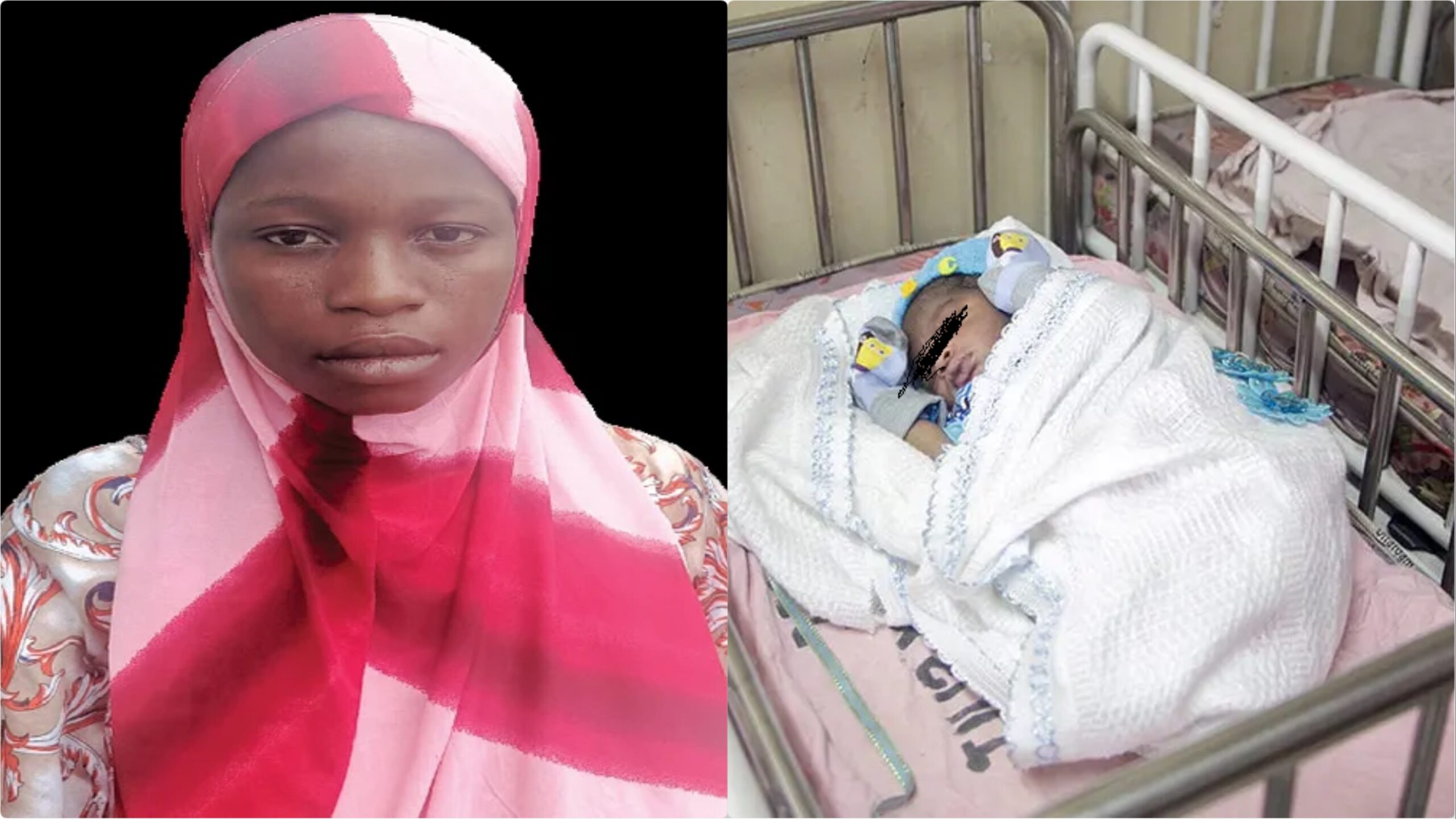
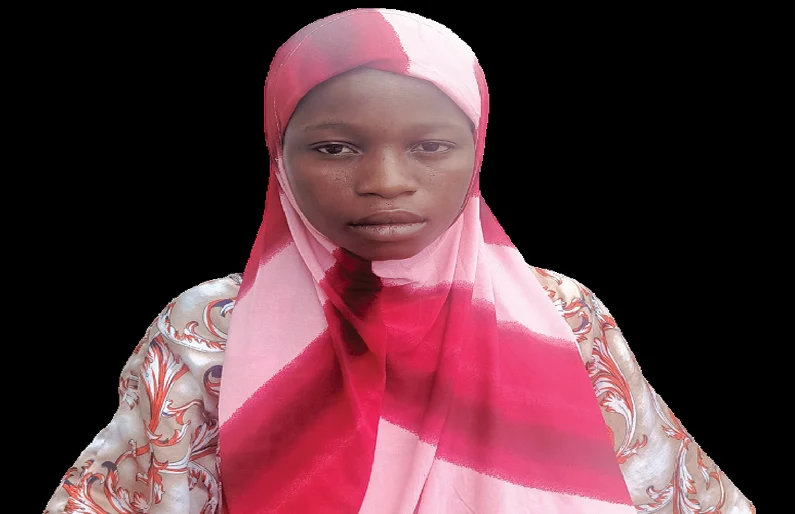
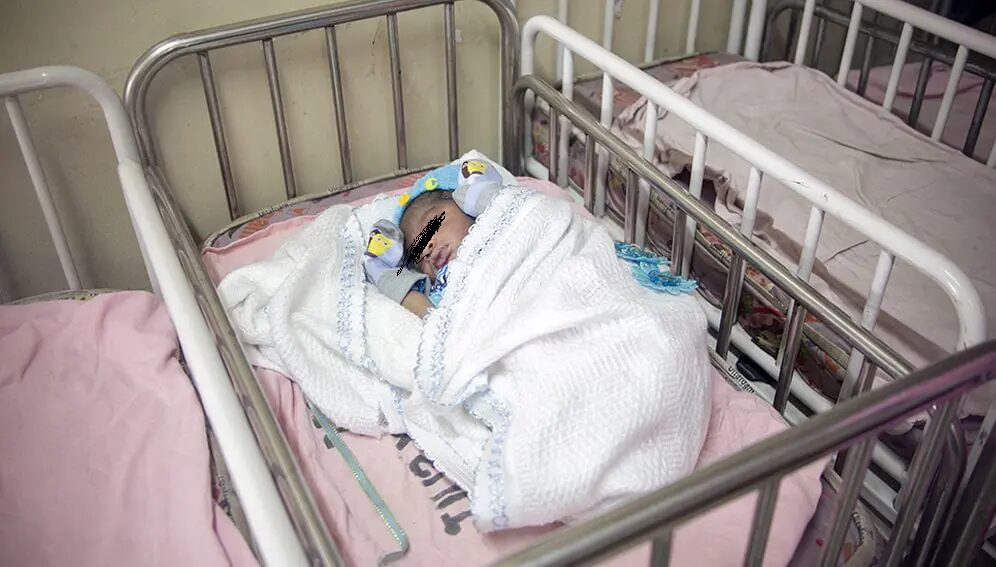
A 21-year-old first-time mother, Iqmat Yinusa, has cried out for help after watching her newborn son grow inside a hospital cot, a tiny space he has never been allowed to leave because of an unpaid medical bill running into hundreds of thousands of naira.

It was reports that for more than three months, the young mother and her baby have remained at Lifeline Paediatric Hospital, Alekuwodo, Osogbo, Osun State, since August, unable to go home after treatment was completed, following the family’s inability to settle the hospital charges.

Yinusa, who hails from Iree, Boripe Local Government Area of Osun State, shared the harrowing experience of her family with The PUNCH.

With hurried steps and visible anxiety, Yinusa approached journalists, and before she could be asked a question, the young woman knelt down in greeting and pleaded for help.

“Ekaasan sir (Good afternoon sir). Please help me. My child and I have been here since August this year, and we’re not allowed to go because we couldn’t pay the hospital bill,” she said, her voice shaking with emotion.

Three Days of Labour, Emergency CS

Yinusa narrated that her ordeal began after she went into labour and spent three days at two different hospitals, hoping for a normal delivery.

She was first admitted to a hospital in Iree before being transferred to another private hospital in Iragbiji, where doctors later advised a Caesarean section due to complications.

“I was shocked when I was told I would undergo a CS. We didn’t expect it, although I had been in labour for three days. I was first admitted in Iree, then transferred to Iragbiji, where I spent two days before the procedure. It was a painful experience,” she recalled.

See also  PHOTOS: Nigerian bodybuilder, Akinwale Arobieke found de@d in UK

According to her, the baby became weak before delivery and was rushed out immediately after birth for specialist care at Lifeline Paediatric Hospital in Osogbo.

“My baby was rushed out of the hospital after delivery. I was told he was weak because of the labour stress and needed urgent medical attention. He was taken to Lifeline Hospital in Osogbo,” she said.

She added that being separated from her newborn at birth was traumatic. Yinusa said, “Despite being in pain, I wanted to stay with him. Being separated from my baby at birth was harrowing. I kept praying for a quick recovery and divine intervention so I could be with him.”

Mother Battles Health Complications

Yinusa’s health deteriorated after delivery, delaying her reunion with her child for about a month. She said she was stabilised with two pints of blood and several sachets of intravenous fluids.

By the time she was strong enough to join her baby at the hospital, the family’s finances had already been badly stretched.

“All I wanted was to be near my child,” she said.

At Lifeline Hospital, the baby was placed on oxygen for more than a week. Recalling her first meeting with her son after weeks of separation, Yinusa broke down in tears.

“I burst into tears when I saw where he was placed. It was such an emotional moment for me. I held him tight for the first time after a month. The hospital staff had been taking care of him, feeding him with baby formula. May no mother experience what I am going through,” she prayed.

She said breastfeeding was initially difficult as a first-time mother but improved over time.

See also  Tinubu sends 2026–2028 fiscal framework to Reps

“By the time I joined him, he had completed treatment, so my role was mainly cleaning and feeding him,” Yinusa explained.

Restricted Access Due To Unpaid Bills

It was reports that despite being allowed to stay in the hospital, Yinusa said her interaction with her baby was restricted because of the unpaid bill.

She explained that she could feed and clean her child, but was not allowed to hold him for long, for fear of being sent away by hospital staff.

“Till this moment, I haven’t been able to take my son home. I also can’t hold him for too long because of the hospital rules,” she said tearfully.

The young mother lamented that her baby, since birth, has never experienced life outside the hospital ward.

“Since birth, my baby has not seen the outside world. He has been confined to a small baby pod. The space is cramped, and rashes have appeared all over his body,” she said.

Explaining why her son had not been discharged, Yinusa said the hospital bill had become overwhelming for the family.

“We are owing the hospital. We couldn’t afford the bill, which is running to about ₦700,000. All the treatment amounted to over ₦800,000, but we made a deposit of ₦150,000 initially,” she explained.

She added that they had remained in the hospital since the first week of September, even after her baby completed treatment.

“I’m not blaming the hospital management; they have tried for us. I am appealing to well-meaning Nigerians to come to our aid,” the mother said.

‘I Am Exhausted’ – Father Speaks

The baby’s father, Sodiq, who spoke with journalists on the phone, said the experience had left him emotionally and financially drained.

See also  Christian genocide: PFN, Islamic council in verbal crossfire

The well-known moulder disclosed that he had spent over ₦900,000 on the treatment of his wife and child.

“This situation has drained me emotionally and financially,” he said.

According to him, his son was admitted on August 24 and completed about 15 days of treatment, but was not released due to the unpaid bill.

“My son has been detained for over three months because we couldn’t pay the hospital bill. He has spent nearly three months at the hospital now,” Sodiq.

Sodiq further explained the financial burden the family had borne since August.

“My wife underwent surgery to deliver the baby. She received two pints of blood transfusion. We deposited ₦150,000 before treatment started. The baby was on oxygen for eight days,” he said.

He added, “I spent ₦9,000 every four days on baby food. That’s almost ₦20,000 per week. We ran several tests for my wife and the baby, which cost a lot. I mould and fix well rings, but there is no patronage now. Nobody is willing to give me a loan.”

Appealing for public assistance, he said, “Please help us. Even if we manage to pay the bill now, what will we eat afterwards?”

Findings by reporters revealed that Yinusa’s experience is not isolated, as at least two other mothers were previously detained at the same hospital for over two months due to unpaid medical bills.

They were, however, released a few weeks ago after funds were raised to settle their bills.
FOLLOW US ON:

FACEBOOK

TWITTER

PINTEREST

TIKTOK

YOUTUBE

LINKEDIN

TUMBLR

INSTAGRAM

Continue Reading
Click to comment

Leave a Reply

Your email address will not be published. Required fields are marked *

News

Kebbi gov signs N642.9bn 2026 budget into law

Published

on

Governor Nasir Idris of Kebbi State, on Tuesday, signed the 2026 Appropriation Bill of N642.9 billion into law following its passage by the Kebbi State House of Assembly.

The News Agency of Nigeria reports that the governor assented to the budget at Government House, Birnin Kebbi, after receiving the document from the Speaker of the House of Assembly, Alhaji Usman Muhammad-Zuru.

Idris expressed appreciation to the speaker, principal officers, and members of the assembly for the speedy passage of the 2026 budget.

He commended the legislators for their commitment to the welfare of the people and their responsiveness to legislative responsibilities.

“I am the happiest person. This government truly belongs to the people of the state. Whatever we do is done in the best interest of the people.

“We are working harmoniously with the State House of Assembly to move the state forward and take it to greater heights, in line with people-oriented governance.

“We will also work closely with the assembly to boost Internally Generated Revenue (IGR), given the fact that federal allocations alone are insufficient to meet the needs of our people.

“People should understand that a budget is not physical money at hand; rather, it is a projection of expected revenue, either from IGR or federal allocations,” he said.

The governor also described the assembly as a true representative of the people, noting that it had diligently considered and ratified several bills forwarded by the executive arm.

Earlier, Muhammad-Zuru described the signing of the budget as a significant milestone in the democratic journey of the state.

See also  PHOTOS: Nigerian bodybuilder, Akinwale Arobieke found de@d in UK

He said the budget was the outcome of extensive consultations, deliberations, and rigorous scrutiny by members of the assembly.

“You have so far assented to about 60 bills passed by the House, many of which have a direct bearing on the lives of the people of the state,” he said.

Muhammad-Zuru reaffirmed the legislature’s commitment to sustained collaboration with the executive arm to accelerate the development of the state for the benefit of its people.

He said the recurrent expenditure stood at N163.57 billion, representing 25 per cent of the total budget, while capital expenditure was N479.36 billion, accounting for 75 per cent.

The speaker reaffirmed the total 2026 budget size of N642.9 billion as presented by the governor and duly passed by the House of Assembly.

punch.ng

FOLLOW US ON:

FACEBOOK

TWITTER

PINTEREST

TIKTOK

YOUTUBE

LINKEDIN

TUMBLR

INSTAGRAM

Continue Reading

News

Senate seeks support for farmers over farm produce price crash

Published

on

The Senate on Tuesday called for urgent government intervention to cushion Nigerian farmers from the sharp drop in prices of agricultural produce, warning that the situation, if left unchecked, could threaten millions of livelihoods and worsen the country’s fragile food security.

The call followed the adoption of a motion sponsored by Senator Mohammed Danjuma Goje (Gombe Central), which highlighted the growing imbalance between falling farm-gate prices and the persistently high cost of agricultural inputs.

In its resolutions, the Senate commended the Federal Government for bringing down the cost of foodstuffs across the country by granting waivers and special permissions for large-scale importation of food products, noting that the policy had brought relief to many Nigerians amid the cost-of-living crisis.

However, lawmakers observed that the same policy had created unintended consequences for local farmers.

“The lowering of the cost of food products has brought succour to Nigerians but has at the same time created special problems for the Nigerian farmers.”

“While the prices of farm produce have been going down, those of the farm inputs, especially fertilisers, pesticides and insecticides, have remained extremely high, placing enormous pressure on farmers’ earnings and sustainability,” Goje stated.

According to him, the situation “gravely threatens the livelihood of millions of smallholder farmers who constitute the backbone of Nigeria’s food production system and depend almost entirely on farming, as their primary and sole source of income.”

Seconding the motion, Senator Aliyu Wamakko (Sokoto North) emphasised the need for policies that balance food affordability for consumers with sustainable incomes for farmers, stressing that high input costs must be urgently addressed to boost production.

See also  65th Independence: 65 quick facts about Nigeria

Senator Dandutse Mohammed (Katsina South) described the motion as timely, noting that over 60 per cent of Nigerians depend on agriculture for their livelihoods.

He lamented that fertiliser prices had reportedly risen above ₦60,000 per bag, while produce prices continued to fall, warning that unchecked food importation and lack of subsidies were devastating local farmers and contributing to insecurity.

Senator Steve Karimi (Kogi West) raised concerns over insecurity in farming communities, describing it as a major threat to food security, while Senator Idiat Adebule (Lagos West) questioned the role of state governments in complementing federal agricultural initiatives.

In his contribution, Senator Victor Umeh (Anambra Central) acknowledged that temporary border relaxation during periods of scarcity might be necessary, but insisted that farmers must be supported with affordable inputs and stable commodity pricing to sustain production.

“Nigeria’s growing dependence on imported food commodities will weaken national food sovereignty, undermine domestic value chain, distort local markets as well as discourage the development of agro-processing industries, thereby exposing the national economy to global price volatility and foreign exchange pressures,” the Senate noted.

The senators added that “effective coordination between MDAs, state governments, commodity boards, agricultural cooperatives and other relevant stakeholders, is critical to ensuring fair pricing, robust storage facilities, efficient transportation system and improved market linkages.”

Consequently, the Senate urged the Federal Government to design and implement a comprehensive Special Emergency Intervention Package for farmers affected by the current collapse in agricultural produce prices to cushion their losses and ensure household stability.

It also called on the government to establish a “Benchmark Minimum Price Framework for major agricultural commodities and implement a Guaranteed Off-take Programme, whereby government purchases produce directly from farmers at the benchmark price to stabilise the market.”

See also  Heavy rain causes Air Peace flight delays in Lagos

The Senate further resolved to urge the Federal Government to introduce broad-based agricultural input subsidies, particularly for fertilisers, and other farm inputs, and to prioritise investment in “strategic agricultural infrastructure, including storage facilities, rural roads, processing centres, and irrigation systems to reduce post-harvest losses and boost the profitability of farmers.”

punch.ng

FOLLOW US ON:

FACEBOOK

TWITTER

PINTEREST

TIKTOK

YOUTUBE

LINKEDIN

TUMBLR

INSTAGRAM

Continue Reading

News

One-party dominance threatens federal system, SANs warn

Published

on

The Body of Senior Advocates of Nigeria has warned that Nigeria’s federal system is under serious threat due to the dominance of a single political party, stressing that the judiciary must remain strong where opposition is weak.

BOSAN said the current political landscape has weakened federalism and virtually eliminated effective opposition, thereby placing greater responsibility on the judiciary to protect the constitution and the rule of law.

The body made the remarks in a speech delivered at a special court session marking the ceremonial commencement of the 2025/2026 Legal Year of the Federal High Court and the 41st Annual Judges’ Conference held in Abuja on Monday.

Currently, the All Progressives Congress controls at least 26 of the 36 states in the federation, with opposition parties decrying a tilt toward a one-party state.

In the address, read on its behalf by a former Attorney-General of the Federation and Minister of Justice, Chief Kanu Agabi (SAN), BOSAN declared: “When there is no strong opposition, the judiciary must be strong. It must be adept. It must be innovative. It must defend the law and the constitution, and employ every inherent sanction of a court of law.

“The framers of the Constitution would never have entrusted the judiciary with the custody and control of the Constitution, without at the same time, giving it the necessary jurisdictional power to protect it at the time of mindless corruption.

“As I said before, it is midnight. It is you, judges, who will lead in this darkness. At such a time as this, you must be bold and courageous. You must be honest, you must be innovative.”

BOSAN further cautioned against what it described as the criminalisation of politics, urging judges to rise to the challenge of safeguarding constitutionally guaranteed rights

It said: “Criminalisation of politics means that you are the hope of the nation. If the electoral process continues to be dominated by money, if violence and ethnicity continue to prevail, if the checks and balances instituted by law have been eliminated or have ceased to be effective, if all the structures for accountability provided in the constitution are surprisingly ignored, in that case, we need a judiciary that can assert itself.

See also  65th Independence: 65 quick facts about Nigeria

“Do so now! Do not fear and do not be afraid. If this generation does not appreciate you, generations to come will do so. Generations to come shall look back and wonder how you were able to save a nation so totally lacking in moderation.

“It has been said that as long as the nation is rife with corruption, we should not consider ourselves a democracy.

“The hope of the nation is in the judiciary to remove this cankerworm of corruption so that we can have a genuine democracy. This means that judges must be enlightened. You must spiritualise yourselves. You must be holy.”

The body added that it depended not so much on the priests, pastors, and imams to have a godly society, stressing that the men of God had taught the lessons they ought to teach.

“It remains for you, judges, to punish disobedience. The appropriate use of punishment. You have the means to compel criminals to give up crime.

“That is why it is said that a nation is as good as its judiciary. It is for this reason that some people blame not the politicians, but our judges and magistrates,” the body said.

The Chief Justice of Nigeria, Justice Kudirat Kekere-Ekun, acknowledged that public expectations of the judiciary had risen significantly in recent years, noting that scrutiny had intensified.

She stressed that the judiciary remained the last line of defence for the constitution and the rights it guaranteed.

“In an age where misinformation travels swiftly, and institutional trust is increasingly fragile, we must continually demonstrate, through both conduct and decisions, that justice in Nigeria is anchored firmly on impartiality, transparency, and integrity.

See also  Lagos unveils artisan certification to curb building collapse

“The Judiciary does not speak through press statements or public commentary; our judgments constitute our voice, and the manner in which we discharge our duties defines the authority and credibility of that voice.

“Beyond the substance of our judgments, the public increasingly measures justice by the discipline of our daily processes.

“Punctuality in sitting, consistency in court schedules, and the courtesy of giving advance notice when a court will not sit are no longer minor administrative matters,” she said.

She emphasised that these expectations were essential expressions of respect for litigants, counsel, and citizens whose time, resources, and confidence are invested in the justice system.

She noted that it would be unrealistic to ignore the fact that public confidence in judicial institutions was fragile, and that perceptions, whether fair or otherwise, carried real consequences.

“Where court processes appear unpredictable, opaque, or inefficient, the credibility of even sound decisions may suffer.

“Restoring confidence is not achieved by rhetoric, but by reliability, professionalism, and visible order in the administration of justice.

“Judicial independence must therefore be upheld, not as an abstract ideal, but as a lived and daily discipline grounded in courage, restraint, and fidelity to the law.

“Independence is not an adornment of democracy; it is its lifeblood. Yet independence, standing alone, is insufficient unless exercised with responsibility and moral clarity,” she added.

She also said that the Bench and the Bar must remain partners in the administration of justice.

“A weak link on either side diminishes the system as a whole. I therefore urge members of the Bar to uphold the highest standards of advocacy, to eschew tactics that frustrate proceedings, and to work constructively with the courts in advancing efficiency, professionalism, and the Rule of Law,” Justice Kekere-Ekun said.

See also  Baba-Ahmed faults Tinubu’s security emergency, says govt missed the point

The Chief Judge of the Federal High Court, Justice John T. Tsoho, disclosed that the court disposed of a total of 16,019 cases at the end of the 2023/2024 legal year.

He said 3,113 were civil cases, while 5,818 were criminal matters.

He added that 3,724 motions and 3,374 fundamental human rights cases were filed within the same period.

Justice Tsoho said the annual ceremony served as a reminder of the court’s collective responsibility to uphold the rule of law, administer justice fairly and impartially, and safeguard the rights of citizens.

He further disclosed that, in line with efforts to modernise the judiciary, the Federal High Court had commenced an e-filing system at its Lagos Division, with plans to extend it to all divisions nationwide.

“We are intensifying investment in infrastructural development such as construction of court buildings, judges’ quarters, renovation of courtrooms and staff quarters where needed.

“We also strive to provide essential technological equipment in our courts,” he said.

Justice Tsoho noted that the initiatives were aimed at enhancing service delivery despite limited resources.

The President of the Nigerian Bar Association, Afam Osigwe (SAN), urged the judiciary to guard its independence jealously, noting that its authority rests on public confidence in its neutrality.

While commending the Federal High Court for its resilience and fidelity to the law, he called for continued courage, saying judicial decisions remained vital in shaping governance and ensuring national stability.

punch.ng

FOLLOW US ON:

FACEBOOK

TWITTER

PINTEREST

TIKTOK

YOUTUBE

LINKEDIN

TUMBLR

INSTAGRAM

Continue Reading

Trending