Connect with us

News

Real reasons Tinubu sacked ex-IG Egbetokun revealed

Published

on

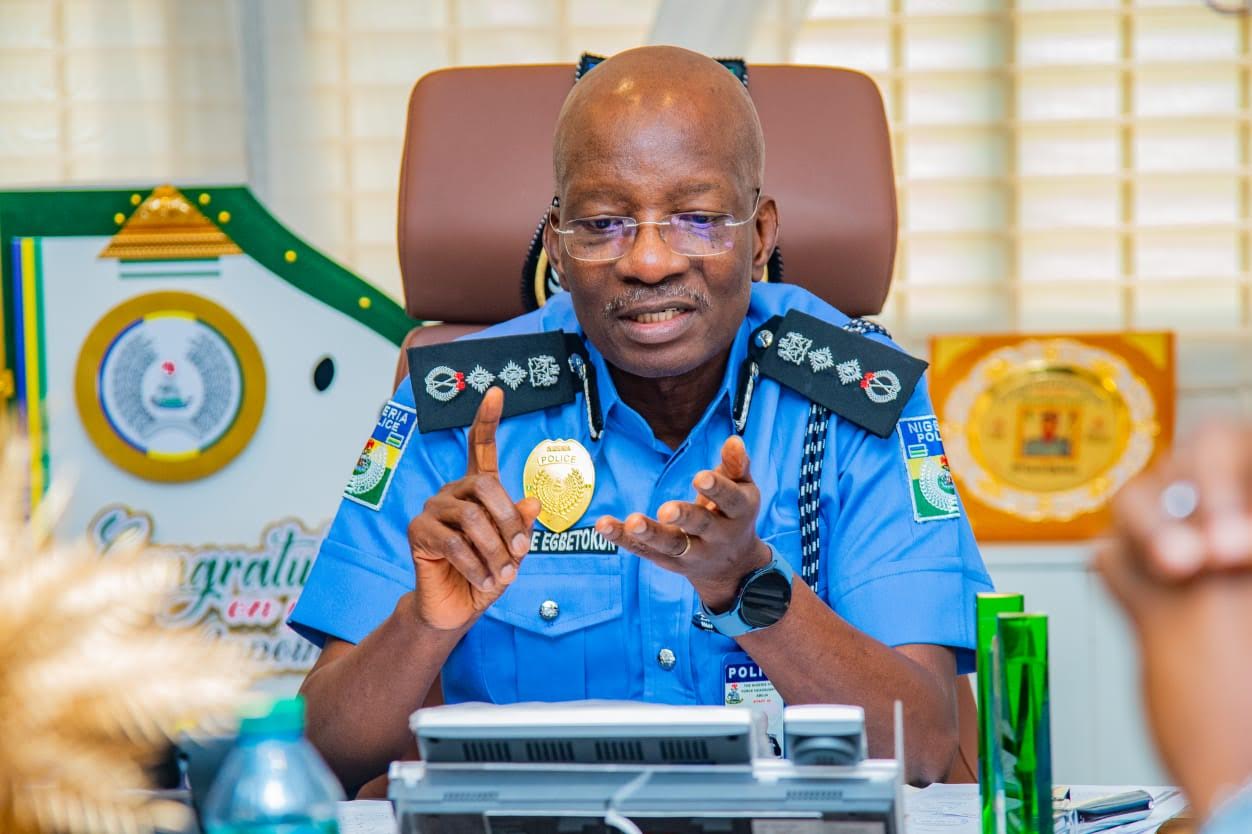
Former Inspector-General of Police, Kayode Egbetokun, was removed from office by President Bola Tinubu over his reported resistance to the President’s directive to withdraw police officers from Very Important Personalities protection duties, PUNCH has learnt.

According to multiple highly placed officials in the Presidency and the police establishment with first-hand knowledge of events that unfolded between Monday evening and Tuesday, the former IG was also compelled to resign over his alleged opposition to state policing and vindictive conducts towards colleagues.

Although Egbetokun officially cited “family issues” in his resignation letter submitted on Tuesday, insiders told our correspondent that the former police chief was summoned to the Presidential Villa and informed that he had to step down.

The sources spoke on condition of anonymity because they were not authorised to comment on the matter.

“That Monday evening, he (the President) called him to tell him that he has to go,” one of the sources said.

Another insider explained that the former IG pleaded for more time, asking to be allowed to complete his four-year tenure, which was expected to run until October 2027 under a 2024 amendment to the Police Act granting IGs a fixed term regardless of age or years of service.

“The former IG was supposed to go in 2027. He begged that he be allowed to complete his term. The President said no, he had to go,” the source said.

PUNCH gathered that the President’s decision was driven by three grievances that had accumulated over several months.

The most immediate trigger, Presidency sources said, was Egbetokun’s handling of the November 23, 2025 presidential directive ordering the withdrawal of over 11,000 police officers from VIP protection duties for them to be redeployed to communities plagued by kidnapping, banditry and terrorism.

An official in the Presidency told our correspondent that Egbetokun did not merely drag his feet but pushed back directly against the President during a meeting with security chiefs, arguing that business leaders and senior corporate executives needed police protection.

“One of the issues is the withdrawal of police from VIPs. He didn’t execute it as quickly as the President wanted. He did it halfheartedly. He actually argued against it with the President during the security meeting, saying that the economic actors, the business people need to be protected,” he said.

The source added that the President rejected the argument, pointing to the Nigeria Security and Civil Defence Corps as an adequate replacement.

“The President said yes, they need to be protected. But the police don’t have to protect them. Civil Defence can protect them. In fact, he said, ‘the Civil Defence is even more lethal in handling of arms. So, what are you talking about? What is the difference between Civil Defence and the police? They are both carrying arms. So why are you fixated on having police to do that?’

See also  Dangote rejects NNPC offer to increase stake in refinery; read why

“We are not saying they won’t be protected because they are the bloodstream of the economy. We don’t want our business people to die the kind of death they shouldn’t die. But Civil Defence are trained. They’re even more lethal than police. In any case, the business people also have the resources to hire their own security,” the source added.

On December 10, 2025, weeks after issuing the initial order, President Tinubu reiterated the order at a Federal Executive Council meeting, declaring it “non-negotiable” and directing the Minister of Interior, Olubunmi Tunji-Ojo, to work with the IGP and NSCDC to replace the withdrawn officers.

He also asked the National Security Adviser, Nuhu Ribadu, and the Department of State Services to issue further guidance and ensure the directive is effected.

Another insider knowledgeable about the incident revealed that the initial resistance had a financial dimension.

According to the source, the VIP deployment scheme generated over N300bn annually for the police through a system in which businesses and individuals pay a fee for each officer deployed to them.

“The truth of the matter is, from what we know, what goes into police from money that these people pay for protection is over N300bn annually.

“They collect N100,000 per month from one officer. So, they will give the officer maybe N50,000. So, the rest goes through the chain. It trickles down.

“The President’s order was very disruptive. So, the police establishment was not happy because he removed a big income source from them. They resisted it. Some of them started wearing mufti. So, it means that they found a way to compromise it and the President got to learn about it,” the source said.

Reports had earlier indicated that some officers, rather than comply with the withdrawal order, disguised themselves in NSCDC and vigilante uniforms to continue protecting VIPs, while others paid as much as N500,000 to have their service rifles reissued after returning them.

State police opposition

The second grievance, according to multiple sources who spoke with Saturday PUNCH, is Egbetokun’s alleged opposition to the creation of state police.

State police creation is a flagship security reform that President Tinubu has championed and it is currently the subject of a constitutional amendment process in the National Assembly.

See also  Ramaphosa slams xenophobic violence, vows illegal immigrants arrest

A source familiar with the President’s thinking said the former IGP went as far as presenting a memorandum against state policing at a National Assembly public hearing, a move seen as a direct challenge to the administration’s policy direction.

“He is publicly against state police. Even at the National Assembly, the police memorandum that he read when they did public hearing, he was against it.

“How can you be against something that your Commander-In-Chief wants? He attended a public event where you are arguing against state police. It wasn’t a prudent thing to be openly against what your principal is pushing,” the source said.

He cited the timing of Egbetokun’s exit, saying, “Just hours after the former IGP was summoned to the Villa on Monday evening, President Tinubu had told state governors at an interfaith breaking of fast that the establishment of state police would not be postponed.

“Without it, farms cannot flourish, businesses cannot grow, and families cannot sleep in peace. We will establish state police to curb insecurity,” the President declared at the dinner.

During another Iftar dinner on Wednesday, Tinubu requested the National Assembly to begin the process of amending the constitution to incorporate state police as part of efforts to tackle the nation’s security challenges.

Vindictive conduct

The third reason, sources said, related to Egbetokun’s conduct toward colleagues, particularly his treatment of Olatunji Disu, the man who ultimately replaced him as the Acting Inspector General of Police.

Both men served under Tinubu when he was governor of Lagos State between 1999 and 2007.

Egbetokun was the Chief Security Officer while Disu as Aide-De-Camp, and both owed their career advancement to the President’s political support.

A Presidency source who spoke on condition of anonymity said the President found Egbetokun’s behaviour toward those who had shared the same journey troubling.

“The President doesn’t like people using power against their peers, your friends, people that you grew up with, people that were with you, your colleagues, those who were part of your career growth.

“He (Egbetokun) used his position against Disu. They both served Tinubu when he was governor. Disu was ADC, he was CSO.

“How can somebody that two of you were mentored by the same person and has been instrumental to lifting all of you…So, if Tinubu acted like him, would he have gotten here?” the source said.

He added that the President had been instrumental to every major promotion Egbetokun received throughout his police career, including during the administration of former President Muhammadu Buhari.

See also  Four persons hospitalised as fire guts two Lagos buildings

The insider said, “Tinubu helped him to attain all the positions he got to. It was Tinubu that was pushing him, using political leverage. Tinubu was the one that pushed him to commissioner of police, to be DIG and he eventually became the IG.

“He got Buhari to promote him four times. I mean, he wrote formal letters to Buhari for all his promotions. So, if you have enjoyed someone’s favour, why do you use your position against other people?”

He added that Egbetokun had been hoping Disu would quietly retire from service upon turning 60 in April 2026, removing him as a rival without any overt action.

“He also wanted him to retire out of service in April. He was hoping that this guy is going to retire. So, he just wanted him to ease out by age. But you know the good thing is, the President signed that act that once you become IG, that four-year kicks in,” the source said.

Police Council to meet next week

However, a source familiar with the transition process told our correspondent that the Nigeria Police Council is expected to meet next week to formally consider Disu’s confirmation.

“The Police Council meeting is going to be next week. I’m hearing Monday. But until the schedule is set and invitations have been sent out, it can change,” he said.

Disu currently serves in an acting capacity. The Police Council is expected to consider his appointment after which President Tinubu will transmit his name to the Senate for confirmation as substantive IGP, in line with the Police Act 2020.

Tinubu appointed Egbetokun as the 22nd IGP on June 19, 2023, shortly after his inauguration.

Egbetokun succeeded Alkali Baba, whose tenure had expired in September 2023 following an extension granted by former President Buhari.

The appointment drew early criticism because Egbetokun, born on September 4, 1964, was approaching the mandatory retirement age of 60.

When he turned 60 in September 2024, civil society groups called for his retirement, but the National Assembly passed the Police Act (Amendment) Bill in July 2024, granting IGPs a fixed four-year tenure regardless of age, effectively extending his stay until October 2027.

His replacement, Disu, 59, a Lagos Island native, joined the police on May 18, 1992. He holds a bachelor’s degree in English Education from Lagos State University and master’s degrees in Public Administration and in Criminology, Security and Legal Psychology.

punch.ng

FOLLOW US ON:

FACEBOOK

TWITTER

PINTEREST

TIKTOK

YOUTUBE

LINKEDIN

TUMBLR

INSTAGRAM

Continue Reading
Click to comment

Leave a Reply

Your email address will not be published. Required fields are marked *

News

Step-by-step guide for contactless passport renewal for Nigerians abroad

Published

on

The Nigeria Immigration Service has released an updated step-by-step guide for Nigerians living abroad to renew their passports through its Contactless Passport Application System.

The Service announced the update in a post on its official X handle on Tuesday, encouraging Nigerians in the diaspora to take advantage of the digital platform.

According to the Service, the application process involves the following steps:

1. Visit the official NIS Passport Application portal.
2. Select Continue from the pop-up window.
3. Click Apply for Renewal/Re-issue.
4. Create an account and verify your identity using your National Identification Number and date of birth.
5. Complete the application form and choose your preferred processing embassy or high commission.
6. Upload the required documents.
7. Pay the passport fee for your selected booklet.
8. Obtain your Application ID and Reference Number.
9. Select the Contactless option under the Application Status/Book Appointment section.
10. Review the contactless instructions and click “I Understand and Opt In.”
11. Download the NIS Mobile App.
12. Log in or create a profile on the app.
13. Select Passport Application Services.
14. Click Passport Biometrics Enrolment, enter your Application ID and Reference Number, and check your eligibility.
15. Capture your facial image and fingerprints.
16. Complete the liveness verification.
17. Pay the contactless service fee.
18. Submit your biometrics.

The Service, however, noted that not all applicants would qualify for the contactless process.

“If response is INELIGIBLE, then it means applicant should return to the landing page of the portal to book physical appointment at the Embassy/High Commission,” it stated.

See also  Afenifere, northern leaders demand state police amid delays

For applicants who successfully complete the contactless biometric enrolment, the NIS said additional documents must be forwarded to the selected processing mission.

“Upon successful completion of biometrics via Contactless App, applicant should print-out the Application form, passport booklet payment, biometric payment, current Passport and enclose all in a self-addressed return envelope to the processing embassy selected during the application process,” the Service said.

It added that applicants would be able to monitor the progress of their applications after submission.

“Applicant may track successful application two weeks after submission via https://track.immigration.gov.ng or on the NIS Mobile App,” the Service added.

punch.ng

FOLLOW US ON:
FACEBOOK

TWITTER

PINTEREST

TIKTOK

YOUTUBE

LINKEDIN

Continue Reading

News

PFIPC scandal: Ex-SGF Babachir Lawal suspects ‘big racket’ behind ‘fake’ agency’s budget code

Published

on

A former Secretary to the Government of the Federation, Babachir Lawal, has called for a judicial inquiry into the controversy surrounding the alleged fake Presidential Fiscal and Infrastructure Projects Council (PFIPC), arguing that the scandal points to deep institutional failures rather than a simple administrative error.

Speaking in an interview with ARISE NEWS on Monday, Lawal said the circumstances surrounding the alleged agency suggested the existence of a wider network that enabled it to function within government processes despite questions over its legal status.

He insisted that an administrative investigation alone would be insufficient. “I don’t think it should even be administrative alone; it should be a judicial inquiry”, the former SGF clearly stated.

Lawal questioned claims surrounding an alleged ₦27.5bn take-off grant reportedly linked to the agency, asking how such funds could have been approved and released if the organisation had no legal basis.

“Nigerians are talking about how N1.3bn was inserted into the budget. The man himself first said the quarrel came about because he refused to part with 48% of the 27-point-something billion Naira take-off grant. That money has been spent before this budget office was looking for the budget.

“Who gave him the money? It was not appropriated for; it’s not in any budget, that N27.5bn Naira for which he says somebody demanded 48%. Who gave him the money? How did the process of generating the request for the release come up? How did it go through?

“We are just talking about the tip of the iceberg here. Down there, before we got to here, N27.5bn had already been disbursed, according to him, as a take-off grant. How did that money get to him? It was not in the budget. So this is what should frighten us. If such money can go to a fictitious organisation, we only now begin to see it when we are quarrelling about how it got into the budget. How did that money get to them?”, Babachir queried.

See also  NNPC subsidiaries’ debt balloons 70% to N30tn

The former SGF argued that the controversy only became public because of disagreements over the sharing of funds rather than because government oversight mechanisms functioned effectively.

He continued,… “So you see, that’s how we got to know this to start with. That is the reason why we got to know this on his side of the coin. It’s about the sharing of the N27.5bn. That’s why the thing came up. So it didn’t work. It should have worked before that money left the government coffers into the account of the agency.”

Lawal also alleged that the scandal reflected broader institutional weaknesses within the current administration, arguing that the Office of the SGF should have detected any irregularities before the matter progressed through official channels.

He maintained that the SGF’s office bears responsibility for identifying and flagging agencies without legal backing before their requests or budgets proceed through government.

He said, “It’s institutional compromise, because in this, I sense there’s quite a big racket going on somewhere along the line. If the agency was created by maybe one big man alone, and then he wants to go through the budget process, the budget office assigns the budget code according to the chart of accounts in GIFMIS. So, how did they manage to assign the budget code for this agency that does not exist? Who inserted it?

“Because first of all, the budget office issues a budget call circular to MDAs, and everybody starts to prepare his budget according to the budget line. They give you ceilings, and you prepare your budget and forward it to the budget office as an agency or ministry. Now, the Ministry of Budget and Planning would, in our time, call every MDA to come and defend its budget. Now, if you don’t exist, how did they recognise that you are a genuine entity? Who gave out the budget code and allowed their budget to pass?

See also  FRSC, Army collaborate on intelligence sharing, others

“That’s what oversight is. The SGF should be able to know, because before it gets to the National Assembly, that budget goes through the SGF. Unless there’s a dereliction of duty by the SGF’s office, the responsibility to flag that this is a fake agency would have come from them.”

Lawal further criticised the National Assembly, accusing lawmakers of failing to thoroughly scrutinise budget proposals.

“It is a legislative oversight. This government—this National Assembly—has no interest in scrutinising the budget that comes before them. Most of the legislators just go in there to earn their salaries and collect allowances and go. They don’t scrutinise the budget line by line. We all know how this particular government works. There are some people that when they talk, nobody else has the authority to contravene.”

He also suggested that public attention should focus not only on the agency’s legal status but on the individuals who allegedly enabled its operations.

“Why are you interested in N27.5bn that had already been collected and spent? We are talking about an agency that we are claiming doesn’t exist. Maybe it exists, but it doesn’t have a legal framework for its existence. But it exists. And there are a lot of powerful people that make sure it exists in that form.

“Those are the people we need to expose. The Chief of Staff, in particular, is so powerful. The SGF is there, just reneging on his responsibilities. And nothing has happened now”, he concluded.

punch.ng

FOLLOW US ON:
FACEBOOK

TWITTER

PINTEREST

TIKTOK

YOUTUBE

LINKEDIN


See also  Coalition demands Atiku and Obi’s full membership on 2027 Presidency

Continue Reading

News

Fake Agency Scandal: Gbajabiamila threatens Adeyemi with N10bn defamation suit

Published

on

Chief of Staff to the President, Femi Gbajabiamila, ha threatened to initiate legal steps against Prince Adeniyi Adeyemi, and demand N10 billion in damages over allegations linking him to murder, bribery and other criminal activities.

The move was conveyed in a letter dated July 6, 2026, signed by Senior Advocate of Nigeria, Kemi Pinheiro, on behalf of Pinheiro LP, the Chief of Staff’s legal representatives.

The dispute stems from a press conference held by Adeyemi on June 25, during which he accused Gbajabiamila of seeking a share of the alleged take-off funds of the Presidential Foreign Intervention Promotion Council (PFIPC), receiving money through intermediaries, abusing his office and participating in efforts to conceal wrongdoing.Death & Tragedy

During the briefing, Adeyemi also referred to the Chief of Staff as “a murderer” and “an assassin”.

The Presidency has consistently maintained that the PFIPC is a fictitious organisation, despite its appearance in the 2026 Appropriation Act.

Gbajabiamila’s lawyers dismissed all the allegations as entirely false and defamatory, saying they were intended to damage his reputation.

The letter stated: “not only false but gravely defamatory,” adding that the allegations were “designed to portray our client as corrupt, dishonest, criminally culpable, morally bankrupt, administratively incompetent, a murderer and unfit to occupy public office.”

According to the legal team, Adeyemi is already standing trial before the Federal High Court in Abuja in Charge No. FHC/ABJ/CR/652/2026, FRN v. Prince Adeniyi Adeyemi Matthew & Ors, over allegations including forgery of an appointment letter bearing Gbajabiamila’s purported signature and the alleged counterfeiting of Presidential letter-headed papers to present himself as a government official.Nigeria Investment Guide

See also  Senate reconvenes today as Electoral Act triggers uproar

The lawyers further rejected Adeyemi’s claims that Gbajabiamila demanded 48 per cent of a purported N27.4 billion take-off grant for the council, amounting to about N12.5 billion, or that he received N400 million through proxies connected to appointments within the organisation.

Other allegations dismissed in the letter included claims that the Chief of Staff intimidated individuals and media organisations, manipulated budget processes, attempted to misuse security agencies and performed official duties while under the influence of intoxicating substances.Trending News Feed

Gbajabiamila also denied ever having any relationship with Adeyemi.

“You have never at any time met, interacted with, communicated with, or had any form of personal or official dealing whatsoever with him,” the lawyers wrote, adding that the decision to “fabricate and publish allegations against a person with whom you have had absolutely no relationship or interaction underscores the reckless, baseless and malicious nature of your publication.”

The legal team also criticised the timing of the allegations, noting that they were made after criminal proceedings had already been instituted against Adeyemi.

“It is even more disturbing to our client that you resorted to defaming him through your press statements after a criminal Charge had been filed against you,” the letter stated.

It added, “Trial by media remains unknown to Nigerian law and cannot be a substitute for due process.”Nigeria Investment Guide

Gbajabiamila’s lawyers demanded that Adeyemi immediately stop making further defamatory statements, remove all related videos, recordings and transcripts from every platform, issue a full retraction and apology in at least five national newspapers and across all social media platforms used to circulate the claims, and provide a written undertaking that he would refrain from making further allegations.

See also  PHOTOS: Man hospitalised after sustaining injuries from beatings while portraying Jesus Christ during Good Friday procession

The letter warned that failure to comply would result in both criminal defamation proceedings under the laws of the Federal Capital Territory and a civil lawsuit seeking N10 billion in aggravated and exemplary damages. The damages, it said, would be donated to a charity chosen by Gbajabiamila. The legal action would also seek a perpetual injunction and a court order compelling the publication of an apology.

The controversy centres on the PFIPC, which was listed in the 2026 Appropriation Act under the title Presidential Economic Advisory Council/Presidential Foreign Intervention Promotion Council and received more than N1.3 billion in budgetary allocations, including about N803 million for personnel, N200 million for overhead and N300 million for capital expenditure.

Adeyemi had argued during his June 25 press conference that an agency included in a budget signed by the President could not be regarded as non-existent.

However, the Presidency insists the council is fraudulent and has no legal existence.

Meanwhile, human rights lawyer Femi Falana has argued that the Presidency lacks the constitutional authority to clear anyone involved in the dispute and has called for an independent investigation into the allegations against both Gbajabiamila and Adeyemi.

Adeyemi is scheduled to appear before the Federal High Court on July 27, 2026.

FOLLOW US ON:

FACEBOOK

TWITTER

PINTEREST

TIKTOK

YOUTUBE

LINKEDIN

INSTAGRAM

Continue Reading

Trending