Connect with us

News

VIPs move to engage NSCDC after 11,000 policemen were recalled

Published

on

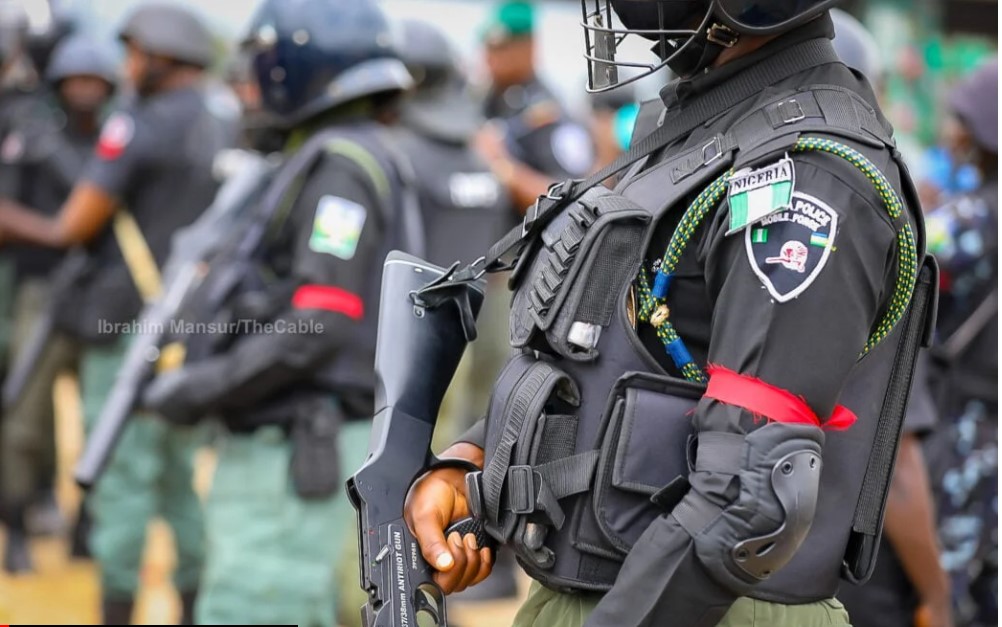
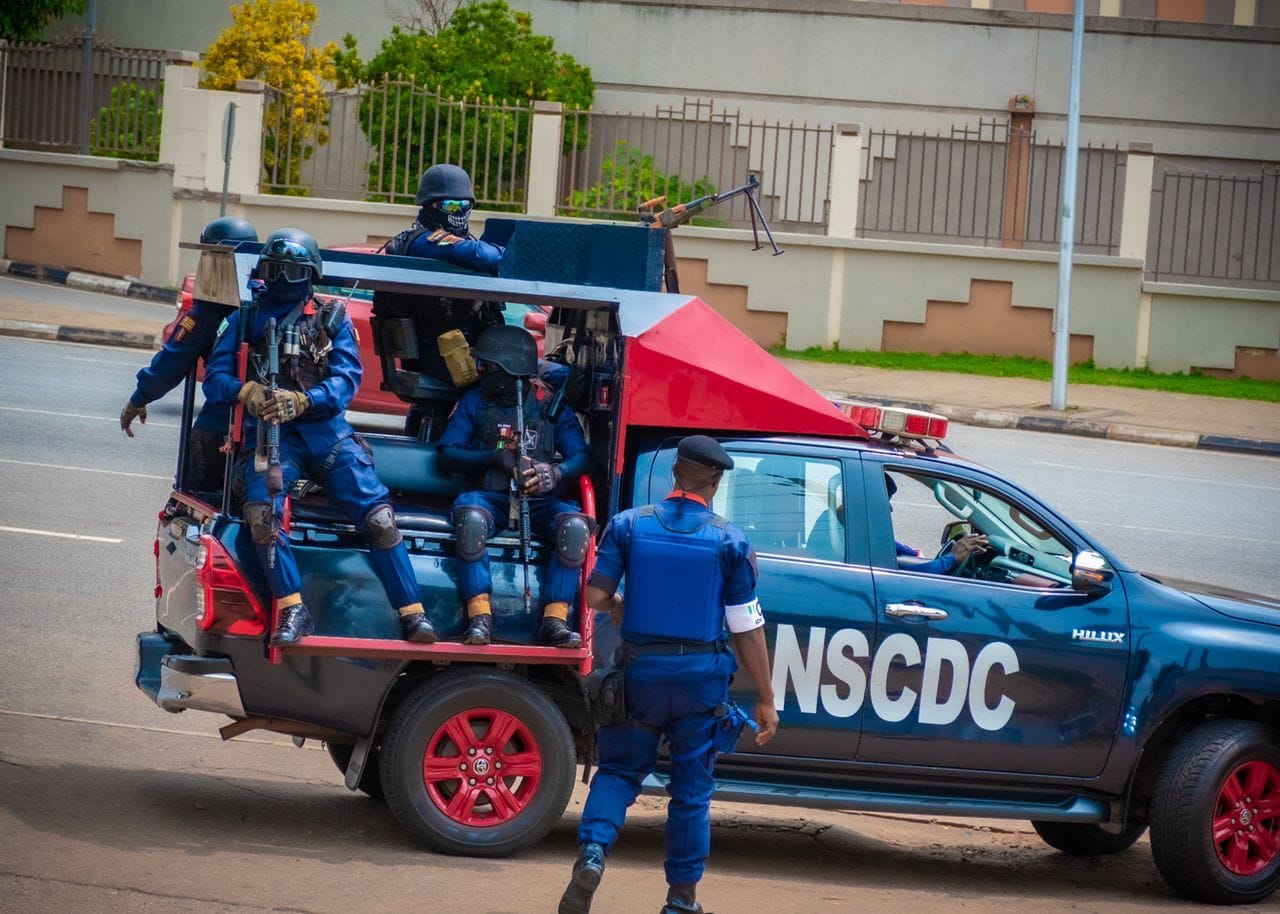
Following the withdrawal of 11,566 policemen by the authorities, prominent Nigerians have revealed plans to apply to the Nigeria Security and Civil Defence Corps for orderlies and security escorts.

The move, ordered by President Bola Ahmed Tinubu, is part of an aggressive push to redirect overstretched security manpower to escalating nationwide threats—including kidnapping spikes in Kwara, Kebbi, Niger and other parts of the North.

Addressing journalists in Abuja, Inspector-General of Police Kayode Egbetokun said the recall of police from VIP duties was neither punitive nor political but was designed to refocus policing on communities ravaged by crime.

“In line with the President’s directive, we have withdrawn a total of 11,566 personnel from VIP protection. These officers are being redeployed to critical policing duties immediately,” he announced.

Egbetokun said the reallocation will strengthen rural and township security, improve intelligence-led operations, and boost rapid response capacity.

He warned that the implementation must be guarded against abuse by criminals posing as law enforcement agents.

“The withdrawal is not a retreat from responsibility, but a reclamation of it.”

The IGP also cited recent abductions in Kwara, Kebbi, and Niger states as justification for redeploying officers from VIP corridors to troubled zones.

Among recent successes, Egbetokun said the police arrested 451 suspects for armed robbery, 356 for kidnapping, 534 murder suspects, 129 for culpable homicide suspects, 173 persons for unlawful possession of firearms, 312 rape suspects and 282 suspected cultists.

Despite the sweeping directive, police insiders told The PUNCH that many officers had quietly resumed VIP assignments

A source who doesn’t want to be named because he was not permitted to speak to journalists said some of his colleagues on VIP duties are back.

“Those on VIPs’ duties are returning. I saw some of them today. In my office, two of them are back. This time around I think the directive will be effective with what I have seen on the ground, “one source said.

Another police official, speaking on condition of anonymity, added, “ Officers are being reassigned to their previous duties gradually. I don’t know the VIPs they were withdrawn from but our colleagues are returning. “

Findings by The PUNCH revealed that several political bigwigs—among them former SDP presidential candidate Prince Adewole Adebayo and suspended PDP National Secretary Samuel Anyanwu—were among VIPs whose police details were abruptly recalled.

At a high-profile meeting in the Central Business District on Thursday morning, The PUNCH spotted the former SDP standard-bearer flanked by NSCDC personnel alongside armed private guards dressed in black. Efforts made to reach Adebayo to confirm the withdrawal of his police escorts were unsuccessful as his line was unavailable.

Meanwhile, suspended PDP National Secretary, Samuel Anyanwu, admitted that his police orderlies had also been withdrawn.

Speaking in a phone interview on Thursday, he expressed support for the policy, but urged the government to prioritise “elder statesmen and national officers of political parties.”

“I support their withdrawal. Nigeria as a government is lacking in terms of manpower in the police. The police officers who are engaged with the VIPs have also mismanaged that position.”

However, he added a caveat: “They should prioritise it. They should know the calibre of people and take a look at their potential to be able to know who really meets the requirements of VIPs. They should do a proper recording and documentation of these police officers.”

Asked if he would turn to private guards, he replied, “How can I be using private guards? I’m entitled to police escorts. I’m a national official of a political party and also a senator. But I have applied to the NSCDC for manpower. In fact, I even prefer them because they are well trained too.”

See also  Tinubu returns to Abuja after counterterrorism talks in Rome

Vice Chairman of the APC (South-East), Dr Ijeoma Arodiogbu, warned that depriving VIPs of protection could backfire.

“No, they didn’t withdraw my security aides. That’s one. In the House of Reps and the Senate yesterday (Wednesday), they spoke against that, because if they withdraw security aides from VIPs, it could be another level of insecurity.

“Of course, VIPs are prime targets, especially with politicians. So, I don’t think that the IGP will implement all of it. Of course, it is big news if any VIP is affected by any form of insecurity. That is why it’s called VIP, Very Important Personality,” he said.

While thanking the president for taking the bold moves, the APC chieftain also backed the call for priority to be given to certain VIPs, saying escorts should not be given to everyone.

“I agree with giving priority to certain persons of importance. In everything, prioritising is important. We shouldn’t be having a situation where some traders will be seen going about with 10 police details.

“Yes, we agreed that they have money. But they shouldn’t fall under the bracket or category of the elite who cogently need these escort and security aides. That is the one that is more disturbing.

“We also thank the president so much for calling for more recruitment of personnel into the police and army. It is all a bid to buffer all those challenges.”

According to him, priority should be given to truly high-risk individuals—not traders “going around with 10 police officers.”

The  Deputy National Youth Leader of the PDP, Tim Osadolor, said Nigerians should embrace a future where VIPs move without escorts.

“Let everybody including the president learn to start moving around without them. Let Tinubu travel to Amsterdam and Denmark and see how their prime ministers move around freely without escorts.”

Meanwhile, the lawmaker representing Borno South, Senator Ali Ndume, has thrown his weight behind the withdrawal of police personnel from Very Important Persons.

Speaking on Thursday night on Politics Today, a programme on Channels Television, Ndume said some ministers had police officers attached not only to themselves but also to their wives and children.

He said he had long advocated the policy, describing it as one of President Bola Tinubu’s most commendable decisions, which must be fully implemented.

“We should see it on the ground. I thought I would not see policemen at the National Assembly today but I saw so many of them there today.

“I was given three police orderlies, but that was a big crowd for me so I refused. I insisted that if there’s going to be any attachment of the police to me, then it should be one orderly because I’m not an accused person.

“I should have police to monitor me so that next time they won’t say I have gone to have a meeting with the other person. So I need that police to monitor my movement and who I relate with. The police are not to protect me. No.

“So, I am of the opinion that all these policemen be withdrawn from VIPs. You can imagine that some of my colleagues like ministers have police attached to their wives and children. What’s their business with that?” he queried.

See also  NSIB - Six injured in Abuja–Kaduna train derailment (PHOTOS)

But some lawmakers described the directive as “unrealistic” and “potentially reckless,” insisting that VIPs remain primary targets of assassinations and politically motivated attacks.

The Majority Leader of the House of Representatives, Prof Julius Ihonvbere,  called for clarification on the category of persons affected by the recent presidential directive ordering the withdrawal of police orderlies from Very Important Persons.

Speaking exclusively with The PUNCH, Ihonvbere said that although he does not consider himself a VIP, his position as a national officer requires police protection.

He stated, “We have to define those this policy will affect. I am not a VIP but a national officer of Nigeria. All over the world, presidents and other key government functionaries are protected by the police.

“In my own case, I can fly to Benin City, Edo State, but I cannot move without police from Benin City to my constituency. This is because that road is a danger zone where kidnappers hold sway.

“If I’m going to my constituency, will I go without security? I think the government should clarify this so that it will be clear for us to know who are affected by this development. I want to repeat that there are VIPs and public officers.”

The Professor of Political Science also lamented the abuse of police orderlies, especially by individuals with financial influence.

“Not long ago, a private citizen visited me. He came from the United States to do business in Nigeria. He had six police guards with him. This is something we need to look at,” he added.

In a separate interview, Edo lawmaker, Billy Osawaru said he is “now on his own,” without elaborating on what he intends to do going forward.

Asked if his police guard had been withdrawn, he replied, “Yes and I’m on my own.”

The lawmaker representing Osun East in the Senate, Francis Fadahunsi,  urged the National Assembly to enact a law that would enable responsible Nigerians to bear arms, especially now that the country is grappling with worsening security challenges.

A short video of the lawmaker’s admonition at plenary was obtained by PUNCH Online in Osogbo, Osun State, on Thursday.

Fadahunsi, a lawmaker belonging to the All Progressives Congress, while advancing arguments on the need to allow responsible Nigerians to bear arms, said about 120 countries across the globe have legalised arm bearing by the people.

“We are almost at military rule, and we are at war. He (Tinubu) is the Commander-in-Chief because they listen to him and he is spending on them. That is what can solve the problem.

“Today, about 120 countries have legalised carrying arms. I think it is time for Nigeria to allow us to carry arms.

“If the elite and a few of us who are okay are carrying guns, it will be a war against these criminals, and they will run away because they are not many,” Fadahunsi said.

On the part of the National Assembly, the Senator said, “It is time for us to make a law that the kidnappers, including the negotiators, are criminals and should face the death penalty.”

Demanding a reorganisation of the country’s military architecture, the lawmaker queried the command structure of the Ministry of Defence.

He said, “The Minister of Defence is not a soldier or a retired general. The Minister of State, all of them are businessmen. The NSA is a retired policeman.

“Do you know that these soldiers called us, even those carrying superior guns than theirs, ‘bloody civilians’, and that is what is affecting us.

See also  Satguru Maharaj Ji promises to help free Nnamdi Kanu if Biafra can do the following...

“The Commander-in -Chief needs to look at the military architecture around him and do the needful. If not, we will continue to waste money because they will not take orders from any other person other than their own general.”

Barely 24 hours after Fadahunsi’s comments, the Senate introduced a bill sponsored by Senate Leader Opeyemi Bamidele to classify all forms of kidnapping as terrorism, attracting a mandatory death sentence.

The Senate on Thursday introduced a bill seeking sweeping amendments to the Terrorism (Prevention and Prohibition) Act, less than 24 hours after lawmakers demanded tougher sanctions to curb the rising wave of insecurity across the country.

Sponsored by the Senate Leader, Senator Opeyemi Bamidele (APC, Ekiti Central), the bill, which sailed through first reading immediately, proposes to classify all forms of kidnapping as acts of terrorism, attracting the maximum penalty of death upon conviction.

The move followed a heated debate during Wednesday’s plenary, where senators lamented the worsening spate of abductions nationwide.

Many lawmakers argued that only the stiffest punishment would deter the growing menace. They called for the death penalty for kidnapping, irrespective of whether the victim dies in captivity.

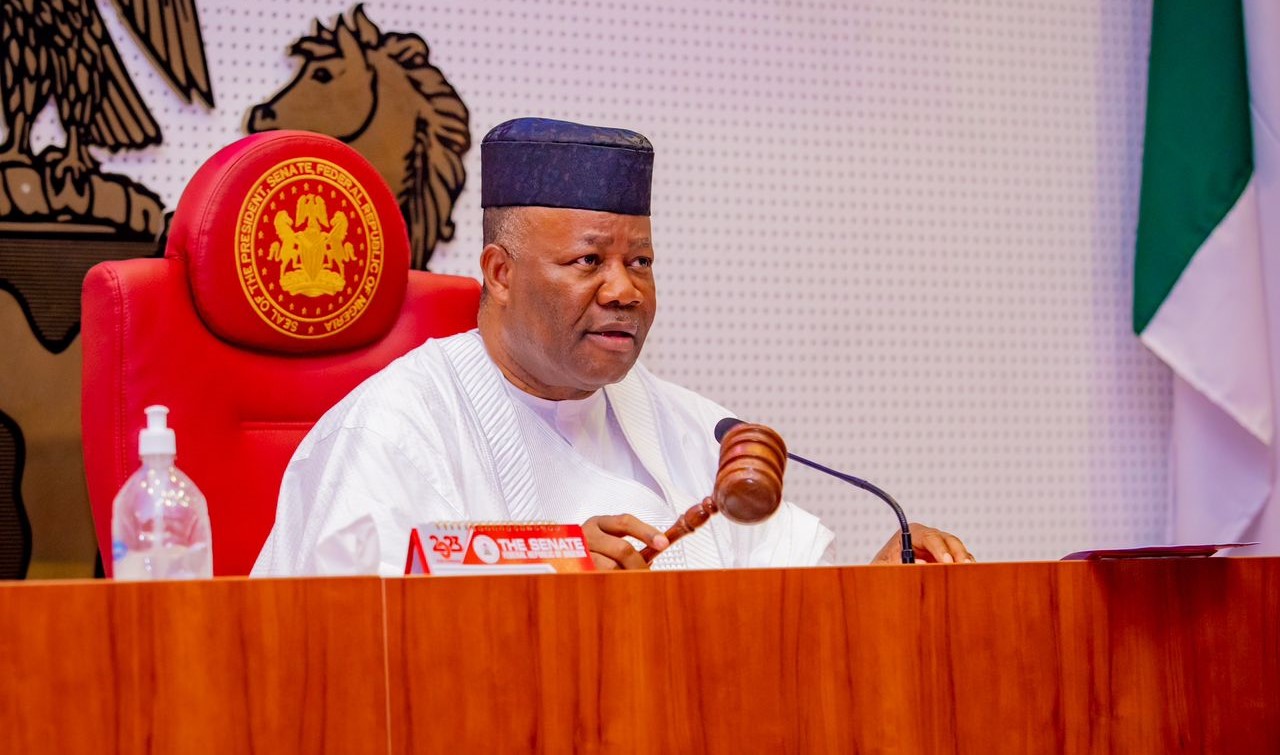
Presiding over the session, Senate President Godswill Akpabio, directed Bamidele to submit an amendment bill “as soon as practicable,” stressing the urgency of the matter.

“A very serious amendment has been proposed, that the penalty for kidnapping be changed immediately to carry the maximum punishment of death,” Akpabio said.

“Henceforth, kidnapping should first be classified as a terrorist act, which should attract the death penalty. Once the offence is established, a death sentence must follow. There is no discretion,” he added.

Bamidele complied with the directive on Thursday, presenting the bill for its first reading.

The proposed amendment, however, seeks to broaden the scope by defining any form of kidnapping as terrorism, making the death penalty mandatory upon conviction, whether or not the victim survives the ordeal.

Meanwhile, the Association of Licensed Private Security Practitioners of Nigeria has described the new development as a wake-up call to modernise the 38-year-old law regulating private security operations.

The association said the current legal framework governing the private security industry is outdated and inadequate for addressing emerging threats.

Addressing journalists on Thursday, the Chairman of ALPSPN’s Interim Caretaker Management Committee, Maj. Gen. Elvis Njoku (retd.), said updating the Act had become necessary to professionalise the sector, standardise operations, and integrate private security firms more effectively into national security planning.

“We are pushing for amendments to the Private Guard Companies Act to incorporate modern security paradigms, such as data protection and environmental security. Our united front will make these demands irresistible, benefiting not just our members but the entire nation.

“The private security industry in Nigeria is at a pivotal juncture. We have witnessed remarkable growth in recent years, with our members providing essential services in areas ranging from corporate security, event management, VIP protection, to community surveillance,”he added.

Njoku explained that the association is seeking provisions that address new security realities, including data protection, technological surveillance tools, and expanded responsibilities for licensed practitioners.

He urged members to unite behind the push for legislative reforms, noting that a coordinated front would strengthen the industry’s advocacy efforts.

He also praised President Tinubu’s security reforms.

Continue Reading
Click to comment

Leave a Reply

Your email address will not be published. Required fields are marked *

News

FG raises allowances, boosts welfare for civil servants

Published

on

The Federal Government of Nigeria has approved a sweeping increase in peculiar allowances and other welfare benefits for civil servants, in a move aimed at improving take-home pay and boosting morale across the public service.

The announcement was made on Friday by the Head of the Civil Service of the Federation, Didi Walson-Jack, during a press briefing in Abuja, where she outlined key reforms endorsed by the Federal Executive Council.

According to Walson-Jack, the review affects workers under both the Consolidated Public Service Salary Structure (CONPSS) and the Consolidated Research and Allied Institutions Salary Structure (CONRAISS), ensuring a broad-based impact across all cadres.

She said the revised peculiar allowances have been structured to reflect across all grade levels, resulting in a meaningful increase in earnings for both junior and senior officers.

In addition, the government approved an upward review of several key allowances, including duty tour allowance (DTA), estacode, and book allowance. Walson-Jack noted that virtually all allowances listed under the Public Service Rules have now been revised.

A major highlight of the reform is the approval of 100 percent Duty Tour Allowance for civil servants attending approved training programmes, regardless of whether travel is involved.

“Even if you are based in Abuja and attend training within Abuja, you are entitled to full DTA,” she said.

Beyond salary-related adjustments, the government also introduced a new exit benefit scheme for retiring civil servants under the Contributory Pension Scheme. The scheme provides 100 percent of a retiree’s total annual emoluments as an exit package, in addition to their pension, effective January 1, 2026.

See also  Immigration hikes passport fees to N100,000, N200,000

Walson-Jack described the move as a step toward ensuring dignity in retirement, stressing that no public servant should leave service without adequate financial support.

The government also confirmed the operationalisation of the Employee Compensation Scheme, designed to provide financial protection for workers who suffer job-related injuries or death.

The reforms come amid growing calls from labour unions for improved welfare, as rising living costs continue to put pressure on workers. Analysts say the combined measures could significantly enhance financial stability for civil servants and improve overall productivity in the public sector.

punch.ng

FOLLOW US ON:

FACEBOOK

TWITTER

PINTEREST

TIKTOK

YOUTUBE

LINKEDIN

INSTAGRAM

Continue Reading

News

Wiretapping: El-Rufai pleads not guilty, faces fresh charges

Published

on

The Federal Government, on Thursday, expanded the criminal case against former Kaduna State Governor, Nasir El-Rufai, introducing fresh allegations bordering on interference with critical national infrastructure and unauthorised access to classified information.

The new counts are contained in a further amended five-count charge filed on April 13, 2026, before the Federal High Court in Abuja, replacing an earlier three-count charge instituted on February 16, 2026.

At his arraignment on Thursday before Justice Joyce Abdulmalik, El-Rufai, however, pleaded not guilty to all counts after the court granted the prosecution’s request to substitute the initial charge.

The Department of State Services, through its counsel, Oluwole Aladedoye (SAN), told the court that the amended charge significantly revised the allegations against the former governor, urging the court to adopt the new processes.

Unlike the earlier charge, which focused mainly on alleged unlawful interception of communications, the fresh counts introduce a broader national security dimension.

In count one of the amended charge, the prosecution accused El-Rufai of “intentionally and unlawfully interfer[ing] with the communication” of the National Security Adviser, Nuhu Ribadu, describing the communication channel as part of Nigeria’s critical national information infrastructure.

The charge states that the alleged act contravenes provisions of the Designation and Protection of Critical National Information Infrastructure Order, 2024, and is punishable under the Cybercrimes (Prohibition, Prevention, etc) Amendment Act, 2024.

In a separate and newly introduced count, the prosecution alleged that El-Rufai, “without authorisation, intentionally secured access to classified information” relating to Ribadu, including details of his arrest and detention order issued on February 12, 2026.

This count marks a shift from the earlier framing of the case, which was limited to claims of intercepted communications, to a more serious allegation involving breach of classified state information.

The amended charge also retains and restructures earlier allegations. Count four accuses the defendant of unlawfully intercepting the NSA’s communications, while count five alleges that he and others still at large used technical systems that compromised public safety and national security, thereby instilling fear among Nigerians.

See also  Kwara to sanction food handlers for poor hygiene due to Lassa fever

Part of count four reads, “That you, Mallam Nasir El-Rufai, adult, male, intentionally and without authorisation, intercepted the communications of the National Security Adviser, Nuhu Ribadu, as admitted by you on 13th February, 2026, while appearing as a guest on Arise TV Station’s Prime Time Programme in Abuja… and thereby committed an offence contrary to and punishable under Section 12(1) of the Cybercrimes Act.”

Count five further states, “That you… did use technical equipment or systems which compromised public safety, national security and instilling reasonable apprehension of insecurity among Nigerians… and thereby committed an offence contrary to and punishable under Section 131(2) of the Nigerian Communications Act, 2003.”

The February charge had contained only three counts, focusing on alleged admission of unlawful interception, failure to report individuals involved, and actions capable of undermining public safety.

However, the amended charge introduces two additional counts and separates previously combined allegations into distinct offences, effectively broadening the scope of criminal liability.

Defence counsel, Oluwole Iyamu (SAN), confirmed receipt of the amended charge and did not oppose its substitution.

Following this, the court struck out the earlier charge and proceeded with the fresh arraignment.

After the plea was taken, the prosecution applied for an accelerated hearing, seeking three consecutive trial dates.

The defence objected, arguing that El-Rufai’s access to legal counsel could be affected due to his custody under the Independent Corrupt Practices and Other Related Offences Commission.

The defence also drew the court’s attention to a pending bail application filed on February 17, noting that an earlier missing affidavit had been located.

The DSS informed the court that it was not opposing the bail request.

In another application, the prosecution sought to shield the identities of two witnesses, requesting that their names be replaced with pseudonyms in court records, citing security concerns.

See also  Presidency Explains Nigeria-UK Migration Agreement, Warns Against Misinformation

The defence opposed the request, insisting that it violated the defendant’s constitutional right to know his accusers and that no concrete threat had been demonstrated.

Further arguments arose over access to proof of evidence, with the defence urging the court to compel disclosure to enable proper preparation for trial.

The prosecution opposed the application, describing it as procedurally misplaced.

The defence also filed a motion seeking to quash the amended charge, while the prosecution asked the court to dismiss it as lacking merit.

After listening to both sides, Justice Abdulmalik adjourned the matter to May 18, 19 and 20, 2026, for hearing.

Bail bid fails

The PUNCH gathered that the Kaduna State High Court refused El-Rufai’s bail application on the grounds that the seriousness of the allegations against him, as well as concerns over possible interference with investigations, outweighed the arguments advanced for his release.

The ruling was delivered on 21 April 2026 by Justice D.H. Khobo of the Kaduna Judicial Division in Charge No: KDH/KAD/ICPC/01/2026, filed by the Federal Republic of Nigeria through the ICPC.

El-Rufai had approached the court via a motion dated 25 March 2026, seeking bail “either on self-recognisance or upon such liberal terms as the court may deem fit.”

His application, brought under Sections 35(4) and 36(5) of the 1999 Constitution (as amended) and provisions of the Kaduna State ACJL 2017, argued that the offences were not capital in nature and, therefore, carried a presumption in favour of bail.

He further contended that he had strong community ties, fixed addresses, and substantial assets, which, according to him, eliminated any risk of flight.

El-Rufai also told the court he voluntarily returned from Egypt on 16 February 2026 to honour an EFCC invitation, and argued that the amended charge was “fundamentally defective” and “unintelligible.”

He also raised health concerns, claiming he required specialist medical attention.

See also  Tinubu returns to Abuja after counterterrorism talks in Rome

The ICPC opposed the application through a nine-paragraph counter-affidavit deposed to by Idris Abubakar, insisting that the offences were serious and “economically sabotaging.”

The anti-graft agency argued that the former governor posed a flight risk, adding that there was a likelihood he could interfere with witnesses and ongoing investigations involving other suspects.

It also alleged an incident at the Nnamdi Azikiwe International Airport, Abuja, on 12 February 2026, where El-Rufai allegedly obstructed law enforcement officers.

The ICPC further dismissed his medical claims, stating that no supporting medical report was provided.

In his ruling, Justice Khobo held that the gravity of the nine-count charge, coupled with allegations of interference and obstruction, made bail inappropriate at this stage.

The court stated, “In the instant application, given the gravity of the nine-count charge against the defendant/applicant, the respondent’s credible apprehension regarding the interference with the ongoing investigations linked to other persons still at large… the interest of justice is best served by ensuring the applicant remains available for an accelerated trial.”

The judge also faulted the defence on health grounds, noting, “The applicant in my view has failed to provide sufficient medical evidence to justify the grant of bail on health grounds.”

Consequently, the court held, “Accordingly, the defendant/applicant’s application for bail pending trial fails and is hereby refused.”

Justice Khobo ordered that El-Rufai “shall remain in the custody of the respondent (ICPC) pending the commencement of the trial,” while directing that proceedings be conducted on an accelerated basis.

The court also fixed June 1, 2, 3 and 4, 2026, for day-to-day hearing, following what it described as a consensus between prosecution and defence counsel.

For now, the former governor remains in ICPC custody as the substantive trial awaits commencement.

punch.ng

FOLLOW US ON:

FACEBOOK

TWITTER

PINTEREST

TIKTOK

YOUTUBE

LINKEDIN

INSTAGRAM

Continue Reading

News

Why El-Rufai’s Bail Application Was Denied

Published

on

A Kaduna State High Court has denied bail to former governor of the state, Nasir El-Rufai, in an ongoing trial over alleged financial misconduct.

Delivering a ruling on Tuesday, Justice Darius Khobo held that it was in the interest of justice for the defendant to remain in custody to ensure his availability for trial.

El-Rufai was arraigned by the Independent Corrupt Practices and Other Related Offences Commission on a nine-count charge bordering on the alleged conferment of benefits under false pretences and dishonest disposal of loan funds.

He pleaded not guilty to all charges.

According to the court, the bail application was supported by a 24-paragraph affidavit, in which the former governor argued that the offences were non-capital.

He also cited his status as a former governor, his strong community ties, and his voluntary return to Nigeria from Egypt.

El-Rufai further claimed that he had underlying health conditions requiring specialist care.

The anti-corruption agency opposed the bail request, filing a counter-affidavit.

The ICPC argued that the offences were “economically sabotaging” and raised concerns about possible interference with witnesses and ongoing investigations.

It also described the defendant as a “flight risk with the means to evade trial due to his high standing in society.” The commission added that no medical evidence was provided to support claims of ill health.

In his ruling, Justice Khobo said the bail application relied heavily on El-Rufai’s status, describing it as “a double-edged sword.”

He noted that concerns raised by the ICPC about interference with investigations were significant.

See also  Terrorism: Police tighten S’East security as Kanu knows fate today

According to the certified true copy (CTC) of the ruling delivered on April 21, obtained by The Cable, the judge held that the prosecution made “weighty depositions” justifying the refusal of bail, adding that the defence failed to counter them with further evidence.

The judge said, “It is, however, noteworthy here that in spite of these weighty depositions in the Prosecution/Respondent’s counter affidavit, which sought to controvert the depositions in the Applicant’s supporting affidavit, the Applicant never deemed it fit to file a further and better affidavit to further controvert the said weighty depositions in the Prosecution/Respondent’s counter affidavit.

“In the instant case, therefore, failure to file a further affidavit by the applicant to further controvert the above-outlined weighty depositions in the Respondent’s counter affidavit leaves the said weighty depositions in the counter affidavit unchallenged and deemed to be admitted as being correct, and I so hold.

“The law is trite: if in an application for bail pending trial there is good reason to believe or strongly suspect that the accused will jump bail, thereby making himself unavailable to stand his trial, and/or will interfere with the witnesses, thereby constituting an obstacle in the way of justice, the Court will be acting within its undoubted discretion to refuse bail.

“In the instant application, the applicant alluded to facts that he has health conditions requiring specialist monitoring, but the applicant did not attach any medical evidence to substantiate his claim of ill-health.

“The law is settled that where an application for bail seeks to lay claim to ill-health, credible evidence in that branch of medicine ought to be made available before the court by the Applicant.

See also  FG seals Plateau mine after gas leak kills 37

“Accordingly, the Defendant/Applicant’s application for bail pending trial fails and is hereby REFUSED.

“The Defendant/Applicant shall remain in the custody of the Respondent (ICPC) pending the commencement of the trial.

“The Respondent/Prosecution is hereby ordered to ensure the trial of the Defendant commences expeditiously and shall be given an accelerated hearing by this Court on a day-to-day basis where practicable.”

Afterwards, the prosecutor and el-Rufai’s counsel agreed that the trial should commence the first week of June.

The case was then adjourned to June 1, 2, 3, and 4, 2026.

FOLLOW US ON:

FACEBOOK

TWITTER

PINTEREST

TIKTOK

YOUTUBE

LINKEDIN

INSTAGRAM

Continue Reading

Trending