Connect with us

Lifestyle

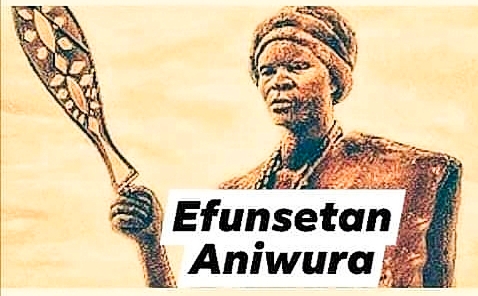
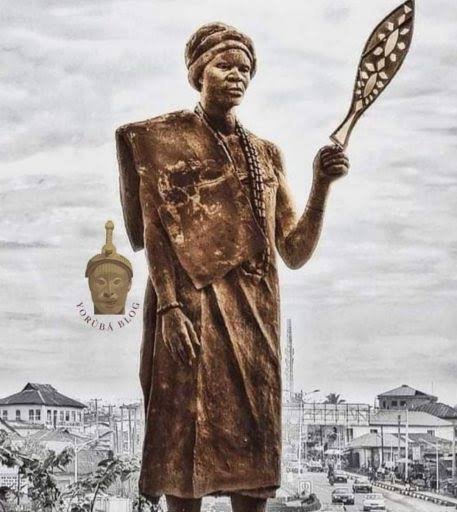
Efunsetan Aniwura: Yoruba’s Most Powerful Woman That Ever Lived (PHOTOS)

Published

on

The story of Efunsetan Aniwura is perhaps one of the most motivating thrillers in Yoruba political history. It captivates, in the most astounding manner, the place of women in Yoruba political history. But all along, the story of Efunsetan had been written and foretold by her tormentors and painted grimly by mostly chauvinistic men.

It must be understood the context of Efunsetan’s coming into global fame, at least at this time, the World was defined as the circumference within which local people operated within a phenomenon.

The 1700s up to 1900 were centuries of great wars and arms build-up in the vast Yoruba country of old. It was a period of great revolutions and social upheavals across the Yoruba country. It saw the massive production of weapons and the importation of military hardwares by Yoruba leaders, from as far as Hambourg in Germany.

I visited the Ogedengbe of Ilesa few months ago and was thrilled by the amazing exploits of Ogedengbe, the war General who led the Ekitiparapo war and who by 1860s was importing military weapons from Europe in the prosecution of war.

To show the grandeur of the Yoruba nation, around 1880, it was reported that the then King of England had invited Ogedengbe for a state visit. England marveled at the military tactics of Ogedengbe, his command structure, his Spartan lifestyle, his mysticism and above all, his science of war which he largely derived from the painstaking study of the movement and behavior of animals in moments of ferocious encounters with death or engagement with trembling. It was at this period that a bomb was invented at Okemesi, which turned around the fortunes soldiers of Ekitiparapo war led by Ogedengbe. Contrary to widespread assumptions, the word KIRIJI actually emanated from the sound of the new weapon produced at Okemesi Ekiti. General Ogedengbe, who was in command of about 100,000 soldiers, had declined the request for a state visit to England, saying that he was too busy with state matters. In Ilesa, during my visit, I saw the picture of the then King of England which the later had sent to Ogedengbe as a mark of respect and honour.

See also  Oba Abdul-Lateef Adeniran Akanni (Obaarun-Oladekan I): The Olofin Adimula of Ado-Odo

Back to the main topic. The story of Efunsetan Aniwura is intriguing. Her date of birth remains uncertain, but she must have been born around 1790s or around that period. Yoruba epic films and folklores portray Efunsetan as a very vicious woman, filled with prejudice, a woman who died in tragic circumstances. But there are hidden thrills and heroic feat that those who wrote his history continue to undermine. There is nothing as perplexing as having the story of a great woman being relayed by men, in a society credited for not giving women any chance in socio-political affairs, especially in the primordial times, where women were seen as objects consigned to the kitchen and on the mat top. It is to the glory of Moremi, that her story definitely ignited passion in subsequent Yoruba women, one of which was Efunsetan Aniwura.

This woman of substance has been consistently portrayed as a villain who ran a Gestapo of sorrow and blood, a blood-sucker who beheaded people’s head at will. No. We must deconstruct the narrative that veiled real stories under the cover of the superiority of men over the distinction of some brave women in our troubled history. Efunsetan was the son of an Egba farmer, Ogunrin, a native of Egba Oke-Ona. She rose to become the Iyalode of Ibadan. She was the first woman to set up a flourishing agrarian economy that employed no fewer than 2000 men and women. Around 1850, worried by the spread of war and combat in the Yoruba country, she introduced infantry military training into the midst of her workers. She was said to have had her own military training in urban and guerrilla warfare after which she requested that the same training be impacted on her slaves, about 2000 of them.

The workers mainly worked in the vast farmland. They produced cash crops, cotton, groundnuts, maize and beef. She was said to be in possession of a vast dairy farm that could feed the entire Yoruba country and beyond. She traded up to Ghana and the Hausa country and even exported her produce to Europe. In her book, A History of the Yoruba ,Prof Banji Akintoye wrote about Efunsetan who she described as a rich “woman trader” that ‘had more than 2000 workers employed on her farms.” This was at a time the industrial revolution was gaining strength in Europe and agriculture had become the most industrious enterprise in Yorubaland, being one of the service points for European products.

See also  Akinwumi Ogundiran: Scholar of the Yoruba World and Atlantic Africa

David Hinderer, a missionary who wanted to erect a Church in Ibadan could not source human labour because all the men and women were engaged in large scale farming. The Generals of the Yoruba Army had also taken to farming to beat famine as a direct consequence of war. Hinderer wrote of his travel to Ibadan in 1853 with a caravan of traders and carriers “consisting of not less than 4000 people.” Prof Akintoye wrote “It is not unlikely that Efunsetan was the richest person in the whole of the Yoruba interior in about the late 1870s.” Efunsetan had her own pains and anguish. She had no child after several years of marriage. Unfortunately, her only daughter died in 1860 during child birth. She also adopted a son, Kumuyilo. Now, having lost her only daughter, she went into recluse and became suspicious of life and living. She even became an atheist, ignoring all the gods wondering why she should lose her only daughter.

She may have been pushed to some form of extremism. She ordered that no one among her 2000 workers must marry or have sex within and non of the girls must conceive. It came that one of the workers broke the law. She ordered that the woman be executed. No doubt that she carried out outrageous order of execution, but this was nothing compared with her heroic contributions to the economy of the Yoruba nation. Due to this act, the Aare ordered that she be brought to justice. This was just the proverbial hawk that was looking for every opportunity to clawlift the chicken.

See also  Why I’m Still Single And Childless At 52 – Nigerian Actress, Bimbo Akintola Opens Up

It is believed that her persecutors merely waited for her to carry out a dastardly act as an opportunity to seek revenge against her perceived emergence as a strong and influential woman, whose mutual rival was Madam Tinubu of Lagos who was also her friend. It was at a time her own army had become a threat to the fiery army of Latoosa. How could a woman raise such a vast array of armed soldiers? There are two varying accounts of her death. One claimed Aare Latosa led a strong infantry army to lay siege on her house and instead of being overpowered, she committed suicide by drinking the Hemlock.

At this period, her army had been divided and the loyalty fractured due to the execution of some of the 2000 workers for acts inimical to her authority. The other story said Kumuyilo was bribed by Latoosa to poison her but that the attack on her was carried out in the night by two of her slaves who sneaked into her apartment through the ceiling and clubbed her. There were events that indicated that the Ibadan chiefs were unhappy with the way Efunsetan was brought on her knees. Infact, with Latoosa there was a meeting on 8th of July when the Egba leaders came to Ibadan requesting for a Commission of Inquiry on the murder of Efunsetan.

The two slaves were subsequently brought before the Ibadan traditional court on 10th of July 1874. They were impaled right at the Basorun market. Efunsetan has been painted in forbidding pictures through Yoruba history. It is time to deconstruct and give her due honour as a heroine. At death, Efunsetan’s property was declared the property of the Yoruba country. `But there were other reports that she was indeed given a befitting burial with full military honours by Ibadan military rulers, after her enforced death.

Source by:By Akinlolu Damilare a.k.a Da-Vinci, Written By: Akinlolu Da Vinci

FOLLOW US ON:

FACEBOOK

TWITTER

PINTEREST

TIKTOK

YOUTUBE

LINKEDIN

TUMBLR

INSTAGRAM

Continue Reading
Click to comment

Leave a Reply

Your email address will not be published. Required fields are marked *

Lifestyle

PHOTOS: A Biafran Armoured Vehicle at the National War Museum, Umuahia: Ingenuity in a Time of Siege

Published

on

Displayed at the National War Museum in Umuahia, Abia State, this armoured vehicle stands as a striking material reminder of the technological improvisation that characterised the Biafran side during the Nigerian Civil War (1967–1970). The vehicle is commonly identified as an up-armoured T16 Universal Carrier, adapted and deployed by Biafran forces in the face of severe resource constraints.

The Nigerian Civil War in Context

The Nigerian Civil War, often called the Biafran War, erupted in July 1967 following the secession of the Eastern Region of Nigeria as the Republic of Biafra under the leadership of Lt. Col. Chukwuemeka Odumegwu Ojukwu. The conflict was rooted in a complex mix of political instability, ethnic tensions, economic disputes, and the fallout from the 1966 military coups.
The federal government imposed a land, sea, and air blockade on Biafra, drastically limiting access to weapons, fuel, spare parts, and food. This blockade forced Biafran engineers, mechanics, and technicians to rely heavily on local innovation and adaptation to sustain their war effort.

The Up-Armoured Universal Carrier

The vehicle shown in the museum is believed to be based on the T16 Universal Carrier, a light tracked armoured vehicle originally designed during the Second World War. Universal Carriers were widely used by Allied forces and were present in Nigeria during the colonial era.
During the war, Biafran forces modified available carriers by:

Reinforcing them with improvised armour plating

Adapting engines and mechanical components using locally available materials

Reconfiguring them for reconnaissance, troop movement, or limited combat roles

See also  ‘I’m A Wise Woman Unlike You, People Should Stop Taking You Seriously’ – Iyabo Ojo Blasts VeryDarkMan

Although such vehicles could not match the firepower or durability of modern armoured tanks, they represented a pragmatic response to isolation, allowing Biafra to maintain some level of mechanised capability.

Ingenuity Under Pressure

The armoured carrier exemplifies what many historians describe as Biafran wartime ingenuity. Alongside makeshift armoured vehicles, Biafra also produced:

Locally assembled rockets and mortars (such as the Ogbunigwe)

Modified civilian vehicles for military use

Small-scale refineries and workshops to support logistics

These efforts were driven by necessity rather than abundance, highlighting the role of technical skill and improvisation in asymmetric warfare.

Human Cost and Global Attention

The war resulted in devastating human losses. Scholarly estimates suggest around 100,000 military deaths, while civilian deaths range from approximately 500,000 to over 2 million, largely due to famine and disease exacerbated by the blockade. These figures vary widely among historians and humanitarian organisations, reflecting the difficulty of precise wartime accounting.
Notably, the Nigerian Civil War was among the first conflicts to receive extensive global television coverage. Images of starving Biafran children broadcast internationally shaped global humanitarian awareness and influenced the development of modern relief organisations.

Preservation and Historical Memory

Today, the presence of this armoured vehicle at the National War Museum, Umuahia serves an educational purpose rather than a celebratory one. It invites reflection on:

The realities of civil conflict

The limits and possibilities of local technological innovation

The enduring human and social consequences of war

As an artefact, it underscores how material culture can help future generations understand both the creativity and tragedy that emerge under extreme historical conditions.

See also  Oba Abdul-Lateef Adeniran Akanni (Obaarun-Oladekan I): The Olofin Adimula of Ado-Odo

Sources

National War Museum, Umuahia (museum displays and archival descriptions)

Nigerianland, Nigeria History Makers – Pictures

Falola, T. & Heaton, M., A History of Nigeria (Cambridge University Press)

FOLLOW US ON:

FACEBOOK

TWITTER

PINTEREST

TIKTOK

YOUTUBE

LINKEDIN

TUMBLR

INSTAGRAM

Continue Reading

Lifestyle

A Woman of Elegance, Resilience, and Impact: Alhaja Simbiat Atinuke Abiola

Published

on

This seldom-seen image from 1991 gently captures the serene presence of Alhaja Simbiat Atinuke Abiola (née Shoaga), pictured alongside her daughter, Wuraola Abiola, at her husband’s birthday celebration in Lagos—just a year before her passing. A prominent member of the renowned Abiola lineage, her life was rooted in service and generosity.

Alhaja Simbiat was not only the cherished spouse of the late Chief Moshood Kashimawo Olawale Abiola, she was also a formidable figure in her own right. In the early 1980s, she shattered glass ceilings by launching and directing Wonder Bakery, an innovative enterprise that provided employment to over 140 Nigerians—at a time when female business leaders were a rarity in the country.

Yet, her brilliance extended well beyond commerce.

In 1992, while waging a brave battle against cancer in a hospital in the United Kingdom, Alhaja Simbiat watched the heart-wrenching news of the Cairo (Dahshur) earthquake. Touched by the plight of the children affected, she selflessly donated $100,000 to support the reconstruction of a school that had been reduced to rubble. Even as her health declined, her compassion remained boundless—reaching across nations and touching lives.

That same year, Nigeria mourned the loss of a quiet luminary. Alhaja Simbiat passed away at age 51 in a British hospital, leaving behind a legacy defined by kindness, tenacity, and quiet leadership.

She was far more than a devoted wife and loving mother—she stood as a beacon of humanity, vision, and unwavering dignity.

May her soul continue to rest in perfect peace.

Source: historylovers

Photo: theelitesng

FOLLOW US ON:

FACEBOOK

TWITTER

PINTEREST

TIKTOK

YOUTUBE

LINKEDIN

TUMBLR

INSTAGRAM

See also  Akinwumi Ogundiran: Scholar of the Yoruba World and Atlantic Africa
Continue Reading

Lifestyle

VIDEO: Seyi Tinubu arrives Alaafin’s palace for installation as ‘Okanlomo of Yorubaland’

Published

on

The city of Oyo is currently witnessing an influx of political figures and traditional rulers for the installation of new high-ranking chiefs by the Alaafin of Oyo, Oba Abimbola Owoade.

Seyi Tinubu, accompanied by his wife, Layal, arrived at the palace of the Alaafin on Sunday.


Alaafin confers chieftancy titles on Seyi Tinubu. Credit: X|adejare_stephen


Alaafin confers chieftancy titles on Seyi Tinubu. Credit: X|adejare_stephen

PUNCH reports that Seyi, the son of President Bola Tinubu, will be installed as the “Okanlomo of Yorubaland,” a title which translates to “the beloved child” or “the one dear to the hearts of all Yoruba people.”

The title is said to symbolise a custodian of Yoruba values, unity, and cultural heritage.

The Senator representing Zamfara West and a former Governor of Zamfara State, Abdul’Aziz Yari, has also reportedly arrived in Oyo, accompanied by a delegation of northern senators and political figures.


Alaafin confers chieftancy titles on Seyi Tinubu, Senator Yari. Credit: X|adejare_stephen

Yari will also be installed as the “Obaloyin of Yorubaland” on the same occasion by the Alaafin.

The Director of Media and Publicity to the Alaafin, Bode Durojaiye, in a recent statement, reportedly stated that the ‘Obaloyin of Yorubaland’ title represents love, compassion, justice, and a bridge between physical and spiritual realms.

Both titles are said to come with responsibilities that include promoting Yoruba culture, advising the Alaafin, fostering unity, and advancing education and social welfare.


Alaafin confers chieftancy titles on Seyi Tinubu, Senator Yari. Credit: X|adejare_stephen

Videos circulating on social media reveal that the venue of the event is set, capturing the presence of several notable figures, including former Governor of Kano State, Abdullahi Ganduje, lawmakers, and a diverse assembly of traditional rulers and chiefs.

See also  Green Sands Shandy: A Nostalgic Drink of the 1970s and 80s

Watch videos below:

CLICK TO WATCH THE VIDEO

Credits: PUNCHNG

FOLLOW US ON:

FACEBOOK

TWITTER

PINTEREST

TIKTOK

YOUTUBE

LINKEDIN

TUMBLR

INSTAGRAM

Continue Reading

Trending