Connect with us

News

2026 budget twist: MDAs inject N3.5tn new projects despite FG freeze

Published

on

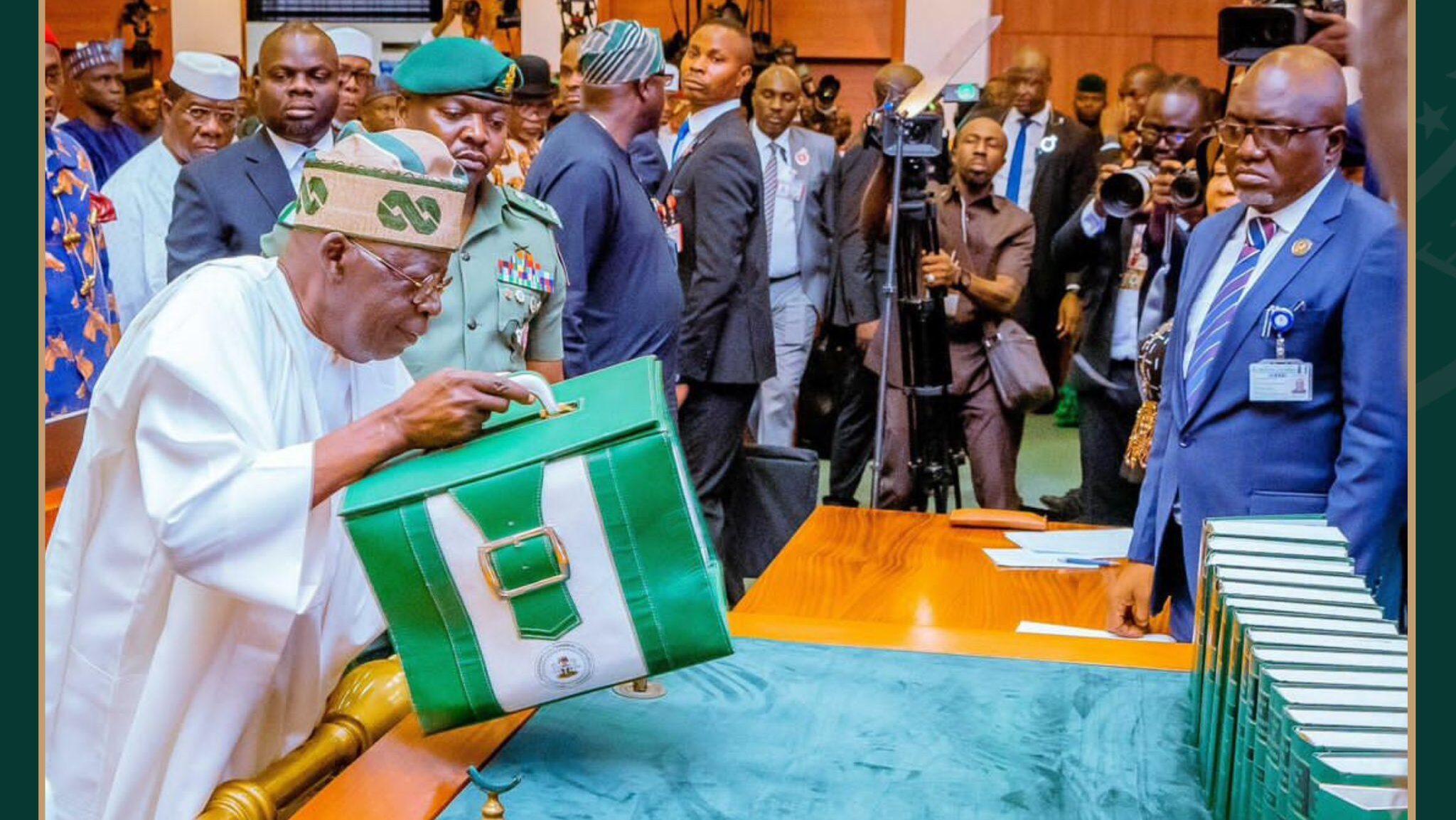
There are at least N3.50tn new projects in the proposed 2026 budget, according to an analysis by The PUNCH.

This is despite earlier budget preparation guidelines that directed Ministries, Departments, and Agencies to carry over 70 per cent of their 2025 capital allocation into 2026 and avoid introducing new capital projects.

Figures collated from the 2026 Appropriation Bill show that new project entries amount to N844.49bn across MDAs, while the total rises to N3.50tn when Service Wide Votes are included.

Against the proposed capital budget of N23.21tn for 2026, the combined new project provision of N3.50tn represents 15.09 per cent of total capital expenditure.

The Service-Wide Votes component within the new project portfolio totals N2.66tn, reflecting the concentration of the largest single allocations outside conventional ministerial capital lines.

Earlier in December 2025, The PUNCH reported that the Federal Government ordered ministries, departments, and agencies to carry over 70 per cent of their 2025 capital budget into the 2026 fiscal year as the administration moves to prioritise the completion of existing projects and contain spending pressures in the face of weak revenues.

This directive is contained in the 2026 Abridged Budget Call Circular issued by the Federal Ministry of Budget and Economic Planning and circulated to all ministers, service chiefs, heads of agencies, and top government officials in Abuja.

According to the circular, “MDAs are to upload 70 per cent of their 2025 FGN Budget to continue in FY2026. All such rollover and uploads MUST be in line with the immediate needs of the country as well as the government’s development priorities that align with the policy direction of the new administration, which hinges on National Security, the Economy, Education, Health, Agriculture, Infrastructure, Power & Energy, as well as social safety nets, women & youth empowerment.”

It stated that ministries and agencies must continue with the allocations already approved in the 2025 budget rather than seeking fresh projects. The circular said all expenditure would be properly scrutinised to allow only essential spending and to ensure value for money

However, The PUNCH observed that no fewer than 82 MDAs have at least one fresh capital or programme item included in the budget.

Across these MDAs, the proposed budget contains over 400 new project lines, ranging from large multibillion-naira infrastructure and health investments to smaller constituency-level interventions such as boreholes, training schemes, and equipment supply.

Also, the review of the Service Wide Votes, with 18 new projects in the 2026 appropriation bill, shows that a significant share of the new project portfolio is tied to financing programmes, security-related provisions, liabilities, and central initiatives.

See also  New ADC faction emerges, rejects David Mark-led coalition

The largest single line item is the provision for 2024 outstanding contractors’ liabilities put at N1.70tn. This allocation alone accounts for about 48.55 per cent of the N3.50tn total new projects, including Service Wide Votes.

Also, the bill includes three N100bn provisions under Service Wide Votes for the Nigeria Development Finance Corporation, the Economic Transformation Finance Programme, and the Nigeria Growth Investment Fund, bringing the total for these three funding lines to N300bn.

The Service Wide Votes entries also include capitalisation of INFRACO of N20bn, a DSS special operations fund of N30bn, and N110.31bn for the Nigerian Air Force to meet outstanding obligations on six T-129 ATAK helicopters and three Mi-35 helicopters. Another large entry is presidential air fleet logistics and management, including operation of the National Forest Guard, put at N283.85bn.

There is also a recurrent related take-off grant line for new MDAs at N41.12bn and a capital take-off grant line for 12 new MDAs, most in health and education, at N19.50bn, alongside other service-wide provisions such as pension increases due to consequential adjustment and payment of gratuity to civil servants.

Within the MDA level items, the five MDAs with the highest value of new projects, based on the figures provided, are the Budget Office of the Federation, the Federal Ministry of Transport headquarters, the National Library of Nigeria, the National Blood Service Commission, and the Sokoto Rima River Basin Development Authority.

The Budget Office of the Federation has the largest MDA level new project provision at N375bn for a multilateral or bilateral tied loan line for the Power Sector Recovery Operation, additional financing. This single item is larger than the combined new project allocations of most other MDAs listed.

As a share of the N844.49bn MDA total, the Budget Office provision accounts for about 44.41 per cent. As a share of the total new projects, including Service Wide Votes, it accounts for about 10.71 per cent.

The Federal Ministry of Transport headquarters has N210.53bn in new projects, made up of N68.50bn for consultancy services for the Lekki Ijebu Ode Ore Kajola railway and coastal railway, Badagry Apapa Tin Can, and N142.03bn for the construction of six bus terminals and transportation facilities in the six geopolitical zones under national public transportation.

The ministry’s two entries together represent about 24.93 per cent of the N844.49bn MDA new project total and about 6.01 per cent of the N3.50tn total, including Service Wide Votes.

The National Library of Nigeria has a new project provision of N24bn for structural renovation and space upgrade of the National Library of Nigeria across the six geopolitical zones. This is the third largest MDA new project amount in the list and accounts for about 2.84 per cent of the total MDA new projects.

The National Blood Service Commission has N15bn in new projects for the construction and equipping of a national blood service centre and strategic national blood reserve in Abuja, valued at N10bn, and the reconstruction or rehabilitation of NBSC state offices valued at N5bn. The combined total represents about 1.78 per cent of the MDA new project total.

See also  FG deploys military retirees to secure ungoverned spaces

The Sokoto Rima River Basin Development Authority has N9.14bn in new projects. These include construction of solar mini grids in selected locations in the catchment area at N2bn, construction of all in one solar street lights as security lighting points at N1bn, construction of rural roads to selected rural communities at N3bn, and supply of water pumps for irrigation to Isa and Sabon Birni federal constituency at N140m.

Others include the supply of 3 inch solar powered water pumping machines to farmers in Kebbi State at N1bn, provision of small town water supply system with reticulation at N1bn, and provision of empowerment materials to support the livelihood of youths at N1bn. This portfolio accounts for about 1.08 per cent of the total MDA new projects.

Beyond the top five, the next tier of MDAs by size includes health and social sector institutions clustered around N5bn to N6.22bn per entity, as well as several teaching hospitals and medical centres.

The PUNCH further observed that N5.85bn in new projects is for vehicle purchases, led by N1.5bn for vehicles at FUT Iyin Ekiti, N600m at FUADSI, and N500m at JUTH.

Furnishing and office equipment account for N2.93bn, driven by N1.18bn for two medical complexes at NAUTH Nnewi, N435m at the Air Power Centre of Excellence, and N250m for a Pharmacy Council zonal office. Renovation and refurbishment total N29.88bn, dominated by the N24bn national library upgrade and N5bn for blood service offices.

Residential and staff accommodation projects reach N25.29bn, anchored by N16.48bn for Defence Headquarters facilities and N7bn for DSS housing.

The PUNCH further observed that this was not the first time the Federal Government had restricted the addition of new projects into the national budget.

In December 2024, The PUNCH reported that the Federal Government directed all Ministries, Departments, and Agencies to exclude new projects from their budget submissions for 2025 unless they can be linked to the completion of ongoing initiatives, according to the 2024 Federal Government Budget Call Circular.

See also  Fire-ravaged Lagos airport old terminal to be demolished – Keyamo

The 2024 Budget Call Circular clearly states that no new projects will be admitted into the 2025 capital budget unless MDAs can demonstrate that sufficient resources have been allocated to complete ongoing projects.

The document read, “Again, the thrust of the FGN’s capital expenditure programme in 2025 will be the completion of as many cardinal ongoing projects as possible, rather than starting new projects. Thus, MDAs are hereby advised that new projects will not be admitted into the capital budget for 2025 unless adequate provision has been made for the completion/work programme of all ongoing projects.”

Also, MDAs have been instructed to carefully scrutinise and justify their proposed projects and programmes, ensuring that these align with the country’s immediate needs and the government’s key development priorities.

These priorities, as set out in the circular, include national security, economy, education, health, agriculture, infrastructure, power and energy, as well as social safety nets, with a focus on women and youth empowerment.

However, it appears that MDAs often flout this directive without any scrutiny from the Budget Office of the Federation or the National Assembly.

The National President of the Nigerian Economic Society, Professor Adeola Adenikinju, earlier argued that the late budget presentation prevents the National Assembly from carrying out proper scrutiny.

Adenikinju said, “The 2026 budget should have been in the National Assembly for consultation so that we can keep to this January 1st thing. That makes our fiscal system predictable.”

The economist said the rush to approve budgets “does not allow for proper analysis” and prevents ministries and departments from fully defending their plans. He warned that the practice was creating a disorganised fiscal environment.

A development economist and Chief Executive of CSA Advisory, Dr Aliyu Ilias, told The PUNCH that the Federal Government has “fiscal discipline problems.”

He insisted that government performance on fiscal and budget discipline “for now has not done well” and suggested that the lapses were deliberate. “I am sure I want to say that it is intentional because you could have seen that this is becoming an error,” he said.

Ilias said the problem also rested with the National Assembly, which he accused of failing in its oversight duty.

He said the legislature was tolerating inefficiencies, adding that “The National Assembly is also failing, failing in the sense that it is their own responsibility to make sure that those things do not really fly.”

punch.ng

FOLLOW US ON:

FACEBOOK

TWITTER

PINTEREST

TIKTOK

YOUTUBE

LINKEDIN

TUMBLR

INSTAGRAM

Continue Reading
Click to comment

Leave a Reply

Your email address will not be published. Required fields are marked *

News

Sand depletion threatens construction, food security — LASG

Published

on

The Lagos State Government has raised alarm over the growing sand depletion deposits across the state, warning that unchecked dredging activities could worsen construction costs, damage aquatic ecosystems and threaten food security.

“We need proper data. We need to know how many people are dredging, how much sand is being dredged daily, and what is left within those areas,” the Commissioner for Waterfront Infrastructure Development, Dayo Bush Alebiosu, said during the ministry’s two-year scorecard presentation at the annual ministerial press briefing held at the Bagauda Kaltho Press Centre.

Alebiosu said increasing demand for sand used in reclamation and infrastructure projects, particularly within the Lekki-Ajah corridor, had intensified pressure on available deposits across Lagos.

According to him, developers handling reclamation projects in Lekki and Ajah now source sand from communities as far as Ikorodu, pumping materials across distances of between 10km and 12km because deposits in closer locations are becoming exhausted.

He said the development confirmed fears that sand resources around Ajah were gradually running out, stressing that the state government has become more cautious in issuing dredging licences and permits.

The commissioner warned that the continued depletion of sand reserves could significantly increase the cost of construction and infrastructure delivery in Lagos, thereby placing additional pressure on housing and urban development.

He also linked indiscriminate dredging to threats to food security, especially in fishing communities that depend on healthy aquatic ecosystems for their livelihoods.

“It is putting food security at risk. We are encouraging people to consume more protein, such as fish, but whenever dredging disturbs aquatic life, fishermen are forced to work harder, and naturally, the cost of fish goes up,” he said.

See also  Cybercrime Act being used to suppress free speech — NBA president

According to Alebiosu, aggressive dredging disrupts aquatic microorganisms and marine habitats, forcing fishermen to travel farther and spend more resources before making catches.

The commissioner further disclosed that host communities are increasingly facing infrastructural damage caused by heavy-duty dredging equipment and commercial activities associated with sand excavation.

He cited Ibese as one of the affected communities where roads and public infrastructure have reportedly deteriorated due to dredging operations.

Alebiosu said the Ministry of Waterfront Infrastructure Development remains the agency legally empowered to regulate dredging and sand dealing activities in Lagos State.

He added that the ministry collaborates with relevant agencies, including the Ministry of Environment and Physical Planning, as well as host communities, to tackle illegal dredging through monitoring, enforcement and whistleblowing mechanisms.

The commissioner also urged residents to support enforcement efforts by reporting illegal dredging activities, noting that some operators deliberately conceal their activities to evade detection.

“We cannot continue blaming foreigners alone. We must ask ourselves how they got there in the first place. They definitely have the connivance of some locals,” he said.

The Lagos State Government reaffirmed its commitment to stricter regulation of dredging activities to curb environmental degradation, protect waterfront communities and ensure the sustainable use of natural resources across the state.

A statement released later on Thursday by the Director, Public Affairs of the Ministry of Waterfront Infrastructure Development, Morenikeji Akodu, noted that commissioner warned that the increasing desperation for sand across Lagos was already exposing the dangers of over-exploitation of waterways and coastal resources.

See also  Rivers achieves 95% HIV testing among pregnant women — Institute

He also warned that the development pointed to mounting pressure on available sand deposits across the state and underscored the need for stricter regulation and proper monitoring of dredging activities.

Continue Reading

News

Flood alert: Kaduna steps up awareness as rains loom

Published

on

The Kaduna State Government has intensified public awareness and emergency preparedness efforts following forecasts by the Nigerian Meteorological Agency that the state may experience flooding during the 2026 rainy season.

The government said the move followed the release of the 2026 Seasonal Climate Prediction report by NiMet, which identified Kaduna among states likely to witness above-normal rainfall this year.

In a statement issued on Thursday, the Commissioner for Information and Culture, Ahmed Maiyaki, said the government had commenced coordinated sensitisation and disaster response initiatives to minimise the impact of flooding and protect lives and property.

According to the statement, rainfall in Kaduna State is expected to commence between May 19 and June 10, 2026, while cessation is projected between October 5 and October 21, 2026.

The statement further noted that the forecast indicated the possibility of a severe 21-day dry spell between June and August, a development that could worsen flooding and other environmental challenges.

“The Kaduna State Government is taking this forecast seriously. Early preparedness and public cooperation remain critical to reducing the impact of flooding on our communities,” Maiyaki stated.

He disclosed that the Ministry of Information and Culture, in collaboration with the Kaduna State Emergency Management Agency, had launched a statewide sensitisation campaign aimed at educating residents on flood prevention, mitigation and safety measures.

Maiyaki urged residents to clear drainage around their homes and business premises and desist from indiscriminate dumping of refuse into waterways.

He also advised residents in flood-prone communities to adopt preventive measures, including the use of sandbags and other local flood control measures.

See also  Boost climate action funding, Tinubu urges World Bank, IMF

The commissioner appealed to traditional rulers, religious leaders, media organisations and civil society groups to support government efforts by promoting environmental sanitation and disseminating verified information to the public.

“The safety of citizens remains a top priority for the Kaduna State Government. We will continue to work with all relevant agencies and communities to ensure timely information dissemination and effective disaster risk reduction measures throughout the rainy season,” he added.

The statement further disclosed that KADSEMA had commenced vulnerability assessments in flood-prone communities, strengthened emergency response coordination and begun pre-positioning rescue materials and personnel in high-risk areas.

Flooding has remained a recurring challenge in several parts of Kaduna State and across the country during the rainy season.

In recent years, heavy rainfall has led to the destruction of houses, farmlands and public infrastructure in several communities, while hundreds of residents were displaced.

In 2024 and 2025, parts of Kaduna metropolis, Kafanchan, Zaria and some riverine communities witnessed severe flooding following torrential rains and poor drainage systems, prompting repeated warnings from emergency management agencies.

punch.ng

FOLLOW US ON:

FACEBOOK

TWITTER

PINTEREST

TIKTOK

YOUTUBE

LINKEDIN

INSTAGRAM

Continue Reading

News

Akwa Ibom doctors threaten N1bn lawsuit against EFCC over hospital raid

Published

on

The Nigerian Medical Association, Akwa Ibom State chapter, has said it will institute a N1bn legal action against the Economic and Financial Crimes Commission over alleged assault on one of its members, Professor Eyo Ekpe, during a raid at the University of Uyo Teaching Hospital, Akwa Ibom State.

The association on Wednesday said the planned suit followed what it described as physical, emotional, professional and institutional damages suffered during the EFCC operation at the hospital on Tuesday.

It was gathered that EFCC operatives had stormed the UUTH while investigating a fraud case involving a suspect, a move the commission said was to verify a medical report submitted by the suspect.

The EFCC, in its explanation, said its operatives later visited the Chief Medical Director of the hospital “as a last resort to make further enquiries,” but claimed they were met with resistance, adding that the team eventually withdrew without disrupting hospital activities.

However, the NMA said the operation led to the alleged assault of Professor Ekpe, a cardiothoracic surgeon at the hospital.

Addressing a press conference in Uyo, the state NMA Chairman, Professor Aniekan Peter, said the decision to approach the court was part of resolutions reached at an emergency meeting of the association.

He said, “We observed that Prof Eyo Ekpe was apprehended within the premises of UUTH by masked EFCC operatives who physically assaulted him, beat him to the point of bleeding, handcuffed him alongside other doctors and hospital staff who attempted to intervene.

He also alleged that the NMA chairman was affected during the incident, saying, “Professor Peter, Akwa Ibom NMA chairman, was shoved and exposed to teargas when he approached the scene seeking clarification from the operatives.”

See also  North-East logs nearly 2,000 explosions in seven years – Report

The association described the hospital environment as “sacred” and said it should not be subjected to violent operations by security agencies.

It added, “We shall institute a legal action against the EFCC with a demand for damages in the sum of N1bn for the physical, emotional, professional and institutional damages caused.”

The communique, read by Assistant Secretary of the association, Dr Unyime Ndoh, and endorsed by Professor Peter and Secretary Dr Ighorodje Edesiri, said the association would not return to work unless its demands were met.

The demands include an apology to the affected doctors and identification and prosecution of those involved in the operation.

The NMA also said there was no prior formal invitation to Professor Ekpe or its leadership before the incident, describing the raid as “barbaric, degrading, inhuman and a gross violation of the sanctity of the hospital environment.”

The association further said it would not provide medical services to EFCC officials or their relatives until its demands are addressed.

punch.ng

FOLLOW US ON:

FACEBOOK

TWITTER

PINTEREST

TIKTOK

YOUTUBE

LINKEDIN

INSTAGRAM

Continue Reading

Trending