Connect with us

News

Presidential panels rack up N13bn bill

Published

on

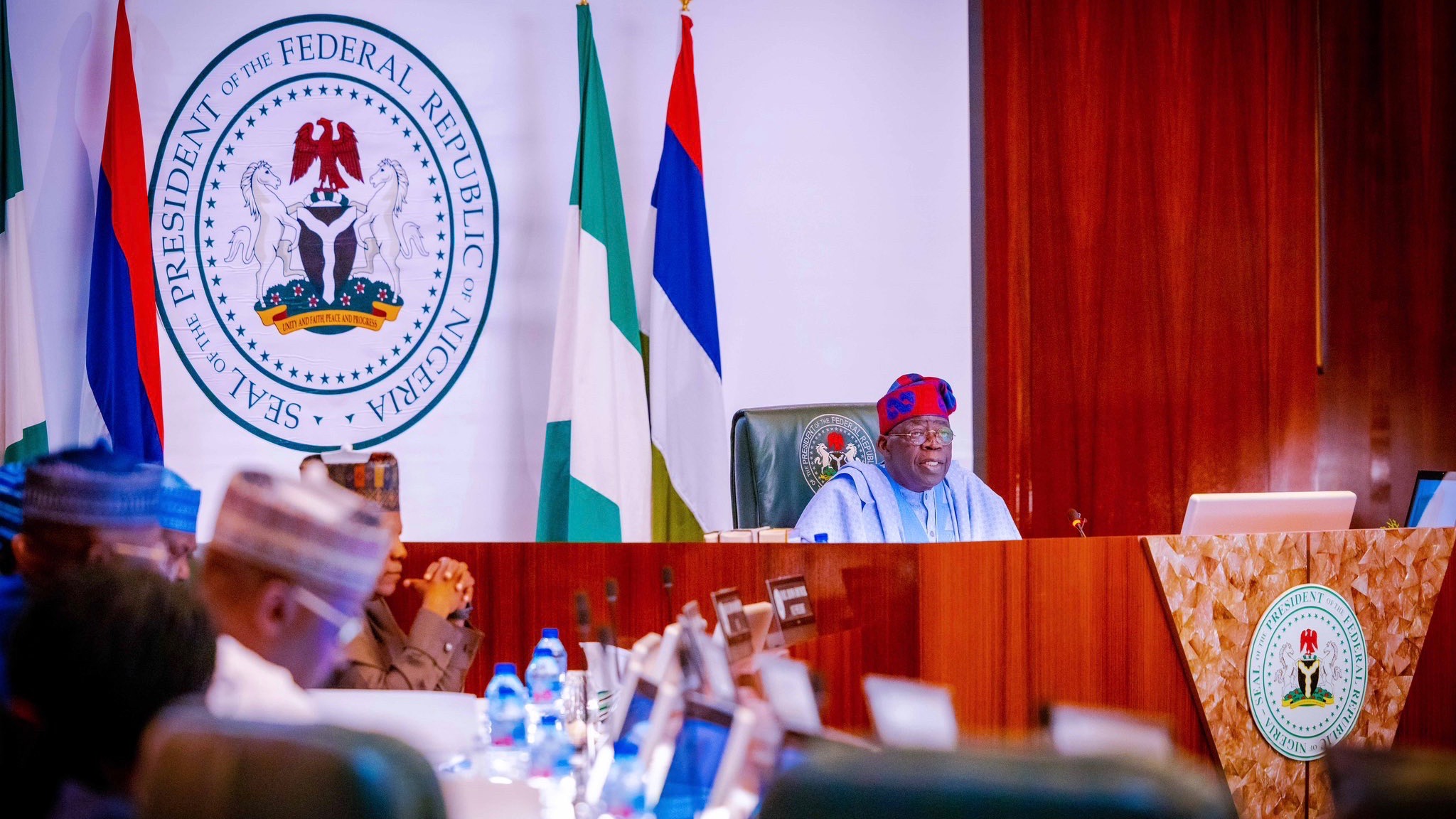
President Bola Tinubu and Vice President Kashim Shettima have inaugurated at least 46 committees since assuming office in May 2023, with budget allocations and documented spending on these panels crossing N13bn in less than three years.

Analysis of budget documents from 2023 to 2026 and government payment data obtained from GovSpend, a public finance transparency platform, shows that N12.99bn has been allocated for the running of long-standing presidential committees, while at least N105.97m in traceable disbursements have been made to individuals and companies servicing specific ad hoc panels.

The N13.1bn represents approximately 62 per cent of the N21.17bn spent over seven years between 2018 and 2025 under the previous administration, according to an analysis by The PUNCH.

For the period under review, committee-related spending was N4.37bn per year, significantly higher than the N3bn annual average recorded between 2018 and 2022 under the previous administration.

The data showed that most of the Tinubu-era committees were special-purpose or ad hoc committees set up to address specific policy challenges with defined lifespans.

The rest are long-standing statutory panels with permanent secretariats that receive annual budget allocations.

Budget documents show consistent annual allocations for these long-standing presidential committees under the Office of the Secretary to the Government of the Federation.

In 2023, the Presidency allocated N3.73bn for these panels, covering political officers and standing committees, the Presidential Advisory Committee, the Presidential Technical Committee on Land Reforms, the Presidential Advisory Committee on the Prerogative of Mercy, the Presidential Enabling Business Environment Council, the Presidential Standing Committee on Private Jetties, and the Presidential Standing Committee on Inventions and Innovations.

In 2024, total allocations amounted to N2.96bn.

The breakdown included N2.58bn for Political Officers and Standing Committees, N50m for the Presidential Standing Committee on Private Jetties, N89.29m for the Standing Committee on Inventions and Innovations, N10.73m for the Presidential Advisory Committee, N221.3m for the Presidential Technical Committee on Land Reforms, and N9.8m for the Advisory Committee on the Prerogative of Mercy.

See also  See the real story behind failed police communications system

The 2025 appropriation rose to N3.24bn, with the Presidential Technical Committee on Land Reforms alone drawing N478.45m, more than double its 2024 allocation.

Other line items included N2.58bn for Political Officers and Standing Committees, N65m for the Standing Committee on Private Jetties, N89.29m for Inventions and Innovations, N15.38m for the Presidential Advisory Committee, and N8m for the Prerogative of Mercy committee.

In 2026, the allocation stood at N3.06bn, comprising N2.58bn for Political Officers and Standing Committees, N418m for the Land Reforms committee, N45.5m for Private Jetties, and N15.37m for the Presidential Advisory Committee.

Aside from the budget allocations, GovSpend data reveals six specific payments made for the operations of ad hoc presidential committees between May 2023 and December 2025, totalling N105.97m.


The earliest entries, both dated May 31, 2023, weeks after the President’s inauguration, revealed payments of N46.64m to Shale Atlantic Intercontinental Services Limited and N21.72m to Good News Creative Ideas Limited, both described as consultant fees for the Presidential Committee on Salaries reviewing the 2014 and 2012 white paper reports.

On December 26, 2023, the Secretary to the Government of the Federation disbursed N5.02m to a project accountant for the purchase of toners, office consumables, and photocopying services to enable the Presidential Committee on Trade Malpractices to carry out its mandate.

Four days later, on December 30, 2023, the National Agency for Science and Engineering Infrastructure paid N19m to Muhammed Salisu as honorarium for members of the Presidential Committee on the Transfer of Technology.

The Federal Ministry of Justice paid N7.52m to Charvid Digital Printing Press Limited on March 15, 2024, for the printing of reports of an unnamed presidential committee, following approval by the SGF on February 26, 2024.

On December 31, 2025, a payment of N6.07m was made to Francis Emmanuel Ukpong as project accountant to the Presidential Committee on Trade Malpractices for administrative and operational costs.

See also  White House quietly drops WTO, ILO from foreign aid cut list

However, the figures represent only what is traceable through the government’s payment infrastructure.

Since taking the oath of office on May 29, 2023, Tinubu and Shettima have turned to committees as a default governance mechanism across virtually every major policy challenge.

On June 19, 2023, barely three weeks in office, the President constituted a steering committee to address organised labour’s demands following the abrupt removal of petrol subsidies.

The committee was mandated to produce a workable framework within eight weeks.

On July 7, 2023, the President established the Presidential Committee on Fiscal Policy and Tax Reforms, appointing former PwC partner Taiwo Oyedele as chairman. The committee was inaugurated in August.

In the same month, the Federal Government created the Presidential Steering Committee on Palliatives to forestall a looming nationwide labour crisis.

On September 14, 2023, Tinubu established the Presidential Committee on Implementation of Livestock Reforms, which eventually led to the creation of a new Ministry of Livestock Development.

On October 10, 2023, he set up the Presidential Committee on Flood Mitigation, Adaptation, Preparedness and Response, directing immediate action to mitigate nationwide flooding. Then-Kogi State Governor Yahaya Bello chaired the committee, which submitted a roadmap on November 23.

Six days later, the Federal Executive Council, chaired by the President, created the Presidential Council on Industrial Revitalisation Roadmap, with Tinubu himself as chairperson.


On November 1, 2023, following a meeting of the Nigeria Police Council, the President established a special committee to assess constitutional shortcomings and enhance coordination and technology resources for the police.

A week later, he inaugurated the National Coordination Committee on Civil Registration and Vital Statistics System alongside the National Geospatial Data Repository.

On November 10, 2023, Vice President Shettima constituted an ad hoc committee to harmonise Nigeria’s agenda at the COP28 Climate Change Conference in the United Arab Emirates.

Ten days later, Shettima established a multi-sectoral committee to drive the Federal Government’s Human Capital Development programme, which was inaugurated in May 2024.

On December 21, 2023, the National Economic Council, chaired by the Vice President, created two committees on Economic Affairs and Crude Oil Theft and Management, headed by Kwara State Governor, AbdulRahman AbdulRazak and Imo State Governor, Hope Uzodimma, respectively.

See also  See how Dangote refinery and marketers fuel deal crashed

In 2024, the administration created at least 25 additional committees covering sectors including steel development, school feeding, social investment programmes, explosives regulation, minimum wage negotiations, emergency food intervention, farmer-herder clashes, state police, agricultural credit, flood prevention, economic coordination, the Oronsaye report, consumer credit, youth development, ambassadorial nominations, the National Single Window Project, CNG adoption, cholera response, sanitation campaigns, poliovirus eradication, dam integrity, minors’ detention, and electricity reform.

In 2025, the pace continued with the creation of committees on economic and financial inclusion on February 10, digital public infrastructure in May, the Museum of West African Art dispute in November, and APC conflict resolution ahead of the 2027 elections in December.

The Presidential Committee on Fiscal Policy and Tax Reforms produced a comprehensive overhaul of Nigeria’s tax architecture that resulted in four Tax Reform Acts signed into law in 2025.

The Tripartite Committee on the National Minimum Wage delivered the new wage framework eventually adopted.

The committee on state police produced the framework that opened legislative action on the subject.

However, critics argue that the committee habit has become a costly form of political patronage.

“I think it is all about political patronage because none of the committees has led to anything significant,” Deji Adeyanju, a sociopolitical activist and former leader of the Concerned Nigerians Advocacy Group, told The PUNCH in an interview.

He said, “There’s always this policy flip-flop. That is money down the drain in several committees like that.”

The Special Adviser to the President on Information and Strategy, Bayo Onanuga, had not responded to queries on the matter as of press time.


Continue Reading
Click to comment

Leave a Reply

Your email address will not be published. Required fields are marked *

News

US allies gather as Trump kicks off Board of Peace

Published

on

MUS President Donald Trump on Thursday gathers allies to inaugurate the “Board of Peace,” his new institution focused on progress on Gaza but whose ambitions reach much further.

Around two dozen world leaders or other senior officials have come to Washington for the meeting — including several of Trump’s authoritarian-leaning friends and virtually none of the European democrats that traditionally sign on to US initiatives.

The “Board of Peace” came together after the Trump administration, teaming up with Qatar and Egypt, negotiated a ceasefire in October to halt two years of devastating war in Gaza.

The United States says that the plan has now entered its second phase with a focus on disarming Hamas — the Palestinian militant group whose unprecedented October 7, 2023, attack on Israel triggered the massive offensive.

Gaza’s health ministry, which operates under Hamas authorities, says at least 601 people have been killed by Israeli forces since the truce began.

At the “Board of Peace” meeting, Trump is expected to detail pledges of more than $5 billion for Gaza, where the vast majority of buildings lie in rubble and the property-mogul-turned-president has improbably suggested developing resorts.

The meeting will also look at how to launch the International Stabilization Force that will ensure security in Gaza.

A key player will be Indonesia, the largest Muslim-majority country, which has said it is ready to send up to 8,000 troops to Gaza if the force is confirmed.

Indonesian President Prabowo Subianto will take part in the inaugural meeting in Gaza, after joining the launch event at the World Economic Forum in Davos, Switzerland, last month.

See also  Senate reconvenes today as Electoral Act triggers uproar

– Progress on Gaza? –

US officials including Steve Witkoff, Trump’s friend and roving negotiator, have insisted that solid progress is being made and that Hamas is feeling pressure to give up weapons.

Israel has suggested sweeping restrictions including seizing small personal rifles from Hamas.

“The heavy weapon, the one that does the most damage, is called an AK-47,” Israeli Prime Minister Benjamin Netanyahu said recently.

“That’s the main weapon, and that has to go,” said Netanyahu, whose government will be represented by the foreign minister.

Jeremy Issacharoff, a strategic affairs expert at Israel’s Reichman University, acknowledged that disarming Hamas would not be a “simple task” but said that for Israel, a credible pathway would be key to determining “whether this exercise can get off the ground.”

In one step towards a new Gaza, a technocratic committee was formed last month to handle day-to-day governance of Gaza headed by engineer and former official Ali Shaath.

Hamas spokesman Hazem Qassem told AFP that the “Board of Peace” should compel Israel to “stop its violations in Gaza” and to lift its long siege of the territory.

– ‘Ambition and narcissism’ –

The meeting will take place in the building of the US Institute of Peace, a longstanding institution that studied conflict resolution whose staff was fired by Trump, whose name was then chiseled on the entrance.

Under terms laid out by the White House, Trump will wield veto power over the “Board of Peace” and can remain its head even after leaving office, and countries that want to stay on permanently rather than enjoy a two-year stint will need to pay $1 billion.

See also  APC will win 2027 elections convincingly, Yilwatda boasts

US officials say Thursday’s meeting is about Gaza but have also spoken of the “Board of Peace” in broader, amorphous terms, saying it can address other global hotspots.

“It’s a confused mix of ambition and narcissism, unleavened by any effort at intellectual coherence,” said Bruce Jones, a senior fellow at the Brookings Institution.

The effort comes as Trump thumbs his nose at the United Nations, scaling back funding and withdrawing the United States from key bodies.

– Friends and suitors –

The inaugural meeting will bring ideological allies of Trump including Hungarian Prime Minister Viktor Orban, who is facing a tough reelection battle, and Argentina’s President Javier Millei.

Other leaders in attendance include some eager for US attention, such as Pakistani Prime Minister Shehbaz Sharif, who has courted Trump for support in his country’s conflict with India.

But major historic allies of the United States are not participating, including France and Canada.

Japan, usually among the most stalwart US allies, has not decided whether to join the board and will send an envoy handling Gaza.

Brazilian President Luiz Inacio Lula da Silva declined an invitation, saying the board should be limited to Gaza and “include a seat for Palestine.”

Lula last month dubbed Trump’s board “a new UN where only he is the owner.”

AFP

punch.ng

FOLLOW US ON:

FACEBOOK

TWITTER

PINTEREST

TIKTOK

YOUTUBE

LINKEDIN

TUMBLR

INSTAGRAM

Continue Reading

News

3,345 BVAS deployed, movement restricted ahead of FCT poll

Published

on

The Independent National Electoral Commission has said the Bimodal Voter Accreditation Systems would be deployed in all polling units for the Federal Capital Territory area councils election, while results would be uploaded to the Result Viewing portal to enhance transparency.

This was disclosed by the Chairman of the electoral commission, Prof Joash Amupitan (SAN), at a high-level stakeholders’ forum on Wednesday.

At the stakeholders’ forum, Amupitan outlined the commission’s preparations for the polls and reaffirmed its commitment to a peaceful, transparent and credible process.

He specifically noted that operatives of the Economic and Financial Crimes Commission and the Independent Corrupt Practices and other Related Offences Commission would be on the ground to deter vote trading and other electoral offences.

“Any individual found buying or selling votes will be apprehended and dealt with in accordance with the law,” Amupitan said.

He added that 1,132 vehicles, 620 motorcycles and 14 boats would be deployed to facilitate the movement of personnel and materials, stressing that there must be no logistical lapses on election day.

Amupitan noted that INEC remained neutral in the contest.

“INEC does not have a political party and does not have a preferred candidate. Our mandate is clear: to provide the enabling environment for residents of the Federal Capital Territory to freely choose their representatives,” he said.

Amupitan called on political parties, candidates and their supporters to conduct themselves peacefully, while urging security agencies to remain professional and impartial throughout the exercise.

This comes as the commission is set to deploy no fewer than 11,288 ad hoc personnel for Saturday’s area council elections, as the Nigeria Police Force announced a territory-wide restriction of movement to bolster security during the exercise.

See also  See how Dangote refinery and marketers fuel deal crashed

The electoral body fixed February 21, 2026, for the conduct of the election into the FCT area councils.

Findings by The PUNCH show that 2,822 polling units have been designated across the FCT’s six area councils, with four officials, a Presiding Officer and three Assistant Presiding Officers assigned to each unit in line with the commission’s standard procedure.

Supervisory Presiding Officers will also coordinate activities at ward centres, while sensitive materials, including ballot papers, Bimodal Voter Accreditation Systems and result sheets, are scheduled for early deployment to council offices to prevent delays on election day.

With 2,822 polling units and four officials assigned to each, the commission is expected to deploy at least 11,288 ad hoc personnel for the exercise.

INEC said voting would take place in 2,822 polling units, supported by 3,345 BVAS devices to facilitate accreditation and result transmission.

The INEC chairman noted that 89 observer groups and 700 journalists have been accredited to monitor the exercise, adding that multiple security agencies would be deployed to ensure order.

A top official of the commission responsible for monitoring the Area councils election disclosed the preparations to The PUNCH.

The official said sensitive materials, including ballot papers, BVAS and result sheets, would undergo “thorough checks on Wednesday and be moved to the councils’ offices on Thursday.”

The early deployment of materials, another official at the FCT INEC office indicated, was aimed at “enhancing the electoral process and preventing delays on election day to ensure a seamless voting experience.”

For the successful conduct of the election, the FCT police command deployed personnel across the territory, as it announced a restriction of movement across the FCT from 6:00 am to 6:00 pm on election day.

See also  Akwa Ibom commissioner condemns abuse of tradition

Only essential service providers and election officials were granted exemptions.

In a statement on Wednesday, the command spokesperson, Josephine Adeh, said the deployment, carried out under a comprehensive operational order, involved a coordinated effort with sister security agencies, including the Nigerian Army, Nigerian Air Force, Nigerian Navy, the Department of State Services, and the Nigeria Security and Civil Defence Corps.

The statement read, “The Federal Capital Territory Police Command has deployed personnel across the FCT as part of its comprehensive operational order for the February 21, 2026, FCT Area Council Elections.

“This massive deployment has enjoyed a rich exchange of operation and human resources from sister security agencies, comprising the Nigeria Army, Nigeria Air Force, Nigeria Navy, Department of State Services, Nigeria Security and Civil Defence Corps, among others”

Announcing the restriction of movement, Adeh urged residents to cooperate with security personnel and comply with security guidelines during the period.

She assured voters that adequate measures have been put in place to enable them to exercise their civic responsibilities peacefully and without fear.

Adeh said, “The public is hereby informed that there will be a restriction of movement across the FCT from 6:00 am to 6:00 pm on February 21, 2026, except for essential service providers and election officials.

“Consequently, FCT residents are urged to cooperate fully with security personnel and comply with security operations guidelines during this period.

“The command also uses this opportunity to enjoin all residents of the FCT to remain law-abiding and come out to exercise their civic responsibility peacefully and without fear, as adequate security measures have been put in place.”

See also  APC will win 2027 elections convincingly, Yilwatda boasts

The police spokesman added that the Commissioner of Police, FCT Command, Miller Dantawaye, directed all deployed officers to maintain professionalism and ensure adequate security at polling units and collation centres to guarantee a peaceful, free and fair electoral process.

“The Commissioner of Police, FCT Command, CP Miller G. Dantawaye, charged all deployed officers to maintain the highest level of professionalism and ensure adequate security coverage at all polling units and collation centres in order to guarantee a peaceful, free, and fair electoral process.

“He further warned that officers must remain vigilant, impartial, and courteous in the discharge of their duties, while respecting the rights of all citizens,” Adeh said.

As the election approaches, campaign activities have intensified. Already, 17 political parties fielded 637 candidates to contest for 68 elective positions across 62 political wards, with 1,680,315 registered voters expected to participate.

The polls will be held in Abuja Municipal Area Council, Bwari, Gwagwalada, Kuje, Kwali and Abaji, where chairmen and councillors will be elected.

Political actors have described the exercise as a dress rehearsal for the 2027 general elections.

Major parties, including the All Progressives Congress, the Peoples Democratic Party, the Labour Party, and the Social Democratic Party, are engaged in keen contests, particularly in the Abuja Municipal Area Council and Bwari.

The African Democratic Congress and smaller parties are also seeking to make electoral gains.

Continue Reading

News

Electoral Act 2026: Tinubu defends assent, opposition raises hell

Published

on

Opposition parties and civil society organisations have condemned President Bola Tinubu’s assent to the Electoral Act 2026 (Amendment), describing the move as a setback to Nigeria’s democratic progress and a legalisation of electoral manipulation ahead of the 2027 general elections.

The Peoples Democratic Party, on Wednesday, alleged that the ruling All Progressives Congress’s fear of losing the upcoming elections drove what is called the rushed approval of the contentious legislation, which the party described as a threat to the country’s democratic process.

President Tinubu signed the Electoral Act 2026 (Amendment) into law around 5pm on Wednesday at the Aso Rock Presidential Villa, Abuja, with senior National Assembly officials in attendance.

It came barely 24 hours after the bill was passed by both chambers of the National Assembly.

During the ceremony, Tinubu raised concerns about Nigeria’s current broadband infrastructure and technical capacity to handle real-time electronic transmission of election results, even as he signed the Electoral Act 2026 (Amendment) into law.

But in a statement by its National Publicity Secretary, Ini Ememobong, the PDP called the development “a dark day for democracy.”

He stated, “The hurried grant of presidential assent to the contentious bill, as passed by both chambers of the National Assembly, despite widespread opposition from Nigerians, confirms that this was a well-choreographed drama by the APC.

“The party’s fear of inevitable defeat in a free and fair election is palpable, and they can no longer conceal it. This is indeed a sad day for democracy.

“The Nigerian people have been dealt a bad hand, one that existentially threatens democratic governance. The President has demonstrated an inability to rise above partisanship in the art of governance.”

The bill, which was approved by the National Assembly on Tuesday, has generated significant debate, especially over provisions for real-time electronic transmission of election results, a key demand by opposition parties, civil society groups, and election observers following widespread allegations of result manipulation during the 2023 general elections.

The signing occurred days after the Independent National Electoral Commission released the timetable for the 2027 general elections, intensifying concerns among opposition stakeholders that the amendment was designed to favour the ruling party.

The Executive Director of YIAGA Africa, Samson Itodo, described the bill as “a step backward rather than a reform.”

He said, “First, this bill that was passed, it is an absolute missed opportunity for transformative electoral reforms because it fails to address critical gaps. It signals a regression.

“So, it is a reform in name and a regression in substance. I wish that the President had rejected the bill and asked the legislators to go and fix some aspects of the bill.”


He also criticised provisions related to INEC’s independence and electronic transmission of results, saying, “When you look at electronic transmission of results, the provision adopted by the National Assembly is completely against what citizens demanded because what they have done is they have made the process more vulnerable to manipulation.

“So, I say that this particular bill signals a regression in substance. And we cannot call these reforms.”

Meanwhile, the Country Director of Accountability Lab, Friday Odeh, described the amendments as a potential threat to election integrity.

Odeh stated, “There is a huge danger of rigging. We know there has been progress made, but again, for me, it looks like a huge reversal of the progress that has been made. And this is legalising rigging in a very formal way.”

However, the Executive Director of the Civil Society Legislative Advocacy Centre, Auwal Musa, offered a more measured perspective, acknowledging that while the law was not perfect, it provided a framework for future improvement.

“Well, as it is now, since the National Assembly and the President did not yield to the call by Nigerians to ensure that we have electoral law that is acceptable by us, improve the electoral transparency and boost confidence of Nigerians to even participate in the election, I think whatever it is, we just have to manage with what we have now.

“We just have to accept this law and continue to advocate for an improved electoral law in Nigeria,” Musa explained.

Opposition kicks

The Labour Party caucus in the House of Representatives also condemned what it called the hurried assent granted to the Electoral Act Amendment Bill 2026 by President Tinubu.

The plenary of the House was on Tuesday turned into a rowdy session over the bill as opposition lawmakers teamed up against their All Progressives Congress counterparts in demanding, among others, the electronic transmission of election results without a proviso.

The controversy had intensified following the release of the timetable for the 2027 general elections by the Independent National Electoral Commission.

Last week protests rocked the National Assembly complex, with civil society organisations and opposition figures demanding that the law mandate live electronic transmission of results from polling units directly to the commission’s central server.

See also  AU extends Nigeria, Cameroon, others joint military action on Insurgency

They argued that such a provision would reduce manipulation and enhance transparency.

However, members of the ruling All Progressives Congress and other stakeholders expressed reservations about the technical feasibility of real-time transmission in areas with limited telecommunications infrastructure, advocating a phased or hybrid approach that would allow manual collation where electronic systems fail.


Despite an overwhelming rejection of the altered version, which recognised both electronic transmission and manual transmission in the event of the failure of technology, the APC lawmakers voted in the majority, forcing the opposition to stage a walkout.

Reacting to President Tinubu’s assent to the legislation, leader of the caucus, Mr Afam Ogene, said he wondered why the development took place at the speed of light.

In a statement issued on Wednesday, the Anambra lawmaker said, “It is quite interesting that, even before the ink with which the parliament crossed the t’s and dotted the i’s on the clean copies of the bill dried up, the President has gleefully put his imprimatur on the bill, leaving Nigerians to wonder if, indeed, the executive had ample time to look through the document.”

He added, “Gone with the signing are the genuine concerns of apprehensive Nigerians regarding what the new Act portends to the integrity of the country’s future elections.

“In fact, Nigerians and indeed the world must now begin to see the clear difference between campaign promises and actual motives of political players.

“While it is convenient outside the confines of power to oppose incremental increase in the price of petroleum products, it is convenient to pronounce ‘subsidy gone’ when they have the opportunity.”

The lawmaker said while it is right to advocate electronic voting in 2013, it has become obtuse, 13 years after, to canvass a fragment of it: electronic transmission of results.

He explained, “While it was convenient to ask a sitting administration to quit, on account of an alleged inability to halt the spread of insecurity, today, under their watch and allure of office, insecurity of multivarious form have become an insistent by-word.

“For emphasis, on January 13, 2013, the National Publicity Secretary of the defunct Action Congress of Nigeria, Lai Mohammed, had in a statement said, ‘We assure INEC of our full support towards using electronic voting in 2015. We also appeal to all other political parties, civil society organisations and indeed all Nigerians to join us in pushing for a system that will eliminate the role of thugs and sideline vote thieves during our elections, in addition to making our elections free, fair and credible.’

“Today, 13 years afterward, neither Mohammed, who moved on to become Nigeria’s Minister of Information and Culture for eight years, and his principal, who is now our country’s current leader, see anything worthy in electronic transmission of results, much more electronic voting.

“Now that they have had their way, we call upon Nigerians not to despair. On the contrary, the battle for our country’s redemption has only just begun.”

He pledged the readiness of the LP House of Representatives caucus to mobilise Nigerians to reject any compromise of the electoral system.

“As an opposition bloc, we certainly have our job cut out: the mobilisation of fellow Nigerians to reject, at the polls, those who specialise in asking them to do only as they say, instead of living by their own creed,” he added.

CUPP slams Tinubu


The Coalition of United Political Parties also criticised the President and the National Assembly for undermining the will of Nigerians by amending the Electoral Act to allow manual transmission of election results, despite Nigerians demand for mandatory electronic transmission.

CUPP National Secretary, Peter Ameh in an exclusive interview with The PUNCH described the move as a blatant disregard for the aspirations of citizens who hope to vote out the current leadership in 2027.

He stated, “President has been collaborating with the National Assembly all along to undermine the wishes and aspirations of our citizens.

“The effort for a mandatory electronic transmission of election results had already been approved, but they were attempting, using their majority, to brazenly act in disregard of the people.

“Democracy is not built around elective officials; it is built around the citizens.”

Ameh said after prior consultation with all zones, it was agreed that electronic transmission should be mandatory.

Yet, resources were spent on charades, traveling from one zone to another, pretending to act transparently and truthfully for the benefit of the election, only to reverse provisions that would have strengthened the electoral process, he stated.

“The President quickly signed the Electoral Act into law after working with the National Assembly to include manual transmission, against the demand of many Nigerians, instead of mandating only electronic transmission of results,” he asserted.

See also  FG rejects Trump’s ‘country of particular concern’ tag on Nigeria

According to Ameh, the new mandate for electronic and real-time transmission of results will empower more Nigerians and strengthen the electoral process against rigging, and they will be voted out in 2027.

“However, they colluded against the Nigerian people by adding a manual transmission clause for their convenience and hurriedly signing it into law, because they fear credible elections.

“This is totally disheartening and disappointing. I am also disappointed with the opposition,” he lamented, adding that they should not rely solely on breakthroughs or isolated issues but must collaborate and develop a stronger, more coherent strateg.

“Leadership requires putting pressure on the National Assembly, which has surrounded itself with the executive and consistently underperformed.

“They are clearly afraid of elections, which makes the times ahead very challenging,” he argued.

Tinubu questions broadband

At the signing ceremony, President Tinubu raised concerns about Nigeria’s current broadband infrastructure and technical capacity to handle real-time electronic transmission of election results.

“Maybe Nigeria should question our broadband capability. How technically are we today? How technically will we be tomorrow to answer the call of either real-time or not,” the President said, addressing principal officers of the National Assembly who had transmitted the bill to him for assent.

The President emphasised that the credibility of elections depends more on proper human management and oversight than on electronic systems, noting that voters still cast their ballots manually, and results are still counted and sorted manually at polling units.

“No matter how good a system is, it’s managed by the people, promoted by the people, and result is finalised by the people.

“In fact, for final results, you are not going to be talking to the computer.

“You are going to be talking to human beings who announce the results,” he said.

‘Every vote counts’

Senate President Godswill Akpabio, speaking earlier to journalists, said the amended Act addressed core concerns raised by Nigerians and introduces provisions that will make future elections more transparent.

He said the new piece of legislation eliminates the perennial problem of result manipulation between polling units and collation centres.

Speaking to journalists shortly after the signing ceremony, Akpabio said the new law addresses the core concerns raised by Nigerians over the integrity of the electoral process and introduces provisions that will make future elections more transparent and secure.

“At the end, Nigerians will benefit a lot from future elections. Every vote will now count,” the Senate President said.

He noted that the amendment represents the first time since independence in 1960 that Nigeria’s electoral laws will recognise electronic transmission of results.

Akpabio explained that the amended Act mandates the electronic transmission of polling unit results to the INEC Result Viewing Portal, a key demand by civil society organisations, opposition parties, and election observers following widespread allegations of result manipulation during the 2023 general elections.

However, he said the law also took into account areas with poor telecommunications infrastructure, ensuring that the primary source of results remains the EC8A forms signed by presiding officers, party agents, and security personnel at polling units.

“We took cognisance of areas where there may not be any network, where they may not be communication capacities and availability.

“We said, since the polling unit result comes in from EC8A, which is signed by the presiding officer, signed by the agents, and signed in the presence of security agents, copies are given to all.

“Then we can use that as the primary source of collation at that unit,” he said.

Akpabio added, “And then, of course, we transmit it. Even if there is no network at that time, once we step out of there, maybe towards the ward centre or the local government centre, it will drop into the iREV and people will still be able to view.”

The Senate President said the implication is that Nigerians will now be able to compare results uploaded to the portal with what is eventually collated at ward, local government, and state levels, making it impossible for results to be tampered with after leaving polling units.

“The implication of that is that if what is eventually collated at the next centre is different from what is in the iREV, Nigerians will be able to compare whether the election result had been tampered with.

“And for us, that had always been the problem in the country, that once election results leave a polling unit, they will be tampered with or mutilated. That has been eliminated today,” he said.

The Senate President dismissed suggestions that the National Assembly had bowed to political pressure, insisting that the final provisions of the amendment were the product of thorough consultations and deliberations in plenary sessions of both chambers.

See also  PHOTOS: US to deport hundreds of Iranians after deal with Tehran

“We are satisfied that we have met the aspiration of Nigerians, not those who are politically motivated,” he said, adding that the Senate had even sacrificed its holiday break to conclude work on the amendment.

Akpabio also highlighted other provisions in the new law, including the introduction of direct primaries for political parties, which will allow party members to vote directly for candidates of their choice rather than relying on delegate selection.

“Participatory democracy, more inclusiveness. Members of different political parties are now allowed to do direct primaries.

“That means you can choose the person you want. Delegate selection, of course, one person can write the list and then just submit, but this time around, the members who are in the political party will stand up and vote for their candidates and the candidates of their choices,” he said.

The Senate President said the amendment also addresses scenarios where election winners are disqualified by courts, noting that instead of declaring the runner-up as winner, the law now mandates fresh elections to ensure that Nigerians truly elect their leaders.

“We don’t want a situation where in an election, you have five people contesting, one person scores out of 300,000 votes, one person scores 290,000, and then, for one reason or the other, he’s disqualified by the court, and then the person who scored 1,000, who is not popularly elected, will now be declared a winner.

“All those things are eliminated. We have now recommended that where such a case happens, then they should call for another election,” he said.

He noted that the same principle now applies to governorship elections, where candidates who fail to meet the constitutional requirement of scoring 25 per cent of votes in at least two-thirds of local government areas cannot be declared winners even if they scored the second-highest votes.

Speaker of the House of Representatives, Abbas Tajudeen, who also addressed journalists, drew attention to the reduction of the election notice period from 360 days to 300 days.

“This will inadvertently translate to holding the presidential and National Assembly elections in January 2027, and that will technically avoid conducting elections during the month of Ramadan of 2027.

“I think this is another piece of ingenuity that the National Assembly has introduced to avoid voter apathy in the next general election,” the Speaker said.

The Electoral Act 2026 (Amendment) comes days after INEC released the timetable for the 2027 general elections.

The 2022 Electoral Act had been criticised following the failure of INEC’s Result Viewing Portal on the day of the 2023 elections, an incident that triggered allegations of rigging.​​​​​​​​​​​​​​​​


Tinubu gave ascent to the Electoral Act 2026 (Amendment) at a signing ceremony at the Presidential Villa, Abuja, around 05:00pm, with principal officers of the National Assembly in attendance, our correspondent observed.

The 2027 general elections are scheduled to hold on February 20 for Presidential and National Assembly elections and March 6 for Governorship and State Houses of Assembly elections.

Wike commends Tinubu

Meanwhile, the Minister of the Federal Capital Territory, Nyesom Wike, commended President Bola Tinubu for promptly signing the Electoral Act Amendment Bill 2026 into law, describing the move as a strong commitment to strengthening Nigeria’s democratic process.

In a statement issued on Wednesday by his Senior Special Assistant on Public Communications and Social Media, Lere Olayinka, the minister praised the President’s swift assent to the bill, noting that it demonstrates a resolve to make elections more credible.

Wike said the passage of the amended Electoral Act by the National Assembly and the President’s immediate approval had effectively put an end to what he described as “unnecessary protests” by individuals preparing excuses for electoral defeat.

“Democracy has always been a work-in-progress, as it has continuously evolved,” Wike said, adding that “by always looking into the Electoral Act with a view to strengthening our democratic process, it is sure that we will keep getting it better.”


The minister congratulated both the President and members of the National Assembly for their roles in the legislative process.

“I therefore congratulate Mr President and the National Assembly members for playing their roles in this dispensation to make democracy stronger,” he said.

Wike applauded President Tinubu for the speed with which he signed the bill into law.

“Particularly, I commend the President for not keeping Nigerians waiting for more than 24 hours before signing the Electoral Act Amendment Bill 2026 into law,” he said.

Continue Reading

Trending