Connect with us

Business

US-Iran war: Marketers, Dangote trade words over petrol price

Published

on

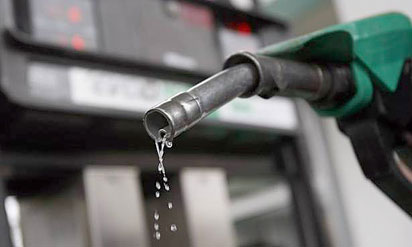
Amid the escalating tensions in the Middle East, data from the Major Energies Marketers Association of Nigeria has shown that a litre of imported petrol is about N64 cheaper than the one produced by the Dangote Petroleum Refinery.

However, the refinery debunked the report, challenging importers to defy the ongoing airstrikes in the Middle East and bring in petroleum products.

The PUNCH reported on Monday that the Dangote refinery increased its gantry price from N774 to N874. The adjustment followed a jump in oil prices to $84 per barrel, up from below $70, days before the airstrikes involving the United States, Iran, Israel, and other countries.

Following the increment, filling stations on Tuesday raised their pump prices to as high as N937, depending on the location. Before the Middle East crisis deepened over the weekend, some filling stations had already been selling petrol at prices ranging between N812 and N839, but the crisis disrupted the global fuel market, affecting Nigeria and other countries.

However, data by MEMAN indicated that Dangote’s petrol gantry price was N874 per litre as of Monday, while the landing cost of imported petrol was N809.37 per litre, showing a difference of about N64 between the two sources.

MEMAN also reported that Dangote’s diesel price was N1,169.42, while imported diesel was N1,125.70 per litre.

However, officials of the Dangote refinery, who did not want to be mentioned because of the sensitivity of the matter, said some importers were projecting a false narrative to ensure the Federal Government continues to issue import licences.

“Anybody can go to Apapa to get the landing cost, and anybody who likes should go to Iran and import. Some people just want us to depend on imports. Isn’t it time we ended that dependence on foreign products?

“Some people want importation to continue, and that’s not normal. You keep importing what can be produced locally. Is that a good thing? How do you expect our children to survive? Nigerians will import and destroy what we have locally,” an official said.

Aside from pricing, another official said Nigeria should be thankful to the Dangote refinery for shielding the country from the fuel crisis that could have paralysed commercial activities.

“Let’s think about what could have happened to Nigeria if we didn’t have a refinery in Nigeria at this time. Assuming there is no Dangote refinery in Nigeria, economic activities would have been paralysed by now.

“Many countries are not so lucky, and they are now facing long queues at filling stations. Dangote has saved Nigeria from that fuel crisis. This has taught us that there’s nothing like one’s country, and we must always be prepared,” he said.

In its report, MEMAN explained that the downstream sector saw a major upward price adjustment on Monday, driven by the Dangote refinery raising its gantry price by N100, bringing it to N874 per litre.

The shift, triggered by rising global crude costs, pushed retail pump prices above N900 per litre. Many private depots reportedly paused sales briefly to recalibrate their pricing in response.

“The market is currently in a state of high uncertainty. With Brent crude climbing above $80/bbl due to escalating geopolitical tensions (specifically the US-Israel-Iran conflict), analysts warn that the cost of petrol remains under significant pressure. If crude prices continue toward the $90/bbl mark, domestic pump prices could potentially reach N1,100 by next month,” MEMAN said.

See also  I won’t die anytime soon, Obasanjo declares at 89

On Wednesday, motorists flocked to petrol stations across Britain in a scramble for fuel as fears of a new oil crisis caused by the Iran war grew, according to a report by The Mirror UK.

Frustrated drivers complained on Wednesday about UK petrol stations running out of fuel and long queues at forecourts after hostilities erupted in the Middle East. Prices have risen by as much as 11 pence per litre in some locations.

In contrast, Nigeria relies on the Dangote refinery for an adequate fuel supply amid the geopolitical tensions. Petrol prices in Nigeria surged on Tuesday, but no queues were reported at filling stations. Analysts attribute this to the Dangote refinery reducing Nigeria’s dependence on imported fuel.

Commentators highlight the Dangote refinery’s role in shielding Nigeria from such disruptions. “Imagine a Nigeria without a refinery; we would be experiencing endless queues, black market prices, businesses slowing down, and an economy held hostage by fuel scarcity.

“Today, we stand at a turning point. The Dangote Petroleum Refinery & Petrochemicals is more than steel and pipes — it is energy security, economic power, job creation, and national pride,” an industry player who spoke in confidence stated.

During a recent meeting with refiners and stakeholders, the Dangote refinery assured them of sufficient fuel supply, though it noted challenges from insufficient crude, requiring some reliance on foreign feedstock.

The PUNCH reports that Dangote outpaced importers to supply approximately 62 per cent of the nation’s petrol in January 2026.

This development, revealed in the fact sheet from the Nigerian Midstream and Downstream Petroleum Regulatory Authority, signals a growing reliance on domestic refining capabilities and a potential reduction in the country’s longstanding dependence on fuel imports.

According to the NMDPRA’s State of the Downstream Sector report for January 2026, the total average daily supply of petrol reached 64.9 million litres per day in January.

Of this volume, receipts from domestic refineries — primarily driven by Dangote, the only petrol-producing refinery at the moment — accounted for 40.1 million litres per day, while imports by oil marketing companies and the Nigerian National Petroleum Company Limited stood at 24.8 million litres per day.

This marked the first time in the 13-month period covered by the report (from January 2025 to January 2026) that domestic production had exceeded imports, reversing a trend where foreign supplies often dominated the market.

The NMDPRA attributed the surge in domestic output directly to “improvement in supply from DPRP” — the Dangote Petroleum Refinery and Petrochemicals — which increased its PMS contributions from 32 million litres per day in December 2025 to 40.1 million litres per day in January 2026.

Crude supply denial

Meanwhile, the Dangote refinery has said that local crude producers are refusing to supply feedstock to its facility, forcing it to rely more on imported crude. In a statement on Thursday, the refinery defended its recent N100 increase in the gantry price of petrol.

While reassuring Nigerians of its unwavering commitment to serving as a stabilising force amid recent shocks in the international oil market, the refinery said the conflict in the Middle East has led to the shutdown of some refineries and cutbacks in refinery production across the world.

See also  Rep urges Atiku, Obi to step down for Tinubu ahead of 2027

This, it said, is leading to a global scarcity of petroleum products, as China has banned the export of gasoline and diesel. “The Dangote refinery will ensure that Nigeria is insulated from these supply shocks by prioritising supply to the domestic market. This is one of the many benefits of domestic refining,” it said.

According to the statement, the conflict in the Middle East has driven global crude and freight prices sharply higher, with benchmark Brent prices rising by about 26 per cent within a short period to above $84 per barrel.

In response, the refinery implemented a measured adjustment of N100 per litre in its ex-depot price of petrol, representing an increase of about 12 per cent.

The refinery said it has absorbed 20 per cent of the cost escalation for now to cushion the domestic market, despite continuing to source crude at prevailing international market prices, whether purchased locally or from foreign suppliers.

“It is worth noting that Nigerian crude oil is more expensive than the Brent benchmark price by $3 to $6 per barrel. After adding freight of $3.50 per barrel, crude oil will be landing in our tanks between $88 and $91 per barrel. For context, crude oil was landing in our tanks at about $68 per barrel when our ex-depot price was N774/litre,” the refinery stated.

According to the company, the refinery receives five cargoes every month from the Nigerian National Petroleum Company Limited instead of 13 cargoes, adding that the cargoes are paid for at international market prices.

“Furthermore, while we receive about five cargoes a month from NNPC, which we pay for in naira, these cargoes are priced at international market prices plus premium and fall short of the 13 cargoes which we require to support sales into Nigeria. We, therefore, end up procuring foreign exchange at open market rates to pay for crude cargoes purchased from local and international traders.

“The high crude cost is compounded by the fact that Nigeria’s upstream producers have failed to supply crude oil to the refinery as required under the Petroleum Industry Act, forcing us to source a substantial portion through international traders who charge an additional premium,” it stated.

As a private enterprise operating in a deregulated environment, the Dangote refinery added that it has remained responsive and has made significant sacrifices by aligning pricing with market realities to ensure sustainability, particularly as it sources all its crude at prevailing international market prices, whether locally or from foreign suppliers.

“Selling below cost would undermine its ability to procure crude, sustain production, and guarantee uninterrupted supply to Nigerians. Despite these pressures, local refining at this scale continues to reduce exposure to international supply disruptions, moderate foreign exchange demand, and protect the country from severe shortages during periods of global instability,” the refinery added.

The refinery said it is also accelerating the deployment of compressed natural gas-powered trucks to cushion the impact of global shocks, enhance nationwide distribution efficiency, reduce logistics costs, and improve delivery timelines across the downstream sector.

See also  US sanctions eight Nigerians over links to Boko Haram, cybercrime

“The rollout is scheduled to commence this month,” it announced, saying, “We remain committed to transparency, operational excellence, and the long-term objective of securing sustainable energy security and stability for Nigeria at an affordable cost.”

Efforts to get the reactions of the Nigerian Upstream Petroleum Regulatory Commission, the agency in charge of the domestic crude supply obligation, were unsuccessful. The NUPRC spokesman, Eniola Akinkuotu, did not reply to messages sent to him.

Similarly, the spokesman of NNPC, Andy Odeh, declined to comment when contacted by our correspondent on Thursday.

Experts speak

Meanwhile, as Dangote and modular refineries demand sufficient crude supply in the face of low crude production, experts have called on the government and operators to ramp up production.

An energy expert, Professor Emeritus Wumi Iledare, said meeting oil production targets would depend far less on ambitious projections of the government and far more on practical and on-the-ground actions.

Iledare told The PUNCH that the government must prioritise improved security around oil assets, reduce operational disruptions, fast-track regulatory approvals, and create a stable operating environment that allows existing fields to produce at full capacity.

According to Iledare, Nigeria earned about N55tn from crude oil in 2025, up from roughly N50tn in 2024. “While this is an improvement, it still fell short of what the Federal Government expected for the year,” he said. The don noted that the main issue was not oil prices but production.

He explained that the government planned to produce 766.5 million barrels in 2025 but managed to get only about 599.6 million barrels, saying that means close to 167 million barrels were not produced, and the revenue that could have come with them was lost.

“Looking ahead to 2026, meeting oil production targets will depend far less on ambitious projections and far more on practical, on-the-ground actions. The government must prioritise improved security around oil assets, reduce operational disruptions, fast-track regulatory approvals, and create a stable operating environment that allows existing fields to produce at full capacity,” he stated.

He added that supporting investment in maintenance and infill drilling—while ensuring policy consistency—will be critical to converting planned barrels into actual barrels. The expert called on the Independent Petroleum Producers Group to lead the charge by reopening shut-in wells.

“In this regard, the IPPG holds a key role in near-term production expansion. With appropriate economic and policy incentives, re-entry into shut-in wells in the onshore and shallow-water basins could deliver meaningful production gains within the year,” Iledare explained.

A professor of economics, Segun Ajibola, said the crude production volume is dependent on several factors, many of which are beyond the immediate control of the government itself.

According to him, the government can deploy resources towards oil exploration, but the overall impact depends on technical cooperation by partners, the joint ventures, happenings in the global oil market, and the environmental conditions, among others.

Ajibola maintained that the Nigerian situation is somehow complex, as the key agency in charge, the NNPC, has been enmeshed in controversies over the period.

punch.ng

FOLLOW US ON:

FACEBOOK

TWITTER

PINTEREST

TIKTOK

YOUTUBE

LINKEDIN

TUMBLR

INSTAGRAM

Continue Reading
Click to comment

Leave a Reply

Your email address will not be published. Required fields are marked *

Business

NNPC eyes $60bn investment, targets 600tcf in new master plan

Published

on

The Nigerian National Petroleum Company Limited (NNPC) has unveiled plans to grow Nigeria’s gas reserves from 210 trillion cubic feet (tcf) to 600 tcf, while attracting approximately $60 billion in investments into the sector.

According to NNPC’s X handle on Friday, the disclosure came from NNPC’s Executive Vice President for Gas, Power & New Energy, Olalekan Ogunleye, during the CERAWeek energy conference by S&P Global in Houston. Speaking on a panel titled “The New Gas Order: Market Depth and the Reshaping of Global Trade”, Ogunleye emphasized Nigeria’s strategic position in the global gas market.

“With the ongoing Strait of Hormuz shipping constraints stemming from geopolitical tensions in the Middle East, Nigeria is uniquely positioned to become a major supplier of LNG and gas-based industries,” Ogunleye said. “Our abundant gas resources, combined with our proximity to key markets, give Nigeria a competitive advantage in the global energy landscape.”

Ogunleye outlined the key deliverables of the NNPC Gas Master Plan, noting, “We aim to move Nigeria’s validated gas reserves from 210.5 tcf to an estimated potential of 600 tcf.”

“Our goal is to increase gas production volumes from 7.4 billion standard cubic feet per day (bscfd) to 12 bscfd by 2030, exceeding the Federal Government’s mandate for 62% growth.”

“We are committed to attracting $60 billion in additional investments into the gas sector through commercial incentives and strategic partnerships,” Ogunleye averred.

He stressed that the Gas Master Plan is grounded in disciplined execution rather than ambition alone. “This plan is neither aspirational nor theoretical.

See also  Ex-UK PM Johnson in Nigeria, reassures foreign investors

“Its success depends on applying execution discipline to our annual work plans to ensure we meet—and surpass—our gas development growth targets,” the executive vice president for AGS, power & new energy said.

With these strategic moves, Nigeria is positioning itself to play a more significant role in global LNG supply and the gas-based industrial sector, leveraging both its natural resources and geographic advantage.

punch.ng

FOLLOW US ON:
FACEBOOK

TWITTER

PINTEREST

TIKTOK

YOUTUBE

LINKEDIN

Continue Reading

Business

Blackouts cost Nigeria N40tn yearly – Report

Published

on

Nigeria loses about N40tn annually to poor electricity supply, the Nigerian Independent System Operator, an agency of the Federal Government, has said, warning that unreliable power remains one of the biggest constraints to economic growth, industrial productivity, and job creation in the country.

The system operator noted that persistent outages continue to impose high costs on businesses and households, many of which are forced to generate their own electricity.

According to the organisation, reliable electricity remains one of Nigeria’s most important economic priorities, stressing that power outages cost Nigeria up to $29bn annually.

Converted at the prevailing exchange rate of N1,385 to a dollar, this translates to roughly N40.1tn in yearly losses to the economy. The operator added that the burden extends across all sectors, stating that businesses, manufacturers, and households spend billions each year generating their own electricity.

“Reliable electricity is one of Nigeria’s most important economic priorities. Power outages cost Nigeria an estimated $29bn annually. Businesses, manufacturers, and households spend billions each year generating their own electricity,” the system operator said in its latest industry report.

It emphasised that a stable power supply would unlock economic opportunities, noting that “a stable national grid unlocks economic growth, industrial productivity, and job creation”.

Despite the huge demand, the organisation said Nigeria generates significantly more electricity than is ultimately delivered to consumers due to structural bottlenecks across the value chain.

It disclosed that Nigeria generates approximately 45,000 to 50,000 megawatts of electricity daily, but the grid only takes 5,000 megawatts, which is about 10 per cent of total generation. “Nigeria generates approximately 45-50 GW of electricity daily, far more electricity than the grid can deliver. Yet only about 5GW currently reaches the national grid,” it said.

The operator attributed the shortfall to multiple challenges, saying, “The gap reflects constraints across the value chain, including transmission capacity limitations, distribution network constraints, and gas supply disruption.”

To address these issues, the system operator outlined its responsibilities, noting that NISO’s mandate is to strengthen grid reliability and accountability. It added that its duties include enforcing the national grid code, strengthening system dispatch and reliability, improving sector transparency and accountability, and supporting coordination across the electricity value chain.

See also  Wike distributes subsidised fertilisers to Abuja farmers

The organisation stressed the urgency of reforms, stating that a stable national grid is essential for Nigeria’s economic future. It also quoted its board chairman, Adesegun Akin-Olugbade, as saying, “Electricity is, after all, a 19th-century technology, and we do not need rocket scientists to fix these problems.”

Making recommendations, the operator said the way forward is to digitalise the grid, strengthen infrastructure, diversify the energy mix, and enforce grid code compliance.

On the feats recorded in the past year of NISO’s creation, the organisation pointed to ongoing improvements in transmission infrastructure, noting that 82 new power transformers were commissioned between 2024 and 2025. It added that 8,500+ MVA additional transformer capacity had been added, while over 30 transmission projects were completed.

According to the operator, the national grid wheeling capacity now stands at approximately 8,700MW. The organisation further disclosed that the grid had recorded operational milestones in recent years, including a 5,802MW all-time peak generation in March 2025, a 129,370MWh record daily energy delivery, and 421 consecutive days without grid collapse during 2022–2023.

“These milestones demonstrate the potential of the system when operating conditions align,” it said.

The agency also highlighted progress in grid digitalisation through the SCADA/EMS programme, stating that there had been a “$1.16bn investment in grid digitalisation,” with over 3,000 kilometres of fibre optic network deployed and more than 100 substations equipped with SCADA technology, adding that the project had reached approximately 69 per cent completion.

It emphasised that improved monitoring would strengthen operations, noting that real-time monitoring enables faster decision-making and improved grid stability. The operator reiterated that bridging the gap between generation and delivery remains critical, stressing that Nigeria generates far more electricity than consumers receive, while transmission, distribution, and gas supply challenges continue to limit the amount of power that reaches the grid.

As Nigerians continue to grapple with widespread power outages blamed on gas constraints since the beginning of the year, the Transmission Company of Nigeria blamed multiple factors for low allocation, including generation companies’ output and requests by the DisCos. TCN said electricity load allocation to distribution companies is determined mainly by their daily requests.

See also  Trade minister reveals Nigeria is exploring alternative markets as US tariffs takes effect

So far, power generation has fallen far below 4,000MW, limiting the capacity of DisCos to supply electricity to their customers. Our correspondent reports that data from TCN’s distribution load profile as of 25 March 2026 showed that a paltry 2,908 megawatts was allocated to the 11 distribution companies.

While Nigerians experience persistent outages, several distribution companies keep apologising to customers and attributing the situation to reduced generation caused by gas constraints. The Minister of Power, Adebayo Adelabu, also apologised on Tuesday, acknowledging the disruptions and assuring Nigerians that efforts were ongoing to stabilise supply in a few weeks.

The minister attributed current blackouts to gas supply constraints affecting 75 per cent of Nigeria’s gas-fired plants. “Even the best turbines cannot operate without raw materials. Global gas shortages due to the Middle East crisis, local supply obligations, outstanding payments to gas suppliers, and pipeline repairs have all contributed to the recent decline in generation,” he said.

According to him, only two out of 32 power plants currently have firm gas supply contracts, while the rest rely on irregular supplies on a best-effort basis.

Experts speak

A Professor of Energy, Dayo Ayoade of the University of Lagos, blamed corruption and poor governance for the country’s electricity woes. According to him, the economy will continue to lose money and will not develop “provided we don’t take control of the power sector”.

Ayoade said the economy will continue to suffer because self-generation is too costly for the common man and small businesses.

“Until the power sector is put right, the economy will continue to suffer, Nigerians will continue to suffer, and there is no way out of this. Self-generation doesn’t work because it’s inefficient. The kind of resources you need to generate power, like gas, are out of the hands of private individuals or companies. So, it is very important that the government takes the lead on this,” he stated.

See also  States pay N455bn to service foreign loans

The professor said the way forward is for the government to undertake holistic reforms of the sector, calling for the removal of electricity subsidies.

“That reform requires us to tell one another the truth. Nigerians will have to pay more money for power. Tariffs must reflect the cost of delivering electricity. Also, creating new institutions like GAMCO and others all the time means there is a proliferation of institutions in the sector. We need to streamline the sector; we need to control corruption,” he said.

Ayoade added that governance is key to the power sector. “One of the reasons the sector is not working is poor governance. Billions of dollars were spent on power in the past with no appreciable electricity. We can’t continue down that way. There are too many loopholes and leakages. We have to address this,” he submitted.

The convener of PowerUp, Adetayo Adegbemle, reiterated that the sector is bleeding because bulk power users have exited the grid, making cost recovery a burden. He said operators may not be able to boost power generation in the face of low recovery.

“We have allowed the big consumers to escape the national grid, pushing the load of sustaining it onto residential consumers. The tariff becomes more expensive for them, while producers continue to seek alternatives, albeit more costly. The Federal Government should, as a matter of urgency, reverse this trend to boost power supply,” he said.

Adegbemle also noted that the electricity subsidy is no longer sustainable, saying the government ought to have found a way out of the burden. He emphasised that the subsidy affects the entire value chain, as the Federal Government has failed to fulfil its subsidy obligations.

punch.ng

FOLLOW US ON:

FACEBOOK

TWITTER

PINTEREST

TIKTOK

YOUTUBE

LINKEDIN

Continue Reading

Business

CBN blacklists top loan defaulters

Published

on

The Central Bank of Nigeria (CBN) has officially restricted banking services for “chronic defaulters” and large-ticket obligors with non-performing loans.

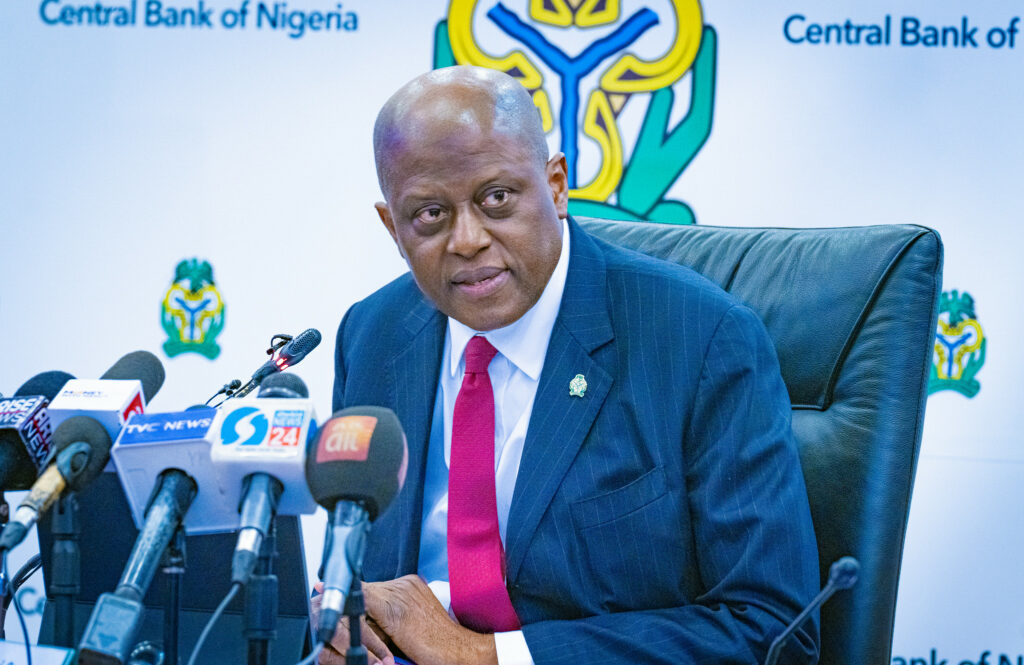
In a sweeping move to enforce credit discipline and safeguard the nation’s financial system, the apex bank issued a policy statement on Wednesday following remarks by CBN Governor Olayemi Cardoso at the 4th Annual IMF/AFRITAC West 2 High-Level Executive Forum in Abuja.

The Governor made it clear that the era of regulatory forbearance for delinquent borrowers is over.

He emphasised that the bank is shifting toward a more aggressive stance on corporate governance to ensure that the N4.61tn in new capital recently attracted by the banking sector is protected from systemic abuse.

“Our stance on corporate governance is unequivocal: zero tolerance for violations. By ending years of regulatory forbearance, we have reinforced accountability, tightened supervision, and elevated compliance standards across the sector,” the Governor stated.

The new directive specifically targets “large-ticket obligors”, individuals or entities with significant outstanding debts classified as non-performing in the Credit Risk Management System. Under the new rules, these defaulters will be barred from accessing not only fresh credit but also essential contingent liabilities and trade instruments.

“We have implemented a restriction of banking services to non-performing large-ticket obligors. This decisive step underscores our commitment to credit discipline, financial integrity, and accountability,” the statement read.

According to the CBN, the move is designed to instil a “culture of repayment” that has historically been lacking among high-profile borrowers. By cutting off access to instruments such as letters of credit and performance bonds, the regulator aims to prevent “credit jumping”, a practice where defaulters migrate between banks to accumulate more debt.

See also  US sanctions eight Nigerians over links to Boko Haram, cybercrime

“By curbing access to banking services for chronic defaulters, we are reinforcing the culture of repayment, protecting depositors, and safeguarding the stability of the financial system,” the apex bank added.

Beyond the crackdown on debtors, Cardoso reaffirmed that the CBN remains firmly committed to orthodox monetary policy. This approach prioritises price stability and the use of traditional tools to anchor inflation expectations, moving away from unconventional interventions to restore confidence in the naira.

“The CBN remains firmly anchored in orthodox monetary policy, focused on restoring price stability, strengthening policy credibility, and anchoring expectations through discipline and consistency,” the statement concluded.

For years, the Nigerian banking sector has struggled with “chronic defaulters”, wealthy individuals or massive corporations that borrow billions and fail to repay.

These are often referred to as “large-ticket obligors”. When these loans go bad, they threaten the liquidity of banks and the safety of ordinary citizens’ deposits.

Under the leadership of Cardoso, the CBN is pivoting toward “Orthodox Monetary Policy”. This means moving away from the era of massive development interventions and direct lending to sectors like agriculture and focusing instead on its core mandate: price stability and financial system regulation.

punch.ng

FOLLOW US ON:

FACEBOOK

TWITTER

PINTEREST

TIKTOK

YOUTUBE

LINKEDIN

Continue Reading

Trending