Connect with us

Business

2027 poll spending may trigger inflation, MPC warns

Published

on

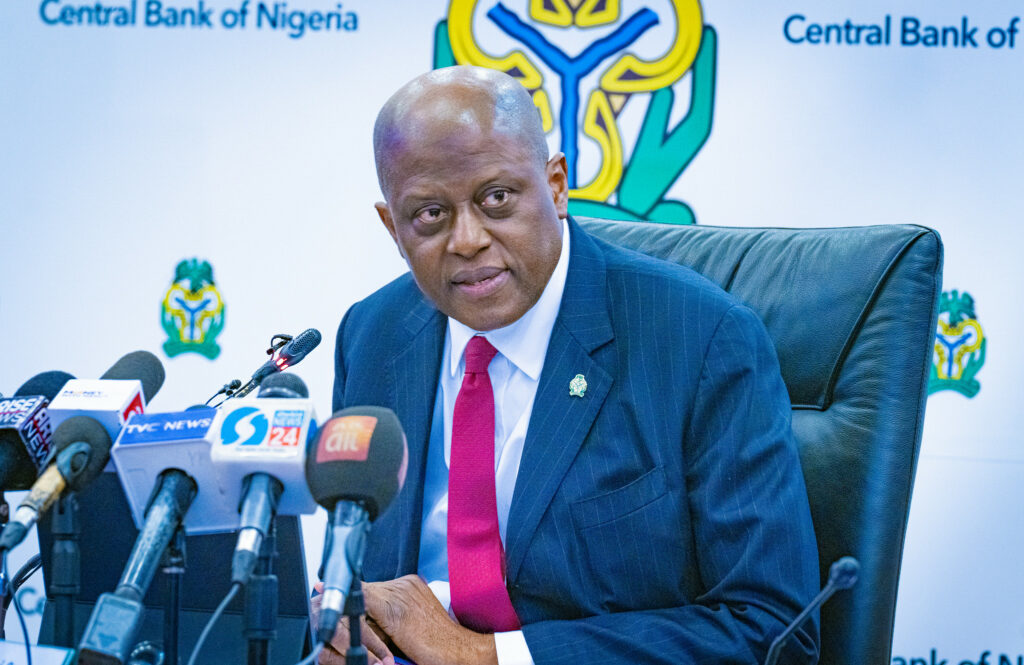
The Governor of the Central Bank of Nigeria and Members of the Monetary Policy Committee have warned that rising political and election-related spending ahead of the 2027 general elections could undermine the country’s disinflation gains and trigger fresh inflationary pressures.

The warnings were contained in the personal statements of MPC members released by the apex bank and obtained by The PUNCH on Thursday. The MPC, at its 304th meeting held on February 23 and 24, 2026, reduced the Monetary Policy Rate by 50 basis points from 27 per cent to 26.5 per cent, while retaining other key monetary parameters.

CBN Governor, Olayemi Cardoso, had earlier warned in the MPC communiqué that election-related fiscal spending could threaten the inflation outlook despite the current moderation in prices.

According to the communiqué signed by Cardoso, “The outlook indicates that the current momentum of domestic disinflation will continue in the near term. This is premised on the lagged impact of previous monetary policy tightening, sustained stability in the foreign exchange market and improved food supply. However, increased fiscal releases including election-related spending could pose upside risk to the outlook.”

Also, in his personal statement, he noted “Growing fiscal pressures, from reduced government fiscal headroom and the approaching 2027 election cycle, warrant particular attention given the well-established link between pre-election fiscal expansion and inflation.”

CBN Deputy Governor for Economic Policy, Dr Muhammad Abdullahi, also highlighted election-related spending as a major risk to the inflation outlook. He said, “As political activities intensify ahead of the 2027 elections, increased fiscal injections and consumption spending could elevate demand-side inflation.”

See also  BUA Foods declares N13 per share dividend for shareholders

Abdullahi added that “the fiscal deficit has already increased significantly, and election-related spending is likely to exacerbate this trend in 2026 and early 2027.” According to him, stronger fiscal-monetary coordination would be needed to manage the liquidity impact of rising government spending.

Similarly, the CBN Deputy Governor for Operations, Emem Usoro, warned that the pre-election environment could worsen liquidity conditions and inflation expectations. Usoro stated, “Crucially, the pre-election environment increases the risk of liquidity surges, higher FX demand and a drift in inflation expectations.”

She added that the risks justified maintaining tight liquidity conditions despite the moderate rate cut. According to her, “These considerations support small, cautious adjustments and the retention of strong liquidity and prudential buffers.”

Also raising concerns was the newly appointed Deputy Governor, Lamido Yuguda, who said increased fiscal releases and election spending could disrupt the disinflation trend.

Yuguda, who was a former Director General of the Securities and Exchange Commission, noted, “The 75 per cent CRR on non-TSA public deposits remains critical, particularly given the potential for increased fiscal releases as implementation of Executive Order 9 advances.”

He further warned that, “Potential increases in fiscal spending associated with the electoral cycle could generate demand pressures and disrupt the disinflation trajectory.”

A member of the MPC, Dr Aloysius Ordu, warned that political spending tied to the elections could put pressure on foreign exchange demand and test the resilience of the economy. He said, “Domestically, rising political spending and FX demand pressures associated with the 2027 elections will test the resilience of the economy.”

See also  NNPC links cooking-gas price hike to PENGASSAN strike

Ordu added that although reforms such as Executive Order 9 were expected to improve fiscal transparency and strengthen reserves, high debt servicing costs and political-cycle spending remained major concerns for macroeconomic management.

Another MPC member, Bandele Amoo, also expressed concern over excess liquidity from fiscal injections and early political activities ahead of the elections. He said, “My primary concern is the persistence of excess liquidity from fiscal injections, which could undermine disinflation gains and exchange rate stability.”

Amoo further noted that “fiscal spending pressures linked to the 2026 budget cycle, and early political activities ahead of the 2027 elections may heighten risks.”

Another committee member, Professor Murtala Sagagi, said the main domestic risks to inflation included fiscal slippages and election-related spending. He said, “Upside risks to the inflation outlook warrant monitoring, particularly increased fiscal releases including election-related spending and any pass-through from global oil price volatility to domestic fuel prices.”

Sagagi added that “the primary domestic risks are fiscal slippage and the possibility of election-related spending which are medium-term in nature.” He urged stronger fiscal discipline and closer coordination between monetary and fiscal authorities.

The next meeting of the Monetary Policy Committee is scheduled to hold on Tuesday, May 19 and Wednesday, May 20, 2026. This would be about four days after the National Bureau of Statistics is expected to release the country’s Consumer Price Index report for April 2026 on May 15.

Nigeria’s inflation rate rose to 15.38 per cent in March 2026, marking a reversal in the recent easing trend, as increases in food, transport, and accommodation costs pushed prices higher. The PUNCH observed that this was the first time the headline inflation rate had increased since March 2025.

See also  ‘Price Of 5kg Cooking Gas Increased To ₦8,324’

In its Inflation Forecast report for April 2026, the Financial Market Dealers Association projected that Nigeria’s headline inflation would rise to 16.42 per cent year-on-year in April 2026, as sustained pressure from food prices, higher energy costs and elevated global commodity prices continue to shape the domestic price environment.

punch.ng

FOLLOW US ON:

FACEBOOK

TWITTER

PINTEREST

TIKTOK

YOUTUBE

LINKEDIN

INSTAGRAM

Continue Reading
Click to comment

Leave a Reply

Your email address will not be published. Required fields are marked *

Business

NNPC urged to revive refineries after Dangote snub

Published

on

The National Publicity Secretary of the Independent Petroleum Marketers Association of Nigeria, Chinedu Ukadike, has tackled the Nigerian National Petroleum Company Limited (NNPC) over its attempt to increase its stake in the Dangote Petroleum Refinery despite the poor state of government-owned refineries.

Ukadike stated this while reacting to comments by the President of the Dangote Group, Aliko Dangote, that the refinery rejected requests by the NNPC to increase its 7.25 per cent stake in the $20bn facility.

Dangote had disclosed this during an interview with the Chief Executive Officer of the Norwegian Sovereign Wealth Fund, Nicolai Tangen, monitored by our correspondents on Wednesday.

Reacting to the development, Ukadike questioned why the national oil company was seeking to invest more funds in the privately-owned refinery when the Port Harcourt, Warri, and Kaduna refineries under its control had remained largely inactive despite billions of dollars spent on rehabilitation.

“Why is NNPC trying to invest money in the Dangote refinery when it has three refineries that are not working? Why is NNPC not investing that money in those ones?” Ukadike asked.

He added, “The NNPC did not revive our refineries, but they want to look for where the refinery is already working to put money into it. Does that make sense?”

The IPMAN spokesman said Dangote had the right to reject the offer from the NNPC if he considered it unsuitable for his business interests.

“If Dangote refused to sell more stakes to NNPC, he must have his reasons. Dangote is a businessman. He doesn’t want issues, unnecessary crises, and nepotism. He knows what he wants, and I also think he has enough cash to fund his business,” he stated.

See also  CBN sets tough cybersecurity timeline for banks

Ukadike further urged the national oil company to focus on reviving critical oil infrastructure across the country instead of pursuing additional ownership of the refinery. “The NNPC should repair the pipelines and revive the refineries instead of eyeing the Dangote refinery,” he said.

Dangote had stated during the interview that the NNPC was interested in acquiring more shares in the refinery after previously purchasing a 7.25 per cent stake for $1bn in 2021. According to him, the request was rejected because the company planned to list the refinery publicly and allow more Nigerians to own shares in the project.

“The other biggest risk is government inconsistencies in policies, and we are addressing that one because if you look at our refinery, the national oil company already owns 7.25 per cent, and they are trying to buy more. We are the ones that said no; we want to now spread it and have everybody be part of it,” Dangote said.

The NNPC had initially planned to acquire a 20 per cent stake in the refinery, but later reduced its ownership to 7.25 per cent after failing to pay the balance before the June 2024 deadline.

Dangote had explained this in 2024, saying, “The agreement was actually 20 per cent, which we had with NNPC, and they did not pay the balance of the money up until last year; then we gave them another extension up until June (2024), and they said that they would remain where they had already paid, which is 7.2 per cent. So NNPC owns only 7.2 per cent, not 20 per cent.”

See also  Greenwich Merchant Bank achieves N50bn capitalisation

However, a stakeholder in the petroleum sector who pleaded for anonymity because of the sensitivity of the matter held that the interest of the nation is well served by NNPC having a 20 per cent stake in the Dangote refinery.

“I think Nigeria is better served by NNPC being a shareholder. If NNPC could have taken 20 per cent of that refinery, Nigeria as a country would be better served,” the stakeholder said.

According to him, the fact that the NNPC failed to get the 20 per cent take before does not mean it could not get it again. He said Dangote refused NNPC’s offer because he wants to remain in control.

“You know Dangote is planning to value his company at $50bn. I think he’s going to sell 10 per cent only, so he remains in control, making a lot of money for himself. Selling only 10 per cent means he has 90 per cent. If NNPC were there with 20 per cent, then NNPC would have two directors. These two directors would have some say,” he said.

The stakeholder added that such an important asset cannot exist in a country without the government’s involvement.

“You can’t have such a big asset in the country, and then the government or the government’s agent has no say in the decisions of that company. It can’t happen. It’s wrong. I’m not saying the government must have a say in all the big companies, but in a company that is so big that it can influence whether the sun rises or falls in that country, the government must have a say.

See also  BUA Foods declares N13 per share dividend for shareholders

“The refinery is big. In any case, NNPC is also the supplier of last resort. It’s the national oil company. That has some meaning. I think that in the best interest of the country, if we all agree that Dangote is too big to fail, then it means that Nigerians as a people need to be inside the Dangote refinery to make sure it does not fail,” the operator said.

Meanwhile, a senior official of the NNPC said the NNPC is proud of its current stake in the Dangote refinery.

“The NNPC is proud and happy that we own a 7.2 per cent stake in Dangote. And whatever we own as a stake in Dangote as a national oil company is on behalf of the entire Nigeria. So, when the opportunity presents itself in the long term, yes.

“But right now, we are proud of the 7.2 per cent stake we own in the Dangote refinery. Apart from that, the quality and level of collaboration that is currently going on between NNPC and Dangote is in the interest of the entire Nigeria,” the official said, begging not to be mentioned because he was not authorised to speak on the matter.

punch.ng

FOLLOW US ON:

FACEBOOK

TWITTER

PINTEREST

TIKTOK

YOUTUBE

LINKEDIN

INSTAGRAM

Continue Reading

Business

Presidential fleet operations gulp N4.24bn in six months – Read report details

Published

on

The Presidential Air Fleet received at least N4.24bn in disbursements between June and December 2025, the latest updates on GovSpend, a civic technology platform that tracks and analyses Federal Government spending, have revealed.

Findings by The PUNCH also revealed that the disbursements, made into the Presidential Air Fleet naira transit account operated by the Presidential Air Fleets (State House), were recorded in eight separate transactions across three months of June, July and December 2025, with the bulk of the transfers concentrated in July, when four transactions totalling N2.43bn were made in the space of a week.

A breakdown of the transactions shows that N1.285bn was disbursed on June 12, followed by N430m on July 24, N1.28bn on July 25, N92m on July 29, and N626m on July 31.

In December, three further disbursements were recorded. They include N9m on December 18, described in the GovSpend database as “Presidential Air Fleet forex transit funds,” N343.9m on December 30 and N90.9m on December 31.

Four of the eight transactions carry no accompanying description, listed simply as “None,” a pattern consistent with previous disbursements to the transit account.

Most disbursements to the Presidential Air Fleet transit account are labelled “Forex Transit Funds,” typically funds allocated for foreign exchange requirements to facilitate international transactions, covering expenses related to operations outside the country, including fuel purchases, maintenance or services in foreign currencies.

The new figures add to a growing cumulative spend that has accelerated significantly since Tinubu assumed office.

At least N26.38bn was spent on the operations of the Presidential Air Fleet from July 2023 to December 2024, with N14.15bn disbursed in 2024 alone.

See also  NNPC links cooking-gas price hike to PENGASSAN strike

The Presidential Air Fleet’s total budget allocation stood at N17.32bn in 2025, declining to N14.70bn in 2026.

The reduction was driven mainly by decreased capital expenditure.

Engine overhaul projects across the fleet consumed N4.58bn in 2024, N8.65bn in 2025 and N6.05bn in 2026, bringing the three-year aggregate to N19.27bn.

Since 2017, under the Buhari administration, budgetary allocations for the fleet have shown a growing trend, with one exception in 2020, rising from N4.37bn in 2017 to N20.52bn in 2024, a 370 per cent increase in running costs over seven years.

In an interview with our correspondent, the General Secretary of the Aviation Round Table, Olumide Ohunayo, had blamed the meteoric rise on the age of some of the aircraft in the fleet and the declining value of the naira, as well as the “commercial use” of aircraft by the Nigerian Air Force.

Ohunayo explained, “The cost will definitely increase over the years because, for one, this issue of the naira against the dollar.

“As the naira keeps falling to the dollar, we will see a rise in cost because most of the costs of training crew and engineers and replacing aircraft parts are all in dollars.

“Also, some of these aircraft are not new. The older the aircraft, the higher the cost of maintenance and operation.

“Lastly, during these past years, terrorism and insecurity have increased in Nigeria, which has also affected the cost of insuring the aircraft.”

In late April 2024, Tinubu was compelled to charter a private jet to continue his journey to Saudi Arabia after the state-owned Gulfstream 550, which had been assigned to carry him, developed an unspecified technical fault in the Netherlands, forcing him to abandon the aircraft mid-tour.

See also  Dangote Refinery appoints new CEO David Bird

The episode had prompted the House of Representatives Committee on National Security and Intelligence to recommend the procurement of two new presidential aircraft.

In August 2024, the official Boeing 737 business jet for the President was replaced with an Airbus A330 purchased for $100m through service-wide votes.

The nearly 15-year-old plane, an ACJ330-200, VP-CAC (MSN 1053), is “spacious and furnished with state-of-the-art avionics, customised interior and communications system,” Tinubu’s Special Adviser on Information and Strategy, Mr Bayo Onanuga, said, adding “it will save Nigeria huge maintenance and fuel costs, running into millions of dollars yearly.”

From February through July 2025, the President flew a San Marino-registered BBJ (REG: T7-NAS).

Sources who spoke to one of our correspondents confirmed that the primary aircraft had been flown to South Africa to change its colours to reflect the office of the President. It was flown back in July 2025.

The Presidential Air Fleet comprises a fixed-wing fleet that includes the Airbus ACJ330-200, a Gulfstream G550, a Gulfstream G500, two Falcon 7Xs, a Hawker 4000 and a Challenger 605, three of which are reportedly unserviceable.

The rotor-wing fleet includes two Agusta 139s and two Agusta 101s, operated by the Nigerian Air Force under the supervision of the Office of the National Security Adviser.

The CEO of Centurion Security Limited, John Ojikutu, argued that the disbursements for the air fleet operations were justified considering all related expenses.

“That’s not a big deal. If they are going for repair, particularly for C-checks. It’s always around that range.

“They will fly it abroad, buy fuel, catering, and hotel bills are also involved; pilots will fly it back, and the figure likely includes far more than the direct cost of repairing the aircraft,” Ojikutu explained, adding that the figure likely includes far more than the direct cost of operating the aircraft.

See also  Port Harcourt Customs Record N247bn Revenue In 10 Months

The Presidency did not respond to inquiries on the nature of the specific disbursements captured in the recent data.

As of the time of filing this report, calls to the Special Adviser to the President on Information and Strategy, Bayo Onanuga, went unanswered.

In an earlier interview with our correspondent, Onanuga had argued that the costs of maintaining the air fleet are not for the President but in the interest of Nigerians.

“It’s not President Tinubu’s plane; it belongs to the people of Nigeria, it is our property…the President did not buy a new jet; what he has is a refurbished jet, but it is a much newer model than the one President Buhari used.

“Nigerians should try to prioritise the safety of the President. I’m not sure anybody wishes our President to go and crash in the air.

“We want his safety so that he can hand it over to whoever wants to take over from him,” Onanuga said.

punch.ng

FOLLOW US ON:

FACEBOOK

TWITTER

PINTEREST

TIKTOK

YOUTUBE

LINKEDIN

INSTAGRAM

Continue Reading

Business

Dangote rejects NNPC offer to increase stake in refinery; read why

Published

on

The President of the Dangote Group, Alhaji Aliko Dangote, has said the group rejected requests by the Nigerian National Petroleum Company Limited to increase its 7.25 per cent stake in the Dangote Petroleum Refinery.

Dangote stated this in an interview with the Chief Executive Officer of the Norwegian Sovereign Wealth Fund, Nicolai Tangen. The interview was monitored by one of our correspondents on Wednesday.

This came as findings by The PUNCH showed that petrol supply from the $20bn Lekki-based refinery rose to 3.18 billion litres in the first quarter of 2026, while imports fell sharply to 965.52 million litres.

Further findings indicated that the average domestic ex-depot petrol price from the Dangote refinery across January to March 2026 was about ₦1,000 per litre. This implies that the multi-billion-dollar plant supplied over N3.2tn worth of petrol domestically during the review period.

Also, the war between the United States and Iran, and its resultant disruption of the oil sector and other sectors, has led to increased revenue for the Dangote refinery, as the plant has raised its refined petroleum products export.

According to Dangote during the interview, the NNPC’s offer to increase its 7.25 per cent stake in the refinery was rejected because the company is planning to go public and give other Nigerians the opportunity to own shares in the plant.

It was reported that in 2021, the NNPC acquired the 7.25 per cent stake in the refinery for $1bn, with an option to acquire the remaining 12.75 per cent stake by June 2024. But the national oil firm reneged on its decision.

During the interview with the Norwegian Sovereign Wealth Fund CEO, Dangote revealed that the national oil company had made attempts to acquire more stakes in the refinery, but this was turned down.

Responding to questions about what could be the biggest risks to his businesses, Dangote mentioned civil war and government policy inconsistencies, saying, “Actually, if there are civil wars, which is not in the offing at all.

“The other biggest risk is government inconsistencies in policies, and we are addressing that one because if you look at our refinery, the national oil company already owns 7.25 per cent, and they are trying to buy more. We are the ones that said no; we want to now spread it and have everybody be part of it.”

Recall that the NNPC, under the former Group Chief Executive Officer, Mele Kyari, reduced its stake in the refinery from 20 per cent to 7.25 per cent. Aliko Dangote made this public in 2024. He disclosed that the NNPC had only a 7.2 per cent stake in the refinery and not 20 per cent as many Nigerians believed.

“The agreement was actually 20 per cent, which we had with NNPC, and they did not pay the balance of the money up until last year; then we gave them another extension up until June (2024), and they said that they would remain where they had already paid, which is 7.2 per cent. So NNPC owns only 7.2 per cent, not 20 per cent,” Dangote stated in 2024, to the surprise of many Nigerians.

Speaking further during the latest interview, the billionaire businessman said shareholders can get their dividends in dollars. “What we are announcing is that when you invest in any of our businesses going forward, in cement or in the refinery, in petrochemicals, in fertiliser, we guarantee to pay you a dividend in dollars because we are very well into exports. 80 per cent of our revenue will be in dollars,” he said.

To raise funds for building the refinery, Dangote said he got a lot of support from various financial institutions, including Nigerian banks.

According to him, the initial plan was to fund most of the construction work “from our internally generated funds”, but because of naira devaluation, the group “had to rely on Afreximbank, Africa Finance Corporation, Zenith Bank, Access Bank, UBA and a couple of the local banks, but of course we also have a very good relationship with the Standard Bank of South Africa and, at the beginning, Standard Chartered Bank of the UK”.

He maintained that the company was lucky and what happened when the plant was completed “turned out to be much more than our own expectations”.

See also  ‘Price Of 5kg Cooking Gas Increased To ₦8,324’

In the interview, Dangote disclosed how he sold his properties in the United States and the United Kingdom to settle in Nigeria.

“When I decided to go into the industry, you know what I did? I sold all my properties in the US. I had two houses in the US, big mansions, and I had a house in the UK. I wanted to really sit in Nigeria and concentrate.

“You know, sometimes when you own a holiday home anywhere, you have to create that time to go and use that property. So, now my life is very simple. Wherever I go, I use hotels; I pay. When I leave, nobody will call me and say I have a burst pipe or something is wrong. So I’m committed to what I do, and I just don’t do things; I always create a vision.

“It’s just like now; we created a vision for 2030. So, I know I have a target to meet. I just don’t do business. All my businesses are targeted,” he said.

On how he decides which business to venture into, the business mogul replied, “I first of all look at what we need as a people? What is it that we are supposed to be producing, and we’re importing? So we do what you call ‘backward integration’. We produce what the people need, and we are now producing things that when you wake up as a human being every morning, you must use part of what we produce,” he said.

While defending why the NNPC reduced its planned stake in the Dangote refinery in 2024, the NNPC’s former spokesman, Olufemi Soneye, said it was to invest in compressed natural gas stations.


N3.2tn petrol supply

Petrol supply from local refineries rose to 3.18 billion litres in the first quarter of 2026, while imports fell sharply to 965.52 million litres, according to data from official documents of the Nigerian Midstream and Downstream Petroleum Regulatory Authority analysed by The PUNCH.

Although the NMDPRA documents did not directly name Dangote refinery in the first-quarter supply table, industry records show that it is the only refinery in Nigeria currently known to be producing Premium Motor Spirit on a commercial scale.

The agency’s fact sheet also listed Dangote among Nigeria’s active refineries and separately tracked its PMS performance. The figures showed that Nigeria’s total petrol supply stood at 4.14 billion litres between January and March 2026, with local refinery supply accounting for 76.7 per cent, while imports contributed 23.3 per cent.

This marked a major shift from the first quarter of 2025, when domestic refineries supplied 1.99 billion litres, while oil marketers imported 2.43 billion litres. Total supply in Q1 2025 stood at 4.42 billion litres.

For a proper year-on-year comparison, The PUNCH converted the 2025 figures from the average daily supply provided by the NMDPRA into monthly volumes by multiplying each month’s million litres per day by the number of days in the month and then by one million. This became necessary because the 2026 report provided actual monthly litre volumes, while the 2025 data was presented as daily averages.

The analysis showed that local refinery supply jumped by 59.2 per cent from 1.99 billion litres in Q1 2025 to 3.18 billion litres in Q1 2026. Importation, however, dropped by 60.2 per cent from 2.43 billion litres to 965.52 million litres.

Despite the increase in local refining, total petrol supply declined by 6.2 per cent year-on-year from 4.42 billion litres in Q1 2025 to 4.14 billion litres in Q1 2026.

In January 2026, local refinery supply stood at 1.24 billion litres, importation was 698.19 million litres, while total supply reached 1.94 billion litres. This translated to a daily average of 40.07 million litres from local refining, 22.52 million litres from imports, and 62.59 million litres in total supply.

Compared with January 2025, local refinery supply rose by 109.8 per cent from 19.1 million litres per day, while imports fell by 8.8 per cent from 24.7 million litres per day. Total daily supply also increased by 43.2 per cent from 43.7 million litres per day.

In February 2026, local refinery supply dropped to 824.45 million litres, while imports collapsed to 85.10 million litres. Total supply fell to 909.55 million litres. On a daily basis, local refinery supply averaged 29.44 million litres, imports averaged 3.04 million litres, and total supply averaged 32.48 million litres.

See also  CBN sets tough cybersecurity timeline for banks

This showed that while local refinery supply was 18.7 per cent higher than the 24.8 million litres per day recorded in February 2025, imports crashed by 88.9 per cent from 27.5 million litres per day. Total supply also fell by 37.9 per cent from 52.3 million litres per day in the same month of 2025.

In March 2026, local refinery supply recovered to 1.11 billion litres, while importation rose to 182.24 million litres. Total supply stood at 1.29 billion litres. This amounted to daily averages of 35.87 million litres from local refining, 5.88 million litres from imports, and 41.75 million litres in total supply.

Compared to March 2025, local refinery supply increased by 56.6 per cent from 22.9 million litres per day, while importation fell by 79.5 per cent from 28.7 million litres per day. Total supply declined by 19.1 per cent from 51.6 million litres per day.

Month-on-month, total petrol supply fell by 53.1 per cent from 1.94 billion litres in January 2026 to 909.55 million litres in February, before rising by 42.3 per cent to 1.29 billion litres in March.

Local refinery supply also fell by 33.6 per cent between January and February, before rising by 34.9 per cent in March. Imports declined by 87.8 per cent in February but increased by 114.2 per cent in March.

The NMDPRA’s April 2026 FAAC report showed that PMS supply rose from 909.55 million litres in February to 1.29 billion litres in March, representing a 42.29 per cent increase. It also showed that PMS distribution through truck-out fell from 1.59 billion litres in February to 1.47 billion litres in March.

The figures indicate that Nigeria’s petrol market is becoming less dependent on imports, with domestic refining now providing the bulk of the national supply.

However, the decline in total Q1 supply suggests that increased local refinery output has not fully translated into higher overall petrol availability compared with the same period of 2025.

The PUNCH earlier reported that Nigerians consumed about 4.93 billion litres of Premium Motor Spirit (petrol) to fuel various economic activities in the first quarter of 2026, according to an analysis of the Nigerian Midstream and Downstream Petroleum Regulatory Authority’s downstream fact sheet monthly data.

It revealed that this amount represents a 7.4 per cent increase from the 4.59 billion litres recorded in the corresponding period of 2025.

The PUNCH also reported that the Dangote Petroleum Refinery exported about 434 million litres of Premium Motor Spirit (petrol) in March 2026, as the facility diversified its customer base after significantly outpacing domestic consumption.

The report indicated that the refinery, owned by Aliko Dangote, operated at an average capacity utilisation of 93.62 per cent, reinforcing its position as the dominant supplier of refined petroleum products in Nigeria.

In earlier remarks reported in 2025, the Dangote group chairman, Aliko Dangote, asserted that the refinery had sufficient refined products in storage to meet domestic needs, saying:

“Right now, we have more than half a billion litres in storage. The refinery is producing enough refined products, gasoline, diesel, and kerosene to meet all of Nigeria’s needs.”

Commenting in an earlier report, renowned energy economist Professor Wumi Iledare, noted that Nigeria’s reliance on imported petrol has declined but has not been eliminated. He also warned against claims that fuel importation has ended following increased domestic supply from the Dangote Petroleum Refinery.

In a personal note titled “Dangote Refinery, Petrol Imports, and Market Reality,” Iledare said recent assertions that Nigeria no longer imports petrol reflect “understandable optimism” but overstate the economic reality of the downstream oil market.

“Recent claims that petrol importation into Nigeria has ended because Dangote Refinery now meets domestic demand reflect understandable optimism, but they overstate economic reality.

“Dangote Refinery has significantly improved domestic supply conditions and reduced Nigeria’s marginal reliance on imported petrol. However, neither Dangote refinery nor petroleum marketers determines national supply outcomes,” he said.

The Chief Executive Officer of petroleumprice.ng, Jeremiah Olatide, recently said that Nigeria’s domestic refining capacity has grown significantly.

Olatide described the development as a major milestone in the country’s long-standing quest to reduce dependence on imported petroleum products.


661,000bpd output

Also during the latest interview, Dangote revealed that his refinery is now operating at 661,000 barrels per day. This was even as he recounted the gains of the US-Iran war for its refinery and fertiliser business.

See also  Greenwich Merchant Bank achieves N50bn capitalisation

Dangote boasted that the company has proved its capacity by building a refinery of that magnitude in Nigeria, commissioning it, and running it above its 650,000 bpd nameplate capacity.

With this, he said financial institutions would be ready to support the group whenever the need arises.

“The refinery has been tested. We have now processed even crude at 661,000 barrels a day. So we have demonstrated that capability. Now, a lot of financial institutions are saying that, ‘Yes, if it is you doing this project, we are there to back you because we know that you can deliver; you have the capacity, you have the knowledge, and you have the experience,” he said.

Asked to speak about the impact of the Middle East crisis on his businesses, Dangote recounted the gains of the war, which has sent energy prices high across the globe.

To Dangote, there were windfalls as the demand for fuel rose globally, even with the prices. According to him, fertiliser has risen from $400 to $850 per tonne. Polypropylene went up from $900 to about $3,000. Dangote added that most Nigerian plastic companies would have shut down by now if not for his polypropylene.

“The effect of the war on our businesses is more beneficial than a downside because today, fertiliser is in very high demand. In February, before the Middle East crisis, urea was selling for about $400 a tonne. Today we are selling a tonne of fertiliser for $850, and we are actually oversold. In plastics, polypropylene has moved from $900. In the UK today, it is about $3,000.

“And if not because of the polypropylene we are producing today, all the plastic industries in Nigeria would have shut down because there’s nowhere you can even get it. Our aviation fuel is oversold till the middle of July, and we’re producing 20 million litres of jet fuel a day,” Dangote disclosed.

Speaking about crude supply, Dangote said, “We source about 56 per cent from Nigeria and some from Angola. We buy quite a bit from Angola, we buy from Libya, and we buy from the US. At one point, we were doing about seven to eight cargoes of WTI from the US. But we’re getting more of Nigeria’s crude now. We have to now buy 21 cargoes every month. That’s how big we are. And we’re more than doubling the refinery. You know, in the next 30 months, we will be at 1.4 million barrels per day, which is huge.”

Aliko Dangote named a category of those he called the ‘Mafia,’ trying to sabotage the refinery.

“The Mafia are the people who are actually benefiting because Nigeria was giving out almost $10bn every year as a subsidy. There are shippers who are making tonnes of money. There are traders who are making a lot of money buying crude and sending us refined products. There are also the local people; because it was subsidised, very few people are getting allocations. So they are making billions of naira. So, these are the people that did not want us to settle down because they believed that we were coming here to displace them, and of course, that’s what we have done now,” he said.

He added that plans are underway to sell stakes and inject about $45bn into the businesses for a target of $100bn revenue by 2030.

“We are coming up with selling part of the business, getting more investors into the business, and also making sure that we continue to grow the business. Cement production is going to 100 million tonnes. In cement, we don’t even need much money; we are getting financing, and the cash generation is very liquid.

“So, we’ll be able to actually fund this $45bn, which will eventually take us to $100bn of revenue, because our target is to get to $100bn by 2030, with a market valuation of maybe more than $250bn, because as we speak today, last year, our EBITDA was $3bn, but the target by 2030 is to be 10 times that amount, to be at over $30bn of EBITDA,” he stated.

Continue Reading

Trending