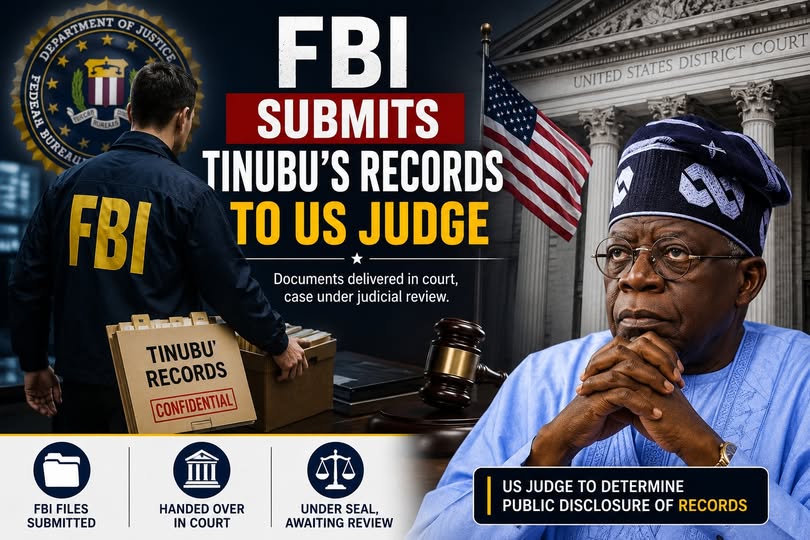
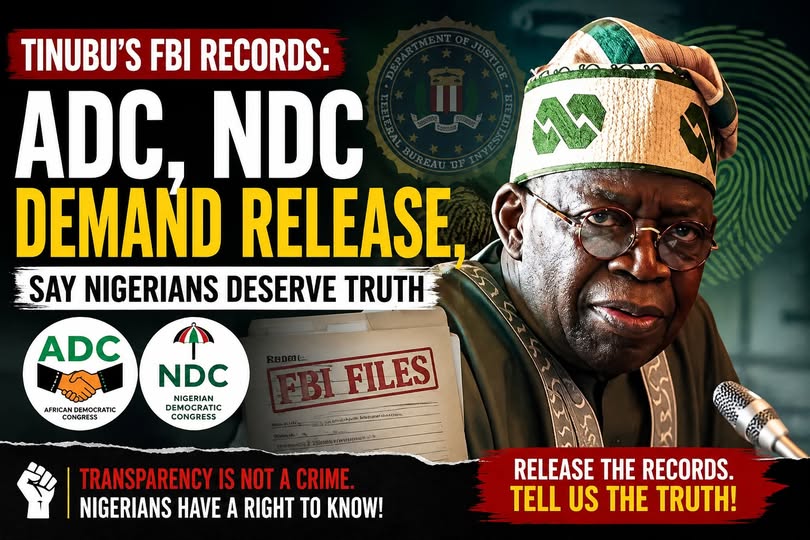
President Bola Ahmed Tinubu’s records with United States law enforcement agencies has taken another turn with opposition parties demanding that the documents be made public.
The African Democratic Congress (ADC) and the Nigeria Democratic Congress (NDC) have questioned the President’s decision to oppose the release of the records, insisting that Nigerians deserve to know the truth about his past.
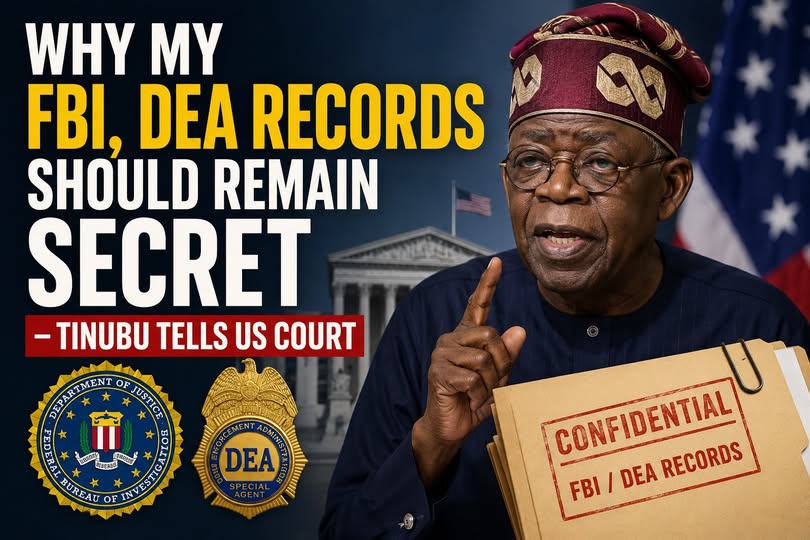
Naija News reports that the fresh controversy comes as details of submissions made by Tinubu’s lawyers before the United States District Court for the District of Columbia emerged.
In the filings, the President’s legal team, led by Christopher Carmichael, Victor Henderson and Oluwole Afolabi, gave reasons why his unredacted records with the Federal Bureau of Investigation (FBI) and Drug Enforcement Administration (DEA) should not be released to the public.
Tinubu’s lawyers argued that the records were protected under the US Freedom of Information Act and the Privacy Act.
The legal team maintained that the information being sought contained private details from law enforcement files and therefore fell under provisions that exempt such records from public disclosure.
The lawyers also argued that there was no recognized public interest under US law strong enough to justify releasing the records.
According to them, the argument that Nigerians have an interest in knowing about Tinubu’s background does not amount to the kind of public interest recognized under the Freedom of Information Act.
They further rejected the argument that the documents could be necessary to determine the President’s fitness for public office, saying such an interest was not one that the US law was designed to address.
Tinubu’s legal team also questioned the motive behind the request, arguing that the documents were being sought largely for political purposes in Nigeria.
The lawyers said the filings by the American transparency activist, Aaron Greenspan, showed that his main interest was obtaining government documents bearing Tinubu’s name.
They urged the court not to allow the FOIA process to be used as a means of accessing private information about an individual simply because he is the President of Nigeria.
The legal team also dismissed suggestions that the records could expose a secret prosecution or an agreement by US authorities not to prosecute Tinubu, describing such claims as speculative and unsupported by evidence.
The lawyers further argued that the fact that some information about Tinubu’s past had previously entered the public domain did not automatically remove his right to privacy over other details contained in government files.
The President Should Come Out Clean – ADC
Reacting to the development, ADC spokesperson, Bolaji Abdullahi, described the President’s opposition to the release of the records as suspicious.
Abdullahi, who spoke with a correspondent on Saturday, said Tinubu should allow the records to be released if he wanted to put the controversy surrounding his past to rest.
“Why is the President opposing the release of his past records? That is suspicious. The President should allow them (records) to be released to clear himself.
“The President should come out clean. He should be the one calling for the records to be released if he has nothing to hide because this is not good for him and the image of the country,” he said.
Nigerians Deserve To Know – Says NDC
The National Publicity Secretary of the NDC, Osa Director, also called on the President to allow the records to be made public.
Speaking with The PUNCH on Saturday, Director rejected the argument that the request for Tinubu’s records was simply a political move by the opposition.
According to him, the President should use the opportunity to clear the air over an issue that has remained in the public domain for more than two decades.
“When a man commits an offence and he says, please, don’t blame me because it is the devil, does that mean he should not face the consequence of his action because it is the devil? That is the question the President should answer.
“Whether it is the opposition or not, if the issue wasn’t there, the opposition would not capitalise on it. Why did the opposition not ask the FBI to release records on our presidential candidate, Peter Obi, or Atiku? That is not an excuse,” Director said.
He argued that the controversy would continue to resurface as long as the matter remained unresolved.
“Nigerians deserve to know and in the interest of the President. He deserves to clear the air. This case has been hanging on since his time as a governor. It is over 20 years.
“Even me, as an opposition, am getting bored. It is time, once and for all, that he should clear the air to allow the issue to be buried,” he added.
Naija News reports that the controversy over Tinubu’s US records dates back several years and became a major political issue during the build-up to the 2023 presidential election.
At the centre of the matter are records relating to a 1993 US civil forfeiture proceeding involving $460,000 held in an account linked to Tinubu.
US authorities had alleged that the funds represented proceeds of narcotics trafficking or were connected to prohibited financial transactions.
Meanwhile, the ruling All Progressives Congress (APC) had maintained during the presidential election litigation that the case was a civil forfeiture proceeding and did not amount to a criminal conviction.
FOLLOW US ON:
FACEBOOK
TWITTER
PINTEREST
TIKTOK
YOUTUBE
LINKEDIN
INSTAGRAM




















 Crime9 hours ago