Connect with us

Politics

Falana, Adams predict one-candidate presidential poll in 2027

Published

on

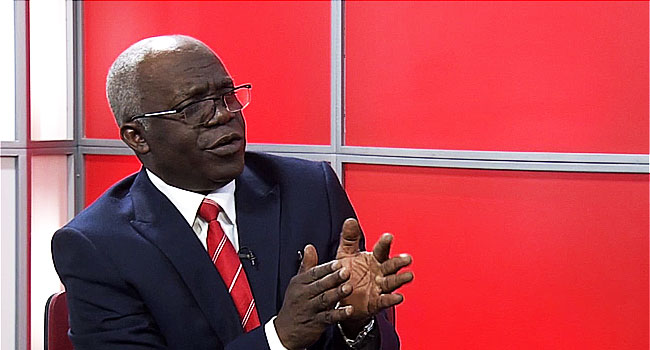
Human rights lawyer, Femi Falana, and the Aare Ona Kakanfo of Yorubaland, Gani Adams, on Thursday, warned that Nigeria could end up having only one presidential candidate in the 2027 election if the judiciary continues to interfere in political party affairs.

They spoke at the fifth Comrade Yinka Odumakin Memorial Lecture held at the Airport Hotel, Ikeja, Lagos.

The event had in attendance the President of the Nigeria Labour Congress, Joe Ajaero; activist and publisher of Sahara Reporters, Omoyele Sowore; and Senior Advocate of Nigeria, Olumide Fusika.

It was hosted by the President of the Oluyinka Odumakin Foundation, Dr Joe Odumakin, and was also attended by the Executive Director of the International Press Centre, Mr Lanre Arogundade; other activists, including Agba Jalingo and Richard Akinola.

Delivering the memorial lecture, Falana asserted that court orders and conflicting judgments were being used to destabilise political parties and could lead to a situation where only one political party would present a presidential candidate in the 2027 election.

He spoke against the backdrop of Wednesday’s pronouncement of the Independent National Electoral Commission that it would no longer recognise the factions of the African Democratic Congress led by David Mark or Rafiu Bala.

The INEC based its decision on a Court of Appeal judgment, which directed the commission to maintain the status quo pending the determination of a suit challenging the legality of David Mark’s leadership of the opposition party.

Speaking, Falana criticised the judiciary for interfering in the internal affairs of political parties despite provisions of the Electoral Act prohibiting such interference.

Falana said, “Through the manipulation of Nigerian courts and senior lawyers, you may have only one candidate contesting the presidential election in this country.

If that happens, Nigeria may not even need to spend money on a presidential election.”

See also  PDP chaos: Wike, Makinde forces revive war over INEC’s nod

Falana warned that actions capable of undermining democracy could provoke unrest if Nigerians felt they no longer had a genuine electoral choice.

He urged civil society groups, labour unions and political activists to organise and defend democratic values, warning that unorganised protests could lead to anarchy rather than meaningful change.

“We must stop agonising and start organising in the interest of our people and democracy,” he said.

Speaking in the same vein, Adams warned that Nigeria was gradually drifting towards a one-party system, accusing those in power of using the judiciary to suppress opposition parties and the will of the people.

He said the situation reminded him of the political repression experienced during the military era and the struggle for democracy in the 1990s.

Adams said, “We are moving towards a one-party system. Those in power are using the judiciary to suppress the will of the people. We may end up having only one presidential candidate in Nigeria if care is not taken.”

He urged Nigerians not to remain silent because their ethnic group was in power, noting that political power rotates and silence in the face of injustice could later be used against those who failed to speak up.

According to him, Nigerians must continue to speak against injustice and defend democracy regardless of ethnic or political affiliations.

He added that the best way to honour the late Odumakin was for activists and civil society groups to remain committed to justice, democracy and good governance in Nigeria.

Delivering a lecture titled, “Can Nigeria’s Democracy Work without Restructuring?” Falana said restructuring had already been taking place in the country, but largely in favour of the political class, especially state governors and members of the ruling elite.

According to him, Nigeria operated more like a federal system in the First Republic when regions controlled the police, courts and local governments, but the 1999 Constitution returned the country to a unitary system with more items on the Exclusive Legislative List.

See also  By-election: Stakeholders sign peace accord in Kano

He said, “In 1963, there were about 45 items on the Exclusive List, but today we have about 68 items. Practically everything is controlled by Abuja. What we have now is more of a unitary system than a federal system.”

Falana explained that some powers had been taken from the Federal Government through court cases filed by states, particularly on issues such as local government administration, Value Added Tax, and control of land.

He noted that despite the agitation for restructuring, many state governments had failed to utilise the powers already granted to them, especially in areas like electricity generation, railways and prisons, which were moved from the Exclusive List.

He said, “Some of those who shout restructuring don’t believe in it. Electricity, railways and prisons were removed from the Exclusive List, but how many states have generated electricity, built rail lines or established prisons? None.”

Speaking on the debate over state police, Falana warned that the system could be abused by state governors to suppress political opponents, citing abuses recorded during the First Republic when regional governments controlled the police.

He said the Police Council, which includes the President, Inspector-General of Police, Chairman of the Police Service Commission and state governors, was supposed to manage the Federal Police collectively, but the body hardly met, leaving policing effectively in the hands of the President.

Falana also criticised the political class for cornering the country’s resources, especially oil blocks and solid minerals, alleging that a few individuals had become extremely wealthy through government allocations of oil blocks and mining licences.

He said illegal mining and smuggling of minerals were also contributing to insecurity in some parts of the country, as unemployed youths were being recruited into illegal mining operations and criminal activities.

See also  Anambra govt counters Obi, alleges N127bn, $124m debt

Fusika (SAN) warned that the nation was approaching a dangerous end, especially with pervasive insecurity.

He, however, rallied all Nigerians to unite to tackle the issues facing the country.

Human rights activist Akinola decried what he described as the “incestuous relationship” between the executive and the judiciary.

“Politicians have hijacked the judiciary, and it is dangerous,” he said.

Speaking, NLC President Ajaero argued that Nigeria has been hijacked by a few persons benefitting from the present centralised structure.

He spoke in favour of restructuring, devolution of powers,  localising resources to decouple the present centralised structure and state police.

On calls for revolution, Ajaero warned that such a move must be organised so that it does not lead to anarchy.

In his remarks, Sowore opined that the President Bola Tinubu administration was driving Nigerians to push for a revolution.

Sowore said, “These are revolutionary times if we take advantage of them. I predicted, when President Bola Tinubu came to power, that he was the one who would lead us to a revolution in Nigeria. It is up to the Nigerian people to take charge of the moment and the opportunity he has provided for the revolution.

“Tinubu is on a highway driving you to a revolution, and you still have not got the message. But he will make it happen because this country cannot escape a revolution.

“Tinubu’s most important duty as President is to drive this country in a revolutionary direction where he, the rest of his colleagues, ministers, and friends will be strangers to the system that they think they brought about, where they think everybody is foolish and in need of handouts.”

punch.ng

FOLLOW US ON:

FACEBOOK

TWITTER

PINTEREST

TIKTOK

YOUTUBE

LINKEDIN


Continue Reading
Click to comment

Leave a Reply

Your email address will not be published. Required fields are marked *

Politics

No quarrel with Soludo, says Peter Obi on Anambra debt

Published

on

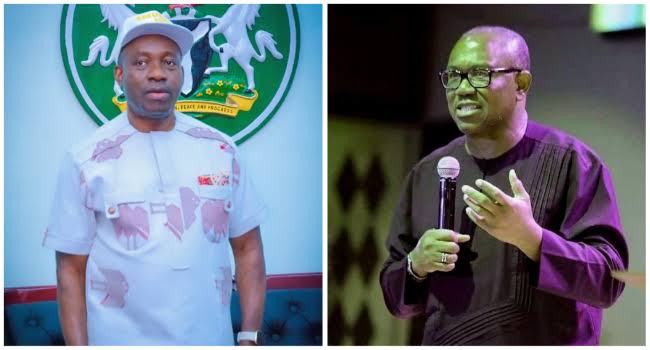
Former Anambra State Governor and Labour Party presidential candidate, Peter Obi, has said he has no disagreement with his successor, Chukwuma Soludo, declaring that he will not seek the governorship of any state again.

Obi made the clarification on Friday while responding to issues that had recently generated public discussion, including the controversy over the financial obligations associated with projects implemented during his tenure as Anambra governor.

The former governor, who said he had remained silent in recent days because he was mourning his late elder brother and friend, Chief Okey Ezeibe, said he was not interested in returning to the governorship, even if the Constitution was amended.

“I wish to assure the public that I have no disagreement with my dear elder brother, Governor Soludo, or with any governor in Nigeria. I am not seeking the office of governor in any state, and I will not seek that position again, even if the Constitution is amended”, he stated.

Obi also appealed to governors to allow presidential candidates and other contestants to campaign freely in their states, irrespective of their political affiliations. He said, “Accordingly, I appeal to governors to support whichever presidential candidate they choose while also permitting and assisting other presidential candidates and contenders for other offices to campaign freely and without interruption in their states. Ultimately, voters should be allowed to determine whom they wish to serve them.”

He added that political actors should focus on the challenges confronting Nigerians rather than engage in distractions.

See also  Why I will never criticize Goodluck Jonathan – Omokri

“On the Anambra debt question, I have remained silent over the past few days because I have been grieving the loss of my very dear elder brother and friend, Chief Okey Ezeibe. However, the time has come for me to address some of the matters that have occupied public discussion in recent days. I respectfully urge everyone to concentrate on the existential challenges confronting Nigeria and the hardships endured by its citizens, rather than on the needless distractions that have become widespread in our politics.”

His comments came amid a disagreement between the Anambra State Government and Obi over external borrowings associated with projects undertaken during his administration. https://punchng.com/anambra-govt-counters-obi-alleges-n127bn-124m-debt/

The state government had said eight external borrowings linked to projects during Obi’s tenure had a combined contracted value of $123.77m, with $92.35m outstanding as of June 30, 2026, based on figures from the Debt Management Office.

Obi rejected the characterisation of the facilities as “debt owed by Peter Obi”, saying they were primarily World Bank and International Fund for Agricultural Development development programmes negotiated by the Federal Government and accessed by participating states through subsidiary arrangements.

He said the figures being cited should be separated into the amount approved, the amount actually drawn and the balance outstanding when he left office. “The government has combined these distinct categories, added them together, and described the resulting US$123.77 million as ‘loans left by Peter Obi.’ That is an incorrect application of public-sector accounting”, he argued.

Obi further maintained that he did not personally approach any financial institution to borrow funds or issue a bond on behalf of the state. He said, “Regarding the multilateral funding inaccurately described as ‘debt owed by Peter Obi’ in Anambra State, I wish to state unequivocally, as Governor of Anambra State, I did not approach any financial institution to borrow funds or issue a bond on behalf of the state.

See also  Primaries aftermath: Obi rallies NDC aspirants for unity

“Indeed, at his farewell ceremony, the then Director-General of the DMO, Abraham Nwankwo, appointed me chairman and declared that, during his 10 years in office, I was the only state governor who had not approached him for a loan facility.”

He also said his administration left no unpaid salaries, gratuities or pensions, and no verified debts owed to contractors or suppliers. “When I left office, the Anambra State Government owed no unpaid salaries, gratuities, or pensions. Neither did it owe any contractor or supplier who had completed work that the government had verified and certified.”

Obi said the issues surrounding the development financing should be considered in the context of how the facilities were approved, accessed and repaid.

“The eight facilities identified were primarily World Bank and IFAD development programs negotiated by the Federal Government, with participating states receiving access to the funds through subsidiary arrangements. They were not conventional commercial loans that I personally secured during my tenure. This does not suggest that Anambra had no repayment responsibilities; rather, each facility must be examined in light of its approval, effectiveness, drawdown, and repayment record”, he explained.

He also cited Debt Management Office figures for Anambra’s external debt at different points, questioning how the $123.77m figure attributed to his administration was arrived at.

“The clearest contradiction appears in the government’s own figures. It states that the original facilities amounted to approximately US$123.77 million and that US$92.35 million remained outstanding in June 2026. However, the DMO’s published records showed Anambra’s total external debt at approximately US$18 million when I began my tenure in March 2006, about US$30 million in March 2014, when I left office, and approximately US$45.15 million as of 31 December 2014, nine months after my departure.

See also  Anambra govt counters Obi, alleges N127bn, $124m debt

“The Anambra State Government must therefore clarify how a state whose recorded external debt was about US$30 million in March 2014 and US$45.15 million in December 2014 could supposedly have inherited US$123.77 million from Peter Obi, who left office in March of that same year”, he concluded.

Source: punchng.com

FOLLOW US ON:

FACEBOOK

TWITTER

PINTEREST

TIKTOK

YOUTUBE

LINKEDIN

INSTAGRAM

Continue Reading

Politics

Moghalu rejects Atiku campaign appointment ahead of 2027 elections

Published

on

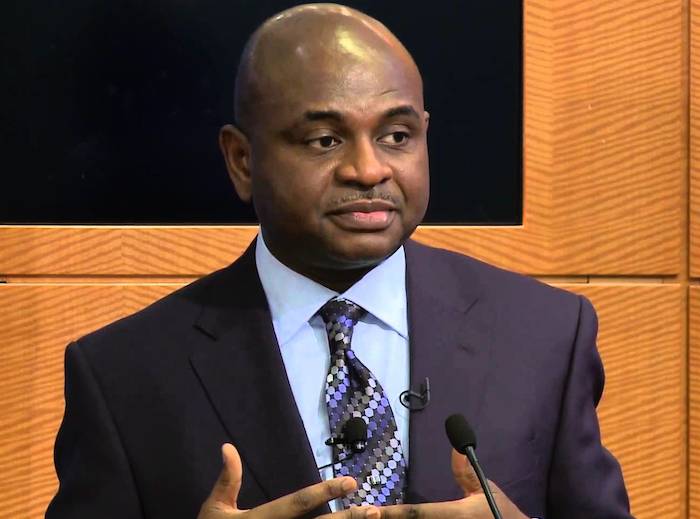
A former Deputy Governor of the Central Bank of Nigeria, Kingsley Moghalu, has rejected his inclusion in the policy team of the African Democratic Congress presidential candidate, Atiku Abubakar, for the 2027 election.

Moghalu, in a statement posted on his X handle on Thursday, said he was neither consulted nor asked for his consent before his name was published as a member of Atiku’s campaign policy team.

His reaction came hours after Atiku’s campaign unveiled its Presidential Campaign Council, naming Moghalu among members of its Policy Team.

The team is chaired by economist and banker Mohammed Hayatudeen, with Professor Mohammed Sagagi as deputy chairman.

Atiku Abubakar
FILE: Atiku Abubakar

“I am surprised to see a statement from @atiku and @ADCNig campaign team including my name as a member of former Vice-President Atiku Abubakar’s policy team for the 2027 presidential campaign.

“For the record: I was not consulted and did not give my consent to my name being published as a member of the ADC candidate’s policy team.

“I am NOT, in fact a member of Atiku’s policy team, even unofficially or in any advisory capacity,” Moghalu said.

Moghalu, who was a presidential candidate of the Young Progressives Party in the 2019 election, said he had quit partisan politics in Nigeria in 2022.

“I have quit partisan politics in Nigeria since 2022. I have maintained, and continue to maintain, my non-partisan posture in our country’s national affairs.

“I am not a member or sympathiser of any political party in Nigeria,” he said.

He said his current engagements included serving as president of the Institute for Governance and Economic Transformation, IGET Africa, which he described as a non-partisan public policy think tank and executive education academy, as well as Chief Executive Officer of Sogato Strategies, a geopolitical risk and regulatory strategy advisory firm.

See also  N571bn campaign spending limit for presidential, gov candidates ahead of 2027 poll

Moghalu said his decision to remain outside partisan politics did not mean he was disengaged from national affairs.

“I remain committed to my country, Nigeria and its progress, but such commitment does not have to entail ANY partisan alignment.

“I have adopted the path of statesmanship, not partisanship,” he said.

The clarification follows the unveiling of Atiku’s campaign structure on Thursday, with Kashim Ibrahim-Imam named chairman, former Kaduna State Governor Nasir El-Rufai as deputy chairman and Senator Austin Akobundu as Director-General and Campaign Manager.

The campaign said its Policy Team would develop policy proposals addressing issues including the cost of living, unemployment, insecurity and declining purchasing power.

Source: punchng.com

FOLLOW US ON:

FACEBOOK

TWITTER

PINTEREST

TIKTOK

YOUTUBE

LINKEDIN

INSTAGRAM

Continue Reading

Politics

Benue PDP faults Alia over LG workers’ attendance register

Published

on

The Peoples Democratic Party in Benue State has condemned the directive issued by Governor Hyacinth Alia, ordering the 23 local government areas to maintain attendance registers for their workers.

The Benue State Local Government Service Commission, in a letter dated September 24, 2026, and signed by the Permanent Secretary, John Akume, on behalf of the chairman of the commission, had directed all LGAs to maintain daily staff attendance registers across departments.

The circular read, “I am directed to inform you that owing to the directives from His Excellency, the Executive Governor of Benue State, Rev. Dr Hyacinth Alia, all establishments in the state civil service are to keep and maintain attendance registers.

“To this end, all local government councils are directed to comply with the above directive by opening attendance registers for staff across Departments.

“These registers are to be opened and closed by Heads of Departments daily at 8:30 am, as only staff who attain the minimum punctuality of 25 days would be eligible for payment of salaries.”

The permanent secretary advised that all the local government councils must adhere strictly to the directive beginning from  October 1, 2026.

Reacting, the opposition PDP described the directive as “draconian and anti-worker.”

In a statement issued by the party’s state publicity secretary, Bright Antyo and made available to journalists in Makurdi on Thursday, the PDP said the directive negated the judgment of the Supreme Court, which affirmed the financial and administrative autonomy of local governments in Nigeria.

See also  APC drafts Omisore into 276-member Osun gov campaign council

The PDP statement read, “This directive is not only draconian and anti-worker, but also a direct affront to the spirit and letter of the landmark Supreme Court judgment of July 2024, which affirmed the financial and administrative autonomy of local governments in Nigeria.

“Autonomy means independence. Autonomy means local governments should be free to take decisions concerning their administration, personnel management and internal operations without interference from the state government.

“A governor who genuinely believes in local government autonomy cannot simultaneously act as a supervisor, inspector, disciplinarian and paymaster of local government employees.”

The major opposition party in the state stated that the directive had exposed the contradiction between the governor’s public rhetoric and the reality on the ground.

“While the administration continues to celebrate supposed local government autonomy in public speeches, its actions reveal a desperate determination to retain control over affairs of the 23 councils through intimidation and despotic directives.

“Even more disturbing is the threat that workers who fail to meet a prescribed attendance requirement would be denied salaries.

“The authority to determine staff attendance, discipline workers and administer payroll belongs to the appropriate local government authorities, not the Governor’s Office or agencies acting on its behalf.

“Attempting to centralise such powers undermines the constitutional status of Local Governments and reduces elected council officials to mere spectators in the administration of their councils.”

The opposition PDP asked if the governor had been receiving directives from the Federal Government on how to administer the state.

The PDP said that with the directive, the third tier of government had been reduced to an appendage of the governor.

See also  Kano APC stakeholders endorse Tinubu for second term

“They neither possess the practical freedom nor the financial capacity to award contracts independently.

“The governor runs the councils as extensions of his office, while any local government chairman who dares to complain or assert independence is swiftly suspended and eventually forced out of office,” the statement concluded.

Source: punchng.com

FOLLOW US ON:

FACEBOOK

TWITTER

PINTEREST

TIKTOK

YOUTUBE

LINKEDIN

INSTAGRAM

Continue Reading

Trending