Connect with us

Business

Dangote Cement insider buys 986 shares worth N996,491

Published

on

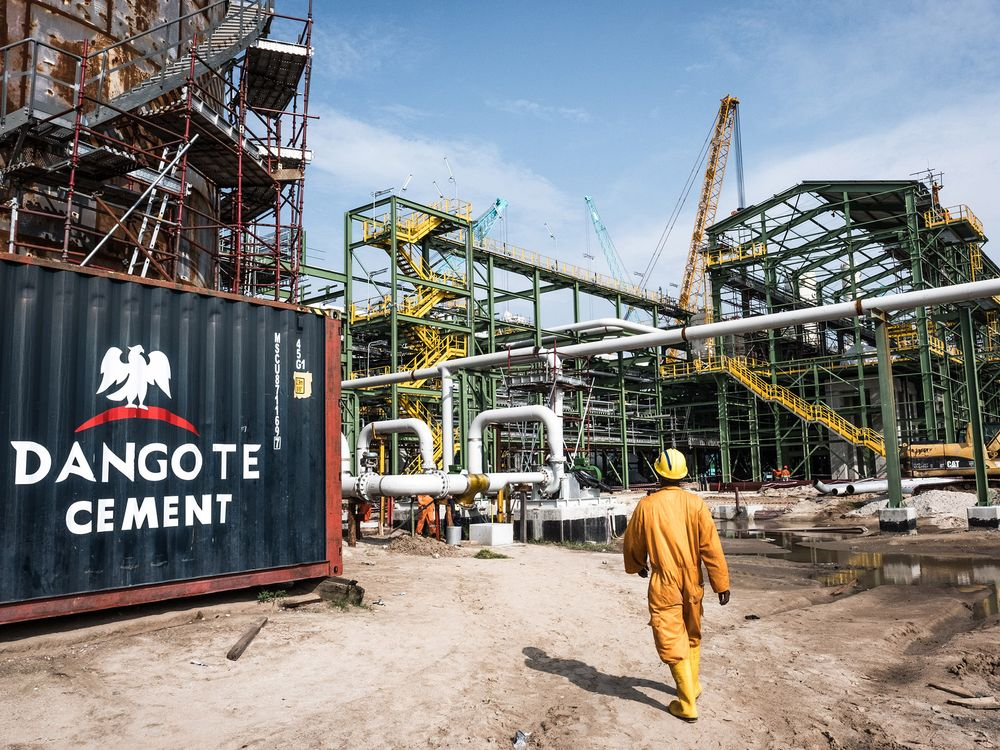
Dangote Cement Plc, Sub-Saharan Africa’s largest cement producer, has formally notified the Nigerian Exchange Limited and the investing public of a recent insider share transaction.

The regulatory disclosure, titled “NOTIFICATION OF SHARE DEALING BY INSIDERS,” was filed on the bourse as part of statutory governance requirements designed to enforce market transparency and full disclosure regarding stock transactions conducted by key management personnel.

According to the official filing released on Tuesday, and signed by Company Secretary, Edward Imoedemhe, the company’s Head of Treasury, Omode Emmanuel Oladimeji, acquired a total of 986 ordinary shares of Dangote Cement Plc valued at N996,491.01.

The corporate document was categorised as an initial notification of insider dealing in compliance with Rule 111 of the NGX Rules Governing Director and Insider Dealings, which mandates listed entities to publicly declare all equities transactions executed by internal stakeholders.

The deal took place on the floor of the market in Lagos on 4 May, 2026, and was structured across two distinct price tranches.

The filing revealed a “PURCHASE OF DANGOTE CEMENT PLC SHARES” involving a first tranche of “263 UNITS OF SHARES AT #1,008.15 PER UNIT,” followed immediately by a secondary tranche of “723 UNITS OF SHARES AT #1,013.13 PER UNIT”.

Aggregated together, the cumulative purchase of 986 ordinary shares reflects a volume-weighted average acquisition price of N1,010.64 per unit.

Insider share purchases are routinely tracked by equity analysts and retail investors as a marker of internal sentiment and executive confidence in a corporate entity’s long-term earnings trajectory.

Source: punchng.com

FOLLOW US ON:

FACEBOOK

TWITTER

PINTEREST

TIKTOK

YOUTUBE

LINKEDIN

INSTAGRAM

See also  Afreximbank drives $4bn funding for Dangote refinery
Continue Reading
Click to comment

Leave a Reply

Your email address will not be published. Required fields are marked *

Business

Cash transfer office debunks auditor-general’s N33.75bn fraud allegation

Published

on

The National Cash Transfer Office has rejected allegations arising from a report by the Auditor-General for the Federation that the Federal Government could not provide sufficient evidence that N33.75bn in electronic cash transfers reached genuine beneficiaries.

The NCTO management, in a statement made available to our correspondent on Wednesday, described the interpretation of the audit observations as materially incomplete, insisting that the questioned funds were transferred through the established payment architecture to beneficiaries captured in the National Beneficiary Register.

The NCTO also disputed the allegation that its officials obstructed auditors from accessing the REMITA payment records, saying documentary evidence, including emails showing the transmission of beneficiary data and payment information, was available for independent verification.

The Auditor-General’s findings were earlier reported by PUNCH on September 5, 2026, following the publication of the 2024 Annual Report on Non-Compliance/Internal Control Weaknesses in Ministries, Departments and Agencies.

According to the report, the audit reviewed transactions of the National Cash Transfer Office for the 2023 financial year and identified eight audit queries involving billions of naira.

The auditors noted that N33.751bn was said to have been electronically transferred to 3,295,207 households and beneficiaries across 35 states. They, however, said the payment vouchers did not contain full beneficiary details and that the REMITA statement required to reconcile those who received the funds with names on the National Social Register and National Beneficiary Register was not presented.

But the NCTO, in its detailed response, said the audit observation should not be interpreted as a finding that N33.75bn was stolen, diverted or lost. The Office stressed that an audit observation requiring clarification or supporting documents is different from a final determination of fraud or financial loss.

“An audit query or observation is not, by itself, a final determination that public funds were stolen, diverted, misappropriated or lost,” NCTO responded, adding that audit observations ordinarily require management responses, examination of supporting records and reconciliation before definitive conclusions can be reached.

Addressing the central allegation, the NCTO said the transfers were made electronically to identified beneficiaries under the programme’s established payment architecture.

It explained that beneficiaries were not paid simply on the basis of names submitted for payment but through beneficiary records maintained in the programme’s information systems and subjected to identification, validation and authorisation controls.

See also  Shell, banks launch $3bn financing for oil contractors

The NCTO maintained that the electronic nature of the programme meant that millions of beneficiaries’ records were maintained digitally and did not have to be physically printed and attached to individual payment vouchers where the underlying electronic audit trail was available.

“Beneficiary records underlying the transfers are maintained electronically and can be subjected to data-level reconciliation against the corresponding electronic payment records,” the office said.

More significantly, the NCTO said it had documentary evidence showing that the National Beneficiary Register was transmitted to the audit team.

According to the NCTO management, the 2023 NBR beneficiary list was sent to the auditors by email on April 18, 2025, at 11:48 am, while the 2024 and 2025 NBR records were transmitted on April 21, 2026, at 6:25 pm.

It said the emails contained identifiable dates and times and could be independently verified. It, therefore, rejected any suggestion that it deliberately withheld beneficiary records from the auditors.

The NCTO also specifically challenged the allegation that its accounts officials obstructed access to the REMITA statement, saying that the project accountant has retained email correspondence demonstrating that the relevant REMITA payment report was shared with the audit team.

It said the correspondence would be made available alongside the clarification to enable independent verification. “The existence of contemporaneous email evidence showing transmission of the REMITA report provides an objective documentary basis for establishing whether the payment information was made available during the audit process,” NCTO added.

The cash transfer office consequently argued that the allegation of deliberate obstruction was inconsistent with the documentary correspondence in its possession.

It maintained that the fact that millions of beneficiary records were not physically printed and attached to individual vouchers could not reasonably be interpreted as evidence that the records did not exist.

The office also responded to the Auditor-General’s query concerning 101 payments totalling N4.62bn from the S&S/IDA Cash Book. The audit had said the corresponding paid vouchers were not presented for examination and recommended that the money be accounted for or recovered and remitted to the Treasury.

However, NCTO said it maintains paid vouchers and supporting records relating to its expenditures. It noted that the audit observation aggregated 101 transactions into the N4.62bn figure without providing sufficient transaction-level details to enable its management to identify precisely which vouchers were allegedly omitted.

See also  Nigeria GDP grows by 3.89% in Q1 2026 — NBS

The office has requested a schedule identifying the individual payments, voucher numbers, dates, payees, descriptions and amounts. It said this would allow each transaction to be reconciled with its corresponding voucher and supporting documentation.

The NCTO also rejected the characterisation of N350.18m released to states for beneficiary enrolment as unaccounted funds. The Auditor-General had reported that of the N3.09bn released to states for the enrolment of unbanked beneficiaries, supporting documents covering N2.74bn were made available, leaving N350.18m without adequate documentation.

The audit also cited missing beneficiary lists, photographs, attendance registers, enrolment reports and acknowledgements. NCTO said it was resubmitting relevant evidence and remained available for transaction-by-transaction reconciliation.

It also disputed the characterisation of N36.74bn in payments as having been improperly made because they were not subjected to a prepayment audit. The Auditor-General reportedly found that 215 vouchers amounting to N36.74bn were paid in December 2023 without internal audit or prepayment checks, with the Internal Audit Unit instead carrying out post-payment checks.

NCTO said the applicable World Bank Project Appraisal Document expressly provided for an internal audit arrangement that did not adopt the conventional prepayment audit system.

According to the Office, the document required the Internal Audit Unit to undertake traditional compliance and non-financial/operational audits “without adopting the prepayment audit system”.

It therefore argued that the use of post-payment audit under the approved project framework should not, without the necessary context, be presented as evidence that the N36.74bn was improperly paid.

On the N89.51m store and procurement transactions queried by the Auditor-General, NCTO said the amount comprised multiple transactions and should not be treated as one homogeneous expenditure.

The NCTO also disputed any suggestion that the N280.421m advanced to Payment Service Providers remained outstanding. According to NCTO, the advances were made against insurance bonds associated with the contracts.

See also  Soludo closes Onitsha market for one week, see why

It said the World Bank subsequently reviewed the procurement and underlying activity, after which the contracts were cancelled because of compliance concerns and because the activity was no longer required following the restructuring of the project.

The office said the advances were subsequently recovered from the payment service providers and that REMITA/reference documents evidencing the refunds were available.

It maintained that any questions concerning the original procurement process should be separated from the issue of whether the money ultimately constituted a financial loss to the government.

The office further said N393.71m was returned by nine state cash transfer units that were unable to conduct the planned activities because of insecurity, disasters and other operational constraints, resulting in refunds of unused funds.

Contrary to claims that NCTO did not provide evidence that the funds were credited to the Consolidated Revenue Fund, NCTO said REMITA documentation shows the refunds had been provided for verification.

The office also addressed the N17.422m procurement observation relating to diesel, saying the diesel supply was undertaken through a company or service provider and that relevant vouchers and supporting documents were available and had been presented or provided for examination.

The cash transfer office said it welcomed scrutiny of its activities but urged caution in interpreting audit observations.

It argued that “a request for additional documents does not, by itself, establish that money is missing; that electronically maintained beneficiary records should not be treated as nonexistent merely because they were not printed; and that a recovered advance should not be presented as an outstanding financial loss”.

It also maintained that refunds supported by electronic payment evidence should first be reconciled before the underlying amounts are described as unaccounted for. The office stressed that it remains committed to transparency and would continue to cooperate with the Auditor-General and other oversight institutions.

It urged the media and the public to distinguish between audit observations requiring management response and reconciliation and established findings of fraud, diversion, misappropriation or loss of public funds.

Source: punchng.com

FOLLOW US ON:

FACEBOOK

TWITTER

PINTEREST

TIKTOK

YOUTUBE

LINKEDIN

INSTAGRAM

Continue Reading

Business

Mechanisation critical to attracting youths, empowering women in agriculture – Oluremi Tinubu

Published

on

The First Lady, Oluremi Tinubu, has said empowering women and young Nigerians with the skills, tools and opportunities required for modern agriculture was critical to the future of the sector and the country’s food security.

She also commended the Federal Ministry of Agriculture and Food Security for launching the Agri360 Mechanisation Training Initiative aimed at empowering 5,000 women and youths across the country.

Tinubu, represented by the wife of the Vice President, Nana Shettima, spoke on Wednesday at the National Colloquium on the Role of Women and Youth in Advancing Agricultural Mechanisation in Nigeria and the unveiling of the initiative at the State House Banquet Hall, Abuja.

This was disclosed in a statement signed by the Special Adviser on Media and ICT in the office of the Vice President, Kwapchi Bata Hamman.

According to the statement, the initiative is designed to train the beneficiaries in agricultural mechanisation, digital agriculture, equipment operation and maintenance, entrepreneurship and agribusiness management.

She said mechanisation would improve traditional farming methods by increasing productivity, reducing the physical burden of farming and making agriculture more attractive to young Nigerians.

According to her, the benefits of mechanisation would extend beyond crop production to equipment operation and maintenance, agricultural processing, logistics, technology and other areas of the agricultural value chain.

Tinubu said young Nigerians were already transforming agriculture through the use of digital technologies, precision farming, artificial intelligence and drones.

“They no longer see agriculture as subsistence; they see it as a huge opportunity, an enterprise and a career path to prosperity,” she said.

See also  IMF reveals that rising prices threaten Nigeria’s poverty reduction gains

The First Lady also stressed the need to create more opportunities for women in agriculture, saying empowering them with skills and resources to earn incomes and expand their businesses would benefit their families and communities.

The Minister of Agriculture and Food Security, Abubakar Kyari, said mechanisation was critical to easing agricultural production and reducing the physical strength required for farming.

Kyari said the Agri360 initiative would cover the agricultural process from land preparation to value addition, including access to water and machinery.

He said the government was moving from “conversation to action” by treating agriculture as an economic enterprise capable of improving the livelihoods of farmers.

The minister said the initiative was in line with the Renewed Hope Agenda of President Bola Tinubu, which identifies agriculture as a key driver of economic growth, food security and job creation.

The colloquium identified low mechanisation, limited access to finance, inadequate skills and infrastructure, as well as the exclusion of women and youths, as some of the major challenges limiting agricultural productivity in Nigeria.

They stressed that greater access to mechanisation could reduce drudgery, create jobs, attract young people to agriculture and empower women while improving food security.

Source: punchng.com

FOLLOW US ON:

FACEBOOK

TWITTER

PINTEREST

TIKTOK

YOUTUBE

LINKEDIN

INSTAGRAM

Continue Reading

Business

Dangote, regulator clash in court due to Refinery access; read details

Published

on

The Nigerian Midstream and Downstream Petroleum Regulatory Authority and the Dangote Petroleum Refinery have clashed in court over allegations surrounding the quality and distribution of propane, with the dispute centring on the regulator’s directive to suspend propane loading and truck-out operations at the refinery.

The face-off came to a head at the Federal High Court in Lagos on Wednesday, where NMDPRA urged the court to discharge an interim order restraining it from enforcing the suspension, while Dangote accused the regulator of abusing its powers.

The court had on August 31 restrained NMDPRA, its officers, agents and representatives from entering, sealing, shutting down, restricting access to, obstructing, suspending, disrupting, inspecting, supervising or sanctioning the refinery’s operations pending the hearing and determination of the substantive application.

NMDPRA, through its counsel, Matthew Burkaa, told the court that the interim order had been obtained through alleged misrepresentation and suppression of material facts.

The regulator also challenged the jurisdiction of Justice Akintayo Aluko to grant the order, arguing that the refinery had not filed the required motion on notice when its ex-parte application was heard.

According to the regulator, its decision to suspend propane loading and truck-out operations followed findings of alleged diversion of propane-laden trucks to unknown and unlicensed customers and the alleged illegal blending of propane at some LPG plants.

NMDPRA said its investigation began after laboratory tests conducted on LPG samples from three plants – Selai, Tewa and Ameego Pago – allegedly showed propane content above 50 per cent.

It said industry requirements stipulated that propane should constitute no more than 20 per cent of an LPG blend, while butane should account for about 80 per cent.

The regulator said representatives of the three plants were invited to discuss the findings and identified Sublime Oil and Gas Limited, an off-taker from Dangote Refinery, as their source of propane.

See also  New Tax Law: S£x Workers, Hookup Girls to Pay Tax from 2026 – Presidency (VIDEO)

NMDPRA said this prompted a wider reconciliation and material-balance exercise involving propane-producing facilities and LPG-blending plants. It further alleged that its officials were denied access when they attempted to inspect propane-loading operations and records at Dangote Refinery on August 24.

The regulator subsequently issued a notice of potential non-compliance and directed the refinery to suspend propane loading and truck-out pending the outcome of its investigation and the implementation of additional safety measures.

According to NMDPRA, an examination of the refinery’s truck-out manifests revealed significant discrepancies. It alleged that Sublime Oil and Gas lifted 25 trucks of propane on August 20 and 22 for delivery to Navgas/Agasco, but Navgas confirmed receiving only six.

The regulator therefore said the remaining 19 trucks were unaccounted for. NMDPRA also alleged that records from Delta State showed that another off-taker loaded 52 trucks between May and August 2026 for delivery to Navgas, but Navgas reportedly confirmed that none of the consignments were received.

It argued that the alleged diversion of propane to unauthorised and unlicensed customers raised serious public health and safety concerns, particularly because the product was allegedly being used for LPG blending outside approved standards.

The regulator further claimed that propane produced by Dangote and other gas-processing facilities had a vapour pressure of about 13 bar, compared with the maximum seven-bar pressure required for the standard propane-butane LPG mixture.

It argued that the higher-pressure propane could pose an explosion risk at LPG refilling plants not designed to handle such pressure.

However, Dangote Group’s spokesman, Anthony Chiejina, rejected the regulator’s position, arguing that NMDPRA officials had inspected and certified the propane before it left the refinery.

See also  Afreximbank drives $4bn funding for Dangote refinery

Chiejina said, “We have NMDPRA staff there in the refinery. They inspected and certified the product as okay. Then, a company came to pick up the product with its truck, not Dangote’s truck. You later arrested the truck somewhere else and said it was conveying adulterated or blended propane. How does that concern us after you tested and certified our product okay?”

He added, “You went to the plant to seal it and later left the plant. For me, that is an absolute abuse of power by NMDPRA. And that is just a diabolical sense of control. It makes no sense. That’s what led to the court action.”

Chiejina further challenged the regulator to produce its records, saying, “They have a hidden transcript. Assuming you entered our refinery and discovered that what we have there is blended, that’s a different thing. You have earlier certified the product.”

He also questioned Dangote Refinery’s responsibility for the movements of products after they had been purchased and transported by independent off-takers.

“Let them go and check their records. And the owner of the truck has left with his truck. Where he goes with his truck – is it my business? He does what he likes with his products,” he said.

At Wednesday’s proceedings, counsel for Dangote Refinery, Wale Akoni, SAN, drew the court’s attention to NMDPRA’s counter-affidavit filed in response to the refinery’s motion on notice.

Akoni, however, requested a brief adjournment to enable him to respond, saying he had only been served with the counter-affidavit in court on Wednesday.

Burkaa did not oppose the request but emphasised the urgency of the matter because of the safety concerns raised by the regulator.

See also  High borrowing costs threaten banks’ credit expansion - CBN

Justice Aluko, however, said he could not fix a fresh date because he was sitting as a vacation judge and the court’s annual vacation would end on Friday.

“My jurisdiction ends on Friday as far as the vacation matter is concerned. Therefore, the Admin Judge will, in his wisdom, decide where the case file should go,” the judge said.

“So, it’s not even proper for me to give you a date now. The case file should be sent back to the court registry for the admin judge to, in his wisdom, set a date.”

The judge thereafter extended the interim order restraining NMDPRA from interfering with the refinery’s operations pending the hearing and determination of the substantive application.

Justice Aluko held, “I find it proper to extend the interim order made on the 31st day of August 2026. It shall continue to subsist and shall be in force till the hearing and determination of the motion on notice, or until the court gives further directive.”

He subsequently directed that the case file be returned to the registry for assignment to the regular court by the administrative judge. “The case file is hereby remitted to the registry for assignment to the regular court by the Honourable Administrative Judge,” the judge held.

The court’s interim order therefore remains in force while the substantive dispute over NMDPRA’s regulatory action, the quality and handling of propane, and the alleged diversion of trucks awaits determination. The earlier court order had specifically restrained the regulator from shutting down or otherwise disrupting the refinery’s operations.

Source: punchng.com

FOLLOW US ON:

FACEBOOK

TWITTER

PINTEREST

TIKTOK

YOUTUBE

LINKEDIN

INSTAGRAM
Continue Reading

Trending