





Connect with us

Business

FG unveils agric reforms, moves to create 21m jobs

Published

on

The Federal Government on Tuesday reeled out a slew of new incentives to attract agricultural investment, which it said could create 21 million jobs in the country.

It also pledged reforms to expand irrigation, improve access to credit and create millions of rural jobs under President Bola Tinubu’s economic agenda.

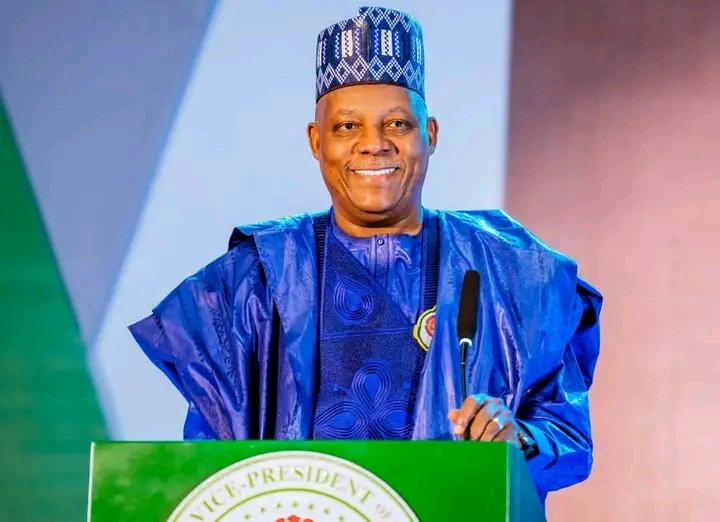
Vice President Kashim Shettima outlined the plans at the Food and Agriculture Organisation’s National and Subregional Hand-in-Hand Investment Forum in Abuja, calling hunger “the great equaliser that reveals our vulnerabilities and the shared fragility of our existence.”

Senior Special Assistant to the Vice President on Media and Communications, Stanley Nkwocha, revealed details of Tuesday’s meeting in a statement titled, ‘More incentives farmers as FG unveils new agric investment incentives.’

The measures include single-window platforms for land registration, strengthened agricultural credit systems, large-scale mechanisation, and strategic irrigation projects.

Tuesday’s unveiling comes as rising food prices and climate shocks have intensified calls for long-term investment in the sector.

Nigeria has been under pressure to cut its reliance on imports and address food insecurity, which worsened after fuel subsidy removal and currency reforms deepened inflation in 2023.

Shettima said Nigeria had the capacity to irrigate more than three million hectares of farmland but currently uses less than 10 percent of that potential.

“Strategic investment in irrigation alone could triple yields, free us from seasonal dependency, and fortify our resilience against climate shocks,” he stated.

“Nothing unifies humanity as much as hunger. It is the great equaliser that reveals our vulnerabilities and the shared fragility of our existence.

“Food is not merely a matter of survival, it is a matter of global security,” Shettima added.

The Vice President noted that Nigeria’s blueprint under the 2021–2025 National Development Plan aims to lift 35 million people out of poverty, create 21 million jobs in rural communities and secure food and nutrition sufficiency.

Shettima specifically observed that irrigation is a game-changer, noting that Nigeria has river basins and aquifers capable of irrigating over three million hectares but currently uses less than ten per cent.

“Strategic investment in irrigation alone could triple yields, free us from seasonal dependency, and fortify our resilience against climate shocks,” he added.

He assured investors that regulatory reforms, public-private partnerships and agri-tech innovations would make Nigeria “open for business.”

See also  Naira, stocks drop after Trump’s military threat

“Nigeria is open for business, and we are ready to partner with you. Let us work hand-in-hand to build Nigeria and a sub-region where no one goes to bed hungry, where rural communities are hubs of wealth creation, and where agriculture is the true foundation of our prosperity,” VP Shettima said.

Earlier, the Minister of Agriculture and Food Security, Abubakar Kyari, described Nigeria’s market, large arable land and growing digital economy as unique opportunities for investors.

He said a combination of Nigeria’s domestic market, large arable land, clement weather and fast-growing digital economy present unique opportunities for investment across the agribusiness ecosystem.

For his part, the Minister of Budget and Economic Planning, Senator Atiku Bagudu, said the economic potential of Nigeria remains largely untapped, especially in agriculture and irrigation, which hold significant promise for economic diversification and transformation.

He noted that agriculture, particularly agribusiness, remains a pivotal component of Nigeria’s national development plan in the medium and long term, as well as the Renewed Hope Agenda of President Tinubu.

For his part, the Minister of Agriculture, Livestock and Food Security of The Gambia, Dr Demba Sabally, commended the FAO for hosting the event and Nigeria’s leadership in agriculture, highlighting the country’s success stories in the rice and cassava value chains as worthy of emulation by countries in the sub-region and beyond.

Sabally emphasised the need for peer review among countries in the West African sub-region because of their common challenges and opportunities for growth and transformation.

In the same vein, the representative of the FAO in Nigeria and ECOWAS, Dr Hussein Gadain, said the Hand-in-Hand Initiative is FAO’s “evidence-based, country-led, and country-owned flagship programme, designed to accelerate agricultural transformation and sustainable rural development.”

Gadain said the programme is squarely aimed at eradicating poverty, ending hunger and all forms of malnutrition, and reducing inequalities. It is our vehicle for achieving the SDGs.

Commending Nigeria’s clear agricultural development priorities and describing them as catalysts for transformative and sustainable growth within Africa’s agri-food systems, Gadain hailed Vice President Shettima’s genuine commitment and visionary leadership in transforming Nigeria’s agri-food systems.

According to the FAO rep, the VP’s “passion for agriculture, food security, and nutrition is unmatched. He has been a driving force in attracting crucial investments and fostering innovation, and his continued engagement deserves our highest commendation.”

See also  INEC chair: Security check begins, Council of State to meet

Also, the Head of the EU Delegation in Nigeria, Mr Gautier Mignot, said the Hand-in-Hand Initiative reflects Nigeria’s strong commitment to strengthen food security and deepen investment across the agribusiness value chain.

He declared that the EU remains Nigeria’s long term partner in Nigeria’s agricultural journey and is committed to investing in value chain development in the country, starting with the recent investment of over 80 million euros to unlock opportunities in key value chains across seven states.

Reacting to the announcement,  farmers urged the government to back the new farm incentives with action, pointing out that the initiatives would not yield results without implementation.

The National President of the All Farmers Association of Nigeria, Kabir Kebram, stressed the need for follow-through.

“Definitely, it will boost if they are implemented. Of course, you can have a policy but unless you implement it very well, you cannot see the results. So we call on the Vice President to actualize what he promised and then to follow it up and make sure that it is properly implemented. We are sure that that will make a difference in the food system,” Kebram said.

The Chairman of the Competitive African Rice Forum, Agric, Peter Dama, also cautioned against ‘’a cycle of promises without delivery.’’

“Pronouncements are different from implementation. While we welcome all these pronouncements, we  are still hoping that the pronunciations will be met with practicality, that it will be implemented the way they have said it.

“Somebody can come and read a speech, but then the actual implementation is something that might take some time. They made pronouncements about tractors.  Today we are in August. Have those tractors been given? Already, we are moving toward the dry season.

“Government can make statements, but the implementation might take quite some time. I believe that if pronouncements are going to be made, let the actuality be on ground, as you are making pronouncements, you are dishing them out.

“But when you make pronouncements and it takes about six months, you know the cycle of our farming session in this country. We await the implementation. We are happy if it is actually going to be done and going to be implemented or not.

See also  Fuel distribution controversy: Dangote restores marketers amid mounting pressure

We are happy, but unless we see it, and by the time we see it, we will complement and encourage the government,” Dama said.

The Small-Scale Women Farmers Organisation in Nigeria faulted the Federal Government’s agricultural interventions, saying they have failed to improve the country’s food production.

In a phone interview with The PUNCH, National Secretary of SWOFON, Chinasa Asonye, said government efforts have not translated into meaningful impact for smallholder women farmers who form the backbone of food supply in Nigeria.

Asonye said, “Coming from the angle of a small-scale woman farmer, we know that government interventions on single-digit loans, women-friendly machines, access to land and inclusion in policies have not yielded results. One-third of what we have been advocating for has not been implemented. After developing different policies like the Malabo policy, CADI policy and WSHADA policy, are we even implementing one-third of them? The answer is no.”

She decried the government’s inability to meet the 10 per cent budgetary allocation to agriculture recommended under the Malabo Declaration, stressing that Nigeria currently spends less than 1.9 per cent on the sector.

“If we keep waiting for the government, we will never do anything. Some states in the North are helping their farmers with grants and support. But in the South-West, including Lagos, farmers are not benefitting from these renewed initiatives,” she said.

The SWOFON secretary also questioned the transparency of the government’s agricultural spending, noting that billions of naira were being earmarked without visible results.

She added that the school feeding programme had previously helped farmers by off-taking their produce but lamented that such initiatives were no longer benefiting smallholders.

“We will continue to talk, we will continue to tell them our issues, and probably one day the government will listen. They know our problems, but if they fail to look into them, farmers will keep struggling by themselves,” Asonye said.

FOLLOW US ON:

FACEBOOK

TWITTER

PINTEREST

TIKTOK

YOUTUBE

LINKEDIN

TUMBLR

INSTAGRAM

Continue Reading
Click to comment

Leave a Reply

Your email address will not be published. Required fields are marked *

Business

PENGASSAN-Dangote rift widens over salary suspension

Published

on

The Dangote Petroleum Refinery has stopped the monthly salaries of the engineers sacked in September during its face-off with the Petroleum and Natural Gas Senior Staff Association of Nigeria.

In a bid to address this, PENGASSAN said it is engaging the Dangote Group to resolve the matter amicably instead of resorting to another industrial action.

Findings by The PUNCH revealed that the salaries were halted following the refusal of many of the engineers to accept their redeployment to Zamfara, Borno, Benue, and Sokoto states, among others.

Some of the workers, who spoke on condition of anonymity because of the sensitivity of the issue, had earlier said individuals were sent to a coal mine in Benue, concrete road construction sites in Borno and Ebonyi states, as well as rice plants in Kebbi, Niger, Sokoto, and Zamfara.

While a few workers were said to have accepted the redeployment, many rejected it, relying on assurances from PENGASSAN that the crisis would be resolved through dialogue.

It was learnt that the Dangote Group issued a warning signal in October by slashing the wages of the affected workers before withholding their November salaries completely.

A senior official of the Dangote Group confirmed to our correspondent that the company would no longer continue paying those who rejected the redeployment offers.

While the affected workers described the non-payment of their salaries as “victimisation”, the official, who did not want his name in print due to the lack of authorisation to speak on the matter, wondered why the company should keep paying individuals who had refused the alternative placements offered.

“Those whose services were terminated were given an opportunity to work in our other projects, such as rice mills, concrete road construction, and coal mines.

See also  Senate approves Tinubu’s N1.15tn domestic loan to fill 2025 budget gap

All those who accepted have started working.

“If a newspaper terminates the services of an employee, and if it even goes out of its way to provide alternative employment, but the employee is not interested in availing the alternative employment, will it keep paying his/her salary?” the official said.

Recall that PENGASSAN had shut down oil and gas facilities in September over allegations that 800 refinery workers were fired for volunteering to be members of the union. However, the Dangote refinery said it only sacked a few workers who were sabotaging the facility, describing the exercise as a reorganisation.

The shutdown caused nationwide losses in oil and gas production and contributed to a drop in power generation until the Federal Government intervened and directed the redeployment of the affected workers.

In October, the sacked engineers were invited to pick up their letters at the Ikeja office of the Dangote Group. One of the letters sighted by our correspondent was titled ’Offer of Trainee Engagement’ and carried the letterhead of Dangote Projects Limited.

It reads partly: “Based on your performance at the assessment and subsequent interviews held with you, we are pleased to engage you as Engineer Trainee (Mechanical Engineering) for the coal project we are executing at Okpokwu, Benue State. This engagement shall be subject to the following conditions: You will report to your work location within 14 days upon receipt of this letter.

“You will undergo classroom training and hands-on training in the construction, commissioning, and operation of our Coal Project at Okpokwu, Benue State. Your training will be for a period of two years, and it will be reviewed periodically. You will be required to submit reports on your learning and progress. The objective of the training is to impart to you skills and to enable you to take up a position of responsibility in the organisation.”

See also  Soludo’s Anambra win sparks political storm

Many of the engineers expressed concerns about the posting, especially to places perceived to be security hot spots. “The issue with the re-employment is that, firstly, there’s no address to report to on that letter. No office to report to in the states we were posted to. Secondly, those are security hot zones.

“Thirdly, in the letter, it is stated that if you don’t report within 14 days, your employment will be terminated, but no office location was given, and they don’t exist when we checked on Google Maps. So, if we accept the letters, we are basically terminating our employment by ourselves because there’s no office in those states to report to. PENGASSAN has basically told us not to accept the letters. We should let them continue with their talks,” they told The PUNCH.

Speaking during a briefing last week, the PENGASSAN President, Festus Osifo, said the union was still engaging the Dangote refinery to have the issues resolved.

Osifo said, “Since our last national industrial action, we have been engaging them in a lot of conversations, but the issues are not fully resolved. There are still a lot of pending issues. The NEC decided that, yes, let us still continue that process by pushing those issues by engaging in a dialogue to resolve the issues, and by also engaging all our social partners and stakeholders to get the issues resolved. And we hope and pray that these issues will be resolved at the table.

“These issues should be resolved in mere jaw-jaw so that we will not go back to Egypt. But as PENGASSAN, you know, we don’t shy away from doing what is right. But our preference is to get the subject resolved over the negotiation table.”

See also  ASUU, VCs decry Profs’ N525,000 monthly pay - Strike Looms

A senior management officer told our correspondent on Sunday that PENGASSAN had the right to make its requests, but the company also had the liberty to make decisions that suited its business.

“They (PENGASSAN) have their privilege to ask. We can’t deny the opportunity to anyone to ask anything they wish. But we, too, have the privilege to state what we want,” the official said.

Some of the engineers lamented the turn of events. They disclosed that there was “an agreement that they would send us to oil and gas companies owned by Dangote.”

According to them, it was initially agreed that their salaries would be paid until the issue was resolved.

“But we noticed a reduction in our October salaries. We were not paid for November when others have been paid. That’s clear victimisation. It was agreed that Dangote would keep paying us until the matter is resolved, but it seems they have breached the agreement already,” they said.

As the stalemate lingers, the affected engineers said they are now caught between losing their livelihoods and accepting deployments they consider unsafe and irregular, while PENGASSAN continues to push for a negotiated settlement to prevent another nationwide shutdown.

With both sides holding firmly to their positions, the resolution of the dispute now hangs on the outcome of ongoing engagements between the union and the Dangote Group.

Continue Reading

Business

VIDEO: Stop Buying Rolls-Royce, Use The Money To Build Industries Instead – Dangote Tells Wealthy Nigerians

Published

on

Olarenwaju disclosed that Jonathan betrayed a gentleman’s agreement with Atiku, hence the former Vice President moved against him in 2015.

Aliko Dangote, Chairman of Dangote Group, has urged Nigeria’s elite to channel the money spent on luxury items like Rolls-Royce cars and private jets into building industries that boost economic growth and generate jobs.

Speaking with The PUNCH after a meeting with President Bola Tinubu at Aso Rock Villa on Saturday, Dangote lamented the culture of extravagant consumption, stressing that the nation’s development depends heavily on the responsibility of local investors.

“If you look at the Nigerian policy before, during the military, everybody from the president downwards used Peugeot 504. That was the highest. So, when a president is using 504, you cannot come as a commoner, as a businessman, or whoever you are, to be using Rolls-Royce,” he said.

Dangote criticised the proliferation of private jets at Nigerian airports, arguing that such wealth would be better invested in productive ventures.

“If you have money for a Rolls-Royce, you should go and put up an industry in your locality or anywhere in Nigeria where there is a need.

“It pains me when I go to the local airport, whether here or in Lagos, and even finding a parking space for your plane is impossible because everybody has a private jet. Those private jets could be in industries creating jobs,” he added.

Dangote emphasised that national development requires a strong focus on manufacturing and agriculture, supported by robust banking systems.

He also highlighted the urgent need for job creation, noting Nigeria’s population grows by 8.7 million babies every year, which demands significant investments in infrastructure and power.

See also  Senate approves Tinubu’s N1.15tn domestic loan to fill 2025 budget gap

“Some people may not know the position of the country as we speak. Population growth is 8.7 million babies every year. So we need to deliver power, infrastructure, and other essentials,” he said.

The billionaire also framed tax compliance as both a civic duty and a partnership with the government.

“When you have a company, the number one shareholder is the government. We need an enabling environment from the government, and as corporate citizens, we must pay our taxes. I cannot cheat my partner. If I pay tax, children can go to school and hospitals can function. The government has huge demands, and we must do our part,” he added.

The businessman dismissed what he described as over-reliance on foreign investors, insisting that no external investor would commit to Nigeria without strong domestic participation.

He said, “We should stop calling for foreign investors. No foreign investor will come here unless domestic investors are active. Good policies, governance, and rule of law attract local investors, and foreign investors follow to partner or establish their own operations.

Dangote reiterated that industrialisation must be led by Nigerians, saying “We must industrialise our country. Nobody will do it but us. Once we industrialise, foreigners will partner with us or invest in Nigeria. We must remove both real and perceived risks to investment.”

The businessman also revealed that the Dangote Refinery would soon produce surplus volumes, with projections indicating that by February, it will supply 15–20 million litres more than Nigeria needs.

This will allow exports to neighbouring countries, reducing fuel scarcity across West Africa.

See also  Petrol soars above N1,000/ltr as Tinubu okays 15% import tariff

“We are working to make Nigeria the refining hub of Africa. African countries import products, and we want to ensure that whatever we consume is produced locally,” he said.

Earlier in October, Dangote had also encouraged Nigerians to embrace homegrown products as a way to strengthen the economy and create jobs.

FOLLOW US ON:

FACEBOOK

TWITTER

PINTEREST

TIKTOK

YOUTUBE

LINKEDIN

TUMBLR

INSTAGRAM

Continue Reading

Business

NNPC serviced $3bn loan with N991bn crude – Report

Published

on

The Nigerian National Petroleum Company Limited has serviced part of its $3bn forward-sale loan from the African Export-Import Bank with crude oil worth N991bn in 2024, according to its 2024 financial statement report. The repayment was tied to Project Gazelle, a forward crude oil supply agreement signed in 2023.

On August 17, 2023, The PUNCH reported that the NNPC announced it had secured a $3.3bn emergency loan to repay crude oil obligations from Afreximbank. It explained that the loan would be used by the oil company to support the Federal Government in stabilising Nigeria’s exchange rate.

“The NNPC Ltd. and AFREXIM bank have jointly signed a commitment letter and Termsheet for an emergency $3bn crude oil repayment loan,” NNPC said in a statement.

“The signing, which took place today at the bank’s headquarters in Cairo, Egypt, will provide some immediate disbursement that will enable the NNPC Ltd. to support the Federal Government in its ongoing fiscal and monetary policy reforms aimed at stabilising the exchange rate market,” it added.

Under the deal, NNPC committed to deliver 90,000 barrels of crude oil per day from Production Sharing Contract assets to back a funding facility. According to the 2023 financial statement, a drawdown of $2.25bn had already been achieved by 31st December 2023, with principal repayment scheduled to begin in June 2024.

The funding carried an interest rate of 3-month LIBOR plus 6.5 per cent, with a 6 per cent margin and 0.5 per cent liquidity premium.

According to the 2024 financial statement, the drawdown on the facility had reached N4.9tn out of a total available N5.1tn, while N991bn worth of crude oil had been lifted in repayment, leaving an outstanding balance of N3.8tn at the end of 2024.

See also  Dangote Cement begins Ivory Coast operations

The report read, “In December 2023, NNPC Limited entered into a forward sale agreement with Project Gazelle Funding Limited to supply 90,000 bbl. of crude oil per day from Production Sharing Contract Assets for the settlement of a 5-year N2.7tn funding.

“The funding was utilised by the company to finance an advance payment of future taxes and royalty obligations due to the federation on PSC assets managed by the Company on behalf of the Federation.

“As at 31st December 2024, a drawdown of N4.9tn has been achieved from the initial facility of N5.1tn. The interest rate for the facility is 3-month SOFA plus 6.5 per cent while the margin and Liquidity Premium of 0.5 per cent respectively. A total value of Crude Oil worth N991bn has been lifted with a balance of N3.8tn as at 31st December 2024.”

The repayment was made between June and December 2024. However, NNPC did not disclose the identity of the offtakers or exact delivery volumes fulfilled in 2024.

The Project Gazelle arrangement has become one of NNPC’s most significant forward-sale financing vehicles, following a trend of oil-backed loans designed to shore up government revenues, refinance legacy debts, and meet budgetary obligations amid limited fiscal buffers.

The PUNCH earlier reported that the NNPC Ltd is burdened with crude-backed loan obligations estimated at N8.07tn.

The liabilities stretch across multiple forward-sale and project-financing arrangements that are expected to be serviced through substantial crude oil and gas deliveries. The commitments have become a major pillar of NNPCL’s funding structure following years of fiscal pressure, volatile crude production, and declining upstream investment.

See also  Petrol soars above N1,000/ltr as Tinubu okays 15% import tariff

Several of the facilities were used to refinance older debts, fund refinery rehabilitation, support cash flow, and meet government revenue obligations.

When assessed together, the company’s major crude-for-loan facilities—Eagle Export Funding (21,000 bpd), Project Yield (67,000 bpd), Project Leopard (35,000 bpd), and Project Gazelle (90,000 bpd)—represent a combined commitment of 213,000 barrels per day, in addition to separate gas-delivery obligations under the NLNG arrangement.

The volume equates to a sizeable share of Nigeria’s daily crude output, underscoring the long-term implications of these arrangements for government revenue, export allocation, and operational flexibility.

The PUNCH also reported that Nigeria’s gross profit from crude oil and gas sales plunged by N824.66bn in 2024 despite a rebound in oil production, according to figures from the Budget Implementation Report for the fourth quarter of 2024 released by the Budget Office of the Federation.

Data from the report revealed that gross profit from crude and gas sales fell to N1.08tn during the year, from N1.90tn in 2023, representing a 43.32 per cent decline.

The Chief Executive Officer of AHA Strategies and oil and gas expert, Mr Ademola Adigun, earlier linked Nigeria’s declining oil earnings to opaque crude-for-cash agreements and undisclosed loan repayments that have tied up part of the country’s crude output.

He said some of the government’s oil barrels were already committed to debt settlements and forward-sale contracts, reducing the actual volume that brought fresh revenue into the Federation Account.

Adigun said, “Some of our crude is already tied up in loan agreements. The problem is that Nigeria doesn’t know the full details of these transactions because there’s little transparency around them.”

See also  APC’s gov candidate slams Otti’s ‘harsh’ tax hike on Aba traders

He explained that several crude-backed projects, such as Project Gazelle, were carried out without proper public disclosure or parliamentary scrutiny.

He added that the Nigeria Extractive Industries Transparency Initiative should strengthen its audits to determine how much of the country’s crude is being used for debt repayment or swap transactions.

punch.ng

FOLLOW US ON:

FACEBOOK

TWITTER

PINTEREST

TIKTOK

YOUTUBE

LINKEDIN

TUMBLR

INSTAGRAM

Continue Reading

Trending