Connect with us

News

Religious freedom violations: APC, NNPP back Kwankwaso as US sanctions tension rises

Published

on

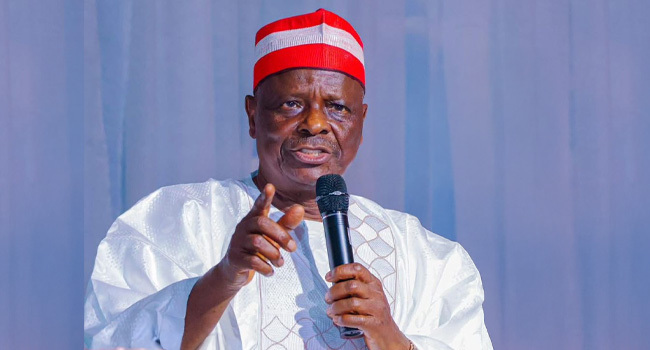
The All Progressives Congress and the New Nigeria Peoples Party have rejected the proposed visa bans and asset freezes recommended by United States lawmakers against ex-Kano State Governor, Senator Rabiu Kwankwaso, the Miyetti Allah Cattle Breeders Association of Nigeria and the Miyetti Allah Kautal Hore over alleged violations of religious freedoms in Nigeria.

The bill, titled, ‘The Nigeria Religious Freedom and Accountability Act of 2026,’ was introduced in the US House of Representatives by Rep Chris Smith alongside Reps Riley Moore, Brian Mast and Bill Huizenga.

The bill recommends visa bans and asset freezes under the Global Magnitsky Human Rights Accountability Act against individuals and entities accused of involvement in religious freedom abuses.

The APC criticised the proposed sanctions, insisting that the allegations alone could not justify curtailing Kwankwaso’s freedom of movement without a fair hearing and due process.

Speaking with The PUNCH on Wednesday, the APC Director of Publicity, Bala Ibrahim, described the United States as a symbol of democracy and cautioned its government against taking action solely based on allegations.

He stated, “I think they (the United States of America) cannot just act on allegations. America is the beacon of democracy. America is the beacon of freedom, and it ought to be seen to be behaving in that manner.

“Now, whatever the allegation against former Kano State Governor,  Rabiu Musa Kwankwaso, and others is, it remains an allegation until it is proven.

“They cannot, on the strength of an allegation alone, go ahead to suggest a ban or restriction on the freedom of movement of an individual without substantiating it, without subjecting him to a fair hearing and trial.

“So I think that is a wrong move. It infringes on his right to a fair hearing, and I don’t support that.”

The NNPP, on the other hand, described the planned censure of its national leader as blackmail.

At a press conference in Abuja on Wednesday, the opposition party expressed shock over the inclusion of Kwankwaso in the proposed sanctions list, while dismissing any suggestions that he was responsible for religious freedoms violations.

The National Publicity Secretary of the party, Ladipo Johnson, stated, “We see this development as a contrived action against an innocent man who clearly has no relationship with religious fundamentalism in Nigeria.

“His record is there in the public domain, either in public office or in private life and it is advisable for people to investigate such things properly, before reaching such conclusions.”

Johnson noted that months before the latest development, Kwankwaso had reacted to the decision by US President Donald Trump to re-designate Nigeria as a Country of Particular Concern over alleged persecution of Christians.

He said, “The months before the latest development, Kwankwaso had openly reacted when President Donald Trump re-designated Nigeria as a Country of Particular Concern over alleged religious persecution.

“In a statement posted on his X handle at the time, Kwankwaso cautioned against what he described as oversimplified characterisations of Nigeria’s internal challenges.

“Kwankwaso stated that it was important to emphasise that our country is a sovereign nation whose people face different threats from outlaws across the country.”

However, in a post shared on X, US lawmaker Riley Moore had written to Kwankwaso saying, “Governor, do you care to comment on your own complicity in the death of Christians? You instituted Sharia law. You signed the law that makes so-called blasphemy punishable by death.”

Kano State, under Kwankwaso’s leadership, implemented the Islamic legal code, joining other northern states such as Zamfara, Sokoto, Katsina, Yobe, Jigawa and Borno.

Questioning the allegation, the NNPP asked, “But is this enough to accuse Kwankwaso of severe religious freedoms violations? Why were the other state governors who introduced Sharia in their states not accused as well? Is Rep Moore being fair or selective?

‘Isn’t the US in a good relationship with Qatar and Saudi Arabia (both Sharia countries)? Why is this coming just after our government apparently paid for a consultant in the US? Isn’t it strange that it is Kwankwaso, an opposition leader who has spoken out so many times about the insecurity under this administration, that the United States now seems to be turning on?”

See also  Adeleke reveals why he defected despite love for PDP

The party also defended Kwankwaso’s record as governor, stating, “We recall that as Governor of Kano State, Senator Kwankwaso ensured that the Boko Haram sect was wiped out of the state, and his close relationships with Christian leaders in Kano and across the country attest to his credibility as a national leader and statesman.

“Even when he was pressured to introduce Sharia, he still lost his election because the predominantly Muslim voters punished him for supporting a Christian presidential candidate in the person of Chief Olusegun Obasanjo. Furthermore, in 2023, he ran his presidential campaign with a Christian Bishop, Isaac Idahosa, as his running mate.

“These are the facts, which we think, should guide the Congress and its leaders, particularly Reps Riley Moore and Chris Smith, to do a thorough investigation on the credibility of our leader, Senator Rabiu Musa Kwankwaso, so that Justice is done to his noble name and cleared of such undue embarrassment,” Johnson added.

The US Congress, in the bill, issued one of its strongest condemnations yet of religious persecution in the country, declaring that Nigeria accounts for 82 per cent of all Christians martyred globally and warning that the scale, coordination and impunity surrounding the violence now threaten regional stability and US foreign policy interests.

The bill calls for targeted sanctions on individuals and networks responsible for severe violations, and urges their designation as Foreign Terrorist Organisations.

The legislation specifically directs the Secretary of State to determine whether certain Fulani-ethnic militias qualify as Foreign Terrorist Organisations under section 219 of the U.S. Immigration and Nationality Act.

If such a designation is made, it would carry far-reaching consequences, including criminalising material support, expanding US law enforcement reach, and intensifying international pressure on any state or entity found to be aiding the groups.

Part of the bill read, “Appropriations Act, 2026, to enhance efforts, protect innocent lives; the United States should deliver humanitarian assistance, co-funded by the Government of Nigeria, through trusted faith-based and nongovernmental organisations in Nigeria’s middle belt states;

“The Department of State and the Department of the Treasury should impose targeted sanctions, including visa bans and asset freezes under the Global Magnitsky Human Rights Accountability Act, on individuals or entities responsible for severe religious freedom violations, including Fulani-ethnic nomad militias in Nigeria; Rabiu Musa Kwankwaso, former Kano State Governor; Miyetti Allah Cattle Breeders Association of Nigeria (MACBAN); and (D) Miyetti Allah Kautal Hore.

“The Secretary of State should determine whether certain Fulani-ethnic militias in Nigeria qualify as a foreign terrorist organisation under section 219 of the Immigration and Nationality Act (8 U.S.C. 1189).”

The lawmakers, citing multiple sources, including the Open Doors 2024 World Watch List, stated that between 50,000 and 125,000 Christians were martyred between 2009 and 2025, with more than 19,000 Christians, churches, and Christian-owned facilities attacked or destroyed in that period.

“Systemic religious persecution has persisted in Nigeria since at least 2009,” the lawmakers wrote, listing Boko Haram, the Islamic State West Africa Province (ISWAP), and Fulani-ethnic militant groups as key perpetrators.

The attacks, they said, include mass murder, kidnappings, rape, village destruction, and the forced displacement of entire communities.

From Benue and Plateau states in the Middle Belt to parts of the North-East and North-West, violence has become cyclical and brutal, the proposed bill further noted.

Between May 2023 and May 2025, the US lawmakers said the Fulani-ethnic militias alone carried out major massacres in Umogidi, Mgban, Yelwata, and during the Christmas Eve attacks of 2023 and 2024, as well as the Holy Week and Easter assaults of 2024 and 2025.

According to the bill, those incidents killed more than 9,500 people, mostly Christians and displaced over half a million others.

“These militias have conducted targeted killings, hostage-taking, hijackings, armed assaults, and massacres of civilians. Their actions meet the statutory definition of terrorist activity,” the legislation states.

See also  Insecurity: Tinubu pledges state police to US, European allies

Beyond armed attacks, the US lawmakers criticised Nigeria’s continued enforcement of blasphemy laws carrying the death penalty in 12 northern states under Sharia criminal codes.

They said these laws have been used to target Christians, minority Muslims, and dissenters.

The bill references cases such as Rhoda Jatau and Deborah Yakubu, who suffered mob violence, imprisonment, or death over alleged blasphemy, while known perpetrators often face no punishment.

It also highlights the case of Sunday Jackson, a Christian farmer from Adamawa State who was sentenced to death in 2021 after killing an armed herder in what was widely viewed as self-defence.

Jackson spent nearly a decade in prison before being pardoned in December 2025 in what the bill describes as a “show of good faith” by the Nigerian government.

Despite such isolated steps, the lawmakers said it remains unclear whether any meaningful investigations have led to prosecutions or convictions of jihadists and militia leaders responsible for mass atrocities, clergy targeted and witnesses intimidated.

The legislation notes that more than 250 religious leaders, both Christian clergy and Muslim imams, who advocated tolerance have been attacked or killed in the past decade.

It cites the killing of Father Sylvester Okechukwu in 2025 and pointed out that Christian leaders who testified before Congress, including Father Remigius Iyhula and Bishop Wilfred Anagbe, faced intimidation and harassment as a direct result of speaking out.

“The message to victims and witnesses has been chilling. Tell your story, and you may pay the price,” the Congressmen wrote.

They added that the humanitarian fallout is staggering. An estimated 3.5 to 5 million Nigerians are internally displaced, while over 343,000 remain refugees in the Lake Chad region.

The Act calls on the United States to co-fund humanitarian assistance with the Nigerian government, delivered through trusted faith-based and non-governmental organisations in the Middle Belt states.

It prioritises food, shelter, trauma care, and the safe and voluntary return of displaced persons to their ancestral lands, especially persecuted Christian communities.

The US Commission on International Religious Freedom has recommended Nigeria’s designation as a Country of Particular Concern every year since 2009.

US President Donald Trump also designated Nigeria a CPC in 2020 and again in October 2025, citing the scale of religiously motivated violence.

Lawmakers argue that the prior administration’s removal of Nigeria from the CPC list in 2021 coincided with a marked escalation in attacks.

“Designating Nigeria as a CPC enhances diplomatic tools, including sanctions, to pressure the government to halt persecution and protect vulnerable communities,” the bill states.

In a striking addition, the Act urges the US government to work with Nigeria to counter “hostile foreign exploitation,” including allegations that Chinese illegal mining operations in parts of Nigeria pay protection money to Fulani militias, thereby fueling insecurity.

The Secretary of State was encouraged to support disarmament programmes, counter-terrorism cooperation, and regional efforts to eliminate Foreign Terrorist Organisations that pose a direct threat to both Nigeria and the wider international community.

If passed, the Act will require the US Secretary of State to submit a comprehensive report within 90 days of enactment and annually thereafter until Nigeria is no longer designated a CPC.

Each report must include an assessment of Nigeria’s compliance with the International Religious Freedom Act of 1998; identification of individuals and entities sanctioned or under consideration for sanctions; details of US – Nigeria co-investments in humanitarian assistance, including amounts, recipients, and measurable outcomes; an evaluation of US security assistance and whether it risks enabling persecution; an assessment of conditions for internally displaced persons and recommendations for further executive or congressional action.

The Act states that “The United States stands in solidarity with Christians and all persecuted religious minorities in Nigeria.”

Meanwhile, the Miyetti Allah Cattle Breeders rejected its inclusion in the US list of religious freedom violators in Nigeria.

The National President of Miyetti Allah, Baba Ngelzarma, described the allegations as unfounded, insisting the association is not a terrorist organisation.

See also  Kwara massacre: Survivors traumatised after deadly attack in Woro, soldiers occupy deserted community

“In the past, when this report first came out, we had a series of engagements with the American embassy, with contingents of the Congress, and the rest. So, we have reacted verbally, and we have reacted with documentation and everything. We are not a terrorist group,” Ngelzarma said.

He maintained that the Nigerian government is fully aware of the association’s activities and its legal status.

“The Nigerian government knows much about the Miyetti Allah Cattle Breeders Association. We have never been involved in any form of terrorism. We have never taken responsibility for any form of terrorism,” he said.

Ngelzarma explained that the association, registered 42 years ago, represents cattle breeders across religious and ethnic lines and does not shield criminal elements.

He expressed surprise that the group was still being linked to terrorism despite previous engagements with international bodies.

“We represent the peaceful herders who are doing their peaceful and legitimate business. We don’t represent any criminal in the country. So, we are still surprised that this thing, despite all this thing, that this thing is still going on.’’

According to him, Miyetti Allah has held consultations with various international organisations, including humanitarian and interfaith groups, to clarify its position.

“We have had a series of engagements with international agencies such as the National Corps, the Centre for Humanitarian Dialogue, Interfaith Radiation Centre, and many other international agencies. We are never a terrorist group,” he added.

On the proposed visa bans and sanctions, Ngelzarma argued that the association does not deserve such punitive measures.

“Do we even deserve to be sanctioned? We don’t deserve to be sanctioned because we are not a criminal group. We don’t even deserve to be sanctioned. So, for what reason can you sanction us?” he queried.

He called on the Nigerian government to intervene diplomatically.

“We are citizens of Nigeria; we are under the Nigerian government. This association is under the Nigerian law, and this association has been issued a registration to operate legally. So, we deserve to be protected by our own government here at home. Whatever that should be with the Americans should be with the Nigerian government,” he said.

Ngelzarma urged the FG to engage the US government to address what he described as “misconceptions surrounding the security crisis in Nigeria.”

Similarly, the Miyetti Allah Cattle Breeders Association of Nigeria, Benue State chapter, described the visa ban proposed in the bill as a violation of the Universal Declaration of Human Rights.

The State Secretary of Benue MACBAN, Ibrahim Galma,  who condemned the proposed bill, said that MACBAN was a legitimate association comprising Muslim and Christian members.

According to him, members of the association were also victims of terrorism, having lost their loved ones and cattle to bandits terrorising the country.

He said that the US is biased in its assessment of issues in Nigeria and asked Congress to send a delegation to Nigeria and visit some of the troubled communities before passing the bill into law.

Galma said, “We are not terrorists or bandits. Let me emphasise this: We are also victims of Boko Haram in Nigeria because we have lost members and cattle.

“Maybe, some people do not know that we have Christians as members of MACBAN in parts of Adamawa, Plateau and Bauchi. These people are non-Fulanis.

“We are not terrorists or bandits, it’s true that in every association, there are bad eggs, and this is not limited to MACBAN.’’

Galma advised the US Congress to respect the fundamental rights of every nation, individual and association as embedded in the Universal Declaration of Human Rights, urging the Congress to dispatch a delegation to Nigeria.

 “The US should respect the fundamental human rights, or else it amounts to a breach of international standards such as the Universal Declaration of Human Rights.’’

Continue Reading
Click to comment

Leave a Reply

Your email address will not be published. Required fields are marked *

News

Plateau killings: Tinubu visits Jos, IG deploys mobile police

Published

on

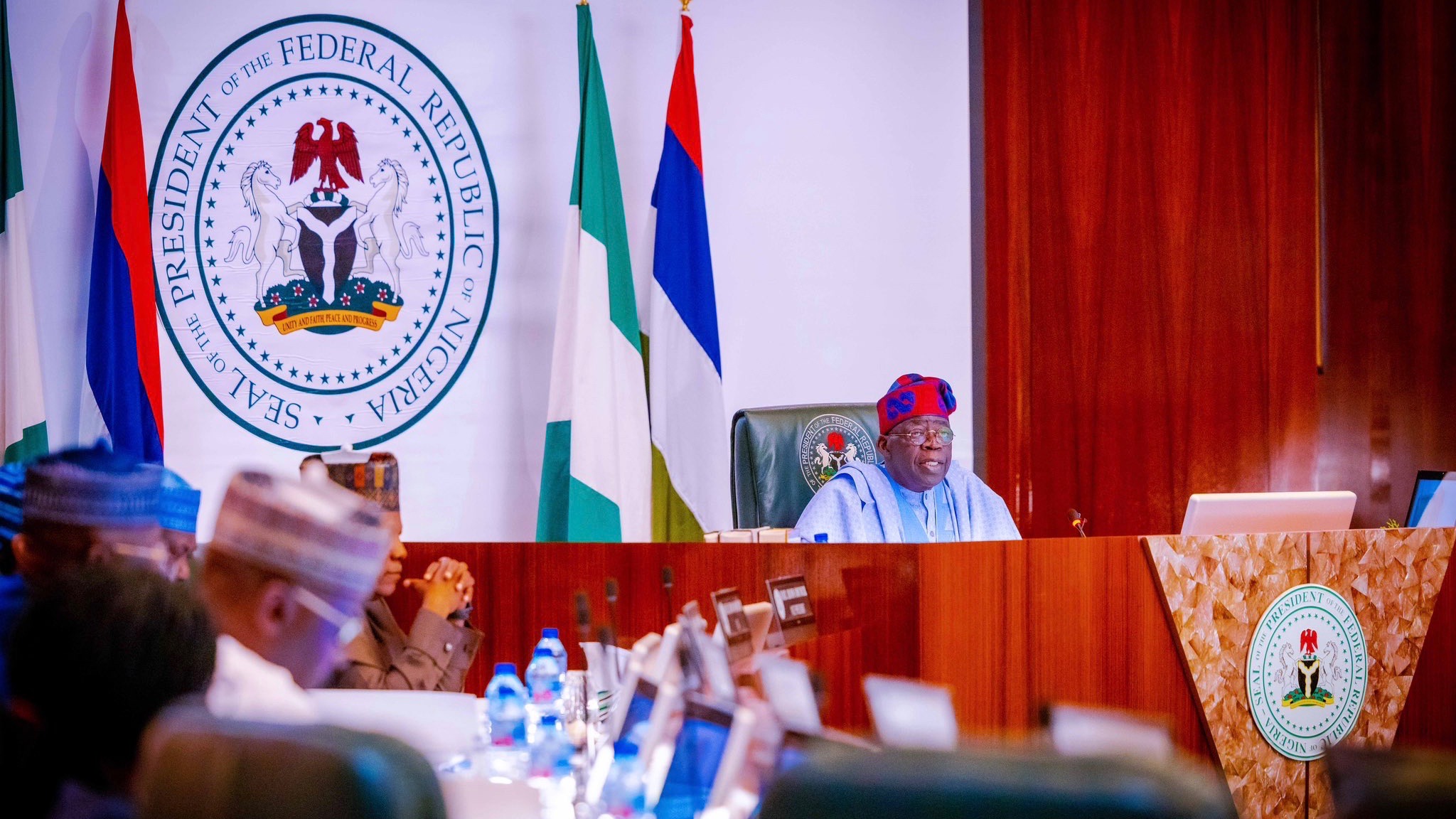
President Bola Tinubu on Wednesday postponed his scheduled trip to Iperu, Ogun State, to prioritise a condolence visit to Jos, Plateau State, over last Sunday’s attacks that left at least 27 people dead.

The decision comes shortly after President Tinubu met with Plateau State Governor Caleb Mutfwang at the Aso Rock Villa on Wednesday evening, where the governor briefed him on the security situation in the state.

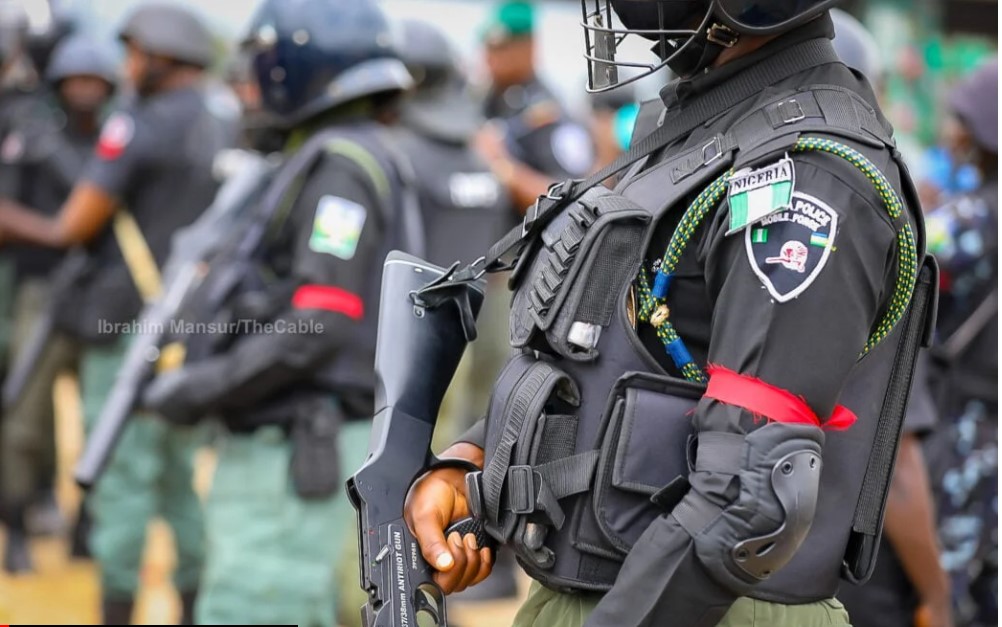
Also, the Inspector General of Police, Olatunji Disu, has ordered the deployment of Police Mobile Force units and other tactical teams to Plateau State.

The Special Adviser to the President on Information and Strategy, Bayo Onanuga, revealed this in a statement he signed on Wednesday, titled “President Tinubu postpones Ogun trip, heads to Jos as he begins four-state visit.”

The President will now travel to Jos today to commiserate with the government and people of Plateau State over the recent attacks in the Angwan Rukuba district of Jos North.

Onanuga said from Plateau, the President will travel to Lagos to observe Good Friday and, on Saturday, April 4, he will proceed to Ogun State for the inauguration of the Gateway International Cargo Airport and the inauguration of two commercial aircraft for the export and import of goods.

The President will also inaugurate the new edifice of the Federal Operations Unit of the Nigerian Customs Service and its operational vehicles during the Ogun visit.

He will return to Lagos to continue the Easter holiday, during which he is expected to inaugurate infrastructure projects undertaken by the administration of Governor Babajide Sanwo-Olu.

These include the Ojota/Opebi Link Bridge, the Lagos State Geographic Information System Building, the Multi-Agency Complex named after the President, and a school complex.

The President Tinubu would also visit Bayelsa State on April 10 to inaugurate some completed projects of Governor Douye Diri, including the independent power plant.

Earlier, Mutfwang had told State House correspondents that the President was contemplating a personal visit to the state to commiserate with the people.

“The President commiserates with the entire state, and as a matter of fact, he’s contemplating coming to the state personally to commiserate with the people.

“It’s something that has touched him personally, and he wants to show the people his love and affection for them,” Mutfwang had told State House correspondents.

Tinubu had on Monday strongly condemned the attacks in Jos and in Kahir village, Kaduna State, describing them as “barbaric and cowardly” acts that will not go unpunished.

He also disclosed that he had invited the governor to brief him on the development alongside security chiefs to stop the killings.

Mutfwang arrived at the Villa at approximately 6:45pm on Wednesday.

Speaking with State House correspondents after meeting the President, he said security forces were yet to apprehend any of the attackers responsible for last Sunday’s killings in Angwan Rukuba district.

“Unfortunately, we’ve not been able to lay hands on the attackers yet to know their identities and their motive,” he said.

The governor said that without apprehending the perpetrators, authorities would not be able to determine the actual reasons behind the attack or establish their identities.

“In a crisis of this nature, you can’t reduce it to one reason. It is a mixture of multiple reasons, and sometimes you can only deduce the actual reasons when you are able to get two groups of people, first the victims and then the attackers.

“Unfortunately, we’ve not been able to lay hands on the attackers yet to know their identities and their motive,” he explained.

Mutfwang also revealed that looters attempted to disrupt the fragile peace in Jos on Wednesday morning, hours after the state government relaxed the curfew imposed following the attack.

“We relaxed the curfew this morning from 8am to 3pm, but unfortunately, this morning, there were some looters who tried to disrupt the peace again.

“But I’m glad that the security forces, working together, were able to calm the situation as of noon,” he said.

See also  Marketers drop petrol prices below Dangote’s cost

The governor disclosed that President Tinubu invited him to brief him first-hand on the attack and discuss the way forward.

He said the President had approved certain security measures to be implemented in conjunction with security forces, though he did not specify what these measures entail.

Mutfwang described the attack as an act of criminality, barbaric, and terrorism, insisting it could not be justified under any religion.

He said, “We are seeing this as an act of criminality. It is barbaric. We condemn it.

“It is an act of terrorism, because whatever religion you belong to, it does not give you any basis to come and do the kind of actions that were done on Sunday.”

The governor expressed optimism that the crisis would mark a decisive turning point for proactive security actions in the state.

“What I can assure you is that this has become a decisive turning point that I’m sure going forward we’re going to see more proactive actions,” he stated.

He added that corpses had been evacuated to the mortuary and some families had already buried their dead.

In a statement on Wednesday by the Force Public Relations Officer, Anthony Placid, the IGP ordered the deployment of Police Mobile Force units to the state.

Additional deployment, according to the statement, included tactical teams and intelligence operatives working in collaboration with other security agencies to prevent further breakdown of law and order across the state.

“In response to the situation, the Inspector-General of Police had earlier deployed the Deputy Inspector-General of Police in charge of Operations, DIG Umar Nadada, to Plateau State to assess the security situation, coordinate ongoing operations, and strengthen the existing security architecture,” the statement said.

It added that the IGP had further intensified operations through the deployment of additional mobile police units and other security assets to tackle the ongoing security challenges.

“The Inspector-General of Police states that these actions will continue until normal conditions return.

“He has instructed all operational commanders to ensure visible policing and actively engage with vulnerable communities,” the statement added.

The police boss also commiserated with the Plateau State Government, the people of the state, and the families of the victims affected by the attack in Angwan Rukuba.

He urged residents to remain calm and cooperate with security agencies, warning against taking the law into their own hands.

Earlier on Wednesday, tension remained high as security operatives struggled to restore calm, following the relaxation of the curfew.

Our correspondent reports that the curfew was initially imposed after gunmen attacked residents of Angwan Rukuba in Jos, leaving at least 28 people dead.

However, the state government eased the curfew earlier imposed on the Jos North Local Government Area following improved security in the area.

The Commissioner for Information, Joyce Ramnap, who disclosed this in a statement issued on Tuesday, explained that the curfew would run from 7 am to 3 pm daily, effective Wednesday, April 1, to allow residents to attend to their normal activities within the permitted hours.

But on Wednesday morning, hoodlums and an irate mob reportedly attacked many motorists and passersby in different parts of the city, raising fresh fear and panic among residents.

A video of a young man hacked to death by hoodlums on the road leading to the University of Jos permanent site raised tension across the town.

It was further learnt that motorists in the Terminus and Bauchi Road, Gangere areas, had their windscreens smashed by hoodlums.

Some of the most affected areas included the University of Jos axis, Bauchi Road, Farin Gada, Tina Junction, and Chobe, among others.

Banks and schools located in the affected areas were forced to close down operations.

“We are scared to open our shops, we don’t know what might happen. But there is no need for the current tension in Jos.

“The governor has done well by relaxing the curfew in the interest of the people, but it’s very unfortunate how some people can decide to take the law into their hands for no reason, and I think the government should not allow them to have their way.

See also  Genocide accusations: US Congress panels hold new session on Nigeria today

“The government needs to do more to ensure our safety,” a resident, Joy Bature, who runs a provision shop at the Terminus Market, said

UNIJOS evacuates students

Our correspondent reports that following the disturbances, the University of Jos ordered the evacuation of students from its hostels, citing the worsening security situation.

The directive was contained in a statement issued on Wednesday by the institution’s Deputy Registrar, Information and Public Relations, Emmanuel Madugu.

The statement read, “In view of the general security situation in Jos, and particularly the near chaotic scenarios that unfolded today (Wednesday 1st April 2026), in areas near the university which heightened tensions and threatened the safety of students in the hostels, the Vice Chancellor, Prof Tanko Ishaya, has directed the immediate evacuation of students of the university from the hostels.

“The evacuation is facilitated by HE Barrister Caleb Manasseh Mutfwang, the Executive Governor of Plateau State, who has provided transport services, fully authorised to carry out the assignment even within the curfew hours.”

Students residing within Jos and its environs were directed to vacate the hostels from 3 pm on Wednesday, while those whose parents or guardians live outside the state are to be evacuated from 8 am on Thursday.

The management assured all that adequate security had been deployed to safeguard the hostels and the institution.

It also urged students and members of the university community to remain calm, adding that further updates would be communicated as necessary.

UNIJOS alumni worried

The University of Jos Alumni Association, in a statement on Wednesday, expressed concern over the recent rise in tension and reported threats affecting students, staff, and the broader university community within Jos North Local Government Area.

In a statement signed by its Global President, Gad Shamaki, the association urged the Plateau State Government and security agencies to deploy an enhanced security presence across all University of Jos campuses, student hostels, residential areas, and major access routes.

“We specifically request round-the-clock patrols, intelligence-led surveillance, and rapid response units to ensure that any potential threats are proactively addressed and swiftly neutralised,” Shamaki said.

The association also advised students to stay indoors, remain vigilant, and report any suspicious activity, prioritising their safety and well-being.

A cross-section of residents who also reacted to the situation called for increased security deployment, particularly around the University of Jos, where students are stranded.

“There’s an urgent need for security deployment to the University of Jos environment, precisely the students’ village hostel.

“We appeal to the security agencies to beam their searchlight around that axis,” said a resident.

Another resident, Ishaku Mark, who lamented the situation, noted, “The Plateau State Government has relaxed the curfew, allowing movement from 7 am to 3 pm daily, effective April 1, 2026, following relative calm in the area after a violent attack that claimed 28 lives.

“What needs to be done is for the residents to maintain peace and not escalate tensions. Those responsible for the renewed tension should be fished out and dealt with.”

When contacted, the spokesman for the Plateau State Police Command, Alabo Alfred, was not readily available to comment on the situation, but sources at the command headquarters in Jos assured all that security agencies had been deployed to the affected areas and were working to restore calm and maintain law and order”

Fresh curfew announced

In a bid to maintain peace, the chairman of Mangu Local Government Area, Emmanuel Mwolpun, imposed a fresh curfew in Mangu metropolis, effective from April 1, 2026, until further notice.

It was learned that the curfew will run from 8pm to 6am, effective on Wednesday, April 1.

See also  Destabilising Nigeria will empower terrorists, says US lawmaker

The spokesman for the Mwaghavul Development Association in the council area, Friday Derwan, confirmed the development in an interview with The PUNCH in Jos on Wednesday.

Derwan said, “Yes, it’s true. There is a curfew in Mangu. It was imposed by the LG chairman in consultation with the security agencies and other stakeholders.

“It is not as if there is any crisis anywhere in the LGA. We felt there was a need to take proactive measures to protect the citizens, given what is happening in Jos and given the past experience of the Mangu LGA.”

A statement later issued on Wednesday by the LGA authority also confirmed the curfew, stating that the  move was aimed at ensuring the safety and security of residents and property within the metropolis.

The statement signed by the Director of Press and Publicity to the Chairman, Mangu LGA, Jeremiah Dakahap, read, “Following a careful deliberation with heads of security operatives, the Chairman of Mangu Local Government, Emmanuel Bala Mwolpun, has imposed a curfew in Mangu metropolis, effective from April 1st, 2026, until further notice.

“The curfew hours have been set from 8pm (night) to 6 am daily. This measure is taken to ensure the safety and security of residents and property within the metropolis.”

“The Local Government Administration urges all residents to comply with the curfew directive. Members of the public are advised to stay indoors during the curfew hours and cooperate with security personnel on duty.

“The Executive Chairman appeals to residents to go about their daily activities peacefully and report any suspicious activities to the relevant authorities.

“This curfew is imposed in the interest of public safety and security.”

NYSC suspends clearance

The National Youth Service Corps on Wednesday suspended the ongoing biometric clearance across all local government areas in Plateau State.

The suspension, approved by the NYSC Director General, affected all the LGAs in the state.

According to a statement signed by the NYSC state coordinator, J. Yavala, the suspension was due to security concerns.

The statement assured that clearances done for April remained valid, adding that the exercise would resume as soon as normalcy returned to the state.

It advised corps members to stay indoors and stay safe.

Lawyers demand tougher action

The Plateau Lawyers Bar Forum called for stricter penalties against commercial motorcycle operators who violate the ban on their activities within the Jos-Bukuru Metropolis.

In a statement issued on Wednesday, the forum’s chairman, Ledak D. Dafer and Secretary, Dr D.N. Dashe, strongly condemned the killings and urged the state government to ensure that those responsible were brought to justice.

The lawyers called on the government to identify, arrest and prosecute the attackers and anyone found to have sponsored the assault.

They also demanded an investigation into what they described as a delayed response by the police, noting that security formations were located close to the scene of the incident.

“The Plateau Lawyers Bar Forum has found it imperative to unequivocally condemn the dastardly and mindless killings of defenceless residents of Angwan Rukuba in Jos, Plateau State, by armed criminals,” the statement said.

The forum urged the Plateau State Government to strictly enforce the existing ban on commercial motorcycles across the Jos-Bukuru metropolis without exception.

Police arrest fake soldier

Operatives of the Plateau State Police Command arrested a fake soldier in the state capital.

It was learnt that the suspect was immediately taken to the police headquarters in Jos to be paraded by the Commissioner of Police, Bassey Ewah.

In a statement confirming the arrest, the Police Public Relations Officer, Alabo Alfred, invited members of the press to cover the event, stating that the arrest was made in Angwan Rukuba, a community in Jos North LGA of the state, still reeling from a recent deadly attack that claimed 28 lives.

punch.ng

FOLLOW US ON:

FACEBOOK

TWITTER

PINTEREST

TIKTOK

YOUTUBE

LINKEDIN

Continue Reading

News

Alleged coup: Families of detained officers protest at N’Assembly

Published

on

Scores of children and wives of military officers detained over an alleged coup plot staged a peaceful protest at the National Assembly on Wednesday, demanding a speedy trial and the release of the accused officials.

The visibly distraught protesters gathered at the entrance of the National Assembly complex, moving in a slow procession while clutching placards with inscriptions such as “Don’t Kill Our Daddies,” “Detention Without Trial is Injustice,” and “Six Months of Torture: Enough Is Enough.”

Amid tears and trembling voices, the children appealed for justice and access to their fathers, many of whom they said they had not seen for months.

Speaking exclusively with The PUNCH, eight-year-old Halima Mohammed, daughter of Lt Col Mohammed Almakura, said, “Please don’t kill our daddy. We want justice for him.

“Since he was arrested by the government, our lives have not been the same again. My mummy cries every day. I really miss him so much.”

Nine-year-old Ibrahim Bala, son of Major Bala, also expressed deep longing for his father.

“Let the government bring my daddy back safely.”

The last time I saw him was nine months ago. I really miss him. He used to teach me things about school and how children should behave towards adults.

“I’m in primary four. But I last saw him about six months ago. Our house has been lonely without him. I also miss him because nobody used to take me out as he used to do before,” he said.

Four-year-old Fatima Yusuf, daughter of Wing Commander Yusuf, made an emotional plea to the nation’s leadership.

See also  Tinubu appoints Olumode as new Controller-General of Fire Service

She said, “I want to beg the President and our First Lady to bring my daddy safely back. Since he left, I have no one to play with. He always helped me to learn things I didn’t know and took me out.”

Eleven-year-old Nana Aisha Usman urged the authorities to either release the detained officers or charge them in court.

“Please help us beg the government to release my daddy or take him to court. He and other people locked up deserve justice. Since he was taken away, the house is empty without his presence.

“If he is at home, he takes me to the shop and buys things for me. Any time I bring my assignments, he is always happy to help me with them. I don’t think my dad is a bad person. He never meant harm to anybody. I want the government to help us investigate and free him.”

One of the spouses, Nana Ibrahim, described the circumstances surrounding the arrests and continued detention as questionable.

She said, “The whole coup allegation and arrest are shady. Investigations and statements have been conducted for over six months.

“Yet, they have been denied access to their families and lawyers. If they have any evidence about their involvement, they should come out with it boldly with their chest.

“They should let the world know how many people are indicted or in detention and charge them in court. That is all we are asking.

“After all, they have announced that they have concluded their water-tight investigation and evidence. So, why the delay? They should take them to court and come out with the evidence.

See also  Fuel scarcity looms as NUPENG begins nationwide strike Monday

“We want an open trial where everybody will listen to the charges and defend themselves. If they can prove themselves beyond a reasonable doubt, they should be set free. Enough is enough!”

The protest comes about a month after families of the detained officers appealed to President Bola Tinubu to grant them access to their husbands and ensure they are either released or arraigned before a court of law.

The appeal was made during a press briefing in Abuja attended by no fewer than 20 wives and several children of the detained officers, including a two-month-old baby.

The families were accompanied by human rights lawyer Deji Adeyanju and activist Omoyele Sowore.

At the briefing, the families lamented that the officers had been held for over 160 days without trial or contact with their relatives, describing the situation as a violation of their fundamental rights.

Speaking on behalf of the families, Memuna Bashiru said the prolonged detention had thrown their households into uncertainty and emotional distress, noting that while allegations had been widely publicised, families remained in the dark about the fate of their loved ones.

They appealed directly to the President and the First Lady, Oluremi Tinubu, to intervene, stressing that their demand was not for favours but for adherence to constitutional provisions.

The arrest of the indicted officers was first announced on October 4, 2025, by the then Director of Defence Information, Brig Gen Tukur Gusau, who disclosed that 16 officers were taken into custody for alleged breaches of military regulations and acts of indiscipline.

See also  Marketers drop petrol prices below Dangote’s cost

However, an interim investigation later suggested the existence of a clandestine network of officers, allegedly coordinated by a senior Army officer, which had begun preliminary planning for a coup.

According to the report, the alleged plot involved surveillance of key national assets, including the Presidential Villa, Armed Forces Complex, Niger Barracks in Abuja, and major international airports, with October 25, 2025, cited as the planned date for the operation.

Those reportedly in custody include Brig Gen M. A. Sadiq, Col M. A. Maaji, Lt Col S. Bappah, Lt Col A. A. Hayatu, Lt Col P. Dangnap, Lt Col M. Almakura, Maj A. J. Ibrahim, Maj M. M. Jiddah, and Maj M. A. Usman.

Others are Maj D. Yusuf, Capt I. Bello, Capt A. A. Yusuf, Lt S. S. Felix, Lt Cdr D. B. Abdullahi, Sqn Ldr S. B. Adamu and Maj I. Dauda.

The alleged plot, according to findings, targeted senior government officials, including President Tinubu and Vice President Kashim Shettima.

punch.ng

FOLLOW US ON:

FACEBOOK

TWITTER

PINTEREST

TIKTOK

YOUTUBE

LINKEDIN

Continue Reading

News

El-Rufai returns to ICPC custody

Published

on

A former governor of Kaduna State, Nasir El-Rufai, has been returned to the custody of the Independent Corrupt Practices and other related Commission (ICPC).

El-Rufai, who left custody on March 27, 2026, following the death of his mother, was re-arraigned on Tuesday.

Earlier, the court had adjourned his application for bail till March 31, 2026.

But, on Tuesday, he first appeared at the Kaduna State High Court for a separate charge filed against him by the ICPC.

The absence of the second defendant stalled the hearing, which was then adjourned to 10 April 2026.

Subsequently, he was taken to the Federal High Court, Kaduna, which was scheduled to hear his application for bail today, Wednesday.

Shortly after the court’s proceedings, the former governor was returned to the ICPC custody pending the continuation of his trial on Wednesday.

Daily Trust reports that the chieftain of the African Democratic Congress (ADC) was taken to the court amid tight security, less than 24 hours after he received dignitaries over the death of his mother, Hajiya Ummar El-Rufai.

Confirming the adjournment of the bail application to one of our correspondents on Tuesday, El-Rufai’s Counsel, Upong Akpan, a Senior Advocate of Nigeria, said the hearing on the bail application would determine his client’s fate temporarily.

Akpan, who did not go into details, expressed confidence that the former governor would regain his freedom in due time.

“I’m sorry, I can’t talk now, we are in the middle of work. I have to go and file responses. The hearing of the bail application has been adjourned till tomorrow,” he told Daily Trust.

See also  Unusual cough, fever stir panic in Lagos

Charges against El-Rufai

El-Rufai is standing trial before the Federal High Court on a 10-count charge bordering on alleged conversion and possession of public property, as well as money laundering.

The charges include: alleged unlawful receipt of about N289.8 million as severance allowance above-entitled benefits; alleged receipt of $320,800 through multiple deposits into a domiciliary account; alleged receipt of $155,800 and $305,300 from separate individuals; and alleged receipt of smaller dollar deposits from different persons at various times.

He denied all allegations levelled against him.

What happened in court

In the court, the Defence Counsel filed a motion, urging the presiding judge, Justice Rilwan M. Aikawa, to recuse himself from the case on grounds of alleged bias and a pending petition.

However, another motion was subsequently filed to withdraw the earlier request seeking the judge’s recusal.

The prosecution also filed a counter-affidavit opposing the bail application, which contributed to the adjournment.

Earlier, El-Rufai, who was arraigned before a Kaduna State High Court sitting in Kawo before Justice Darious Khobo on separate charges, was scheduled to be docked alongside his co-defendant, one Amadu Sule, but the latter was absent in Court over reported ill-health.

Specifically, ICPC said the duo were being arraigned over allegations that border on abuse of office, fraud, intent to commit fraud and conferring undue advantage.

It was gathered that the case, with charge number KDH/KAD/ICPC/01/26, was adjourned to April 10, 2026, for further hearing. The anti-graft agency had earlier explained that both charges were filed on March 18, 2026.

Specifically, armed personnel of the police, DSS and Kaduna State Vigilance Service were deployed to strategic locations, while major roads, including Ali Akilu Road, witnessed heavy traffic due to movement restrictions.

See also  Fuel scarcity looms as NUPENG begins nationwide strike Monday

Journalists were barred from covering the proceedings, as the prosecuting counsel, Dr Osuobeni Ekoi Akponimisingha, declined to speak to the media.

Similarly, the Defence counsel, Ubong Akpan (SAN), also declined to comment at the State High Court.

The spokesman of the ICPC, John Odey, could not be reached last night when contacted, as calls to his mobile phone did not connect.

punch.ng

FOLLOW US ON:

FACEBOOK

TWITTER

PINTEREST

TIKTOK

YOUTUBE

LINKEDIN

Continue Reading

Trending