Connect with us

Business

Firm unveils first phase of 100MW data centre

Published

on

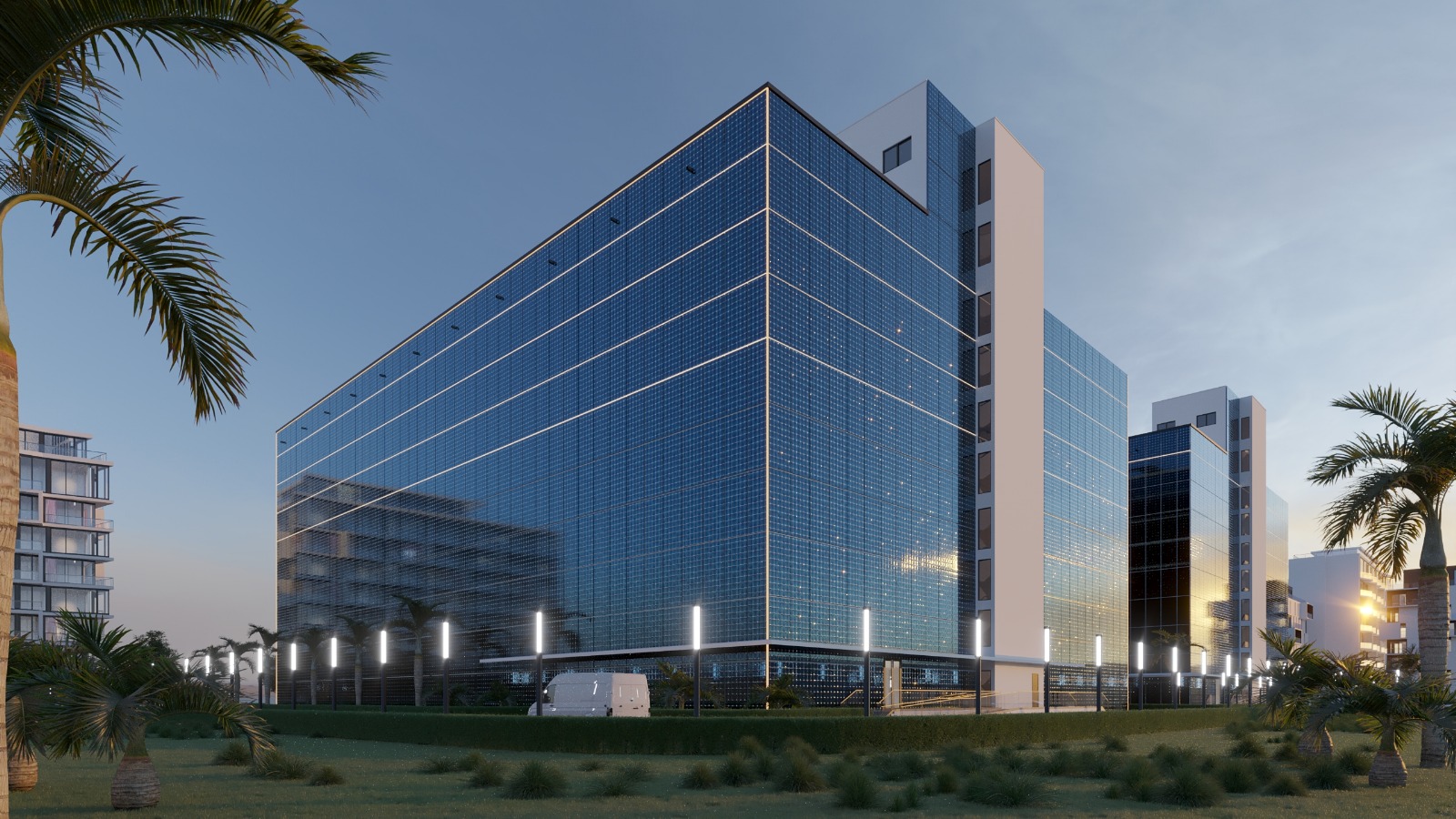
Kasi Cloud has commissioned the first phase of its planned 100-megawatt AI-ready hyperscale data centre campus in Lekki, Lagos, marking one of Nigeria’s most ambitious investments yet in digital infrastructure and local compute capacity.

The company said the facility is designed to support artificial intelligence workloads, cloud computing, enterprise storage and high-density digital services at a time when global demand for AI infrastructure is accelerating rapidly.

The project, estimated to cost about $250m, broke ground in April 2022, while major construction work began in the second quarter of 2023. The commissioning marks the first operational deployment within the broader campus, which Kasi Cloud plans to scale over time into a 100MW data infrastructure ecosystem.

Nigeria currently has about 17 operational data centres, according to industry estimates, with most facilities operating below 25MW capacity. Kasi Cloud said the Lekki campus is intended to significantly expand the country’s compute footprint and reduce dependence on foreign-hosted infrastructure.

Founder and Chief Executive Officer Johnson Agogbua said the project is intended to help reverse Africa’s dependence on foreign digital infrastructure by creating local capacity capable of supporting the next generation of AI-driven applications.

“What we’re most proud of is the role that our people and our team have played,” Agogbua said during a media briefing at the facility in Lagos on Saturday. “Almost every other data centre built here was designed by others for us. Kasi is Nigeria proper. Africa proper.”

The company said the first deployment includes a 5.5-megawatt data hall and a 7.5-megawatt ecosystem floor designed to accommodate local and international businesses requiring colocation, cloud hosting, storage and networking services.

According to Agogbua, the ecosystem floor is intended to allow customers to lease infrastructure ranging from a single server node to an entire aisle of racks, depending on operational requirements.

“It’s an opportunity for our international partners, local partners and local businesses to take up anything between a single node and a rack to a full aisle of IT workloads,” he said.

See also  World’s largest tech expo opens in Dubai

Global Director, Marketing and Sales Operations at Kasi Cloud, Ngozika Agogbua, said the project sits at the intersection of technology, economics and geopolitics at a time Africa is increasingly seeking greater control over its digital future.

“Africa has become one of the fastest-growing digital markets in the world,” she said during a press conference in Lagos on Saturday. Yet when it comes to artificial intelligence, the continent still operates with less than one per cent of global compute capacity, relying almost entirely on infrastructure located outside its borders.”

According to her, the dependence on overseas infrastructure means African businesses continue exporting critical data and economic value whenever they run AI workloads.

“Every time an African business runs an AI workload, the data travels to a server in Europe or America,” she said. “The economic and strategic cost of that dependency is enormous and largely invisible.”

Agogbua described the Lagos campus as part of what could become a structural shift in Africa’s digital economy, comparing the moment to the expansion of subsea cable systems and mobile telecommunications networks that transformed connectivity across the continent over the past two decades.

“We believe this is less a company launch and more a structural turning point,” she said.

The company argued that large-scale local compute infrastructure is becoming increasingly important as governments, financial institutions, startups and enterprises across Africa accelerate adoption of AI-enabled systems and cloud-based services.

The company said the facility is also being designed to support certain GPU-intensive workloads required for AI computing while providing a carrier-neutral interconnection hub linking telecommunications operators and international submarine cable providers.

Agogbua said the upper floors of the campus are specifically designed for wholesale and hyperscale cloud providers such as Amazon Web Services, Google and Microsoft seeking expansion capacity in West Africa.

“Players like AWS, Google and Microsoft find it difficult to enter new markets and build at scale,” he said. “We have both the power and the space they need to expand.”

The company disclosed that the campus has a dedicated 132-kilovolt substation capable of scaling deployments to approximately 100 megawatts of IT load, positioning it among the largest planned AI-ready compute facilities in the region.

See also  Tinubu’s executive order blocks N2tn NNPC fees

Agogbua repeatedly emphasised the distinction between total power infrastructure and “critical load”, the electricity directly delivered to computing systems, storage infrastructure and networking equipment.

“When we say critical load, we mean the things that go to computers, routers and storage devices,” he said.

According to him, each floor of the facility is capable of supporting approximately eight megawatts of critical load, while a single building on the campus could ultimately scale to more than 30 megawatts.

“That’s bigger than power delivered to some small cities in Nigeria,” he said.

He argued that Nigeria’s ability to compete in the digital economy will increasingly depend on whether the country can develop infrastructure capable of supporting AI systems locally.

“If we’re going to really embrace digital and employ AI-related systems to leapfrog into modernity, we need facilities of this scale,” he said.

Agogbua said Nigeria missed earlier phases of industrialisation but could still leapfrog economically through rapid adoption of modern digital infrastructure and AI technologies.

“We can digitise early, apply modern tech and leapfrog into it,” he said. “It requires facilities of this scale. It requires deployment of this scale.”

He also urged policymakers to create conditions that encourage international technology companies to establish local operations while ensuring Nigerian talent participates directly in the ecosystem.

“Make it easy for them to enter,” he said. “But require them to have us working on it. That’s how we get training.”

A major theme throughout the briefing was data sovereignty and concerns that Africa risks remaining dependent on foreign-owned AI systems if local compute infrastructure is not developed.

Agogbua argued that African languages, culture, commerce and historical records may become under-represented in future AI models if the continent does not build domestic infrastructure and local AI ecosystems.

“Will the brain that will run the future be on our soil?” he asked. “Or are we going to be renting it?”

See also  FG unveils ‘fly now, pay later’ credit scheme for domestic flights

He said AI systems shaping future digital experiences should increasingly be developed and operated within African cities rather than entirely from technology hubs in North America, Europe or Asia.

“If those coding the model reside in San Francisco, Munich or Shanghai and documenting our language and culture, we’ll be lost,” he said. “They should be in Yaba, Abuja, Enugu, Kano, and all of our cities.”

The company also emphasised local engineering participation in the project, describing Kasi as an African-led infrastructure initiative rather than a foreign-built deployment.

Agogbua said the company established an internal training initiative known as Kasi Academy to develop local engineering talent capable of supporting advanced digital infrastructure projects.

“When people asked how we would replicate world-class execution, we said we would grow them,” he said.

According to him, many of the engineers working on the project were trained internally through the academy, with Nigerian teams directly involved in designing and deploying key systems across the facility.

“The final design, the final rendering, is done here,” he said.

While acknowledging that some equipment and specialised manufacturing capabilities still need to be sourced internationally, he maintained that Africa already possesses the technical talent needed to build sophisticated infrastructure locally.

Beyond enterprise cloud infrastructure, Agogbua linked AI deployment to broader economic transformation across Nigeria’s informal economy, including retail markets, healthcare delivery, logistics and inventory management.

“Go to the market and watch what’s going on,” he said. “Their ledger is on worn-out paper. Their inventory is in their brain. All those are opportunities.”

According to him, AI-enabled systems supported by local infrastructure could help small businesses automate inventory management, improve forecasting and strengthen supply chains.

“That’s the opportunity for our boys and girls,” he said. “But infrastructure for it must be accessible to them.”

punch.ng

FOLLOW US ON:

FACEBOOK

TWITTER

PINTEREST

TIKTOK

YOUTUBE

LINKEDIN

INSTAGRAM

Continue Reading
Click to comment

Leave a Reply

Your email address will not be published. Required fields are marked *

Business

Nigeria, Benin deepen cross-border security, trade cooperation

Published

on

The Director-General of the National Boundary Commission, Nigeria, Adamu Adaji, has reiterated the importance of enhanced border demarcation in promoting cross-border cooperation, strengthening regional security, and improving the livelihoods of border communities across West Africa.

A statement from the commission on Monday stated that Adaji disclosed this through the Head of Cross Border Cooperation, Dr Farouk Tarfa, who represented him at a two-day Cross Border Cooperation Programme along the Nigeria-Benin and Benin-Togo borders on May 14 and 15, 2026.

The programme was hosted and coordinated by the Director-General of the National Boundary Commission of the Republic of Benin, Dr Yousouf Adams.

According to Adaji, “Clearly defined and properly demarcated borders remain critical to enhancing cross-border cooperation, community resilience, peace, and security across the African continent.”

He noted that most African borders inherited from the colonial era were largely ambiguous at independence, adding that African leaders nevertheless resolved to respect the inherited treaties while working amicably towards resolving areas of dispute and strengthening regional integration.

Adaji further commended the efforts of the two National Boundary Commissions in promoting good border governance and peaceful coexistence among border communities.

“We seek the continued support and intervention of the German International Cooperation towards the completion of the demarcation of the Nigeria–Benin International Boundary. The successful completion of the demarcation process will pave the way for improved cross-border cooperation, enhanced livelihood opportunities for borderland communities, and strengthened border security,” he stated.

The programme was attended by the Director-General of the National Boundary Commission of the Benin Republic, Dr Yousouf Adams; the Director of German International Cooperation at the African Union, Dr Tobias Thiel; the Head of GIZ Programme Support to the African Union for Promoting Peace, Security and Governance in Africa, Mr Max Middeke; and the Head of GIZ-African Union Border Programme, Dr Bakary Sanou.

See also  Infractions - FG threatens to disconnect Gencos from power grid

Speaking during the programme, Dr Yousouf Adams stated that, “Border governance in West Africa is currently undergoing significant transformation driven by collective commitments towards security, cooperation, and regional integration.”

He explained that the African Union Border Programme serves as a continental framework aimed at encouraging member states to properly define their borders and transform border areas into spaces of cooperation and development.

As part of the activities, the delegation visited border pillars and inspected several cross-border socio-economic projects. The delegation also paid a courtesy visit to the Oba of Iwoye-Ketou, His Royal Majesty Sir Isaac, where they solicited continued support for sustained cross-border cooperation aimed at strengthening peaceful coexistence and good neighbourliness among border communities.

The monarch commended the efforts of the National Boundary Commissions of Nigeria and Benin, as well as the German International Cooperation, in promoting peaceful relations and improving the livelihoods of border dwellers.

“Engaging border communities gives them a sense of belonging, reduces irregular migration and further enhances security within the border areas,” the traditional ruler stated.

In his remarks, the Director of German International Cooperation at the African Union, Dr Tobias Thiel, appreciated the warm reception accorded to him and reaffirmed the commitment of the GIZ-African Union Border Programme towards improving border governance across Africa.

“Borders are dynamic and multi-dimensional and should therefore be accorded utmost priority in order to promote peace, cooperation, and sustainable development across the continent,” he said.

Within the framework of the West African Cross Border Cooperation initiative, the representative of the Director-General of NBC Nigeria, Dr Farouk Tarfa, also undertook a solidarity visit to the Benin-Togo border, where Local Cross Border Cooperation Platforms were inaugurated.

See also  When celebration becomes a luxury: Inside Nigerians’ costly Christmas struggle

The operationalisation of the platforms is expected to serve as a practical step towards moving from an “ECOWAS of States” to an “ECOWAS of People,” while also promoting sustainable development, peaceful coexistence, and enhanced cross-border security across the sub-region.

Recall that local governments and communes from Nigeria and Benin had earlier signed a Memorandum of Understanding on Local Cross-Border Cooperation and are expected to fully operationalise the platforms to improve the livelihoods of borderland communities, strengthen security, and deepen the West African integration process.

punch.ng

FOLLOW US ON:

FACEBOOK

TWITTER

PINTEREST

TIKTOK

YOUTUBE

LINKEDIN

INSTAGRAM

Continue Reading

Business

US-Iran crisis: Nigerian crude oil nears $120

Published

on

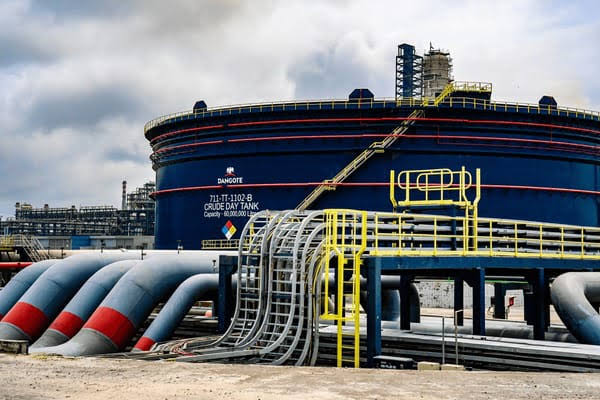
Nigerian crude oil is again edging towards $120 per barrel as the conflict in the Middle East shows no sign of ending.

The PUNCH reports that data from the Central Bank of Nigeria showed that Bonny Light, Nigeria’s flagship crude oil grade, traded at about $117 per barrel, gradually returning to its April level when prices almost hit $140 at one point. Nigerian crude is usually sold at a premium above the global benchmark, Brent crude.

Oil prices have surged from about $70 per barrel since the war between the United States and Iran erupted, and the Strait of Hormuz, which handles about 20 per cent of global oil transportation, was closed.

According to Al Jazeera, Iran has submitted a response to the latest United States proposal aimed at ending the war through mediator Pakistan.

Iranian Ministry of Foreign Affairs spokesman, Esmaeil Baghaei, told a press briefing on Monday that Tehran’s response to the latest US proposal had been “conveyed to the American side through mediator Pakistan”, the semi-official Tasnim news agency reported.

Washington and Tehran have exchanged several proposals in recent weeks amid a ceasefire that largely halted six weeks of fighting. However, talks mediated by Pakistan have stalled, while US President Donald Trump said the ceasefire was “on life support”.

Baghaei said Iran’s demands include the release of its frozen assets abroad and the lifting of sanctions. “The points raised are Iranian demands that have been firmly defended by the Iranian negotiating team in every round of negotiations,” he said.

See also  Class of 99: Create cottage industries, not N5,000 palliative – Former Govs tell Tinubu

Iran has also demanded compensation for war damage, an end to the US blockade of Iranian ports, and a halt to fighting on all fronts, including in Lebanon, where Israeli forces continue their invasion and daily bombardments despite a ceasefire.

Washington had urged Iran to dismantle its nuclear programme and reopen the Strait of Hormuz, which, before the war, transported one-fifth of the world’s crude oil and liquefied natural gas supply.

Trump wrote on Truth Social on Sunday that “the Clock is Ticking” for Iran, warning that “they better get moving, FAST, or there won’t be anything left of them. TIME IS OF THE ESSENCE!”

The Iranian news agency, Fars, reported on Sunday that Washington had presented a five-point proposal, making it clear that the US would cease hostilities only if Iran entered formal peace negotiations.

The proposal reportedly included a demand that Iran retain only one operational nuclear site and transfer its stockpile of highly enriched uranium to the US.

In an earlier proposal sent last week, Iran called for an end to the war on all fronts and the removal of the US naval blockade on Iranian ports, which has been in place since April 13.

Fars also reported that the Iranian proposal insisted that Tehran would continue to manage the strategic Strait of Hormuz, a critical global energy route which Iran has largely kept closed since the conflict began.

The report added that the US had refused to release “even 25 per cent” of Iran’s frozen assets or pay reparations for war damage.

See also  When celebration becomes a luxury: Inside Nigerians’ costly Christmas struggle

Meanwhile, US Treasury Secretary Scott Bessent said on Monday that he would urge G7 finance ministers to align with US sanctions aimed at cutting financing to what he described as Iran’s “war machine”.

Trump is also expected to meet top national security advisers on Tuesday to discuss options for resuming military action, according to US news outlet Axios.

Axios reported that Trump “has got a lot of different people in his ear”, including Israeli Prime Minister Benjamin Netanyahu and “very hawkish people” within his administration.

However, Baghaei said Iran was “fully prepared for any eventuality” should the conflict escalate again. “As for their threats, rest assured that we are fully aware of how to respond appropriately to even the smallest mistake from the opposing side,” the Iranian Foreign Ministry spokesman said.

punch.ng

FOLLOW US ON:

FACEBOOK

TWITTER

PINTEREST

TIKTOK

YOUTUBE

LINKEDIN

INSTAGRAM

Continue Reading

Business

Oil nears $110 as Trump threatens strike in Iran

Published

on

Oil prices rose to $109.3 on Sunday amid the unending tension in the Middle East, data by Oilprice.com has shown.

This was as the United States President, Donald Trump, warned Iran that the “clock is ticking” after talks to bring the war to an end continued to stall.

From about $107 a barrel last week, oil prices continue to go higher, impacting the cost of refined petroleum products at the pump.

Recall that Trump had last week rejected the proposal by Iran to end the crisis and reopen the all-important Strait of Hormuz. Iran has remained in control of the strait since the war started in February, making oil transportation impossible.

On Sunday, Trump warned Iran to act fast or lose everything. “They better get moving FAST, or there won’t be anything left of them. TIME IS OF THE ESSENCE!” he wrote on his Truth Social platform.

The BBC reports that the message came as the president was due to speak with Israeli Prime Minister Benjamin Netanyahu on Sunday.

Trump warned earlier that the ceasefire agreed with Iran was on “massive life support” after rejecting Tehran’s demands to end the war.

Trump had labelled the Iranian response to US proposals “totally unacceptable”.

An Iranian foreign ministry spokesperson, Esmail Baghaei, insisted the response was “responsible” and “generous”.

According to Iran’s semi-official Tasnim news agency, it includes an immediate end to the war on all fronts, a reference to the continued Israeli attacks against Iran-supported Hezbollah in Lebanon, a halt to the US naval blockade of Iranian ports, and guarantees of no further attacks on Iran.

See also  FG to disburse ₦6.3bn interest-free loans to 21,000 flood victims

It also reportedly includes a demand for compensation for war damage and an emphasis on Iranian sovereignty over the Strait of Hormuz.

Trump said Chinese President Xi Jinping had agreed Tehran must reopen the Strait of Hormuz, though China gave no indication it would weigh in.

Iranian Foreign Minister Seyyed Abbas Araghchi stated that the Strait of Hormuz remains open to commercial traffic, but ships must cooperate with the Iranian Navy and the authorities while navigating the region.

About 30 Chinese vessels transited the strait on Wednesday.

Continue Reading

Trending