Connect with us

Business

Govt eyes N1.49tn electricity export revenue

Published

on

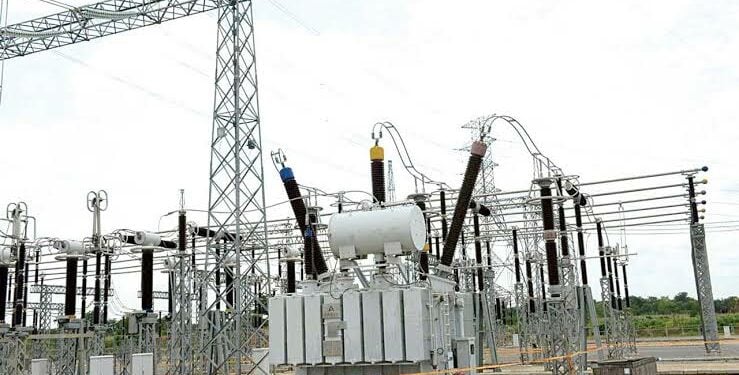
The Federal Government is projecting nearly $1bn (about N1.49tn) in annual revenue from electricity exports to 15 West African Countries under the Economic Community of West African States sub-region from June 2026.

The earnings are based on what a full 600 megawatts export capacity is capable of generating at the prevailing regional tariff, as Nigeria pushes toward full participation in the West African power market following a landmark grid synchronisation exercise carried out this month.

The Minister of Power, Chief Adebayo Adelabu, hinted at the new revenue stream at a press conference on Wednesday in Abuja, where he announced that Nigeria successfully conducted a grid synchronisation test with 15 West African countries for four hours on November 8, 2025.

He said the development positions Nigeria to fully exploit its strategic role as the regional power hub under the West African Power Pool, especially as generation companies ramp up compliance with free-governor control, an operational discipline crucial to regional grid stability.

On November 8, 2025, Nigeria successfully conducted a grid synchronisation test connecting the national electricity grid with the interconnected West African Power Pool system.

The synchronisation exercise, conducted between 05:04 am and 09:04 am, involved the Nigerian grid, which includes the Niger Republic and parts of Benin and Togo, and the rest of West Africa’s interconnected systems covering Ghana, Côte d’Ivoire, Burkina Faso, Liberia, Sierra Leone, Guinea, Senegal, The Gambia, Guinea-Bissau, and Mali.

The minister said for four uninterrupted hours, power flowed seamlessly across national borders, operating at a single stable frequency and proving that West Africa is now technically capable of functioning as a unified power bloc. This exercise represents the first time in history that Nigeria has operated in a unified, stable, and fully harmonised configuration with the rest of the sub-region.

See also  Cheers In Abuja As Price Of Cooking Gas Per Kg Drops

But beyond the latest achievement, the minister said the government is working toward achieving permanent grid synchronisation by June 2026, with a second 48-hour test run planned once ongoing discussions with regional operators are concluded.

The Executive Director, Market Operations at the Nigerian Independent System Operator, Edmund Eje, said Nigeria currently allocates 600MW for its bilateral power trade agreements each day. According to data from the Nigerian Electricity Regulatory Commission, Nigeria continues to offer the cheapest electricity tariffs in West Africa.

NERC figures show that the average approved end-user tariff in Nigeria is about $0.07 per kilowatt-hour (approximately N100.27/kWh), representing just 35.71 per cent of the average $0.19/kWh charged by several other countries in the sub-region.

If exported power is billed at this regional tariff, government officials estimate that delivering the full 600MW allocation could generate close to $1bn in annual revenue.

A breakdown of the figures shows that exporting 600MW, equivalent to 600,000 kilowatts, at the prevailing tariff of $0.19 per kilowatt-hour would fetch about $114,000 every hour. This translates to roughly $2.73m daily and an estimated $998.6m in annual revenue.

The projection assumes uninterrupted export of the contracted volume once a permanent grid synchronisation is completed at a tentative date of June 2026. Officials say the revenue could provide a critical buffer for the power sector, help reduce liquidity shortfalls, and accelerate expansion of regional energy markets.

The government, however, assured electricity consumers that exporting power to West African countries will not compromise supply to the domestic market. Speaking further in his address, Adelabu noted that the milestone also marks the most successful synchronisation attempt since 2007, when a trial collapsed after seven minutes.

See also  CBN - Lending rates may fall as inflation eases

He said, “The benefits of synchronisation with other WAPP countries would extend directly to the Nigerian people. A more stable grid improves the performance of essential services such as hospitals, water supply, transport systems, digital infrastructure, and public institutions.

“As ongoing transmission expansion projects, including the North-Core line, the Ajegunle 330 kV Substation, the Kaduna–Kano transmission upgrades, and the Gwagwalada–Gurara connection, are completed, synchronisation will help deliver more reliable power to homes and industries nationwide. While expectations must remain realistic, this achievement provides the structural foundation for the improvements Nigerians have long awaited.”

The minister added that Nigeria’s transmission wheeling capacity has risen to 8,500 megawatts, creating a more stable backbone for future export commitments. However, despite this available capacity, low demand from the electricity distribution companies has kept actual generation at around 5,000MW, leaving about 3,500MW stranded within the Nigerian Electricity Supply Industry. The industry achieved an all-time generation peak of 5,801.44MW earlier this year.

He said, “Today, the minimum grid capacity we can even communicate is 8,500MW of capacity. If our generation reaches 8,000MW today, the grid can comfortably and conveniently transmit it. We are even sure that it is higher than that, but it is put at a conservative level, at 8,500 MW.

“We have the capacity and the facility to generate more power in Nigeria, and investment is still open to interested power sector investors. As long as there is demand in the other 14 countries of West Africa, Nigeria can easily export energy to those countries.”

Earlier, at the NISO Maiden Stakeholders’ Engagement themed “Building a Resilient and Competitive Electricity Market – The Role of NISO,” Managing Director Abdul Mohammed said the successful grid synchronisation represents more than a technical achievement.

See also  FG orders banks, fintechs to remit VAT on service fees

NISO Executive Director for Systems Operation, Nafisatu Ali, said that 60 per cent of Nigeria’s power-generating plants have now adopted the operating regime of free governor control, significantly boosting the country’s readiness for cross-border electricity trade.

She explained that since the Nigerian Electricity Regulatory Commission issued the directive on governor control, compliance has steadily improved.  “Before now, compliance was very low, about 20 per cent. But as of the last check two days ago, at least 60 per cent of generators have implemented the three-governor system,” Ali said.

She noted that this advancement was evident during the recent grid synchronisation test, when a generator tripped in Côte d’Ivoire, and Nigerian generators responded automatically, maintaining stability.

“The intention is to achieve 100 per cent compliance. This system has already improved grid resilience, ensuring automatic responses whenever there is a tripping event,” she added.

The Free governor control is a critical operational regime in power systems that allows generating units to automatically respond to changes in grid frequency. When a generator trips or demand suddenly spikes, FGC enables other units to adjust output instantly, stabilising the grid without manual intervention.

With the system in place, Nigerian Gencos can respond automatically to frequency disturbances, reducing grid instability and strengthening investor confidence in the country’s electricity market.

punch.ng

FOLLOW US ON:

FACEBOOK

TWITTER

PINTEREST

TIKTOK

YOUTUBE

LINKEDIN

TUMBLR

INSTAGRAM

Continue Reading
Click to comment

Leave a Reply

Your email address will not be published. Required fields are marked *

Business

Oil nears $110 as Trump threatens strike in Iran

Published

on

Oil prices rose to $109.3 on Sunday amid the unending tension in the Middle East, data by Oilprice.com has shown.

This was as the United States President, Donald Trump, warned Iran that the “clock is ticking” after talks to bring the war to an end continued to stall.

From about $107 a barrel last week, oil prices continue to go higher, impacting the cost of refined petroleum products at the pump.

Recall that Trump had last week rejected the proposal by Iran to end the crisis and reopen the all-important Strait of Hormuz. Iran has remained in control of the strait since the war started in February, making oil transportation impossible.

On Sunday, Trump warned Iran to act fast or lose everything. “They better get moving FAST, or there won’t be anything left of them. TIME IS OF THE ESSENCE!” he wrote on his Truth Social platform.

The BBC reports that the message came as the president was due to speak with Israeli Prime Minister Benjamin Netanyahu on Sunday.

Trump warned earlier that the ceasefire agreed with Iran was on “massive life support” after rejecting Tehran’s demands to end the war.

Trump had labelled the Iranian response to US proposals “totally unacceptable”.

An Iranian foreign ministry spokesperson, Esmail Baghaei, insisted the response was “responsible” and “generous”.

According to Iran’s semi-official Tasnim news agency, it includes an immediate end to the war on all fronts, a reference to the continued Israeli attacks against Iran-supported Hezbollah in Lebanon, a halt to the US naval blockade of Iranian ports, and guarantees of no further attacks on Iran.

See also  Petrol, diesel vessels arrive Nigeria amid price surge

It also reportedly includes a demand for compensation for war damage and an emphasis on Iranian sovereignty over the Strait of Hormuz.

Trump said Chinese President Xi Jinping had agreed Tehran must reopen the Strait of Hormuz, though China gave no indication it would weigh in.

Iranian Foreign Minister Seyyed Abbas Araghchi stated that the Strait of Hormuz remains open to commercial traffic, but ships must cooperate with the Iranian Navy and the authorities while navigating the region.

About 30 Chinese vessels transited the strait on Wednesday.

Continue Reading

Business

Lagos bans petroleum tankers from transporting edible oil

Published

on

The Lagos State Government has banned the use of petroleum tankers in the transportation and distribution of edible oil as part of efforts to strengthen food safety, hygiene, and compliance standards across the sector.

The restriction forms part of a broader regulatory framework introduced through a Memorandum of Understanding (MoU) signed between the Lagos State Consumer Protection Agency (LASCOPA) and major stakeholders in the edible oil transportation chain.

The agreement involves the Marketers and Sellers of Edible Oil Association of Nigeria (MASEON), the Nigerian Association of Road Transport Owners (NARTO), and the Association of Edible Oil Tanker Drivers of Nigeria under the National Union of Edible Oil Tanker Drivers of Nigeria (ETD/NUEOTDN).

In a statement issued on Friday, LASCOPA said the move was aimed at stopping the use of tankers previously deployed for petroleum and hazardous substances in the transportation of edible oil.

The agency warned that the practice exposes consumers to serious health risks caused by possible contamination from chemical residues left in fuel tankers.

“The key objectives of the agreement include ensuring that tankers designated for edible oil transportation are used exclusively for that purpose; preventing the use of edible oil tankers for petroleum products and hazardous substances,” the statement read.

According to the agency, the MoU introduces a strict compliance framework mandating the exclusive use of food-grade certified tankers for edible oil transportation.

LASCOPA said the framework would also strengthen hygiene standards, improve traceability, and enhance operational monitoring within the edible oil distribution chain.

The agency added that stakeholders have committed to implementing tanker registration and identification systems, periodic inspections, random spot checks, laboratory testing of edible oil samples, and joint enforcement operations to ensure full compliance.

See also  Sanwo-Olu unveils Lagos 2026 economic blueprint, vows inclusive growth

It further stated that enforcement activities would be intensified under the Lagos State Consumer Protection Agency Law, 2025.

“Stakeholders are committed to tanker registration, identification systems, periodic inspections, random spot checks, laboratory testing of edible oil samples, and joint enforcement operations to ensure compliance,” the statement added.

LASCOPA also said it would step up monitoring activities and investigate consumer complaints as part of efforts to protect public health and improve consumer confidence in food transportation standards across Lagos State.

punch.ng

FOLLOW US ON:

FACEBOOK

TWITTER

PINTEREST

TIKTOK

YOUTUBE

LINKEDIN

INSTAGRAM

Continue Reading

Business

NNPC urged to revive refineries after Dangote snub

Published

on

The National Publicity Secretary of the Independent Petroleum Marketers Association of Nigeria, Chinedu Ukadike, has tackled the Nigerian National Petroleum Company Limited (NNPC) over its attempt to increase its stake in the Dangote Petroleum Refinery despite the poor state of government-owned refineries.

Ukadike stated this while reacting to comments by the President of the Dangote Group, Aliko Dangote, that the refinery rejected requests by the NNPC to increase its 7.25 per cent stake in the $20bn facility.

Dangote had disclosed this during an interview with the Chief Executive Officer of the Norwegian Sovereign Wealth Fund, Nicolai Tangen, monitored by our correspondents on Wednesday.

Reacting to the development, Ukadike questioned why the national oil company was seeking to invest more funds in the privately-owned refinery when the Port Harcourt, Warri, and Kaduna refineries under its control had remained largely inactive despite billions of dollars spent on rehabilitation.

“Why is NNPC trying to invest money in the Dangote refinery when it has three refineries that are not working? Why is NNPC not investing that money in those ones?” Ukadike asked.

He added, “The NNPC did not revive our refineries, but they want to look for where the refinery is already working to put money into it. Does that make sense?”

The IPMAN spokesman said Dangote had the right to reject the offer from the NNPC if he considered it unsuitable for his business interests.

“If Dangote refused to sell more stakes to NNPC, he must have his reasons. Dangote is a businessman. He doesn’t want issues, unnecessary crises, and nepotism. He knows what he wants, and I also think he has enough cash to fund his business,” he stated.

See also  ‘Every Lagos resident must file annual tax returns before March 31’ LIRS says

Ukadike further urged the national oil company to focus on reviving critical oil infrastructure across the country instead of pursuing additional ownership of the refinery. “The NNPC should repair the pipelines and revive the refineries instead of eyeing the Dangote refinery,” he said.

Dangote had stated during the interview that the NNPC was interested in acquiring more shares in the refinery after previously purchasing a 7.25 per cent stake for $1bn in 2021. According to him, the request was rejected because the company planned to list the refinery publicly and allow more Nigerians to own shares in the project.

“The other biggest risk is government inconsistencies in policies, and we are addressing that one because if you look at our refinery, the national oil company already owns 7.25 per cent, and they are trying to buy more. We are the ones that said no; we want to now spread it and have everybody be part of it,” Dangote said.

The NNPC had initially planned to acquire a 20 per cent stake in the refinery, but later reduced its ownership to 7.25 per cent after failing to pay the balance before the June 2024 deadline.

Dangote had explained this in 2024, saying, “The agreement was actually 20 per cent, which we had with NNPC, and they did not pay the balance of the money up until last year; then we gave them another extension up until June (2024), and they said that they would remain where they had already paid, which is 7.2 per cent. So NNPC owns only 7.2 per cent, not 20 per cent.”

See also  CBN - Lending rates may fall as inflation eases

However, a stakeholder in the petroleum sector who pleaded for anonymity because of the sensitivity of the matter held that the interest of the nation is well served by NNPC having a 20 per cent stake in the Dangote refinery.

“I think Nigeria is better served by NNPC being a shareholder. If NNPC could have taken 20 per cent of that refinery, Nigeria as a country would be better served,” the stakeholder said.

According to him, the fact that the NNPC failed to get the 20 per cent take before does not mean it could not get it again. He said Dangote refused NNPC’s offer because he wants to remain in control.

“You know Dangote is planning to value his company at $50bn. I think he’s going to sell 10 per cent only, so he remains in control, making a lot of money for himself. Selling only 10 per cent means he has 90 per cent. If NNPC were there with 20 per cent, then NNPC would have two directors. These two directors would have some say,” he said.

The stakeholder added that such an important asset cannot exist in a country without the government’s involvement.

“You can’t have such a big asset in the country, and then the government or the government’s agent has no say in the decisions of that company. It can’t happen. It’s wrong. I’m not saying the government must have a say in all the big companies, but in a company that is so big that it can influence whether the sun rises or falls in that country, the government must have a say.

See also  Cheers In Abuja As Price Of Cooking Gas Per Kg Drops

“The refinery is big. In any case, NNPC is also the supplier of last resort. It’s the national oil company. That has some meaning. I think that in the best interest of the country, if we all agree that Dangote is too big to fail, then it means that Nigerians as a people need to be inside the Dangote refinery to make sure it does not fail,” the operator said.

Meanwhile, a senior official of the NNPC said the NNPC is proud of its current stake in the Dangote refinery.

“The NNPC is proud and happy that we own a 7.2 per cent stake in Dangote. And whatever we own as a stake in Dangote as a national oil company is on behalf of the entire Nigeria. So, when the opportunity presents itself in the long term, yes.

“But right now, we are proud of the 7.2 per cent stake we own in the Dangote refinery. Apart from that, the quality and level of collaboration that is currently going on between NNPC and Dangote is in the interest of the entire Nigeria,” the official said, begging not to be mentioned because he was not authorised to speak on the matter.

punch.ng

FOLLOW US ON:
FACEBOOK

TWITTER

PINTEREST

TIKTOK

YOUTUBE

LINKEDIN

INSTAGRAM

Continue Reading

Trending