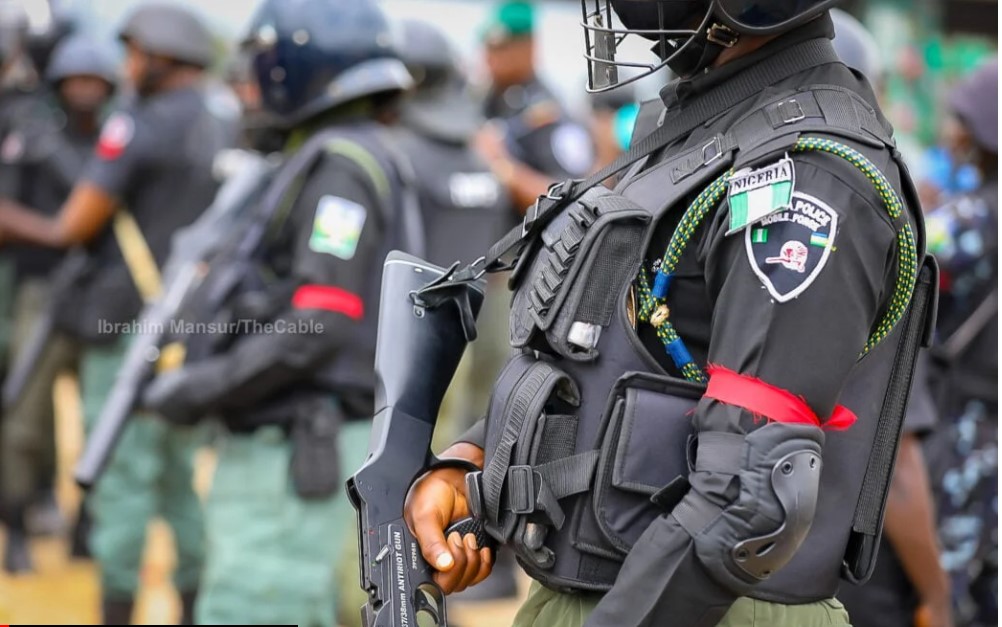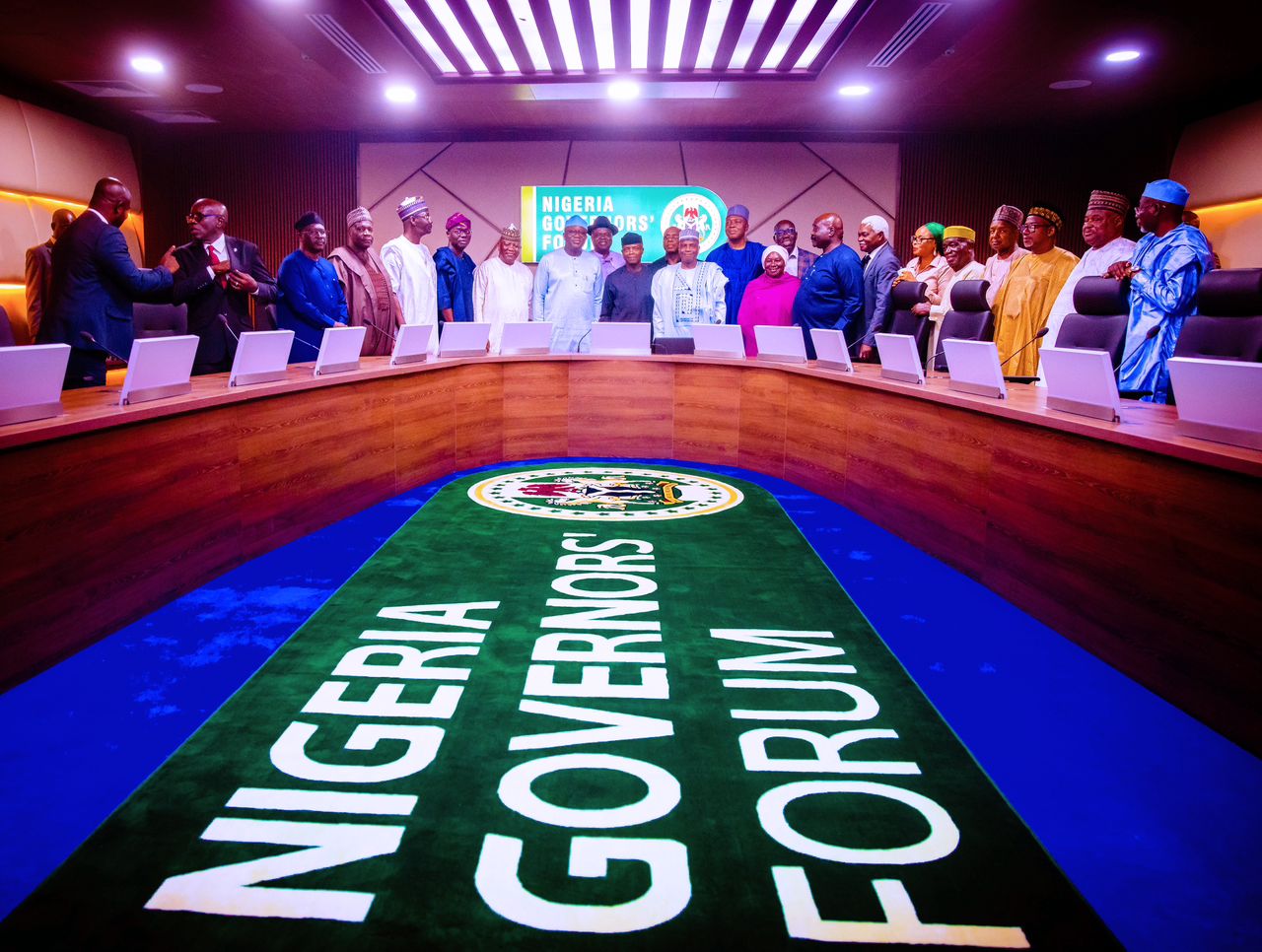
States across Nigeria earmarked a combined N525.23bn for security votes and related operations between 2023 and 2025, according to an analysis of figures extracted from their approved budget documents.
The states’ budgets are contained in Open States, a BudgIT-backed website that serves as a repository of government budget data.
The massive vote, intended to bolster security nationwide, raises critical concerns about the efficacy of these measures, as citizens remain increasingly vulnerable to the tide of violence.
Although the responsibility for ensuring the safety of lives and property lies with the Federal Government, the increasing wave of kidnapping, robbery, and other forms of violence has compelled many state governors to set up their own internal security strategies to combat the menace.
However, these efforts have not yielded the desired results as criminals continue to operate with impunity, terrorising the citizens.
The analysis is based on the budgets of 32 state governors, as Gombe, Kebbi, Niger and Yobe did not clearly disclose their allocations for security vote.
The PUNCH also observed that Ekiti did not clearly disclose this allocation in its 2025 approved budgets, which means the total figure should be higher than N525.23bn over the three years analysed.
Further analysis shows that states approved N150.47bn for security votes in 2023, rising to N164.07bn in 2024, before sharply increasing to N210.68bn in 2025.
The year-on-year growth shows that states added about N13.60bn to their security vote budgets in 2024, a rise of roughly 9.04 per cent over 2023, and then increased spending by a much larger N46.61bn in 2025, representing a jump of about 28.4 per cent over the 2024 level.
Compared with 2023, the amount budgeted in 2025 was higher by more than N60bn (about 40.01 per cent increase), highlighting how security vote allocations expanded rapidly within just three fiscal years.
The aggregate figures are driven by a handful of states with particularly large security vote provisions.
Borno State recorded the highest total over the three years at N57.40bn, reflecting the continuing cost of counterinsurgency and security operations in the North East.
Anambra State followed with N42.57bn, boosted by a sharp rise from N184.90m in 2023 to N17.28bn in 2024 and N25.10bn in 2025.
Delta State ranked next with N38.44bn, while Benue State posted N36.87bn over the period, with its allocation rising each year from N9.27bn in 2023 to N12bn in 2024 and N15.60bn in 2025.
Other high spenders included Ondo with N31.72bn, Zamfara with N31.40bn, Edo with N29.21bn, Adamawa with N27.00bn and Bauchi with N25.41bn.
At the lower end of the scale, Rivers disclosed just N210m over the three years, while Akwa Ibom recorded N624m and Ekiti only N3.1m, showing wide disparities in how states reported or prioritised security vote spending.
In 2023, the highest security vote was recorded by Bauchi, which approved N17.39bn, narrowly ahead of Delta at N17.15bn. Bayelsa followed with N11.12bn, while Adamawa and Benue posted N9.95bn and N9.27bn, respectively.
Borno also ranked among the leading states that year with N8.92bn, reflecting the ongoing security challenges in the state.
The pattern shifted in 2024, when Zamfara emerged as the biggest spender with N17.40bn, followed closely by Anambra at N17.28bn and Borno at N15.65bn. Edo approved N12.87bn while Benue budgeted N12bn, keeping it among the top tier of states in terms of security vote allocations. Delta also remained high at N10.65bn.
By 2025, security vote spending had widened sharply. Borno topped the list with N32.83bn, far ahead of the rest.
Anambra followed with N25.10bn, while Oyo recorded an unusually large jump to N20.09bn, compared with just N26.5m in 2023 and N5.46m in 2024.
Benue posted N15.60bn, Ondo approved N11.50bn, and Edo set aside N11.35bn, with Delta maintaining its level at about N10.65bn.
The analysis also shows major fluctuations in some states’ allocations across the period. Bauchi fell sharply from N17.39bn in 2023 to just N12.8m in 2024 before rising again to N8bn in 2025.
Kano dropped from N2.10bn in 2023 to N11.93m in 2024 before rebounding to N5.62bn in 2025.
Ogun increased from N114.70m in 2023 to N2.20bn in 2024 and N2.80bn in 2025, while Anambra moved from a relatively small figure in 2023 to one of the largest allocations in the country by 2025.
Although Gombe, Kebbi, Niger and Yobe were not captured in the analysis, a regional breakdown of the figures shows that the North East accounted for the largest share of disclosed security vote spending over the three years, with a combined N113.78bn from Adamawa, Bauchi, Borno and Taraba, excluding Gombe and Yobe, which did not publish clear figures.
The region approved N39.12bn in 2023, N25.09bn in 2024, and N49.57bn in 2025, with the sharp rise in 2025 driven mainly by Borno’s N32.83bn.
The South East followed with N102.59bn from Abia, Anambra, Ebonyi, Enugu and Imo. The region’s allocations rose from N21.07bn in 2023 to N39.55bn in 2024 and N41.97bn in 2025, largely on the back of Anambra’s surge in disclosed security spending.
States in the South South budgeted a combined N98.36bn over the period, with N35.13bn in 2023, N34.02bn in 2024 and N29.21bn in 2025. The zone’s totals were driven mainly by Delta, Edo and Bayelsa, while Rivers reported relatively small amounts.
The North Central recorded N76.57bn across the three years from Benue, Kogi, Kwara, Nasarawa and Plateau, with N22.97bn in 2023, N25.27bn in 2024 and N28.33bn in 2025. Niger was not included because no clear figure was disclosed in its approved budgets.
In the North West, disclosed allocations from Jigawa, Kaduna, Kano, Katsina, Sokoto and Zamfara amounted to N70.77bn, comprising N19.02bn in 2023, N26.13bn in 2024 and N25.62bn in 2025, with Kebbi excluded due to non-disclosure.
The South West recorded the lowest disclosed three-year total at N63.16bn, but its spending profile changed sharply in 2025. The zone approved N13.16bn in 2023 and N14.00bn in 2024, before surging to N35.99bn in 2025, driven largely by Oyo’s N20.09bn and Ondo’s N11.50bn, alongside steady allocations from Lagos, Ogun, Osun and Ekiti.
The development comes amid renewed concerns over the unrelenting wave of killings, kidnappings, and destruction of properties across the country.
In Nigeria, security votes are special monthly allocations of public funds reserved by federal and state governments for security-related purposes.
Officially, the funds are intended to cover sensitive operations such as intelligence gathering, crisis response, and other emergencies that demand swift action without bureaucratic bottlenecks.
However, the secrecy surrounding their disbursement has long attracted criticism.
Analysts argue that, rather than enhancing public safety, security votes often double as political war chests or channels of personal enrichment for state governors.
Speaking earlier to The PUNCH, the National Coordinator of the Coalition of Northern Groups, Jamilu Charanchi, questioned the essence of the controversial allocation.
He noted that despite the reportedly huge sums disbursed, citizens in the North still faced worsening insecurity, dilapidated roads, failing hospitals, poor electricity supply, and a lack of access to quality education.
“What is a security vote? What are they doing with the security vote? Don’t we still have killings in the North? Don’t we still have bad roads, dilapidated structures and hospitals? Governments cannot provide health care services to their citizens.
“They cannot provide education. They cannot provide road infrastructure. Electricity is questionable. What are they doing with the money? What are they doing with the security vote?” he asked.
Charanchi further stressed that poverty was at the root of insecurity in the region, alleging that governors benefit from the current state of affairs.
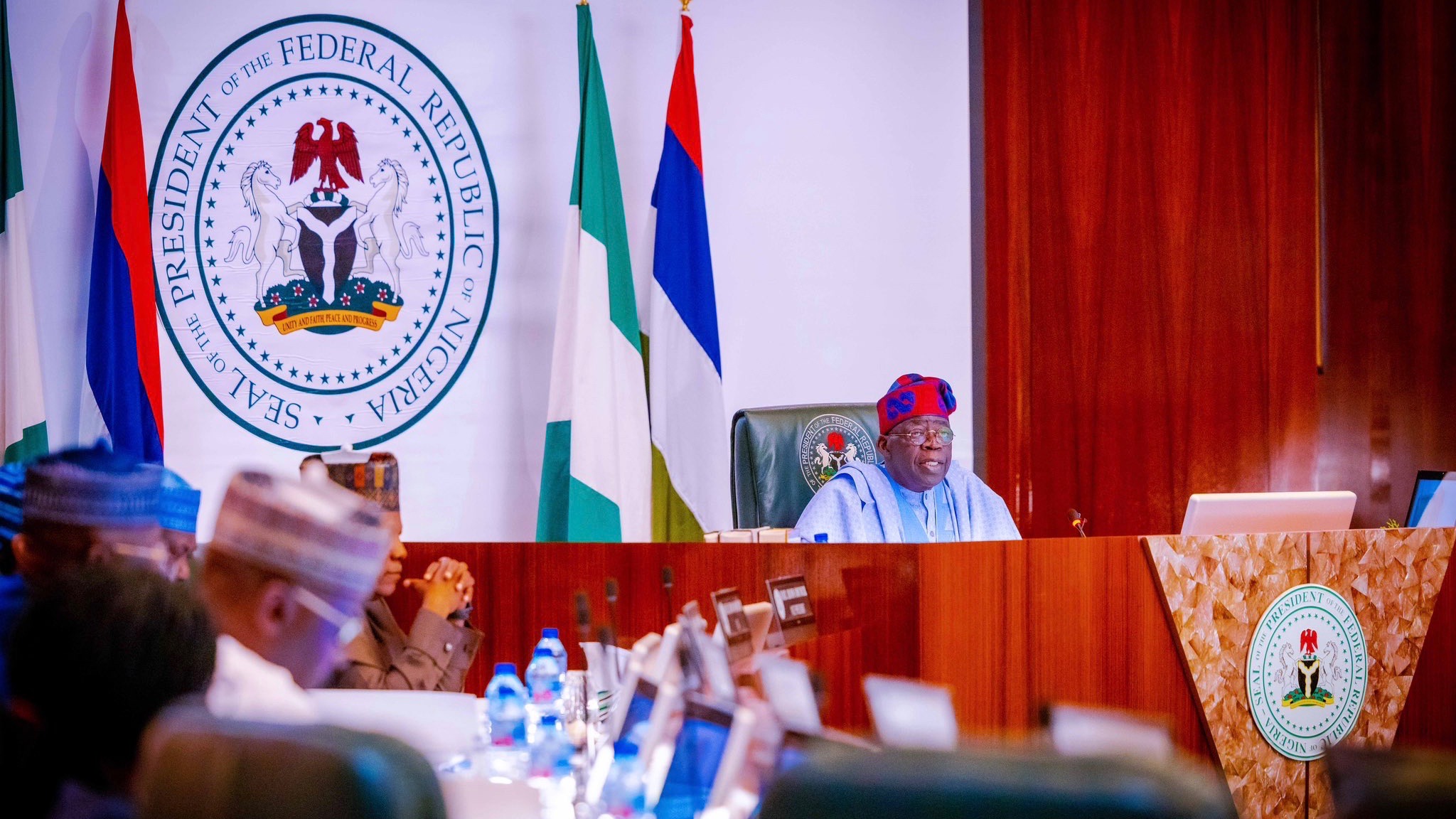
President Bola Tinubu, at a security conference, said a well-governed state is better equipped to address internal challenges and should not depend on federal agencies for safety.
He averred that the sorry state of the local government system has contributed to the developmental setbacks and the country’s inability to tackle the prevailing security threats.
“Sadly, the state of our local government system in Nigeria is a cause of concern, as its degradation and incapacitation have continued significantly and have contributed significantly to our developmental setback and our inability to effectively address the prevailing national security threat.
“We find ourselves trapped in a paradoxical situation where the very areas most affected by security classes are rendered powerless and unable to mount any meaningful resistance or defence.
“Local governments are the frontline defenders against insecurity, as they are closest to the people and possess intimate knowledge of their community’s needs and challenges. This is why some are advocating for community policing as a panacea to end security challenges,” he noted.
In December 2025, organised labour called on state governments and local government authorities to take greater responsibility for tackling Nigeria’s worsening insecurity, warning that the failure to act decisively is draining household incomes and restricting citizens’ freedom of movement.
Chairperson of the Nigeria Labour Congress, Lagos Chapter, Comrade Funmi Sessi, earlier said insecurity had gone beyond isolated incidents and now affects daily life and economic activity.
She said while security is often discussed as a federal issue, states and local governments must play a more active role because of their closeness to communities.
“States and local governments cannot fold their arms. They are closest to the people, they understand the terrain, and they receive security-related allocations. Nigerians deserve to see concrete results,” Sessi said.
Vice Chairman of the NLC Lagos Chapter, Comrade Olapisi Ido, also said insecurity persists partly because subnational governments have failed to translate funding into effective action.
“State governments receive special security allocations. The question Nigerians are asking is simple: what are they using the money for?” Ido said. “People are dying daily, and communities are living in fear.”
He said labour expects states and LGAs to invest more in intelligence gathering, community engagement, surveillance and rapid-response mechanisms.
punch.ng
FOLLOW US ON: