Connect with us

News

US visa shockwave: Trump order may delay 5,000 intending Nigerian immigrants

Published

on

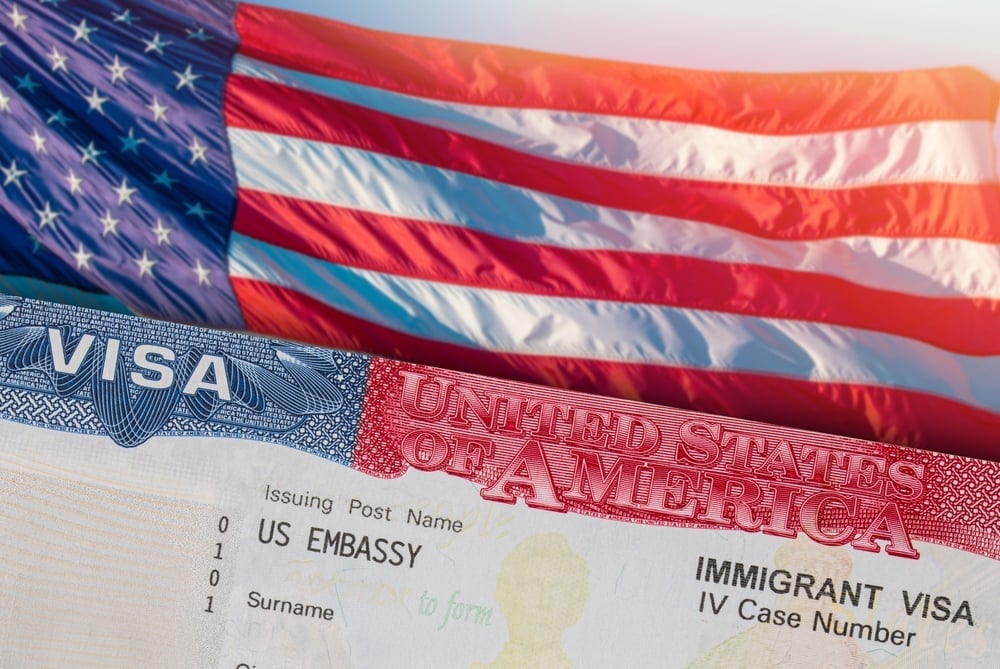
No fewer than 5,000 intending Nigerian immigrants to the United States may be delayed following the new visa restrictions imposed on Nigeria and 74 other countries by President Donald Trump on Wednesday.

Data from the US consulate in Lagos show that 5,626 immigrant visas were issued in 2023, up from 4,219 in 2022—an increase of 1,407 visas within a year.

An analysis by The PUNCH indicates that at least 5,000 immigrant visas granted to Nigerians annually could be affected by the latest measure, which seeks to restrict the entry of foreigners intending to live in the United States.

Additionally, a total of 70,621 Nigerians were issued U.S. immigrant and non-immigrant visas in 2024.

A breakdown reveals that 63,313 non-immigrant visas were issued to Nigerians, with Abuja accounting for 30,222, while 33,091 were issued in Lagos. Also, 7,308 persons obtained US immigrant visas during the period.

Confirming the development, a State Department spokesperson said, “The State Department is pausing immigrant visa processing for 75 countries.”

The pause will begin on January 21 and will continue indefinitely until the review is complete.

The policy forms part of a wider entry suspension affecting countries regarded by Washington as posing screening and vetting difficulties or producing migrants who rely excessively on public benefits.

The latest development comes barely a week after the Trump administration imposed a visa bond requirement of up to $15,000 on nationals from 38 countries, including Nigeria, effective January 21, 2026.

The policy targets countries with high visa overstay rates and security concerns.

The State Department in a post on X on Wednesday announced the pause of immigrant visa processing from 75 countries, which it claimed the migrants take welfare from the American people at unacceptable rates.

The post read, “The State Department will pause immigrant visa processing from 75 countries whose migrants take welfare from the American people at unacceptable rates. The freeze will remain active until the U.S. can ensure that new immigrants will not extract wealth from the American people.

‘’The pause impacts dozens of countries – including Somalia, Haiti, Iran, and Eritrea – whose immigrants often become public charges on the United States upon arrival. We are working to ensure the generosity of the American people will no longer be abused. The Trump Administration will always put America First.”

See also  Truck crash triggers Lagos-Ibadan Expressway gridlock

The affected countries include 27 African countries, 22 Asian countries, 8 European countries, 13 North American and Caribbean countries, three South American countries and one Oceania.

They are Algeria, Cameroon, Cape Verde, Cote d’Ivoire, Democratic Republic of the Congo, Egypt, Eritrea, Ethiopia, Gambia, Ghana, Guinea, Liberia, Libya, Morocco, Nigeria, Republic of Congo, Rwanda, Senegal, Sierra Leone, Somalia, South Sudan, Sudan, Tanzania, Togo, Tunisia, Uganda and Yemen.

Others are Afghanistan, Armenia, Azerbaijan, Bangladesh, Bhutan, Burma, Cambodia, Georgia, Iran, Iraq, Jordan, Kazakhstan, Kuwait, Kyrgyzstan, Laos, Lebanon, Mongolia, Nepal, Pakistan, Syria, Thailand and Uzbekistan.

Also on the list are Albania, Belarus, Bosnia, Kosovo, Macedonia, Moldova, Montenegro, Russia, Antigua and Barbuda, Bahamas, Barbados, Belize, Cuba, Dominica, Grenada, Guatemala, Haiti, Jamaica, Nicaragua, Saint Kitts and Nevis, Saint Lucia, Saint Vincent, Grenadines, Brazil, Colombia, Uruguay and Fiji.

State Department data show that global immigrant visa issuance climbed to 612,258 in 2024, up from 562,976 in 2023. Non-immigrant visa issuance also rose from 10,438,327 in 2023 to 10,969,936 in 2024.

The report further puts the global migrant visa issuance at 240,526 for the year 2020; 285,069 in 2021; 493,448 in 2022;  562,976 in 2023, and 612,258 in 2024.

Non-immigrant categories for 2020 were recorded as 4,013,210;  2, 792,083 for 2021; 6,815,120 in 2022; 10,438,327 in 2023, while  10,969,936 were recorded in 2024.

Meanwhile, in December, the US previously announced a partial visa ban on Nigeria alongside other countries.

In relation to Nigeria, the US policy cited persistent security challenges and overstays on temporary visas.

Referencing radical extremist activity in parts of the country, the proclamation stated that such conditions “create substantial screening and vetting difficulties.”

It also referenced overstay rates contained in US government reports.

Consequently, the proclamation ordered that “the entry into the United States of nationals of Nigeria as immigrants, and as non-immigrants on B-1, B-2, B-1/B-2, F, M, and J visas, is hereby suspended.”

It further directed consular officers to reduce the validity period for any other non-immigrant visas issued to Nigerian nationals.

See also  Iran targets US military sites in Bahrain, Kuwait after wave of US strikes

The State Department stressed that visas already issued before the effective date of the proclamation would not be revoked under the new policy.

However, Nigerians outside the United States without valid visas at the time of implementation would be directly affected by the entry suspension.

Reacting to the restriction,  former Nigerian Ambassador to Mexico, Ogbole Amedu-Ode, described the sweeping ban as a contradiction of America’s long-standing advocacy for the free movement of people and ideas.

“It is unfortunate that the apostle of globalisation is the one now engaging what I’ll call a reverse gear as far as the globalisation phenomenon is concerned. Even as he views this as being in America’s interest to keep some countries or citizens of certain countries out of his national territory.”

He criticised the scale of the measure, stating that it is unbecoming to ban 75 countries’ citizens from travelling to the United States.

According to him, “Migration and immigration are as old as the human race, and for the US under Donald Trump to begin to rev up the anti-migration, anti-immigration policies which we are witnessing now is not helping to solve matters as far as human-to-human contacts are concerned.”

Amedu-Ode added that travel is a natural human activity, stressing, “In view of the fact that travelling between countries is natural to the human person, especially in this age now of ease of travel by air, by road, by ship, it’s unfortunate.”

Ex-Ambassador Godknows Igali acknowledged Washington’s sovereign right to set its immigration policies, but urged the US to weigh the implications for bilateral relations.

“Well, it’s America’s right,  America has the right. These are issues of the right of countries. They are determining the conditions of their visas, but again, you have to consider your relationship with other countries. Between Nigeria and the US, we have a very robust relationship that has gone on for many, many decades,” he said.

He emphasised Nigerians’ positive contributions to US society, noting,  “Nigerians have given a good account of themselves in the US,  very disciplined, very hardworking. Almost all Nigerians are doing very well in the US. So, they are not a liability to the system.”

See also  Missing Ebonyi engineers’ families demand fresh probe

He added, “Most Nigerians who go to the US are skilled; we don’t go there as a liability. We are hardworking, we are creative, we are industrious, we are enterprising.’’

He urged sustained diplomacy, saying, “We advise the Nigerian Ministry of Foreign Affairs to sustain discussion with them so that Nigeria can be removed from that list.”

Foreign affairs analyst Charles Onunaiju said the latest restriction reflects a deeper shift in US domestic politics and global posture.

“If you look at the United States and see what’s going on there with the so-called ICE picking up people in the streets, you could see chaos in US cities with these issues about immigration. So, it is not a surprise the extent to which the United States could go,” he said.

Onunaiju warned that the present period “is not a normal time” in US foreign relations, observing that even close allies have been affected.

“Recently, the United States imposed a visa ban on key European officials. So, I think the worst has not happened yet. There could be more tightening. People should anticipate that. Mr Trump campaigned and won on the basis of extremist anti-immigration posturing, and he is leveraging that.”

He added that Nigerians should “prepare for the worst”, stressing that the US President had recently stated that he did not recognise international law and was guided only by his “private morality.”

“We have to acknowledge that this is not a normal time and anything is possible between the United States and the rest of the world.”

Ex-ambassador Rasheed Akinkoulie observed that the sweeping ban did not apply to Nigerians applying for visas, arguing that the conditions are simply more stringent, citing the $15,000 visa bond.

‘’Government officials and diplomats who have to travel to the USA are still granted visas without any problem.”

punch.ng

FOLLOW US ON:

FACEBOOK

TWITTER

PINTEREST

TIKTOK

YOUTUBE

LINKEDIN

TUMBLR

INSTAGRAM

Continue Reading
Click to comment

Leave a Reply

Your email address will not be published. Required fields are marked *

News

Reps order IG to produce fake, PFIPC agency DG Adeyemi within 48 hours

Published

on

The House of Representatives Committee investigating the operations of the controversial Presidential Foreign Investment Promotion Council has directed the Inspector-General of Police, Olatunji Disu, to produce the self-acclaimed Director-General of the organisation, Adeyemi Adeniyi, before it on Wednesday.

The directive was issued on Monday during the resumed investigative hearing at the National Assembly Complex, Abuja.

Representing the IG, Assistant Commissioner of Police, Bashir Abdullahi, appeared before the committee and was instructed to ensure Adeyemi’s appearance by noon on Wednesday to assist lawmakers in their ongoing investigation into the activities of the organisation.

The committee is probing the circumstances under which the PFIPC, despite not being legally established, allegedly secured office accommodation in Phase III of the Federal Secretariat Complex in Abuja and received a budgetary allocation of ₦1.32bn in the 2026 Appropriation Act.

The directive followed the Nigeria Police Force’s confirmation of key aspects of its criminal investigation, including petitions from the Office of the Chief of Staff to the President alleging that Adeyemi fraudulently presented himself as the Director-General of both the Presidential Economic Advisory Council and the Presidential Foreign Investment Promotion Council.

The Committee Chairman, Yusuf Gagdi, said Adeyemi’s appearance had become imperative given the seriousness of the allegations and the institutions implicated in the matter.

“This committee clearly needs the suspected DG to appear before this committee. People’s names are involved. People’s integrity are involved. Institutional names are involved. Institutional integrity is involved.

“It is not an option now. We will need him here to confirm some documents to us in such a way that will not undermine our investigation to enable us to submit our report on time,” Gagdi said.

See also  ECOWAS, Islamic Scholars Unite Against Terrorism In West Africa

The committee subsequently directed its clerk to formally communicate its resolution to the Inspector-General of Police.

“The committee hereby resolves that the Inspector-General of Police of the Federal Republic of Nigeria do kindly present Mr Adeyemi on Wednesday by 12 noon. That is the ruling of the committee,” Gagdi declared.

Earlier, ACP Abdullahi informed lawmakers that although investigations were ongoing, the police had already filed an eight-count charge against Adeyemi before the Federal High Court.

“The Nigerian Police Force investigated part of this case late last year and filed eight-count charges before a Federal High Court. The case is ongoing,” he said.

He disclosed that the suspect had been arrested and arraigned, but cautioned against making public disclosures that could prejudice the ongoing investigation or judicial proceedings.

“We don’t want to say things that are under investigation. It is definitely going to prejudice the ongoing investigation and make people have opinions that may prejudge the outcome of an investigation or judicial decision,” Abdullahi stated.

Despite the police’s reservations, the committee sought confirmation of documentary evidence already in its possession.

The police confirmed that on October 17, 2025, the Office of the Chief of Staff to the President petitioned security agencies over allegations against Adeyemi, prompting investigations that culminated in criminal charges bordering on conspiracy and fraud.

Investigators also confirmed receiving another petition alleging that Adeyemi falsely presented himself as the Director-General of both the Presidential Economic Advisory Council and the Presidential Foreign Investment Promotion Council.

According to the police, the petition alleged that Adeyemi used the purported office to obtain accommodation within the Federal Secretariat, sought approval to recruit about 300 personnel, attempted to secure a $1.3 billion allocation in the 2026 Appropriation Act for the non-existent agency, and planned to organise a World Investment Summit under the platform of the purported council.

See also  Insecurity: Tinubu pledges state police to US, European allies

One of the highlights of the hearing came when the committee compared signatures on documents allegedly issued from the Office of the Chief of Staff to the President with signatures on authentic official correspondence obtained by the police.

When asked whether the signatures matched, the police witness responded unequivocally,”They are not the same.”

The committee said the discrepancy reinforced concerns that official State House documents may have been forged.

Gagdi further asked, “So, it is not only a letter that was suspected to be forged? We are dealing with documents that include what is said to be a forged Act of the National Assembly in an attempt to establish a fake agency,” he added.

Gagdi disclosed that investigators had identified about 29 allegedly forged documents, including purported approvals from the State House, the Office of the Head of the Civil Service of the Federation, the Office of the Secretary to the Government of the Federation, the Ministry of Finance and several other government institutions.

According to him, representatives of many of the affected agencies had already appeared before the committee and disowned the documents attributed to their offices.

Gagdi, however, stressed that the committee had deliberately avoided compelling the police to disclose information that could compromise ongoing criminal investigations.

“We are avoiding a situation whereby they will be pushed to make statements that will undermine their ongoing investigation,” he added.

He assured that the House investigation would continue independently and that its final report could recommend further action by relevant security agencies.

punch.ng

FOLLOW US ON:

FACEBOOK

TWITTER

PINTEREST

TIKTOK

YOUTUBE

LINKEDIN

See also  Sowore Condemns US Airstrikes In Nigeria, Warns Of Sovereignty Breach

Continue Reading

News

Forged state house letter used to create fake PFIPC agency, Acct-General reveals

Published

on

The House of Representatives’ investigation into the operations of the controversial Presidential Foreign Investment Promotion Council took a dramatic turn on Monday after the Accountant-General of the Federation, Shamseldeen Ogunjimi, revealed that a forged State House letter was used to obtain official government recognition for the ‘fake’ agency.

Appearing before the House Ad Hoc Committee probing the circumstances surrounding the establishment and operations of the council, Ogunjimi disclosed that the Office of the Accountant-General acted on what appeared to be an authentic correspondence from the presidency requesting the creation of an administrative code for the PIFPC, only for investigations to later establish that the letter did not originate from the State House.

The revelation is the latest in a series of disclosures before the committee, which is investigating how a non-existent presidential agency allegedly secured office accommodation in the Federal Secretariat, sought budgetary allocations, recruited personnel and obtained official government recognition through what investigators believe were forged documents.

Presenting his report, Ogunjimi said the Office of the Accountant-General first interacted with the purported council in November 2024.

According to him, “a letter dated November 7, 2024, bearing a State House reference number, requested the creation of an administrative code for the Presidential Economic Advisory Council to facilitate budgeting, accounting and financial reporting.”

He explained that, in line with established procedures, “the Office of the Accountant-General processed the request, created the administrative code and communicated its approval to the State House,” with a copy sent to the Office of the Auditor-General for the Federation.

See also  Sowore Condemns US Airstrikes In Nigeria, Warns Of Sovereignty Breach

Following that approval, the office received additional requests from the purported council, including applications for self-accounting status, deployment of personnel, opening of Treasury Single Account and domiciliary accounts, as well as funding approvals.

Ogunjimi, however, stressed that although some administrative processes were carried out, no public funds were ever released to the council.

“It is important to note that no funds were released under salaries, overhead, capital, or any form of intervention or special allocation to the council,” Ogunjimi told the committee.

He further disclosed that while the council requested an establishment grant of ₦27.4bn, the application was rejected because there was no budgetary provision for such expenditure.

The Accountant-General also explained that although the Central Bank of Nigeria opened two domiciliary accounts for the organisation to receive inflows, the accounts never became operational because the council failed to satisfy the regulatory conditions required for their activation.

Lawmakers expressed concern over how the purported agency was able to navigate several layers of government bureaucracy without raising suspicion.

Responding, Ogunjimi made what committee members described as one of the most significant revelations of the hearing.

“The letter that was received by the Treasury was respectfully addressed as coming from the State House. That letter was never issued by the State House”, he said

The disclosure prompted members of the committee to conclude that a “hijacked” State House letter had allegedly been used to mislead government institutions into processing official requests for an agency that had no legal existence.

The committee also questioned how civil servants originally posted to the Office of the Chief Economic Adviser to the President eventually became attached to the purported council without the knowledge of the Office of the Accountant-General.

See also  Insecurity: Tinubu pledges state police to US, European allies

Ogunjimi explained that two officers deployed to the Office of the Chief Economic Adviser in 2010 and 2013 remained in the office after it was allegedly taken over by the new council, but no formal communication was sent to the treasury notifying it of any change.

“It was never assumed or written to us that those two officers were being taken over. The staff also never reported to the office to say that another council had taken over the office and the name had changed. As far as I was concerned, we were dealing with a new agency, not the Office of the Chief Economic Adviser,” he said.

He further disclosed that when the purported council later requested the deployment of five additional officers, the treasury approved only three after determining that the organisation’s size did not justify the number requested.

“It was when all this matter came to light that I got to know that two of our staff were actually working or being absorbed by the agency. We never knew. We believed, based on the records available to us, that those officers were still with the Office of the Chief Economic Adviser,” he added.

The ongoing House investigation centres on allegations that forged presidential approvals, counterfeit State House correspondence, fake Acts of the National Assembly and other falsified government documents were used to create and operate the purported Presidential Foreign Investment Promotion Council and the Presidential Economic Advisory Council.

The committee has already heard evidence from the Nigeria Police Force, which confirmed that criminal charges bordering on conspiracy and fraud have been filed against the prime suspect, Adeyemi Adeniyi, at the Federal High Court.

See also  PHOTOS: Remains Of Nasir El-Rufai’s Mother Arrive Abuja For Burial

At its sitting on Monday, the committee also directed the Inspector-General of Police to produce Adeyemi before lawmakers by noon on Wednesday to answer questions relating to the alleged forgery of official government documents and the operations of the purported presidential agency.

The committee is expected to conclude its investigation with recommendations on possible administrative, legislative and criminal actions against those found culpable.

punch.ng

FOLLOW US ON:

FACEBOOK

TWITTER

PINTEREST

TIKTOK

YOUTUBE

LINKEDIN

Continue Reading

News

See full list of African countries that do not need proof of funds for UK’s student visa

Published

on

The United Kingdom on Monday updated its financial requirements for applicants seeking Student and Child Student visas, retaining stricter evidence rules while exempting nationals of only three African countries from submitting proof of funds at the point of application.

The updated guidance, published by the UK government on its website, listed Botswana, Mauritius and Tunisia as the only African countries whose nationals will not be required to provide financial evidence upfront unless requested during the visa decision-making process.

Other countries on the exemption list include Australia, Canada, China, Japan, New Zealand, Singapore, the United States, France, Germany, Italy, Spain, the United Arab Emirates and Qatar, among others.

Despite the exemption, the UK clarified that applicants from the listed countries must still meet all financial requirements and could be asked to provide evidence during the application process.

The guidance stated, “You must meet the financial requirements for this route when you apply; however, you may not need to submit evidence upfront as part of your application. In these circumstances, the decision maker may still request the evidence from you during the application process to prove you meet the financial requirements.”

The development means applicants from major African source countries for UK education, including Nigeria, Ghana, Kenya, South Africa, Egypt and others not listed, will continue to submit financial documents as part of their visa applications.

Under the revised rules, applicants for a Student visa must demonstrate they have sufficient funds to cover tuition fees as stated on their Confirmation of Acceptance for Studies and living expenses.

See also  Sowore Condemns US Airstrikes In Nigeria, Warns Of Sovereignty Breach

Students studying outside London are required to show they have £1,171 for each month of their course, up to a maximum of nine months, while those studying in London must show £1,529 per month for the same period.

Applicants travelling with dependants must also show additional funds. Those studying outside London must have £680 per month for each dependant, while applicants studying in London must show £845 monthly for each dependant, both for up to nine months.

For Child Student visa applicants, the required maintenance funds vary depending on their living arrangements, including boarding school accommodation, foster care, residence with parents or legal guardians, or independent living for eligible 16 and 17-year-olds.

The UK government also outlined acceptable sources of funds, including government-backed student loans, official financial sponsorship, personal savings and money belonging to parents or eligible partners.

However, it said applicants cannot rely on overdrafts, cryptocurrency holdings, stocks and shares, pensions or funds kept in unregulated financial institutions.

The guidance further requires applicants using personal or family funds to show that the required amount has been held for at least 28 consecutive days before the application, with financial evidence dated no more than 31 days before submission.

The UK also maintained exemptions from providing financial evidence for certain categories of applicants, including those applying to extend their stay after spending at least 12 months in the country on a valid visa, Student Union Sabbatical Officers, doctors and dentists in training, and applicants whose nationality qualifies for the reduced documentary requirement.

The latest update comes as the UK continues to tighten oversight of its international student visa system while maintaining financial eligibility requirements for prospective students seeking to study in the country.

See also  Truck crash triggers Lagos-Ibadan Expressway gridlock

punch.ng

FOLLOW US ON:
FACEBOOK

TWITTER

PINTEREST

TIKTOK

YOUTUBE

LINKEDIN

Continue Reading

Trending