Connect with us

Business

Cash rush: ATM withdrawals jump 198% to N36tn

Published

on

Nigerians continued to lean heavily on cash withdrawals despite higher automated teller machine charges introduced by the Central Bank of Nigeria, as the value of ATM transactions jumped to N36.34tn in the first half of 2025, reinforcing the resilience of cash usage in the economy.

Data from the CBN quarterly statistical bulletin show that ATM withdrawals between January and June 2025 amounted to N36.34tn, nearly tripling the N12.21tn recorded in the corresponding period of 2024.

This represents an increase of N24.13tn, equivalent to a 197.66 per cent year on year rise, even as regulators moved to discourage excessive cash usage through revised fees and tightening monetary policy.

According to the data on the transaction volumes, Nigerians carried out 858.80 million ATM withdrawals in the first six months of 2025, compared with 496.47 million transactions in the same period of 2024. The increase of 362.34 million transactions represents a growth rate of 72.98 per cent, indicating that higher charges did little to dampen demand for cash.

The sharp rise comes against the backdrop of the CBN’s revised ATM fee regime, which took effect in March 2025. Under the new framework, customers using another bank’s ATM now pay N100 per N20,000 withdrawn, with additional surcharges of up to N500 per N20,000 on offsite ATMs such as those located in malls, fuel stations, and airports.

The removal of the previous allowance of three free monthly withdrawals on other banks’ ATMs further increased the cost of accessing cash. The apex bank attributed the review to rising costs and the need to enhance efficiency in ATM operations.

The circular read, “In response to rising costs and the need to improve efficiency of Automated Teller Machine (ATM) services in the banking industry, the Central Bank of Nigeria has reviewed the ATM transaction fees prescribed in Section 10.7 of the extant CBN Guide to Charges by Banks, Other Financial and Non-Bank Financial Institutions, 2020 (the Guide).

“This review is expected to accelerate the deployment of ATMs and ensure that appropriate charges are applied by financial institutions to consumers of the service. Accordingly, banks and other financial institutions are advised to apply the following fees with effect from March 1, 2025.”

Despite these changes, quarterly data show that ATM usage accelerated markedly in 2025. In the first quarter, ATM withdrawals totalled N15.97tn, compared with N5.46tn in the first quarter of 2024. This reflects an increase of N10.52tn, or about 192.9 per cent.

Transaction volumes in the quarter rose from 210.66 million to 411.42 million, an increase of 200.76 million transactions, equivalent to roughly 95.3 per cent growth.

See also  Crude supply to domestic refineries hit 67.6m barrels – FG

The momentum strengthened further in the second quarter. Between April and June 2025, Nigerians withdrew N20.36tn from ATMs, more than three times the N6.75tn recorded in the second quarter of 2024. The increase of N13.61tn represents a growth of about 201.7 per cent.

Volumes also rose from 285.81 million transactions in the second quarter of 2024 to 447.39 million in the same period of 2025, an increase of 161.57 million transactions or about 56.5 per cent. A closer look at the monthly figures highlights how consistently ATM usage expanded throughout the six-month period.

In January 2025, ATM withdrawals stood at N4.81tn, compared with N2.15tn in January 2024. Transaction volumes more than doubled, rising from 69.62 million to 147.24 million, a year-on-year increase of about 111.5 per cent.

February saw withdrawals rise to N5.40tn, up from N1.72tn a year earlier, representing growth of about 215 per cent. Transaction volumes climbed from 73.16 million to 134.59 million, an increase of roughly 84 per cent.

In March, ATM withdrawals reached N5.76tn, compared with N1.60tn in March 2024, translating to a growth of about 261 per cent, while volumes increased by about 91 per cent to 129.59 million transactions.

The second quarter sustained the upward trend. In April 2025, withdrawals rose to N6.38tn from N1.81tn in April 2024, an increase of about 252 per cent, with transaction volumes growing by roughly 77 per cent.

May recorded the highest monthly withdrawal value in the period at N7.44tn, up from N2.49tn a year earlier, representing a growth of about 199 per cent. Volumes also increased from 92.97 million to 160.10 million transactions, a rise of about 72 per cent.

In June, ATM withdrawals eased slightly to N6.55tn but still far exceeded the N2.45tn recorded in June 2024. The year-on-year increase of about 167 per cent was accompanied by a rise in transaction volumes from 113.17 million to 146.27 million, representing growth of about 29 per cent.

The persistence of high ATM usage contrasts with the steady expansion of point-of-sale transactions, which continue to dominate in absolute terms. POS transaction values rose from N85.91tn in the first half of 2024 to N147.20tn in the first half of 2025, while volumes increased from 6.40 billion to 7.72 billion transactions.

However, the pace of growth in ATM withdrawals outstripped that of POS channels, highlighting the enduring role of cash in daily economic activity.

In a FAQ document published by the apex bank on its website, which provides further information on the CBN’s directive on ATM withdrawal fees, the apex bank clarified that financial institutions are not permitted to charge more than the prescribed fees, although banks may reduce charges depending on their business strategy.

See also  PENGASSAN fires back as Shettima defends Dangote

Any bank found in violation of the directive, including compelling customers to withdraw less than N20,000 per transaction despite sufficient funds in their account, will be sanctioned accordingly.

To minimise transaction fees, the CBN has advised customers to prioritise withdrawals from their bank’s own ATMs. It also encouraged Nigerians to explore alternative payment methods such as mobile banking applications, POS transactions, and electronic transfers to reduce reliance on cash withdrawals.

A FinTech Executive and Techpreneur, Tope Dare, earlier warned that the CBN’s revised ATM withdrawal fees, set to take effect on March 1, 2025, will hurt low-income Nigerians while benefiting wealthier individuals.

“This policy ultimately favours those who can afford to withdraw larger sums, while the average Nigerian, who withdraws in smaller amounts, bears the brunt. For many low-income earners and small business owners, withdrawing N5,000 or N10,000 at a time is a daily necessity. Now, they face unfair charges that wealthier Nigerians can easily avoid,” he said.

Also, consumer rights group Socio-Economic Rights and Accountability Project took legal action against the CBN, calling the policy “unfair, unreasonable, and unjust.” SERAP argued that the revised fees violate sections of the Federal Competition and Consumer Protection Act, which aims to prevent exploitation and ensure fair market practices.

In a statement signed by the TUC President, Festus Osifo, and Secretary-General, Nuhu Toro, the union urged all well-meaning Nigerians to reject what it described as an exploitative policy and demand its immediate reversal.

“Our attention has been drawn to a circular from the CBN announcing an increase in ATM transaction fees, effective March 1, 2025. We say unequivocally: enough is enough. The Nigerian workers and the general public have endured relentless economic hardship under this administration.

“Every day brings a new burden—higher taxes, rising electricity tariffs, exorbitant call and data charges, and now, increased ATM fees. This government has failed to cushion the effects of its harsh economic policies, and the patience of Nigerians is wearing thin.”

However, the Chairman of the Bank Customers Association of Nigeria, Dr. Uju Ogubunka, said the increase was not such a bad idea, given the state of the economy, but expressed concerns about the rate of increase.

He said, “It should have been expected. Other places have increased their fees. The only thing one can talk about is the extent of the increase. Electricity, telephones, and even the open market have recorded increases in prices. The issue should not be the increase but the extent of it. Is it reasonable? Is it affordable at this point in time?

See also  CCB quizzes OSOPADEC leadership over alleged N463m misappropriation

“It is not only banking services that are increasing fees. If you ask me, I will say let’s move on. Someday, these things will adjust themselves.”

Also in October 2025, the CBN directed Deposit Money Banks and other financial institutions to refund customers for failed ATM transactions within 48 hours, in a sweeping reform aimed at protecting consumers and restoring confidence in the banking system.

According to the apex bank, these measures respond to widespread frustration over delayed refunds and poor customer service and form part of a broader effort to enhance consumer protection, improve reliability, and modernise Nigeria’s payment infrastructure in line with global standards.

The guidelines also overhauled ATM operations nationwide. Banks and card issuers are now required to deploy at least one ATM for every 5,000 active cards, with phased targets of 30 per cent compliance in 2026, 60 per cent in 2027, and full compliance by 2028. Any future deployment, relocation, or decommissioning of ATMs must receive prior approval from the CBN.

As ATMs become more efficient, The PUNCH observed an increase in cash outside banks. The PUNCH earlier reported that Nigerians withdrew a net N264.48bn from the banking system in November 2025, pushing the total cash held outside banks to N4.91tn, according to the CBN’s latest money and credit statistics data.

This represented a sharp month-on-month rise from N4.65tn recorded in October 2025, highlighting the continued preference for physical cash in daily transactions despite efforts to deepen electronic payment channels.

The data showed that currency in circulation as a whole also increased in November 2025, rising to N5.26tn from N5.06tn in October. This means the share of total currency circulating outside the banking sector climbed to about 93.34 per cent in November from 91.87 per cent in October.

The growing preference for physical cash raises several macroeconomic concerns. High out-of-bank cash weakens monetary control, reduces deposit mobilisation, creates liquidity constraints for banks, and encourages informal transactions that escape regulatory visibility.

It also complicates inflation targeting, as large cash holdings outside the banking system blunt the effectiveness of policy. The sharp rise in currency outside banks comes at a time when the CBN is focused on tightening liquidity to curb inflation.

Continue Reading
Click to comment

Leave a Reply

Your email address will not be published. Required fields are marked *

Business

Nigeria, UK seal £746m deal to redevelop Tin Can, Apapa ports

Published

on

Nigeria and the United Kingdom have signed a £746 million export finance deal to support the redevelopment of Lagos’ Apapa and Tin Can Island port complexes.

UK Prime Minister Keir Starmer stated this during a bilateral meeting with President Bola Tinubu at 10 Downing Street on the second day of the Nigerian leader’s historic state visit to Britain.

“Today is the opportunity to take that to another level with the agreements that we’ve been able to reach on exports, and I think that shows we can go even further than we’ve already gone,” he stated.

Tinubu, in his remarks, revealed that Nigeria is currently undergoing “very strong reform of the economy” and linked the terrorism challenges facing West Africa to climate change conflict.

“We need more trade agreements and economic relationships that we build between nations. Nigeria is currently going through a very strong reform of the economy,” Tinubu said.

The President described Nigeria as facing significant challenges, stating, “The largest country in West Africa, and on the continent, is challenged by terrorism coming from the conflict of climate change.”

Tinubu emphasised that both countries face global economic challenges, noting, “Currently, the entire world is challenged. Nigeria is not immune. Britain is not immune.”

He said the discussions focused on the “economic welfare of the people and how we can work together to improve livelihood” amid economic volatility.

The President affirmed that Thursday’s bilateral discussions would address what Britain can do to “accelerate the friendship, partnership and collaboration” between both nations.

See also  Kano fire: FG, APC govs donate N8bn to victims

On his part, Starmer described the visit as historic, noting it was the first inward state visit for 37 years by a Nigerian leader.

“The long and shared history between our countries is obvious and much valued, as is the people-to-people contact and engagement that enriches lives here in the United Kingdom,” he said.

He noted that both countries already collaborate on economy, defence, and security matters but expressed determination to deepen the partnership.

“Today is the opportunity to take that to another level with the agreements that we’ve been able to reach on exports,” he stated.

Speaking before the meeting,  Tinubu said discussions with the UK government would focus on “trade, economic cooperation, and shared challenges — including security and climate change.”


The Minister of Marine and Blue Economy, Adegboyega Oyetola, also said the port redevelopment would strengthen Nigeria’s role in regional trade.

He said, “This project will strengthen Nigeria’s position as a leading maritime hub in West and Central Africa.”

PUNCH Online reports that Tinubu’s state visit to the UK began on Wednesday, following an invitation from Their Majesties King Charles III and Queen Camilla at Windsor Castle.

The visit also includes plans to sign a Memorandum of Understanding to deepen trade and investment ties between the two countries.

Tinubu was accompanied by a high-profile delegation, including Senate President Godswill Akpabio; Attorney General and Minister of Justice, Prince Lateef Fagbemi; Minister of Solid Minerals, Dele Alake; Minister of Information and National Orientation, Idris Mohammed; and Minister of State for Foreign Affairs, Ambassador Bianca Ojukwu.

See also  Without Ooni’s Intervention, Refinery Couldn’t Have Been Built — Dangote

Other members of the delegation include Minister of Finance and Coordinating Minister of the Economy, Wale Edun; Minister of Industry, Trade and Investment, Dr. Jumoke Oduwole; Minister of Culture and Creative Economy, Hannatu Musawa; Minister of Communications and Digital Economy, Bosun Tijani; Minister of Defence, Gen. Christopher Musa; National Security Adviser, Malam Nuhu Ribadu; and Director-General of the National Intelligence Agency, Mohammed Mohammed.

punch.ng

FOLLOW US ON:

FACEBOOK

TWITTER

PINTEREST

TIKTOK

YOUTUBE

LINKEDIN

Continue Reading

Business

Hardship: Labour pushes N154,000 minimum wage

Published

on

The National Public Service Negotiating Council of the Organised Labour has formally demanded a N154,000 minimum wage, a 120 per cent upward review of salaries and allowances for public workers in Nigeria.

The new demand, according to the union, is to mitigate what it described as the “life of servitude” currently being experienced in the country.

The demand was contained in a letter addressed to the Office of the Head of the Civil Service of the Federation, dated March 12, 2026, with reference number JNPSNC/Gen/Cor/Vol 1/163.

The demand was titled “Urgent need for the upward review of salaries and allowances of workers in the Nigerian public service and commendation for the approval of gratuity payment to retiring workers.”

The letter was jointly signed by the National Chairman of JNPSNC, Benjamin Anthony, and the National Secretary, Olowoyo Gbenga.

The JNPSNC premised its demand on the outcome of an exhaustive meeting of the council held on Monday, March 9, 2026, at the AUPCTRE National Secretariat, Wuse Zone 4, Abuja, Federal Capital Territory.

The letter read, “The National leadership of Joint National Public Service Negotiating Council writes to respectfully but firmly call the attention of your esteemed office to the urgent necessity for an upward review of salaries and allowances of all serving Public Servants in the Nigerian Public Service.

“Despite their immense contributions, public service workers continue to face severe economic hardship due to the rising cost of living and the declining purchasing power of their earnings.”

The council noted that over the years, Nigeria has experienced unprecedented economic pressures characterised by high inflation, increased fuel prices, rising transportation costs, and escalating prices of food items, housing, healthcare, and education.

See also  Kano fire: FG, APC govs donate N8bn to victims

“The above realities have significantly eroded the real value of workers’ salaries and have made it increasingly difficult for many public servants to maintain a decent standard of living.

“It is important to note that the last major adjustments in workers’ remuneration have not sufficiently kept pace with the current economic realities.

“Many workers are now struggling to meet basic financial obligations, which has inevitably affected the morale, motivation, and overall productivity within the Public Service.”

The council stated that the national leadership of the Joint National Public Service Negotiating Council, therefore, strongly advocates an immediate and comprehensive review of the existing salary structure and allowances to reflect current economic conditions and ensure fairness, equity, and sustainability in workers’ remuneration.

“An upward review of workers’ salaries and allowances is a desideratum,” it stated.

It further noted that workers in the Nigerian Public Service had continued to demonstrate remarkable patience, professionalism, and commitment to their duties despite the prevailing economic difficulties.

However, it stressed that concrete steps must now be taken to safeguard their welfare and dignity.

In light of the foregoing, the council called on the office of the Head of the Civil Service of the Federation to urgently initiate the necessary processes for the upward review of salaries and allowances of public servants in Nigeria.

The council asked the Office of the Head of Service to initiate immediate negotiations and direct the National Salaries, Income and Wages Commission and relevant committees to begin immediate discussions with the Joint National Public Service Negotiating Council to negotiate for an upward review of salaries and allowances.

See also  CCB quizzes OSOPADEC leadership over alleged N463m misappropriation

“Consequently, new salary templates should be developed such that the minimum salary payable to an officer on Grade Level 01 Step 1 shall be N154,000 per month for Federal Public Servants (120% increase in Salaries and allowances).

“Harmonise Wages: ensure that the upward review is applied across all Ministries, Departments, and Agencies (MDAs), and strongly encourage implementation at sub-national levels to ensure equity;

“Implement Cost-of-Living Adjustments: Introduce automatic, periodic salary and allowance adjustments that align with inflation rates to prevent the recurring lag between wage review cycles; and prioritise welfare components: in addition to basic salary, implement non-monetary incentives such as subsidised transportation and affordable housing for civil servants,” the letter noted.

The council emphasised that a timely upward review of public servants’ salaries and allowances is not merely an economic imperative but a social necessity to ensure the sustenance of the workforce, maintain industrial harmony, and improve the efficiency of public service delivery.

It also reiterated its commitment to constructive dialogue with the government.

“We remain committed to constructive dialogue, resourceful engagement and collaboration with the government toward achieving a fair, sustainable, and mutually beneficial outcome for all stakeholders.

“We trust that this request will receive the prompt attention and action it deserves in the interest of workers, the Public Service as an institution and the nation at large; so as to nip in the bud possible escalation that may nosedive into spontaneous social unrest,” it added.

The national leadership of the council commended President Bola Tinubu for approving 100 per cent gratuity payment to retiring federal public servants.

See also  Airlines groaning under multiple taxation – Okonkwo

The commendation was conveyed through the Head of the Civil Service of the Federation, Didi Esther Walson-Jack.

According to the council, the approval represented a major step towards improving the welfare of retiring public servants.

“From the perspective of the national leadership of the Joint National Public Service Negotiating Council, the approval is not only a positive development but also a bold step towards ensuring that retiring public servants escape the life of servitude and serfdom often being experienced when out of public service which is always characterised by impoverish life after service,” it said.

punch.ng

FOLLOW US ON:

FACEBOOK

TWITTER

PINTEREST

TIKTOK

YOUTUBE

LINKEDIN

Continue Reading

Business

Refineries spend N5.7tn on foreign oil despite naira-for-crude policy

Published

on

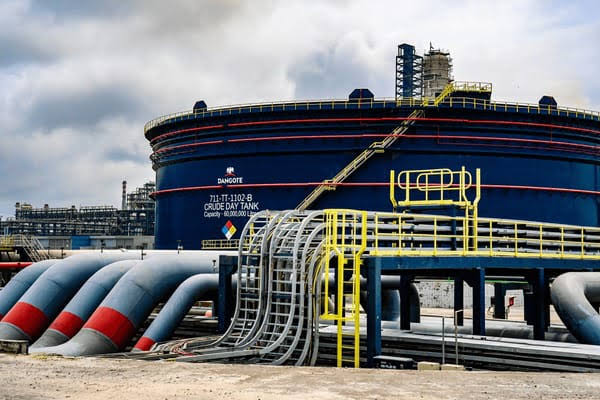
Despite its status as Africa’s largest crude oil producer, Nigeria imported crude oil worth a staggering N5.734tn between January and December 2025 as domestic refineries grappled with persistent feedstock shortages, exposing a deepening supply paradox in the country’s oil sector, The PUNCH reports.

This comes in spite of the Federal Government’s much-publicised naira-for-crude policy designed to prioritise local supply.

Yet, even as the policy sought to channel crude to local refineries, Nigeria produced 530.41 million barrels and earned about N55.5tn from crude oil sales in 2025, highlighting a stark disconnect between robust upstream output and domestic supply shortages.

Data obtained from the National Bureau of Statistics and analysed by our correspondent on Tuesday, showed that the surge represents a dramatic shift from 2024, when no crude imports were recorded, indicating a 100 per cent increase year-on-year.

An analysis of the NBS Foreign Trade in Goods Statistics report revealed that crude oil imports, classified under “Petroleum oils and oils obtained from bituminous minerals, crude”, became one of Nigeria’s major import items in 2025, driven by supply shortages to domestic refineries.

In the first quarter alone, Nigeria imported crude worth N1.19tn, underscoring the urgency with which refinery operators turned to alternative feedstock sources.

The figure rose sharply by about 37.8 per cent to N1.64tn in the second quarter, before climbing further by 46.5 per cent to N2.403tn in the third quarter, reflecting intensifying domestic supply constraints.

However, imports dropped steeply by approximately 79.2 per cent to N499.75bn in the fourth quarter, suggesting a late-year easing in demand or improved local availability, though still indicative of a volatile and inconsistent crude supply environment throughout the year.

Although the NBS report did not name specific refineries, the pattern reflects the broader systemic failure in aligning domestic crude production with local refining demand.

A further breakdown of the figures shows wide monthly fluctuations in crude imports, reflecting unstable supply conditions in the domestic market.

Refineries imported crude worth N335.69bn in January, rising by 32.6 per cent to N445.27bn in February, before declining by 8.5 per cent to N407.29bn in March.

Imports dipped slightly to N335.31bn in April but surged dramatically by 116 per cent to N724.23bn in May, suggesting heightened supply constraints locally.

In June, imports fell by 19.5 per cent to N582.94bn, before spiking to a yearly peak of N1.28tn in July, an increase of about 120 per cent, marking the highest monthly import bill in the year.

This was followed by a 51.8 per cent drop to N619.24bn in August, and further declines to N499.41bn in September and N407.08bn in October.

Imports plunged sharply by 77.2 per cent to N92.67bn in November, before dropping to zero in December, indicating a temporary easing of demand or improved local supply towards year-end.

Overall, the trend underscores a volatile supply environment, with refineries forced to adjust sourcing strategies month by month.

Findings by The PUNCH indicate that local refineries, ranging from modular plants to mega facilities such as the Dangote Refinery, are increasingly turning to international markets due to persistent challenges in sourcing crude domestically.

The refineries cite a combination of structural and commercial factors behind the development.

This was confirmed by the Crude Oil Refinery-owners Association of Nigeria, which noted that refineries turn to imports for survival and increased production capacity.

See also  Reps to regulate crypto, POS operations

The CORAN Publicity secretary, Eche Idoko, stated in an interview that domestic refiners within the supply chain have been marginalised.

He confirmed that for several months, no allocation has been received under the Domestic Crude Oil Supply Obligation framework, naira for crude policy or through any other special arrangements.

He said, “Local refiners, especially the modular refineries, have not been getting crude, I mean zero allocation, under the DCSO or any other special arrangement.”

He said the DCSO implementation has been hampered by the ‘willing buyer, willing seller’ policy

Idoko said a modular refinery like Opac couldn’t get crude, and it stopped production for months.

According to Idoko, local refineries have the capacity to produce more than their current output, blaming the lack of enough feedstock for the current output. “We have the capacity to produce far more than what we are producing now. The challenge has always been inadequate feedstock,” he stated.

Idoko stated that some modular refineries like OPAC produce about 10 per cent of their capacities, while some shut down due to a lack of crude oil.

“A good example, the OPAC refinery has a 10,000-barrel capacity. It produces just about 1,000, and it’s not consistent. Sometimes, the refinery is shut down for months because of the unavailability of crude. The Dangote refinery was recently producing at 60 per cent of its total capacity due to the unavailability of feedstock.”

Earlier this month, Dangote Petroleum Refinery & Petrochemicals also cleared the air on the crude oil supply being received from the Nigerian National Petroleum Company under the naira-for-crude arrangement, disclosing that it receives five cargoes of crude monthly which are paid for in naira.

However, it stated that this falls significantly short of the 13 cargoes required each month to meet domestic demand.

The refinery in a statement issued further explained that the shortfall of eight cargoes is being bought from other sources outside the country.

In addition, it stated that the NNPC cargoes are priced at international market rates plus a premium.

As a result, the company said it is compelled to source additional crude from local and international traders, procuring foreign exchange at prevailing open market rates to complete the purchases.

Further investigations revealed that International Oil Companies operating in Nigeria have been reluctant to prioritise domestic crude supply, largely due to better pricing and fewer regulatory constraints in the international market.

Experts say IOCs prefer exporting crude under long-term contracts denominated in dollars, rather than selling locally under conditions that may involve pricing benchmarks, currency risks, or policy uncertainties.

They added that disputes over pricing frameworks, particularly when crude is sold at a premium and third-party influence, have further complicated domestic supply arrangements.

Similarly, an alternative solution provided by the government through the naira-for-crude policy to allow domestic refineries to purchase crude oil in local currency, reduce pressure on foreign exchange, and ensure a steady feedstock supply hasn’t met expectations.

The policy introduced in October 2024 gained prominence with the ramp-up of refining capacity, particularly from the Dangote Refinery, and was expected to mark a turning point in Nigeria’s downstream sector.

Under the arrangement, refiners would pay for crude in naira, while the government would manage foreign exchange implications through the Nigerian National Petroleum Company Limited.

See also  FULL LIST: Nigeria, 66 other countries hit with Trump tariffs

However, the 2025 import figures suggest that the policy has not fully achieved its core objective.

This situation is driven by several structural challenges, including a mismatch between allocated crude and refinery demand, persistent pricing disagreements over benchmark terms, concerns among upstream producers about naira volatility, and existing forward sales and export commitments that limit the volume of crude available for domestic refining.

The NBS data further showed that Nigeria sourced its imported crude primarily from African countries such as Algeria, Angola while imports from the United States of America accounting for the largest share.

This trend reflects the growing integration of global crude markets, where refiners prioritise reliability and quality over geographic proximity.

Commenting, energy analysts have faulted the implementation of the Federal Government’s naira-for-crude policy, arguing that it has failed to significantly improve domestic crude supply or reduce fuel prices.

The Chief Executive Officer of Petroleumprice.ng, Jeremiah Olatide, said the policy has delivered little impact since its introduction in 2024, as most refineries continue to rely heavily on imported crude.

Speaking in a telephone interview with The PUNCH, he said, “For me, the naira-for-crude policy that was initiated in 2024 has not yielded any reasonable output because the Dangote refinery still sources about 65 to 70 per cent of its feedstock from abroad, while about 95 per cent of modular refineries also source their crude outside the naira-for-crude initiative.

“So, the initiative, for me, is not effective, and that is why we are still seeing a large inflow and importation of crude oil in 2025. In turn, prices at the depot and pump have not been different from when we were fully importing refined products.”

He noted that while the coming on stream of large-scale refining capacity has improved product availability, it has not translated into price relief for consumers.

“The only difference now is that we no longer have supply fears; there is availability of products. But in terms of pricing, I would say the naira-for-crude policy has not translated into lower prices at the depot or pump,” he added.

Jeremiah attributed this to the continued reliance on international pricing benchmarks, even for locally supplied crude.

“Dangote’s crude from the Nigerian National Petroleum Company is still priced internationally and benchmarked to Brent. So it is not as effective as the name implies. The refinery still has to pay based on international prices when converted,” he said.

He argued that to achieve meaningful price stability, the government may need to rethink its approach.

“For me, I feel that the subsidy removal in 2023 should be replaced with another form of subsidy, but this time targeted at refineries. The crude supplied to local refineries should be subsidised. That is the only way prices can be stabilised and Nigerians will feel the impact at the pump,” he stated.

He added that the current arrangement contradicts provisions of the Petroleum Industry Act, which prioritises domestic crude supply.

“The agreement should be revisited. The policy is not effective, and Nigerians are not supposed to be buying fuel at high prices, considering that we have crude and a giant refinery. Local refineries should not struggle to access crude at all,” he said.

See also  Airlines groaning under multiple taxation – Okonkwo

Similarly, a Professor of Energy, Dayo Ayoade, said structural issues in Nigeria’s upstream sector have made it difficult for policies like naira-for-crude to succeed in practice.

“We have deeply unreliable supply from NNPC, largely because the company forward-sold crude oil to secure loans for the government in the past,” he said.

“Also, for over 19 years while the Petroleum Industry Bill was being delayed, there was significant underinvestment in the upstream sector. When you combine this with government’s priority of earning foreign exchange and servicing debts, you will see that, in practice, initiatives like naira-for-crude are more on paper than reality.”

He explained that Nigeria’s current production levels are insufficient to meet both export obligations and domestic refining demand.

“NNPC must have crude oil that it can supply, but it doesn’t. By the time international oil companies take their allocations under joint ventures and production sharing contracts, very little is left,” he said.

“Take the 650,000 barrels per day Dangote refinery, for instance. It would require about 650,000 barrels daily to operate at full capacity. That is not feasible at the moment. That crude simply does not exist in available volumes right now.”

Ayoade further noted that crude importation is built into the operational model of modern refineries.

“We also need to understand that the configuration of the refinery requires a blend of different crude grades. Nigeria’s light sweet crude alone is not sufficient, so some level of importation is part of the refinery’s design and business plan,” he said.

On the outlook for 2026, he warned that the trend of crude importation by domestic refineries is likely to persist.

“This pattern will likely will continue in 2026 because issues like logistics bottlenecks, pipeline vandalism, oil theft, and delayed field development cannot be solved in a short time,” he said.

“As long as crude oil accounts for over 95 per cent of our foreign exchange earnings and the government prioritises exports, we will continue to see this pattern for a few more years.”

He added, “That is why I am always cautious when people talk about new refineries coming on stream. The real question is: where will the crude oil come from? That is the fundamental issue.”

Nigeria has long relied on imported refined petroleum products due to inadequate domestic refining capacity. However, recent investments in local refineries were expected to reverse this trend by boosting in-country processing of crude oil.

The Petroleum Industry Act introduced provisions aimed at ensuring a steady supply of crude to domestic refineries, including domestic crude supply obligations.

However, implementation challenges, legacy contractual commitments, and market realities have slowed progress, leaving refiners to navigate supply gaps through imports.

The N5.734tn crude import bill in 2025 now highlights a new phase in Nigeria’s oil sector paradox, where the challenge is no longer just refining capacity, but access to crude itself.

As the country pushes to maximise value from its hydrocarbon resources, the ability to align upstream production with downstream demand will remain critical to achieving true energy independence.

punch.ng

FOLLOW US ON:

FACEBOOK

TWITTER

PINTEREST

TIKTOK

YOUTUBE

LINKEDIN

Continue Reading

Trending