Connect with us

Lifestyle

Lady sues Peller, demands N395m for filming her without consent

Published

on

A Lagos-based woman, Osarobo Odigie, has instituted legal action against popular TikTok streamer Habeeb Hamzat , popularly known as Peller, over alleged defamation, cyber harassment, and invasion of privacy at a lounge.

In a pre-action letter dated March 10, 2026, and signed by Bola Osineye of FA Garrick & Co., the claimant’s lawyers accused the influencer of making defamatory remarks against their client and publishing a video of her online without consent.

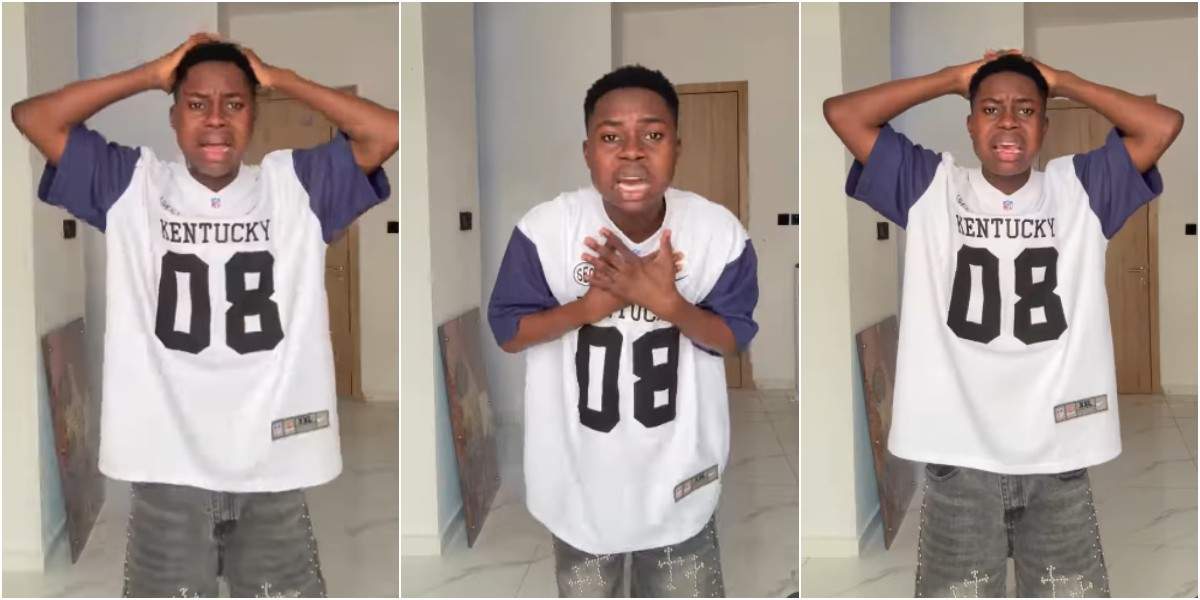
A thumbnail of the viral video…Credit: Peller

According to the letter, the incident occurred in the early hours of January 6, 2026, at Folixxx Lounge along the Lekki-Epe Expressway in Lagos State.

“Our client was present at Folixxx Lounge… for the purpose of purchasing food. While standing at the counter/cashier area, our client was suddenly startled by your loud outburst directly behind her,” the letter stated.

The lawyers alleged that after Odigie moved away from Peller due to the loudness, he confronted her and demanded to know why she had stepped aside.

“You aggressively approached her and proceeded to instruct her to ‘shut up’. When she requested that you moderate yourself in a public space, you immediately resorted to verbal abuse, including but not limited to Yoruba curses such as ‘Oloriburuku,’ ‘Omo Ale,’ and ‘Ashawo,’” the letter read.

The law firm said the words were “untrue, ridiculing and defamatory,” and were used publicly with the intention of humiliating their client.

They further alleged that Peller recorded the confrontation on his phone without her consent and subsequently shared the video across multiple social media platforms.

“You proceeded to escalate the situation by producing your mobile phone and using the same to record our client without her consent. You thereafter published the video on your Snapchat, WhatsApp, TikTok, Instagram and other social media platforms, causing public ridicule of our client,” the letter added.

See also  Fuel scarcity looms as NUPENG begins nationwide strike Monday

The lawyers claimed the video quickly went viral due to the influencer’s large online following, attracting thousands of comments and allegedly leading to harassment and cyberbullying directed at their client.

“Owing to your substantial online presence and following as a streamer and public influencer, the video went viral almost immediately… triggering thousands of comments, many of which reiterated and amplified your defamatory remarks against her,” the letter stated.

The claimant also alleged that the online exposure had led to reputational damage, emotional distress and threats to her safety.

“Our client has suffered significant emotional distress and has developed genuine fears for her safety,” the lawyers wrote.

Consequently, the claimant is demanding a total sum of N395m in damages. This includes N200m as compensation for the alleged defamatory publication, N100m for emotional trauma and reputational harm, and N75m for additional distress caused by alleged cyberbullying and threats from members of the public.

The legal team also demanded N20m to cover legal fees and related costs.

In addition to the monetary compensation, the lawyers asked Peller to immediately cease further publication of the video, remove the content from all his social media platforms, and issue a public apology.

The apology, according to the letter, must be published across his social media platforms and in two national newspapers, The PUNCH and The Guardian, acknowledging that the statements were “false, malicious and injurious” to the claimant’s reputation.

“You are required to issue a clear, unequivocal, and public apology to our client across all platforms where the defamatory content was published,” the lawyers said.

See also  Ways to manage low back pain after childbirth

They also demanded that the influencer notify third-party blogs and platforms where the video may have been reposted and ensure its removal within seven days.

The lawyers warned that failure to comply with the demands within the stipulated period would result in the commencement of legal proceedings.

“Should you fail, refuse, or neglect to comply… our client shall, without further recourse to you, institute appropriate legal proceedings against you,” the letter stated.

The lawsuit follows a widely circulated confrontation between Peller and the woman at a Lagos eatery on January 6.

Peller had earlier apologised publicly to the woman on January 9 after the video sparked widespread criticism online. In the apology video, he admitted that his reaction was out of character and expressed regret for his conduct during the altercation.

punch.ng

FOLLOW US ON:

FACEBOOK

TWITTER

PINTEREST

TIKTOK

YOUTUBE

LINKEDIN

Continue Reading
Click to comment

Leave a Reply

Your email address will not be published. Required fields are marked *

Lifestyle

She Visits My Home – Nollywood Actor Speaks On Impregnating Late Actress, Aunty Ajara

Published

on

Nollywood actor, Femi Adewole, also known as Femi Apefe, has addressed claims linking him to the recent death of actress Aunty Ajara.

It was reports that the actress passed away following complications related to pregnancy and pre-existing liver issues.

After reports emerged that Aunty Ajara had been pregnant, old clips of her and Apefe began circulating on social media, with some users accusing him of being involved.

Apefe responded to the accusations through a video on his Instagram page, clarifying the nature of his relationship with the late actress.

He explained that he first met Aunty Ajara about two years ago and quickly recognised her acting talent.

He often invited her to film projects, and they developed a friendly relationship.

The actress would occasionally visit his home, sometimes with the help of a commercial motorcyclist.

Apefe said that a comedy skit they filmed at his house, in which Aunty Ajara acted as a pregnant woman, became the source of the rumours.

He denied any involvement in a real-life pregnancy, stating that the only pregnancy he knew of was the one in the skit.

The actor also shared that Aunty Ajara sometimes felt insecure about her body size, but he always supported her career and admired her talent.

He said: “I first met Aunty Ajara about two years ago and immediately noticed her natural acting ability. I admired her talent and often invited her to join me on movie sets for filming. We developed a friendly relationship. She was familiar with my home and would sometimes visit with the help of a commercial motorcyclist.

See also  Adebayo Salami (Oga Bello): Six Decades of Excellence in Nigerian Theatre and Film

“At one point, I suggested creating a comedy skit in which she would act as a pregnant woman. People around us liked the idea, and we filmed it at my house. That particular video later became the source of rumours that she was pregnant with twins in real life. I am not responsible for any pregnancy. The only pregnancy I knew about was the one portrayed in the skit.

She sometimes struggled with feelings of insecurity because of her body size, but I always admired her acting talent. I was one of her biggest supporters and encouraged her to keep pursuing her career. I am deeply saddened by her passing and I distance myself from the allegations circulating online.”

FOLLOW US ON:

FACEBOOK

TWITTER

PINTEREST

TIKTOK

YOUTUBE

LINKEDIN

Continue Reading

Lifestyle

I Raised ₦8 Million To Japa. I Was Deported The Next Day

Published

on

In 2019, Chukwudi* (38) firmly believed relocation would solve all his problems. So, he emptied his savings, sold everything he owned and took loans to fund a new life abroad. However, less than 24 hours after landing, immigration officers put him on a plane back to Nigeria. Seven years later, he’s still recovering from the fallout.

As Told To Boluwatife

Seven years have passed since my unfortunate attempt to leave Nigeria for a better life in a different country. Yet, I still struggle to talk about my experience. I’m not sure I’ll ever recover from the embarrassment and pain I suffered.

In 2019, I was 31 and convinced that escaping Nigeria was the only way to move my life forward. I was tired of my office job at a mid-sized logistics company in Lagos, and even more frustrated by the quality of life I could afford on my ₦60k salary.

I lived in a tiny self-contained apartment and couldn’t do anything besides go to the office and church every week. I couldn’t even dream about getting married or owning a car.

Meanwhile, everywhere I turned, someone was preparing to relocate or had already relocated. A former secondary school classmate moved to Germany and began posting pictures of snowy streets in our alumni WhatsApp group chat. A cousin left for the UK and started sending videos of his new apartment. Even someone from my office was talking about their plans to leave.

Everyone in my life was moving forward while I was stuck in one position. So, naturally, I started thinking about relocating too. Unfortunately, I had no money to fund any japa dream.

A colleague at work introduced me to a travel agent who explained a pathway that involved entering an Asian country with a short-term visa and arranging longer-term options after arrival. He spoke with confidence and gave examples of people who had successfully travelled the same route.

It sounded like a great plan, but he also quoted ₦15 million for the entire process — including visa processing, flight cost, accommodation arrangement and settlement support. The cost was too much for me to even imagine, let alone have somewhere.

Still, once the idea entered my head, I couldn’t let it go. For weeks, I thought only about how to raise the money and japa. It got to a point where I regularly daydreamed about finding dollars on the floor or someone mistakenly sending ₦15 million to my account.

I also started researching the japa process on my own. I realised I wouldn’t need up to ₦15 million if I did everything myself without a travel agent. Based on my findings, I estimated ₦10 million would finish the process, and I’d still have extra to hold for the first few months after I arrived in the new country.

See also  Trump threats: Tinubu rallies foreign allies as North rejects Sharia ban

So, I decided to start small and raise the money slowly. I convinced myself I’d somehow raise ₦10 million.

First, I liquidated my entire life savings of about ₦700k to start the visa application process. Next, I sold my late father’s acres of land in the village for ₦3 million. That move caused some issues between me and some extended family members. They argued I shouldn’t have made that move without their approval, but I didn’t really care what they thought. My only focus was on leaving the country.

And it seemed like things were working out in my favour. I got a six-month visa on my first try and still had an extra ₦2 million in my account. I only needed to raise about ₦6 million more to reach the ₦8 million I estimated for flight costs, accommodation and settlement budget.

For accommodation, my colleague had linked me up with someone living in the country I was planning to travel to, and he’d promised to help me get a place. I just needed to send ₦3 million to him.

For the next five months, I tried everything to raise ₦8 million.

I started by taking loans. At first, it was from people close to me: my elder brother, two cousins, and a church member who ran a small cooperative. When that money finished, I started asking friends. Then friends of friends, and even people in my office. Before long, I had borrowed money from more than 12 people.

I told everyone the same thing: once I settled in Asia, I would start paying back immediately. Everybody believed me because at that time, it felt like moving abroad was a shortcut to success. Once you entered, your life automatically changed.

When the loans didn’t fetch me the money I needed, I started selling my things. My TV, generator, wardrobe and even my bed. At some point, I was sleeping on top of my clothes on the floor. I convinced myself I would eventually need to sell everything off when I was travelling anyway.

As my visa expiry date drew near and I saw no sign of raising the full amount I needed, I grew even more desperate. I decided to sublet my apartment without my landlord’s knowledge. I collected ₦1 million for two years’ rent from a former schoolmate’s brother and told him to lie to the landlord that he was my brother who had come to stay with me from the village.

See also  Fuel scarcity looms as NUPENG begins nationwide strike Monday

After all my fundraising efforts, I was only able to raise an additional ₦4 million, bringing my account balance to ₦6 million. By then, I had only one week left on my visa.

The delay had also made it impossible for me to buy plane tickets in advance at a lower price. I eventually spent ₦2.8 million on tickets. After I sent the ₦3 million to the guy who had promised to help me with accommodation, I had just ₦200k left. Still, I believed I could easily find work when I arrived in the new country.

I travelled with that belief. I remember my excitement that day. My siblings took me to the airport, and we took countless pictures and videos. My mum even called and sent several prayers over the phone. Everyone was happy for me.

On the plane, I was lucky enough to sit in a window seat and took even more pictures. I kept telling myself, “My life is about to start.”

I didn’t know it had already ended.

After two layovers, I finally arrived at my destination. At immigration, the officer stared at my passport for a long time. Then he started asking several questions about the duration of my visit and how much money I had.

Remember, I only had a few days left on my visa. Well, I told him I was there on a short two-day vacation to tour the country. I couldn’t tell him I didn’t plan to return.

Now that I think about it, my “vacation” story was too foolish. Who would’ve believed I was only there for two days when I travelled with three big bags?

The immigration officer called another officer, and the two spoke for a long time in a language I didn’t understand. Then they took me into a room and started asking me detailed questions. At some point, they even asked if I had paid someone to help me disappear after entry.

I kept insisting I was just visiting. But they didn’t believe me. I spent that night in an airport detention room with three strangers. Nobody explained anything or told me what would happen next.

The next morning, the immigration officers handed me a document and said I would be returned to Nigeria immediately. They said my visa timeline was suspicious and they’d prefer to remove me from the country before any overstay occurred.

Just like that, within 24 hours of “relocating,” I found myself on a plane heading back to Nigeria. It felt like a very bad dream. I didn’t even know whether to cry or laugh. Everything happened so fast.

See also  Adebayo Salami (Oga Bello): Six Decades of Excellence in Nigerian Theatre and Film

The reality of my situation hit me fully when I landed in Lagos. I had no home and nothing to my name. I’d sold everything and taken multiple loans to raise ₦8 million to travel.

Now, I was back to square one and even worse off than before, owing almost ₦3 million with no hope of how to pay it back.

For the first few weeks, I couldn’t face anybody. When relatives called for updates on my trip, I had to tell them the truth. News of my deportation travelled fast, and creditors started calling to ask when I would start repaying their money. I stopped picking up calls and eventually had to switch the phone off completely.

I initially hid in my brother’s house, but when the shame became too much, I ran to my village. The people there also knew about my failed relocation, but at least they wouldn’t come to me every day to ask about Asia. Even in the village, gossip from Lagos got to my ears. How most people thought I had run away with their money, and were cursing and mocking me.

It was a shameful period for me. I kept imagining how everyone expected me to be doing well abroad, but I was back with absolutely nothing. I had never heard of someone who spent less than 24 hours in a country before deportation. I wanted to die. I even tried to commit suicide twice, but my relatives rescued me.

Seven years later, I’m slowly rebuilding my life. I returned to Lagos last year after spending the last few years working with a cousin who runs a small building materials shop.

I’ve managed to repay some of the people I owed. Most of them eventually forgave my debt. I also have a better job now. My pay is still not much, but I’m surviving.

The trauma of this experience still hasn’t left me. I have nightmares about it from time to time. In my dreams, I’m coming down from a plane, and big, muscled men suddenly rush at me and push me back inside. Sometimes, I wake up crying.

Now, whenever people around me start talking about japa plans, I just keep quiet. I can’t go through that suffering again.

I know Nigeria is even worse now, and I still want a better life. But for now, I’ll try my best to find that life here.

FOLLOW US ON:

FACEBOOK

TWITTER

PINTEREST

TIKTOK

YOUTUBE

LINKEDIN

Continue Reading

Lifestyle

World Sleep Day: Doctors advise adults to sleep seven to nine hours daily

Published

on

Medical experts have advised adults to get between seven and nine hours of sleep daily to maintain good physical and mental health.

A Consultant Family and Lifestyle Medicine Physician, Dr Moyosore Makinde, gave the advice on Friday in Lagos while speaking with the News Agency of Nigeria to mark World Sleep Day.

Makinde, who is also the President of the Society of Lifestyle Medicine of Nigeria, said adequate sleep plays a vital role in maintaining overall wellbeing, productivity and long-term health.

The 2026 World Sleep Day, themed “Sleep Well, Live Better,” is dedicated to raising awareness about sleep’s critical role in human health and encouraging individuals to adopt healthier sleep habits.

Makinde explained that recommended sleep duration varies by age, noting that while adults require fewer hours, infants and children need longer sleep periods for proper development and overall well-being.

Citing World Health Organisation stipulations, Makinde recommended seven to nine hours of restorative sleep for adults above 18, explaining that infants and children required significantly longer sleep duration.

She decried the high level of sleep deprivation among the populace, noting many people failed to get adequate sleep daily, a situation she warned could negatively affect health, safety and well-being.

Makinde said the fast pace of modern life often left little time for rest, urging Nigerians to deliberately prioritise sleep by creating time for proper rest, relaxation and recovery daily.

She attributed sleep deprivation to multiple factors, including health challenges, lack of time, social media addiction, poor sleeping environments, unhealthy sleep positions, and demanding daily schedules aimed at survival.

See also  FG seals Plateau mine after gas leak kills 37

According to Makinde, prolonged sleep deprivation increases risks of accidents, judgment errors, workplace mistakes, Type 2 diabetes, heart disease, obesity, overweight, and certain cancers, including breast and prostate.

“Sleeping well in order to live better is not a myth. Sleep remains one of the most powerful yet often neglected pillars of health and well-being in modern society.

“To maintain good health, adults should have seven to nine restorative hours of sleep per day.

“Infants require up to 16 to 17 hours of sleep, while pre-school and school-age children need up to 13 hours and 12 hours, respectively, for proper brain development,” Makinde added.

According to her, sleep is as important as the food we eat, the water we drink and the air we breathe.

“It is a natural state of rest and a period when the body repairs itself physiologically, restoring energy, strengthening immunity and supporting overall bodily functions.

“Amid the hustle and bustle of work, study and business, particularly in Lagos, Nigerians need to prioritise sleep.

“In doing so, we are also prioritising our health,” she said.

Contributing, a psychiatrist and therapist, Dr Maymunah Kadiri, described sleep as “an integral part of mental well-being,” stressing its critical role in maintaining psychological balance.

Kadiri, also Medical Director of Pinnacle Medical Services, explained that good sleep improved concentration, enhanced brain performance and contributed positively to overall cognitive functioning and emotional stability.

She noted that adequate sleep supported cognitive processes and helped reduce symptoms of depression and anxiety, making it an essential component of maintaining good mental health.

See also  Bauchi shuts all schools over security concerns

According to her, healthy sleep goes beyond hours spent in bed, noting that it involves adequate duration, good sleep quality that is uninterrupted and refreshing, and a consistent sleep schedule.

“Sleep significantly benefits mental health. During a good night’s sleep, the brain gets rest and all the nutrients it needs.

“A person who enjoys long-term good sleep develops improved stress resistance. Brain function improves, and the risk of cognitive disorders is significantly reduced over time.

“Sleep has a direct impact on mental health and its quality. It helps process emotions and alleviates stress as well as negative feelings,” Kadiri said.

NAN

punch.ng

FOLLOW US ON:
FACEBOOK

TWITTER

PINTEREST

TIKTOK

YOUTUBE

LINKEDIN

Continue Reading

Trending