Connect with us

Lifestyle

Man shares journey of living as female for 25 years before transition

Published

on

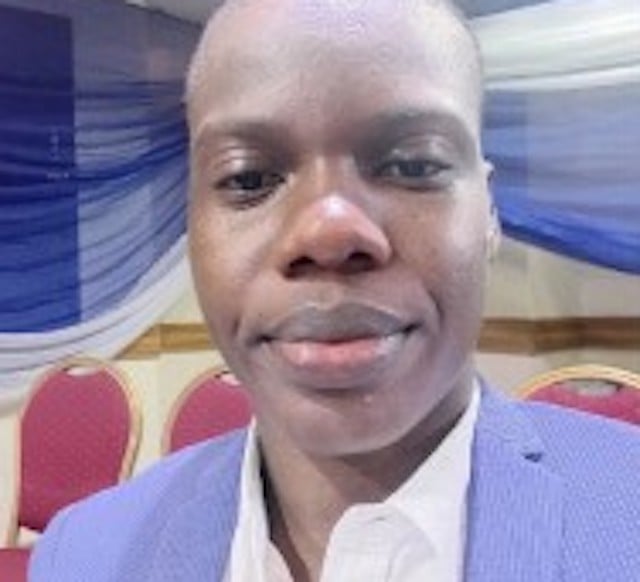
Tosin Odunlami, a Nigerian-born intersex advocate, has opened up about his journey of self-discovery, transition, and his ongoing fight to promote intersex visibility and inclusion in Nigeria.

In an interview released on Friday by The Podcast Network, Odunlami reflected on his childhood, his experience living 25 years as a female, and the challenges of navigating identity in a society that often misunderstands intersex persons.

Intersex is a term used to describe people who are born with physical or biological traits, such as chromosomes, hormones, or reproductive organs, that don’t fit the typical definitions of male or female bodies.

According to a landmark study by biologist Dr Anne Fausto-Sterling (2000) of Brown University, up to 1.7% of the global population is born with intersex traits.

However, later research by Dr Leonard Sax (2002) published in the Journal of Sex Research estimated a narrower range of about 0.018%, depending on which medical conditions are classified as intersex.

Despite these variations, both studies affirm that intersex variations are a natural part of human diversity, not disorders or abnormalities, a position also supported by the United Nations Free & Equal campaign (2019) and the World Health Organisation (WHO, 2022).

Tosin began by clarifying common misconceptions about gender identity. “Intersex persons are not transgender. Neither are they gay or lesbian,” he said. “Intersex means being born with biological variations, it could be internal, chromosomal, or genital.”

“It’s a privilege for me to speak about my experience. I discovered that I’m an intersex person at age 25. Basically, I lived all my life for 25 years as a female, and it wasn’t eas,” he said.

When asked whether he is medically capable of reproduction, Tosin confirmed that he can reproduce as a man, “Yes, because I’ve done some examinations.”

See also  I took inspiration from sex workers for ‘To Kill a Monkey’ role – Sunshine Rosman

Born and raised in Nigeria, Odunlami recounted growing up under societal pressure to conform to the gender assigned at birth.

“You have to behave in the female way, And if you’re not doing all of that, the society and the community start looking at you in a certain way.”

He revealed that during puberty, he noticed bodily changes that made him question his identity, but fear and stigma kept him silent.

“I started seeing some changes in my body, and I was scared. I couldn’t talk to anyone because when you tell them this is what you’re seeing in your body, they decide to discriminate or tell you you’re taboo,” he said.

Odunlami shared how his mother discovered his condition and sought medical help. However, the doctors themselves were confused.

“The doctor did not even know who I am. They tried to confirm me to their ascribed gender and said they had to do surgery to cut off what they were seeing,” he recounted.

He described how his mother rejected the risky surgical option and instead turned to religious interventions.

“My mom took me to several churches; they gave me soaps and prayers, just to make me grow breasts,” he said, recalling years of internal struggle and isolation.

At university, he continued to live as a woman but in secrecy. “I lived with two females in the same room, and when we were dressing up, I shifted myself to the corner. I wore padded bras because I wanted to fit in,” he said.

Odunlami’s transition came after a medical consultation confirmed that his hormones were predominantly male.

See also  Plateau Governor Gifts Pilgrim N1m For Returning Missing $5,000 to Owner in Saudi Arabia

“The doctor said my hormones are more male hormones. That was when I told the doctor, ‘Okay, I think I’m going to come to the male gender,’” he explained.

Speaking on how people reacted to his transition, he said, “Some were surprised, some were supportive, and some are still anxious about it. But I’m always open to share with them.”

On his sexual orientation, Odunlami said he is attracted to females. “I’m attracted to women, emotionally, mentally, and physically,” he said, clarifying that being intersex does not define his sexuality.

Speaking about his church community, he revealed how he came out to his pastor and congregation: “On a Sunday, he said I should come out and you know, it’s also a form of advocacy — educating people, mothers, adults, youths on all of this.”

He continued, “Although it was a shock to them, they were like, ‘No, Sister Esther?’ Because then I was ascribed a female gender, so my first name is Esther. They were saying, ‘What? Sister Esther? Are you a trans? Are you gay?’ They didn’t really understand the whole situation, even after I shared with them that this is me, I’m an intersex person.”

He added that although some members initially distanced themselves, others eventually accepted him.

“Some were like, ‘Don’t near my female daughter,’ and I was a children’s teacher, so I had to step back to see how they received the information. But later they were all open arms, they received me back, and I started teaching again.”

When asked whether being intersex makes one a member of the LGBTQIA+ community, Tosin clarified that intersex persons form part of the wider group while maintaining their distinct identity.

See also  I expected twins, shocked four babies came out — Mother detained over N3m bill

“The ‘I’ in the LGBTQIA, that’s intersex,” Tosin explained. “We can stand alone, and as well we cannot stand alone. We are part of the community because we work together in different ways,  for programming, advocacy, and education. Sometimes, Intersex Nura even educates the LGBT community. So we are a community of one.”

Tosin, however, noted that being intersex does not automatically determine sexual orientation, “An intersex person does not necessarily identify as lesbian, gay, or bisexual,” they said. “All of that does not necessarily apply.”

Speaking further, Tosin said there is a growing intersex community in Nigeria that meets regularly for support and advocacy.

“We have intersex persons in different states across Nigeria. We hold monthly check-ins and community meetings. On October 26, we’ll celebrate Intersex Awareness Day, a day to celebrate our growth, resilience, and visibility,” Tosin added.

They also highlighted ongoing collaborations between Nigerian intersex advocates and global organisations, “There is international support,” Tosin noted.

“The Executive Director of Intersex Nigeria, Obioma, is part of the Intersex Alliance Movement globally, working to advance advocacy and programming. We also receive funding and support from international organisations for our work here in Nigeria.”

Reflecting on faith and acceptance, he described how his church community ultimately responded positively. “I had this peace, that I am living my full self,” he said.

Now an active intersex advocate, Odunlami continues to champion inclusion and awareness through public speaking and advocacy efforts. “It’s not a disability,” he affirmed again. “I’m a normal person like every other person.”

punch.ng

FOLLOW US ON:

FACEBOOK

TWITTER

PINTEREST

TIKTOK

YOUTUBE

LINKEDIN

TUMBLR

INSTAGRAM

Continue Reading
Click to comment

Leave a Reply

Your email address will not be published. Required fields are marked *

Lifestyle

Nigeria’s ambassador-designate to Algeria, Lele, dies at 50

Published

on

The Federal Government has announced the death of Nigeria’s ambassador-designate to Algeria, Mohammed Mahmud Lele, who died at the age of 50.

The Ministry of Foreign Affairs disclosed this in a statement issued in Abuja on Wednesday by its spokesperson, Kimiebi Ebienfa.

According to the ministry, Lele died in the early hours of April 19, 2026, in Ankara, Türkiye, after a protracted illness.

The ministry described the late diplomat as a dedicated officer who served the country with distinction.

“The late Ambassador Lele, until his death after a protracted illness, was the Director in charge of the Middle East and Gulf Division in the Ministry of Foreign Affairs.

“Ambassador Lele, a career diplomat, was recently appointed by President Bola Ahmed Tinubu as Ambassador-designate to the People’s Democratic Republic of Algeria, following the Nigerian Senate’s confirmation of his nomination,” the statement said.

Born in Gamawa, Bauchi State, in 1976, Lele studied Economics at Bayero University, Kano, and went on to serve in Nigerian missions in Berlin, Lomé and Riyadh.

“Ambassador Lele was known for his intellectual depth, strategic insight and commitment to the advancement of Nigeria’s foreign policy objectives,” the statement added.

The Permanent Secretary of the ministry, Dunoma Umar Ahmed, who received the remains of the late diplomat at the Nnamdi Azikiwe International Airport, Abuja, described him as “a hardworking, humble and fine officer, who will be sorely missed by the ministry.”

The ministry added that his death “is a monumental loss not only to his immediate family but also to the entire Foreign Service community and the Federal Republic of Nigeria.”

See also  Ramadan, Lent begin today across the globe

Lele was buried on Wednesday in Kano in accordance with Islamic rites.

The ministry extended condolences to his family, associates, and the government and people of Bauchi State, praying for the peaceful repose of his soul and strength for those he left behind.

Continue Reading

Lifestyle

Governor Amuneke reveals party officials offered him dollars to alter anti-govt skits

Published

on

Comedian Kevin Chinedu, popularly known as Kevinblak, has revealed that officials of a political party offered him dollars to change his satirical skits criticising politicians and governance.

He made the disclosure on Monday in an interview on ARISEtv’s Arise 360 programme, where he spoke about the pressures facing content creators who hold public officials accountable through humour.

Chinedu, known for his character Governor Amuneke, said the approach came at a particularly vulnerable moment, shortly after his wife had a Caesarean section and he was under financial strain.

“They said they were going to change my life, that I’m earning crumbs, you know, give me dollars. They mentioned that my colleagues are in the game and all of that,” he said.

He declined to name the party, saying only that it was “Amuneke’s party”, a reference to the fictional political figure in his skits, and cautioned against any attempt to identify it publicly.

“Don’t mention names, trust me, don’t mention names,” he said.

Despite the financial pressure, the comedian said he turned down the offer, recalling how the officials had tried to lure him to Abuja with the promise of a life-changing sum.

“I had a lot of bills on my head and I just heard come, come to Abuja, let’s change your life. Dollars upon dollars,” he said.

He said he ultimately held firm, guided by a personal code he had maintained throughout his career.

“I looked at it, I said, no, I am who I am. I’ve been here for a long time, and I’ve never been in any illegal thing, and I’ve never been somewhere, you know, I’m doing something because I’m being influenced, because of money.

See also  PHOTOS: The Story of Madam Efunroye Tinubu, businesswoman, kingmaker and the first woman to kick against British rule in Nigeria

“If I want to do it, it should be something I’m doing because I want to do it. So, you know, it is what it is,” he said.

When asked whether friends had urged him to accept the money, Chinedu said his inner circle was equally principled, and had themselves been approached and refused.

“I don’t have friends that are easily overwhelmed with money. I have people who have principles because they have, you know, approached them, they themselves. So, we always have that conversation,” he said.

punch.ng

FOLLOW US ON:

FACEBOOK

TWITTER

PINTEREST

TIKTOK

YOUTUBE

LINKEDIN

INSTAGRAM

Continue Reading

Lifestyle

Over 4,600 Nigerian doctors relocate to UK in three years – Report

Published

on

Nigeria’s already fragile healthcare system is facing renewed strain as no fewer than 4,691 doctors have relocated to the United Kingdom since President Bola Tinubu assumed office on May 29, 2023, fresh data from the General Medical Council shows.

The UK GMC is a public official register detailing the number of practising doctors in the UK alongside other details such as their areas of speciality, country of training, among others.

The mass migration represents not just a human resource crisis but a significant economic loss.

With the Federal Government estimating that it costs about $21,000 to train a single doctor, Nigeria has effectively lost at least $98.5m in training investments within less than two years.

The figure put the total number of Nigeria-trained doctors currently practising in the UK to about 15,692, making Nigeria one of the largest sources of foreign-trained doctors in Britain, second only to India.

As of May 28, 2025, official records showed that the number of Nigerian-trained doctors in the UK was a little over 11,000. The figure has grown significantly since then.

The exodus of doctors comes as Nigeria’s doctor-to-population ratio hovers around 3.9 per 10,000 people, far below the minimum threshold recommended by the World Health Organisation.

For many health experts, the numbers confirm what has long been visible: a system gradually losing its most critical workforce.

The Nigerian Medical Association has repeatedly warned that poor remuneration, unsafe working conditions, and inadequate infrastructure are pushing doctors out of the country.

“Our members are overworked, underpaid and exposed to unsafe environments daily. Many are simply burnt out,” the NMA said in one of its recent statements addressing workforce migration.

See also  Colonel Ahmed Usman (20 August 1951 - 14 April 2021)

Similarly, the National Association of Resident Doctors has consistently highlighted the toll on younger doctors, who form the backbone of Nigeria’s tertiary healthcare system.

“Doctors are leaving because the system is failing them—irregular salaries, excessive workload, and lack of training opportunities,” NARD noted during one of its nationwide engagements.

Ironically, the doctor exodus persists even as Nigeria continues to spend heavily on healthcare abroad.

While official foreign exchange data shows only modest spending on medical tourism in recent years, broader estimates suggest Nigerians still spend hundreds of millions of dollars annually seeking treatment overseas.

For instance, a recent report by The PUNCH revealed that foreign exchange outflow for health-related travel by Nigerians surged to $549.29m in the first nine months of 2025, a 17.96 per cent increase from $465.67m in the same period of 2024, according to official data by Nigeria’s apex bank.

A public health expert, Dr David Adewole, noted that the Federal Government’s national policy on health workforce migration, aimed at curbing the growing trend of health professionals leaving the country—commonly referred to as ‘Japa’—is a good initiative, but may not do much to address the fundamental problems of the shortage of skilled healthcare professionals in Nigeria, particularly in rural and underserved areas.

According to him, many of the push factors for health professionals emigrating to greener pastures, like insecurity, emolument and lack of basic amenities like potable water, health facilities, cost of living and constant electricity, persisted.

He stated: “To make healthcare workers stay here, let the salaries be enough so that what you earn will be much more than the multiples of what you need for basic needs, like food, power supply, housing, and so forth.

See also  PHOTOS: 85-year-old Bayelsa woman "Ego Na Money" buried in Coca-Cola bottle-shaped casket

“People still look at life after retirement. You might have a good policy, but its implementation is the issue. For example, you are retired, and for your retirement package, you don’t need to know anyone for it to be processed promptly.

“Then subsequently, your monthly pension, without pressing anybody, should be paid. Those things are not here.

“And when you go to the hospital abroad, if you tell them that you are in a hurry, you go to your home; they’ll bring the medicines to your doorstep.”

Continue Reading

Trending